

LED Flashlight Factory with Low MOQ: What Buyers Should Know
Finding an LED flashlight factory with low MOQ is not only about getting a smaller first order. For B2B buyers, it is a way to reduce sourcing risk, test market response, and confirm whether a supplier can support repeatable quality before larger purchasing decisions are made. Industrial supply teams, outdoor retailers, promotional product buyers, and private-label brands often need a pilot batch before committing more stock, warehouse space, and cash. The right supplier should make that first order practical without turning a small project into an unclear or overpromised deal.
Why Low MOQ Matters in Flashlight Sourcing
Low MOQ is useful because flashlight buyers often need to answer several downstream questions before scaling. Will the product be used as a work light for technicians, a household emergency item, a vehicle inspection torch, or part of an outdoor retail line? Each use case affects the required appearance, handling, packaging message, and perceived value. A smaller order gives the buyer room to validate these details in the real channel instead of guessing from a photo or sample alone.
It also supports cautious inventory planning. A pilot order can help confirm whether the body finish, lens style, accessory set, and retail presentation are appropriate. For private-label buyers, low MOQ can turn an uncertain launch into a manageable test, especially when the flashlight is one part of a wider product program.
What an OEM Flashlight Manufacturer Should Clarify
An OEM flashlight manufacturer should be able to explain what is standard, what can be customized, and what is not practical for a small order. Buyers may request logo placement, packaging changes, label updates, color adjustments, or feature alignment with a target market. However, the real scope varies by supplier, so assumptions should be avoided. Clear confirmation at the beginning prevents delays after artwork, samples, or purchase documents are already in motion.
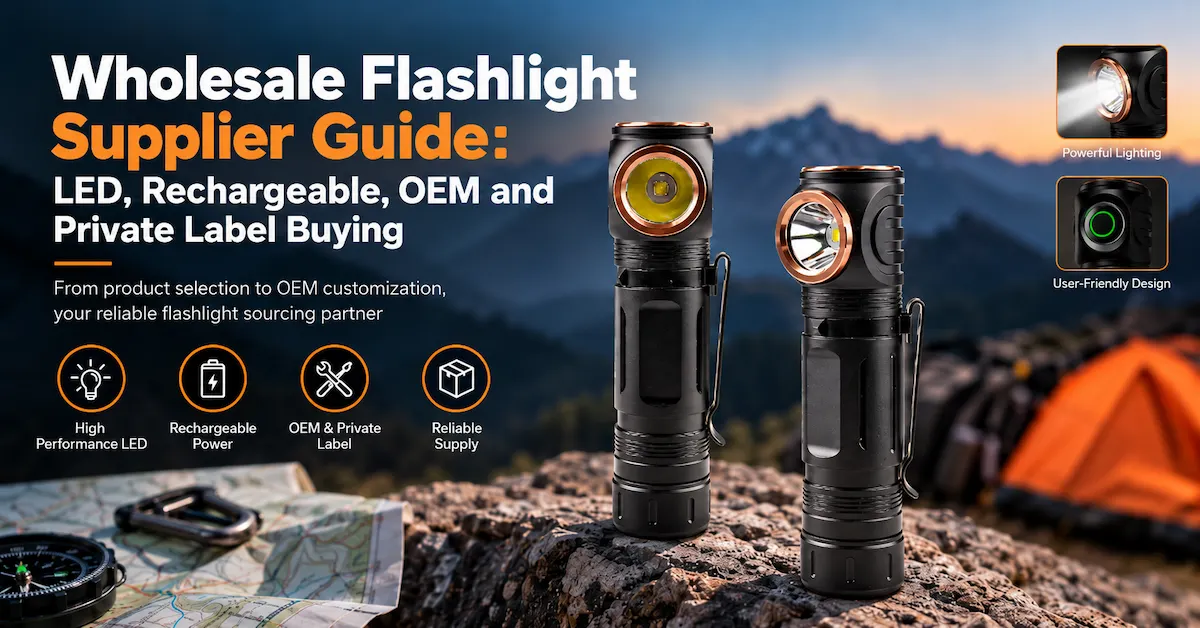
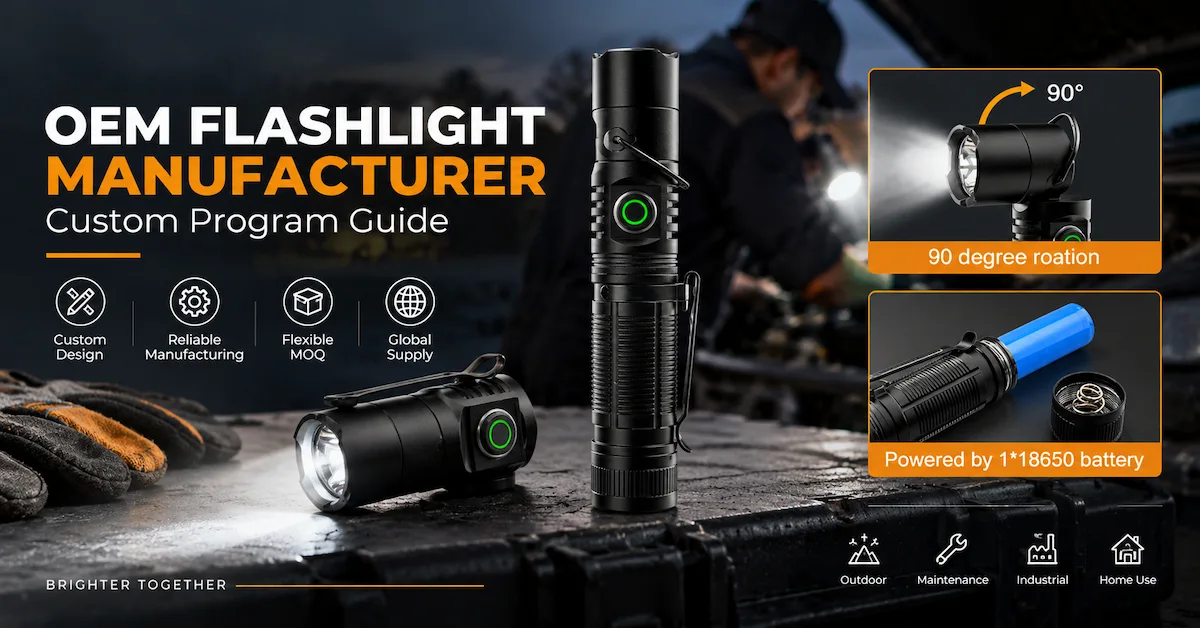
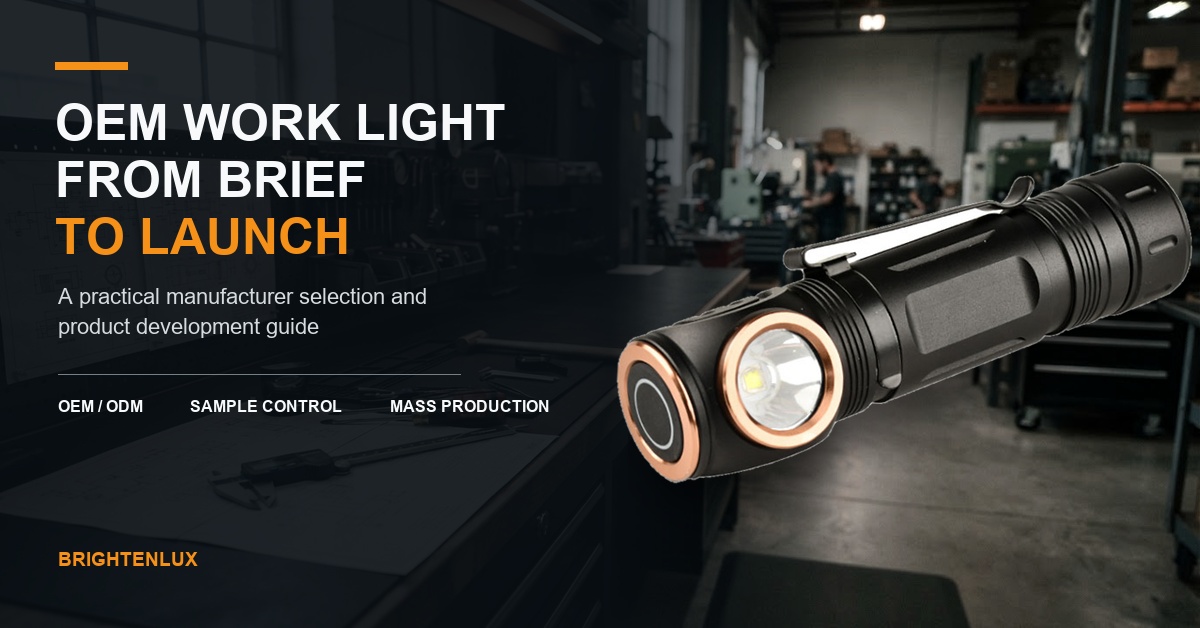
Based on the available product information, the flashlight category discussed here is a compact handheld inspection light with a cylindrical body and a focused front beam. That form factor is familiar for industrial checks, roadside use, home emergencies, and outdoor carry. Buyers can review related sourcing options through Brightenlux products when comparing standard model direction and customization potential.
Product Fit Comes Before Price
A low first-order quantity is helpful only when the chosen flashlight matches the buying channel. A maintenance team may prioritize one-handed handling and a directed beam for close inspection. A household buyer may want simple packaging and a clear use message. Outdoor retail customers may respond more to compactness and convenience. These differences should be defined before requesting a quote, because the same product can look suitable in one channel and under-positioned in another.
Buyers should write the intended use in one sentence before contacting the factory. Examples include inspection light for service technicians, portable torch for emergency kits, or private-label flashlight for outdoor retail. This simple step helps the supplier respond with more relevant information and avoids vague quote comparisons based only on unit price.
Sample Review and Technical Confirmation
The visible design of a flashlight matters, but it should not be the only basis for approval. A compact cylindrical body suggests easy one-handed use, and a focused front beam can support inspection tasks such as checking wiring, engine areas, shelf labels, or a campsite path. Still, buyers should confirm the technical details that are not specified in the available information before making a purchasing decision.
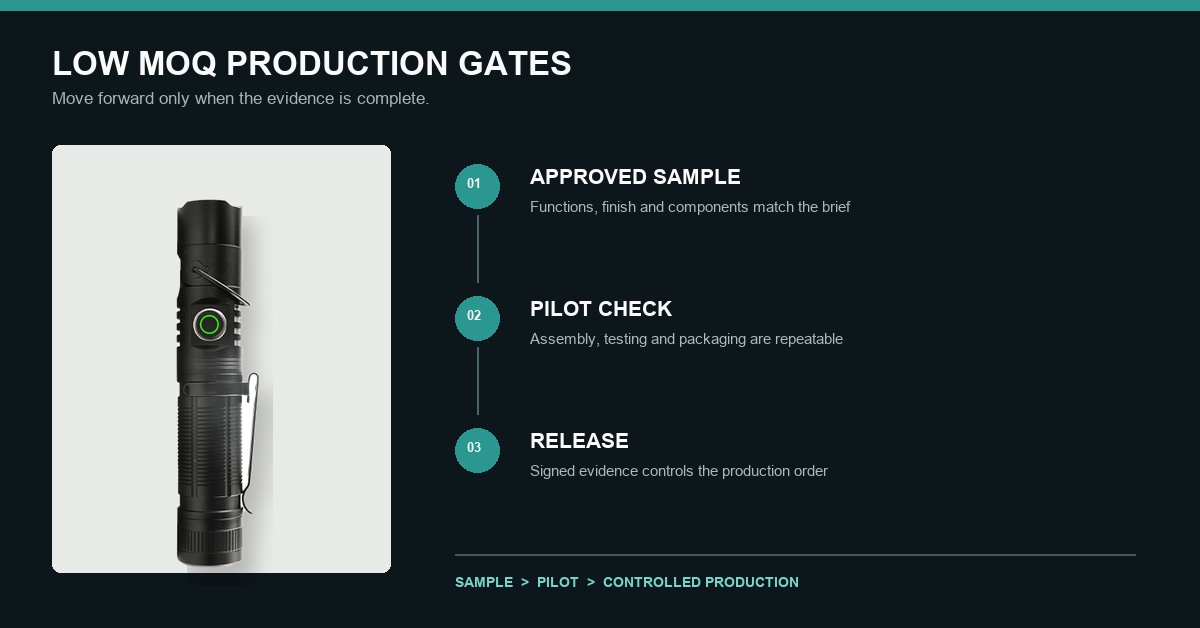
Do not assume internal construction, battery type, lumen output, charging method, runtime, protection rating, or certifications unless the supplier provides them. The absence of those details is not automatically a problem, but it makes sample review and written confirmation more important. Before moving from sample to order, confirm the final configuration, appearance, packaging, carton marks, and any branding elements. A small order can still create problems if these basics are left informal.
Key Checks Before a Small Order
Low MOQ should be treated as a sourcing advantage, not a shortcut. The buyer still needs a disciplined approval process, especially when the product will be resold under a private label or distributed through multiple channels. A compact checklist keeps the conversation focused and makes competing offers easier to compare. It also helps identify whether the factory is specific and operationally clear or simply using low MOQ as a sales phrase.
| Check | What to Confirm |
|---|---|
| Product use | Main channel, user scenario, beam expectation, and handling needs |
| Branding | Logo position, label changes, packaging artwork, and approval steps |
| Order flow | Sample approval, production confirmation, and repeat order consistency |
| Communication | Response speed, technical clarity, and ability to explain constraints |
If a supplier describes quality as reliable or delivery as fast, ask what those claims mean in operational terms. A serious factory should be able to explain its order flow and inspection approach without relying on slogans.
Packaging, Branding, and Channel Presentation
Packaging is often underestimated in low-MOQ flashlight sourcing. The unit may be acceptable, but weak labeling or unclear presentation can reduce buyer confidence in retail, promotional, or bundled programs. For a household emergency item, the packaging message should be simple and direct. For an industrial inspection light, the presentation should support practical use rather than decorative claims. For outdoor retail, compactness and portability may be more important in the sales message.
Branding scope also needs early confirmation. Some factories may support logo printing and packaging graphics but be less flexible on structural changes. That is normal, but it should be stated clearly. If you already have artwork, label requirements, or carton mark rules, share them early. Buyers who are ready to discuss a project can use the Brightenlux inquiry page to start with focused sourcing information.
Common Mistakes in Low-MOQ Flashlight Orders
The most common mistake is treating a small order as low risk in every sense. It lowers inventory exposure, but it does not replace sample approval, artwork confirmation, packaging review, and specification checks. A second mistake is over-customizing too early. Buyers sometimes request too many changes before confirming product-market fit, which can slow the project and create avoidable complexity.
Another mistake is comparing suppliers only by the smallest order quantity or lowest quoted unit cost. Low MOQ is valuable only if the factory can repeat the same standard on the next order. Communication speed is also a signal. Slow replies during sampling often become slower replies during production. For buyers comparing wholesale LED torches, the strongest partner is usually the one that answers clearly, explains limits, and keeps the first run practical.
FAQ: Questions Buyers Usually Ask
Is low MOQ only useful for startups?
No. Established companies also use low MOQ for pilot programs, regional launches, seasonal campaigns, maintenance kits, and product-line testing. It is a risk-control tool that helps buyers validate appearance, packaging, handling, and channel response before placing a larger repeat order.
Does OEM/ODM always mean full customization?
Not necessarily. OEM/ODM support may include logo printing, packaging updates, label changes, color adjustments, or more involved product changes. The exact scope depends on the factory and the order size, so buyers should confirm what is available before approving samples or artwork.
What should I verify before requesting a quote?
Start with the intended use, target channel, customization needs, sample process, and packaging expectations. Then ask for the missing technical details needed for comparison. If you need direct support, you can contact the supplier through Brightenlux contact with your project requirements.
Are wholesale LED torches suitable for industrial use?
They can be suitable when the beam direction, handling, construction, and packaging match the job. Industrial buyers should not rely on the category name alone. They should review a sample, confirm technical details in writing, and make sure the flashlight fits the actual work environment.