

Headlamp Manufacturer Guide: Product Types, Applications, and OEM Solutions
Choosing the right headlamp manufacturer is an important decision for brands, distributors, retailers, and professional equipment suppliers. A headlamp is more than a simple lighting product. It is a hands-free illumination tool used in outdoor activities, industrial maintenance, construction work, emergency response, and professional equipment markets. For business buyers, the manufacturing partner behind the product directly affects product quality, supply reliability, customization flexibility, and long-term market competitiveness.
A professional headlamp manufacturer specializes in designing and producing portable lighting products that allow users to keep both hands available while working, moving, repairing, or exploring. Unlike general lighting suppliers, a focused manufacturer manages several stages of product development, including product design, component selection, assembly production, performance testing, quality inspection, and custom development. These steps help ensure that the finished product is suitable for its intended environment and market positioning.
Brightenlux provides portable lighting products, LED flashlights, rechargeable lighting solutions, and customized lighting services for global customers. Buyers can explore the Brightenlux product portfolio to review available lighting solutions and product categories.
Step 1: Understand What a Headlamp Manufacturer Does
A headlamp manufacturer develops and produces hands-free lighting products for outdoor, industrial, professional, and commercial applications. The role includes more than assembling components. A reliable manufacturer considers how the product will be worn, where it will be used, what lighting performance is required, how the battery is placed, and how the final product will be inspected before shipment.
Headlamps are valued because they provide direct illumination while keeping both hands free. This makes them useful in environments where mobility, convenience, and task focus are important. Outdoor users may need lightweight and comfortable lighting for camping, hiking, travel, adventure activities, and exploration. Industrial users may need durable products for equipment inspection, factory maintenance, construction sites, and workshop operations. Emergency users may require dependable lighting that supports quick operation and stable power supply.
Step 2: Compare Main Headlamp Product Types
Different markets require different headlamp designs. A business buyer should first define the target user, application environment, and expected product features before starting a sourcing or OEM project. The following comparison summarizes the common headlamp types described in the source material.
| Product Type | Typical Applications | Important Features |
|---|---|---|
| Outdoor headlamps | Camping, hiking, travel, adventure activities, outdoor exploration | Lightweight structure, comfortable wearing, long runtime, weather resistance |
| Industrial headlamps | Equipment inspection, factory maintenance, construction sites, workshop operations | Durable housing, stable brightness, reliable battery performance, long working time |
| Rechargeable headlamps | Outdoor products, professional tools, emergency equipment | USB charging capability, lithium battery systems, reduced battery replacement, better long-term usability |
| Professional emergency headlamps | Rescue teams, safety professionals, emergency workers | Quick operation, reliable brightness, stable power supply, durable construction |
This comparison does not replace detailed product specification review, but it helps buyers organize sourcing requirements. For example, an outdoor brand may prioritize comfort and portable design, while an industrial supplier may focus more on durability, stable performance, and hands-free operation.
Step 3: Define the Application Environment
Application environment is one of the first factors a manufacturer should consider during product design. Headlamps used for outdoor activities are often selected for portability, comfortable wearing, long battery life, and weather protection. These features support customers who use lighting while camping, hiking, traveling, or exploring outdoors.
Industrial applications have different priorities. Users working in factories, workshops, construction sites, or inspection tasks require products that can operate reliably in demanding environments. In these markets, buyers often evaluate durable housing, stable brightness, reliable battery performance, and long working time. Safety-related applications may require stable operation, professional quality, and reliable power systems.
Retail buyers usually consider whether the product is suitable for their target customers and whether it can be positioned clearly in the market. For retail channels, product appearance, packaging design, and private label options may also matter, especially when a business wants to build a consistent product line.
Step 4: Review Product Design and Wearing Comfort
Product design affects both usability and market acceptance. During development, a professional headlamp manufacturer considers the application environment, wearing comfort, product weight, lighting requirements, and battery placement. A good design should balance performance, comfort, durability, and cost.
Wearing comfort is especially important because headlamps are used on the body. If a product is intended for outdoor users, the structure should support convenient movement and long use. If it is intended for industrial work, the design should support stable operation during inspection, maintenance, or construction tasks. Battery placement also matters because it influences balance and comfort. The goal is to create a product that supports real usage rather than only looking suitable in a catalog.
Step 5: Evaluate Component Selection
Component selection is a central part of manufacturing quality. Key components include LED modules, battery systems, driver boards, switches, and housing materials. Each component contributes to the overall performance and reliability of the headlamp.
Component quality directly affects brightness, runtime, and product lifespan. A professional manufacturer should understand how different components work together and how they fit the intended application. For rechargeable headlamps, buyers may pay attention to USB charging capability, lithium battery systems, reduced battery replacement, and long-term usability. For industrial headlamps, durable housing and reliable battery performance may receive greater attention.
Business buyers should communicate target applications clearly before confirming product specifications. This allows the manufacturer to recommend suitable component choices based on the product type and market requirement.
Step 6: Check Production Assembly and Process Control
A reliable production process includes component assembly, function testing, appearance inspection, and final quality verification. These steps are important because even a well-designed product can fail to meet expectations if assembly control is weak.
Assembly production should follow the required specifications for the product. Function testing helps confirm that the headlamp operates as intended. Appearance inspection helps identify visible issues before packing. Final quality verification helps ensure that each batch meets the requirements defined for the order.
For B2B buyers, production control is closely connected to customer satisfaction. Stable production reduces inconsistency between batches and helps brands, distributors, and retailers maintain confidence in the products they supply.
Step 7: Assess Quality Control Capability
Quality control should cover the entire manufacturing process. Buyers should not only ask whether a manufacturer checks products at the end of production. They should also understand how materials, performance, and final packing are reviewed.
Material inspection may include checks of LED components, battery systems, electronic parts, and housing materials. Performance testing may include brightness testing, runtime testing, charging testing, and function testing. Final inspection before shipment may include appearance, function, packaging, and quantity accuracy.
This quality control structure helps buyers reduce avoidable risks. It also supports stable product quality, which can help businesses reduce customer complaints, improve brand reputation, and increase repeat orders. For buyers preparing a new project, discussing inspection expectations early can make communication smoother during production.
Step 8: Confirm OEM and Customization Options
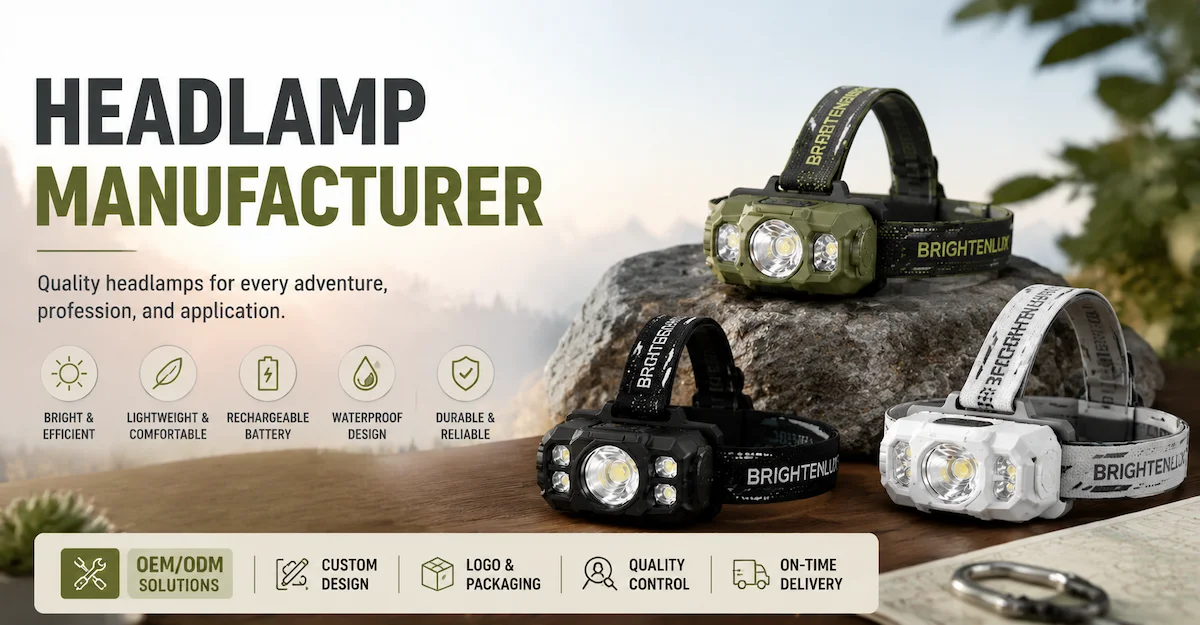
Many brands require customized headlamp solutions. A professional headlamp manufacturer can support logo customization, product colors, packaging design, product specifications, and private label solutions. These services are suitable for outdoor brands, safety equipment companies, retail companies, and professional tool suppliers.
OEM customization allows a buyer to align the product with its market positioning. For example, a retail company may need packaging design that supports shelf presentation, while a professional tool supplier may focus on product specifications for work-related use. Outdoor brands may prioritize wearing comfort, portable design, and weather resistance. Safety equipment companies may focus on stable operation and reliable power systems.
Buyers interested in customized lighting services can contact Brightenlux through the contact page or send project details through the inquiry page.
Step 9: Select a Long-Term Manufacturing Partner
Choosing a headlamp manufacturer requires evaluating more than product price. Buyers should review manufacturing experience, product categories, export experience, previous projects, and technical capability. Experienced manufacturers can better understand market requirements and provide suitable solutions.
A reliable manufacturing partner provides value beyond production. Stable product quality helps businesses reduce complaints and support brand reputation. Flexible product development can support new product development, market-specific designs, and feature improvements. Reliable supply capability helps buyers manage inventory planning, delivery schedules, and changes in market demand.
For B2B buyers, the best choice is often a manufacturer that understands the target application and can support the full process from product discussion to quality verification. Clear communication about product type, application, customization, and inspection requirements helps both sides develop a more suitable headlamp solution.
FAQ: Headlamp Manufacturer Sourcing
What is a headlamp manufacturer?
A headlamp manufacturer designs and produces hands-free lighting products for outdoor, industrial, professional, and commercial applications. The process may include product design, component selection, assembly production, performance testing, quality inspection, and custom development.
What types of headlamps are commonly manufactured?
Common types include outdoor headlamps, industrial headlamps, rechargeable headlamps, and professional emergency headlamps. Each type is designed around different applications and feature priorities.
What should B2B buyers evaluate before choosing a manufacturer?
Buyers should evaluate product categories, export experience, previous projects, technical capability, quality control capability, OEM support, and whether the manufacturer understands the target application environment.
Can headlamps be customized for private label projects?
Yes. A professional headlamp manufacturer can support logo customization, product colors, packaging design, product specifications, and private label solutions, depending on the project requirements.
Why are rechargeable headlamps popular?
Rechargeable headlamps are popular because they offer convenience, USB charging capability, lithium battery systems, reduced battery replacement, and better long-term usability.