

Custom Outdoor Lighting Manufacturer China: What Buyers Should Know
Choosing a custom outdoor lighting manufacturer in China is not only about finding a fixture that looks suitable. Outdoor lighting covers many use cases, from handheld camping torches to commercial exterior fittings, and each application creates different requirements. Buyers need to define where the light will be used, how it will be handled, what beam behavior is needed, and which details must be confirmed before production. A disciplined sourcing process helps reduce warranty risk, avoid vague specifications, and match the final product to real outdoor conditions.
Why Outdoor Lighting Buyers Should Think Beyond the Fixture
Outdoor lighting is often treated as one broad product category, but that approach can lead to weak sourcing decisions. A campsite torch, a park bollard, a wall-mounted security light, and a commercial façade fitting may all be described as outdoor lighting, yet they solve very different problems. The right product depends on the environment, power approach, handling method, and user expectation.
Failures outdoors are rarely minor. A poor beam, weak sealing, uncomfortable grip, or inconsistent finish can quickly become a return or warranty issue. For sourcing managers, the key question is not simply who can make a light. It is who can repeatedly build the right light at the quality level your market expects. That is why a custom exterior lighting project should begin with use case definition, not only a catalog image.
Start With the Application Before Choosing a Style
Outdoor lighting is frequently selected by appearance first. Buyers may see a dark body, narrow beam, or rugged shape and assume the product will meet field expectations. In practice, application should guide the specification. A handheld light for lakeside night use, campsite setup, or trail scanning needs a concentrated beam that can help the user see across open space. A patio or building perimeter light may need broader coverage instead.
If the project team does not settle this question early, engineering time can be spent improving the wrong optical pattern. Environment also matters. Coastal humidity, mountain cold, parking lot traffic, campground handling, and public-space abuse all influence material choice, sealing strategy, switch design, and mounting method. Buyers reviewing outdoor lighting product options should use style as a starting point, not as the final specification.
What a Portable Outdoor Lighting Example Reveals
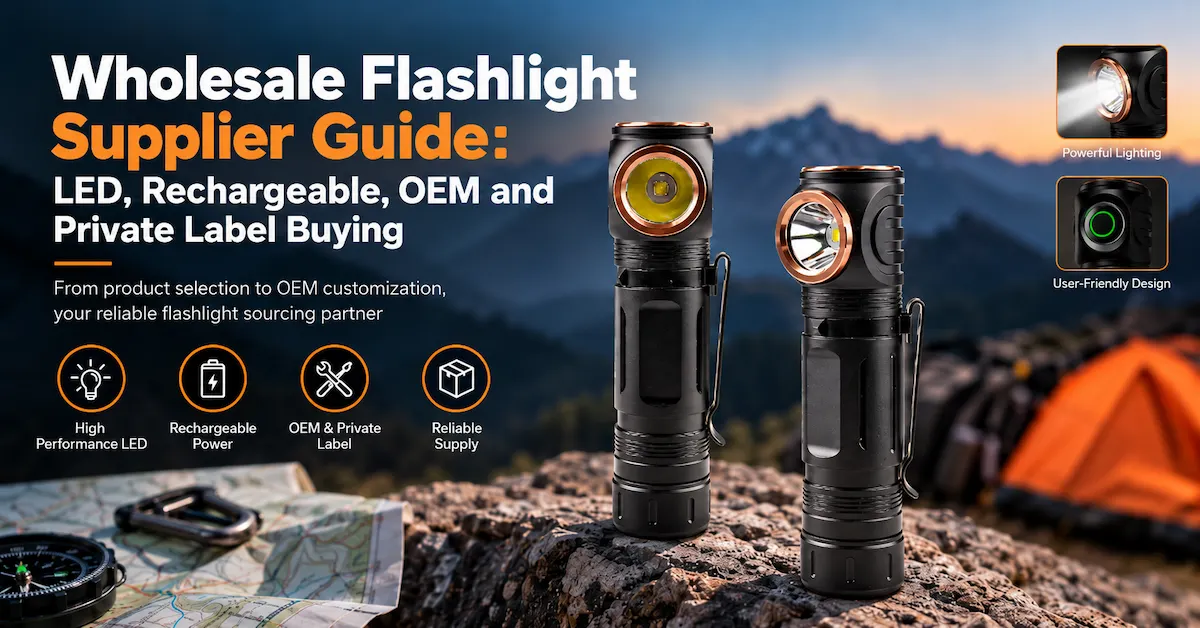
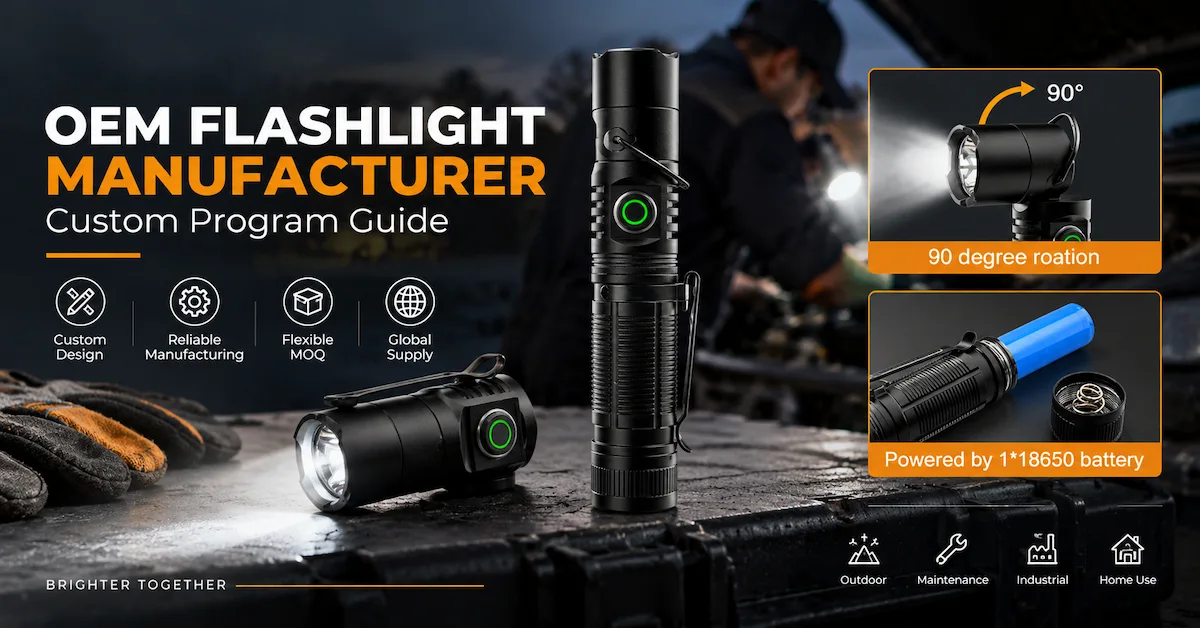
A useful example is a handheld flashlight or torch intended for outdoor camping and nighttime navigation. The most important visible feature is the beam. When a beam appears concentrated and long-reaching, it suggests a design priority focused on directional visibility rather than wide-area flood lighting. That can be suitable when users need to illuminate terrain, find a path, scan a shoreline, or identify distant objects.
The cylindrical handheld form also points to practical ergonomic needs. The product must be easy to carry, hold, aim, and operate with one hand. Grip texture, balance, and switch placement can matter more than buyers expect, especially in wet conditions or when gloves are used. However, important details should not be guessed from an image. Battery type, lumen output, beam distance, runtime, charging method, material, and waterproof rating all require supplier confirmation and, where relevant, validation.
Manufacturing Details That Affect Outdoor Performance
Outdoor products face rain, dust, condensation, impact, thermal cycling, and repeated handling. A sample may look solid in a showroom but still reveal problems when production scales. Loose seals, inconsistent assembly, surface wear, and optical variation can all affect user experience. This is why buyers should look beyond the first sample and ask how the supplier controls repeatability.
| Area | Buyer focus | Why it matters |
|---|---|---|
| Housing and finish | Weight, surface feel, wear resistance | Outdoor users notice scratches, fading, and slippery handling |
| Optics | Beam shape, lens clarity, alignment | Small differences can change the useful lighting effect |
| Sealing | Lens, switch, and interface protection | Rain, dust, and condensation can expose weak design choices |
| Assembly | Consistency from sample to batch | A good prototype does not automatically prove stable production |
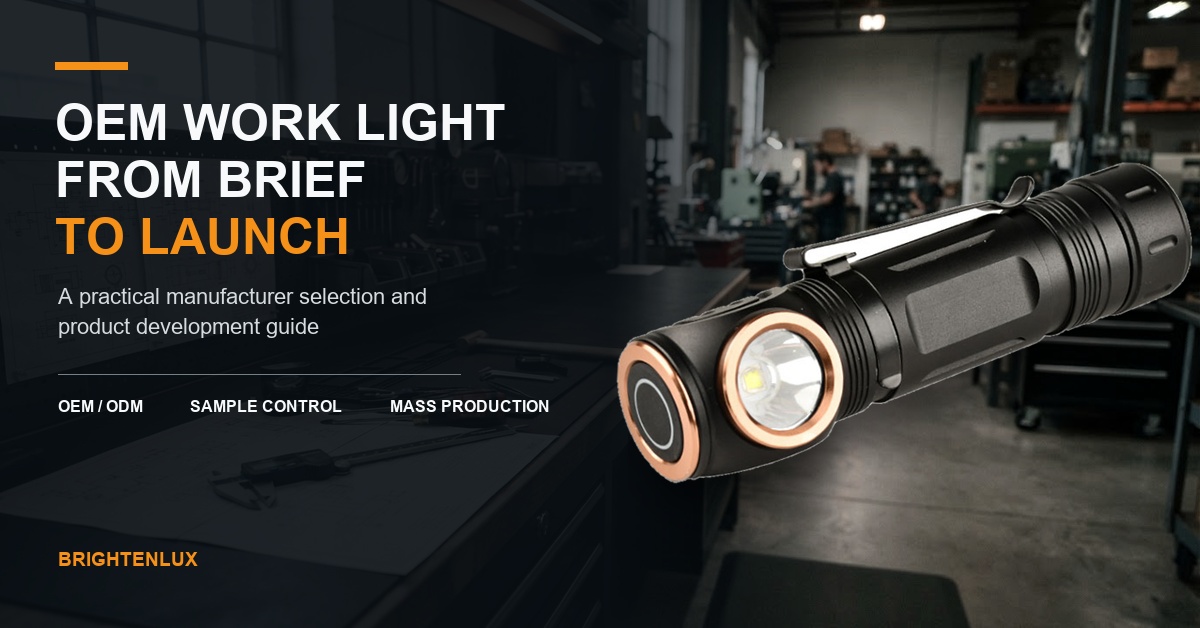
For portable lighting, body material usually involves a tradeoff between weight, toughness, and cost. If the visible product has a dark body, buyers still should not assume exact material from appearance. The right question is how the surface, structure, and assembly method match the intended outdoor use.
How to Evaluate a Custom Outdoor Lighting Manufacturer in China
A reliable supplier often asks more questions than expected. That is a positive sign because it shows they are considering the application, not simply quoting a shape. When evaluating a custom outdoor lighting manufacturer China-based buyers can work with, look at how the team discusses beam behavior, body durability, field usability, assembly quality, and customization scope.
Useful manufacturers also explain limits. Real engineering involves tradeoffs. Increasing beam reach may narrow spread. Reducing weight may influence impact margin. Changing a housing, finish, optic, mounting detail, or branding element can affect tooling, assembly, or testing needs. A supplier that communicates these issues clearly is usually more valuable than one that agrees to every request without discussion.
Buyers should also judge responsiveness when questions go beyond catalog descriptions. If you already have a defined application and want to discuss feasibility, you can contact Brightenlux with a focused project outline.
Selection Criteria That Matter More Than Product Photos
Photos can help buyers compare form factor, apparent beam character, and general build style, but they cannot confirm performance, durability, electrical details, or production consistency. A better evaluation starts with the user scenario. Is the light for focused task lighting or broader area coverage? Will it be handheld, mounted, or fixed? Will the switch be used in darkness, wet conditions, or while wearing gloves?
The intended duty level also matters. Occasional consumer use is different from repeated commercial use. Camping and emergency applications require special attention to intuitive operation, because users may be tired, cold, or distracted. Packaging and accessories should not be ignored either. Outdoor products are often sold through channels where returns are expensive and user expectations are high.
Before requesting a quote, separate must-have requirements from nice-to-have features. If beam concentration is critical, say so. If lightweight handling matters more than maximum output, make that clear. A disciplined brief helps a commercial outdoor lighting supplier respond with more relevant recommendations.
Common Mistakes in Custom Outdoor Lighting Projects
One common mistake is over-specifying features that do not improve the end user experience. Another is under-specifying the actual environment. A light intended for lakeside or campsite use should not be evaluated in the same way as a product intended for urban security, landscape illumination, or commercial perimeter lighting.
Another frequent problem is trusting a sample without asking how it was made. Samples can be hand-finished, adjusted by experienced technicians, or built under conditions that do not fully reflect volume production. That is normal during development, but buyers need to understand how the supplier will maintain consistency later.
Ergonomics are also easy to overlook. Outdoor equipment is used when conditions are imperfect. If the grip is awkward, the surface becomes slippery, or the switch is difficult to locate, the product can fail at the exact moment the user needs it. This is especially important for handheld torches, but the lesson applies across custom exterior lighting programs.
For the next step, turn the use case into a short, testable brief. Define the scene, the required light pattern, the handling method, and the non-negotiable features. Then ask the supplier to confirm what is known, what needs testing, and what should not be assumed. Buyers ready to share specifications can send details through the Brightenlux inquiry page.
FAQ for Outdoor Lighting Sourcing Teams
Is a custom outdoor lighting manufacturer only suitable for large projects?
Not necessarily. Some suppliers focus on full custom development, while others can support lighter customization such as branding, finish, packaging, or selected component changes. The right fit depends on the engineering scope, product complexity, and how much the standard design must change for your market.
What should buyers ask first when comparing outdoor lighting suppliers?
Start with application, environment, and production consistency. These questions reveal whether the supplier understands the real job of the product or is only responding to a visual reference. A strong supplier should discuss practical use, likely tradeoffs, and which specifications need confirmation.
Can an outdoor light be judged accurately from a photo?
Only partly. A photo may show shape, apparent beam character, and general styling, but it cannot prove runtime, durability, material, waterproof rating, or electrical design. Treat visible details as clues, then request confirmed specifications, samples, and validation methods from the manufacturer.
What makes a sourcing brief useful for custom exterior lighting?
A useful brief describes the actual scene of use, not just “outdoor lighting.” Include whether the product is for camping, navigation, perimeter lighting, or another application. Clarify beam needs, handling expectations, must-have features, and any unknowns that should be tested before production decisions.