

Custom Outdoor Lighting Manufacturer China: Buyer Guide
Choosing a custom outdoor lighting manufacturer China can support is not only a price decision. For B2B buyers, the real challenge is finding a supplier that understands the application, product intent, installation conditions, and market expectations. Outdoor lighting covers decorative, landscape, pathway, facade, security, and utility uses, so a catalog image rarely tells the whole story. A good sourcing process separates appearance from function, and function from manufacturing risk. This guide explains how buyers can evaluate customization depth, compare suppliers, and make a more reliable decision before samples, tooling, or repeat orders begin.
What Custom Should Mean in Outdoor Lighting Sourcing
In outdoor lighting, “custom” can mean a simple cosmetic change or a deeper engineering adjustment. Some buyers need a finish, logo plate, label, or packaging language adapted for their sales channel. Others require changes to beam spread, mounting style, cable length, dimming behavior, driver configuration, or the structure of the housing. More involved projects may include new enclosure geometry, revised heat-sinking details, connector placement, gasketing, or a coordinated product family with a consistent visual language.
This distinction matters because not every factory has the same customization depth. One supplier may be comfortable with visual changes but limited in electrical redesign. Another may handle structural work but need more discussion before sample approval. Before asking for quotations, buyers should define which parts are standard, which parts must change, and which features are only preferences. This makes supplier responses easier to compare and reduces the risk of accepting a vague promise that becomes difficult to reproduce later.
Start With the End Use, Not the Headline Specification
Outdoor lighting is often discussed through specifications, but the end use usually determines whether the product succeeds. A fixture can look suitable in a catalog and still create problems if the beam feels harsh, the mounting method is awkward, or the housing does not match the installation environment. Pathways, exposed entrances, landscape accents, decorative facades, and security zones all create different expectations for light direction, appearance, wiring, service access, and installer convenience.
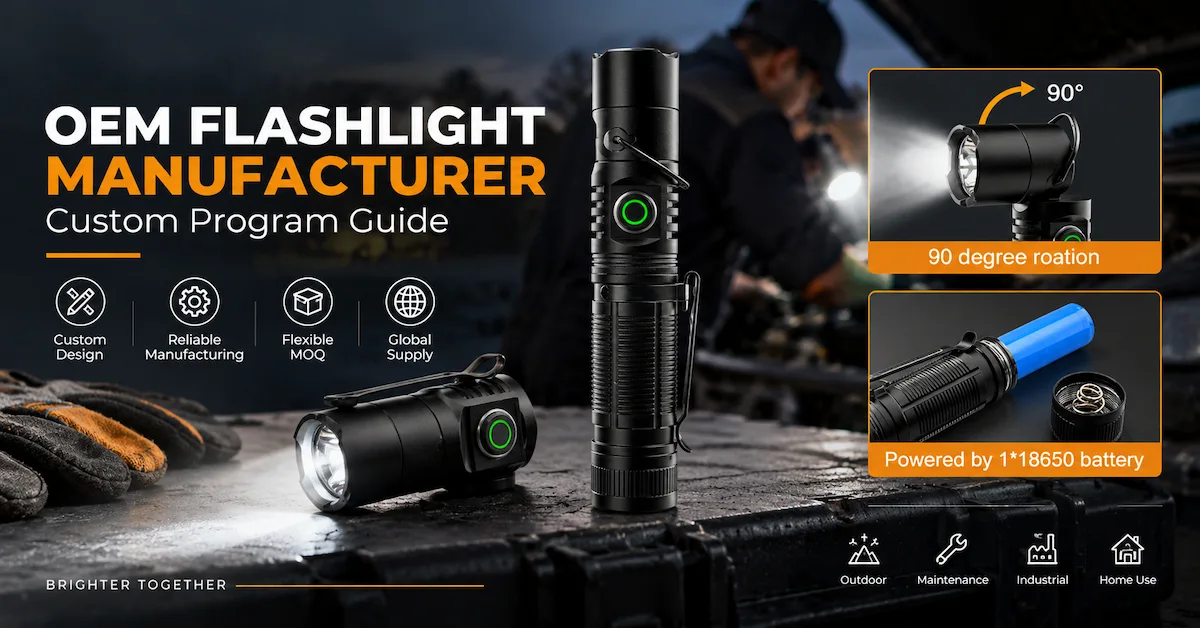
The same logic applies to related lighting tools. A compact handheld inspection light used in automotive repair is valuable because it gives directed illumination in a constrained working space, allowing a mechanic to inspect hoses, wiring, and components under the hood. The buyer is not purchasing light in the abstract; the buyer is purchasing visibility for a specific task. Outdoor lighting projects work the same way. Define how people will install, view, maintain, and sell the fixture before deciding what to customize. Buyers reviewing possible product directions can also compare categories on the Brightenlux products page as part of early planning.
How to Compare China Outdoor Lighting Manufacturers
When comparing suppliers, focus on engineering support, production stability, and documentation quality. The best partner is not always the supplier with the most polished presentation. It is often the one that answers detailed questions clearly, explains trade-offs, and avoids overpromising. Outdoor fixtures depend on practical details such as housing material, sealing approach, surface finish, fastening, cable handling, and connector placement. These factors influence how the product behaves outdoors over time.
A reliable China outdoor lighting manufacturer should also be able to discuss manufacturability before drawings are finalized. Ask how the product will be assembled, where heat may concentrate, how service access is handled, and whether the design depends on fragile or overly complex parts. Vague answers should be treated as a warning sign, not a minor communication issue. If the supplier cannot explain thermal behavior, mounting stress, or assembly sequence in practical terms, repeat production may become difficult. Buyers should look for a factory that helps narrow the gap between customization and manufacturability rather than making the project harder to control.
Key Questions Before Sample Approval
Sample approval should not be treated as a simple visual check. A first sample is only a starting point; the real test is whether the supplier can repeat the build in later production. Buyers should ask questions that reveal whether the project is a mature custom program or a one-off assembly. This is especially important when products will be sold over multiple seasons or through several channels.
| Area | Buyer question |
|---|---|
| Customization | Which parts are truly custom, and which remain standard platform components? |
| Process | How are changes controlled after sample approval? |
| Outdoor build | How are optics, sealing points, cable entries, and connectors handled? |
| Documentation | What is checked before shipment, and what is recorded? |
| Service | How will replacement parts be identified if the item is reordered? |
Be cautious if a supplier says almost anything is possible without first asking about volume, finish expectations, or end-market requirements. In custom outdoor lighting, “possible” can mean new tooling, unstable sourcing, or a design that is hard to replicate. If you already have a technical brief, you can use the Brightenlux inquiry page to organize application details and must-have features before deeper discussion.
Where China-Based Suppliers Can Add Value
China’s lighting manufacturing base is broad, and that breadth can help buyers compare different design approaches, component sources, finishing methods, and assembly styles. For many procurement teams, the value is not only unit cost. It is also the ability to move from concept discussion to sample review and then toward a production-ready build with more options available in the supply ecosystem. That can be useful when buyers are balancing customization with manufacturability.
However, the phrase “China outdoor lighting manufacturer” should be treated as a starting point, not a quality guarantee. Some suppliers are better suited to volume programs, some to contract customization, and others to niche decorative work. A sourcing team that understands the target market can usually identify the right fit faster by asking about platform flexibility, project examples, document control, and the supplier’s approach to design trade-offs. The goal is not to customize everything. The goal is to customize the features that matter while keeping standard elements where they protect consistency, cost control, and repeatability.
Common Sourcing Mistakes and Final Decision Criteria
One common mistake is overcustomizing too early. If a team changes appearance, mounting, packaging, and electronics at the same time, it becomes harder to identify the cause of any later issue. A better approach is to define the few features that truly distinguish the product and keep the rest as standard as possible. Another mistake is underestimating installation reality. Fixtures are often handled by contractors, maintenance staff, or distributors, not by the people who designed them. If a product is difficult to mount, mark, package, or service, that friction will appear later in the channel.
Buyers should also avoid skipping details that feel ordinary, such as packaging durability, spare part identification, marking consistency, and reorder control. These details may not attract attention in a showroom, but they reduce confusion and help protect repeat business. The final supplier decision should combine product intent, engineering comfort, and supply chain practicality. If the project is brand-led, look for visual consistency across reorders. If it is technical, choose a factory that documents design changes and explains trade-offs. If your team needs to discuss fit before moving forward, use the Brightenlux contact page to share the application and sourcing requirements.
FAQ for Buyers
Is custom outdoor lighting only suitable for large projects?
Not always. Some suppliers may support smaller custom programs, but the scope of change is often more limited. Buyers should match the request to the factory’s real capabilities and clarify whether the customization is cosmetic, functional, structural, or related to packaging and program support.
Should buyers prioritize finish or function first?
Function should usually come first. Finish is important for branding and market appeal, but outdoor lighting that looks good and performs poorly can create higher downstream costs. Buyers should confirm application requirements, installation conditions, wiring needs, and service expectations before finalizing visual details.
How can a sourcing team reduce risk before production?
Separate cosmetic, electrical, structural, and program requirements early. Then confirm which parts are standard and which are custom before sample approval, tooling, or mass production. This helps prevent vague agreements and makes it easier to compare suppliers on repeatability, not just price.
What is a good first step when approaching a manufacturer?
Prepare a short technical brief that states the application, environment, installation method, target market, and must-have features. Ask the supplier what they would customize, what they would keep standard, and what trade-offs they expect. Clear questions usually reveal more than marketing claims.