

Certified LED Lighting Manufacturer China: What Buyers Should Check
Choosing a certified LED lighting manufacturer China is not only about finding a lower unit cost. For B2B buyers, the real question is whether the supplier can provide portable lighting that keeps working in camping, emergency, inspection, and maintenance settings. A product that looks bright in a sample room may still fail if waterproofing, battery behavior, housing strength, or assembly consistency is weak. This guide explains what sourcing teams should check before they approve a supplier or place a purchase order.
Why buyers look for certified LED lighting manufacturers
Many buyers start searching for a certified LED lighting manufacturer China after experiencing practical problems: field failures, unstable quality between batches, or vague answers about product protection. Portable LED lighting is often used in environments where weak design becomes visible quickly. A camping lantern may face rain. A work light may be handled roughly on a jobsite. A headlamp may be worn for long periods during hands-free repair work. A flashlight may be stored in a vehicle or tool bag. Certification language can be useful, but it should never replace technical review. If the exact standard or test basis is not stated, buyers should request documentation and confirm what the claim actually covers.
What the current portable lighting group shows
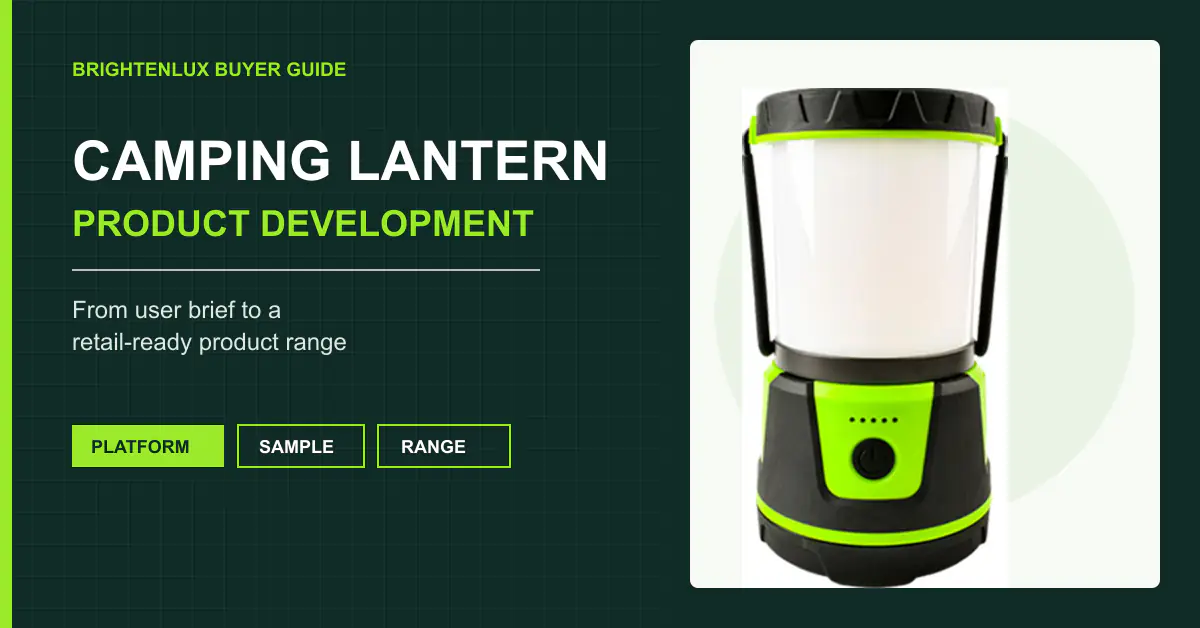
The supplied product group includes several portable LED lighting formats: a lantern-style camping light, a work light or flood light, a headlamp, and a handheld flashlight. This mix is useful because many buyers source lighting as a family of task-based products rather than as one single lamp. The visible design direction is practical and utility-focused. The housings are dark, compact, and functional instead of decorative. One lantern has a cylindrical form with a protective top frame. The work light uses a rugged cased shape with a stand or carry frame. The headlamp includes a strap and dual front LEDs, while the flashlight is slim and simple for quick handling.
Match each light type to the real job
A strong sourcing decision begins with use-case fit. One portable light cannot serve every job equally well. A lantern should provide comfortable area lighting for a tent, tabletop, or campsite. A work light or flood light should support inspection, repair, and maintenance tasks where wider task illumination is needed. A headlamp should keep both hands free when the user is climbing, carrying tools, or working inside tight spaces. A handheld flashlight is best for quick-response inspection, navigation, and portable use. Buyers can review related product formats on the Brightenlux products page before building a shortlist.
| Light type | Best-fit use | Buyer focus |
|---|---|---|
| Lantern | Camping and area lighting | Stable output and practical housing |
| Work light | Inspection and repair | Placement, beam coverage, durability |
| Headlamp | Hands-free tasks | Comfort, beam position, front weight |
| Flashlight | Quick inspection and navigation | Portability and simple handling |
Check construction and waterproofing carefully
Portable LED lights combine several important elements: enclosure, LED module, battery pack, switch, lens, seals, and sometimes straps, frames, or stands. If one part is weak, the whole product can disappoint users. The supplied material highlights IP65 waterproof protection, which is meaningful for many outdoor and maintenance applications. However, IP65 does not mean the product is submersible. Buyers should confirm the exact rating documentation and ask how sealing is achieved around the lens, switch, charging area, and housing joints. A reliable industrial LED lighting manufacturer should be able to explain these limits clearly instead of treating waterproofing as a general marketing phrase.
Check battery, beam, and usability claims
The supplied material also refers to long battery life and high brightness, but it does not provide runtime or lumen figures. Buyers should therefore treat those claims as starting points, not final evidence. Battery performance depends on load, brightness mode, charging behavior, and how the light is used in the field. Ask for runtime by operating mode rather than relying on one broad statement. Beam usefulness also matters. A very bright lamp can still perform poorly if it creates glare, uneven hotspots, or drains too quickly. For headlamps and work lights, placement flexibility and comfort may be just as important as headline brightness.
Avoid common portable lighting purchasing mistakes
One common mistake is choosing products mainly from catalog photos. A clean group image of a lantern, work light, headlamp, and flashlight may suggest a complete lighting line, but it does not prove that the items share a coordinated platform or consistent component strategy. Buyers should ask whether the products are part of one series, a mixed catalog selection, or a promotional presentation. Another mistake is assuming that all “certified quality” language has the same meaning. If no standard is named, there is nothing specific to evaluate. A third mistake is ignoring the operating environment, which often causes returns when the selected lamp does not match the user’s real task.
What to ask before supplier approval
Before approving a commercial LED lighting supplier, buyers should ask practical questions that reveal whether the factory understands field use. Request the exact IP rating documentation and ask what it means in normal conditions. Ask where sealing is most critical and how assembly consistency is checked. Ask whether runtime changes across brightness modes and whether battery options affect performance. Ask about housing construction, lens material, switch design, and protection against rough handling if the product is intended for maintenance or jobsite use. When the next step is technical discussion or samples, buyers can contact Brightenlux or send an inquiry with product-specific requirements.
Use samples and documents before placing orders
A sample review should be more than a visual approval. Buyers should handle the light as the end user would: carry it, place it, switch modes, check charging access, inspect seals, and review comfort where straps or frames are involved. For a lantern, look at stability and area lighting. For a work light, check whether the body can be aimed and positioned conveniently. For a headlamp, check strap fit and front weight. For a flashlight, confirm that the shape supports quick grabbing and storage. Documentation should support the claims being used in purchasing decisions, especially waterproofing and battery-related statements.
FAQ for sourcing teams
Is IP65 enough for outdoor portable LED lighting?
IP65 can be suitable for many camping, emergency, inspection, and maintenance situations because it indicates protection against dust ingress and water jets. It should not be treated as full immersion resistance. Buyers should confirm the product’s exact rating documents and match the protection level to the expected use environment.
Can buyers rely on “high brightness” in a catalog?
No. “High brightness” is too broad unless it is supported by product-specific data. Buyers should request lumen information, beam details, and runtime by operating mode. A light that is bright for a short period may not be the best choice for emergency, repair, or extended outdoor use.
What does certified quality mean when sourcing from China?
It depends on the actual standard or test basis behind the claim. If the supplier does not state the certification clearly, buyers should ask for documents before making assumptions. The phrase can be useful only when it is tied to verifiable product or factory information.
Why compare several portable light types instead of one model?
Different tasks require different designs. A lantern is useful for area lighting, a work light supports repair and inspection, a headlamp enables hands-free operation, and a flashlight remains the simplest quick-response tool. Comparing formats helps buyers avoid forcing one lamp into too many roles.