

Camping Lantern Supplier: What Buyers Should Look For
Choosing a camping lantern supplier is not simply about finding a product that lights up. B2B buyers need a lantern that works in real outdoor settings, looks suitable for consumer channels, and can be supplied with reliable consistency. The best choice should balance stable illumination, portable design, practical charging, and a housing that survives repeated packing and handling. For procurement teams, the goal is not the longest feature list. It is a dependable product platform that fits the market, supports repeat orders, and creates fewer problems after launch.
What Buyers Really Need From a Camping Lantern Supplier
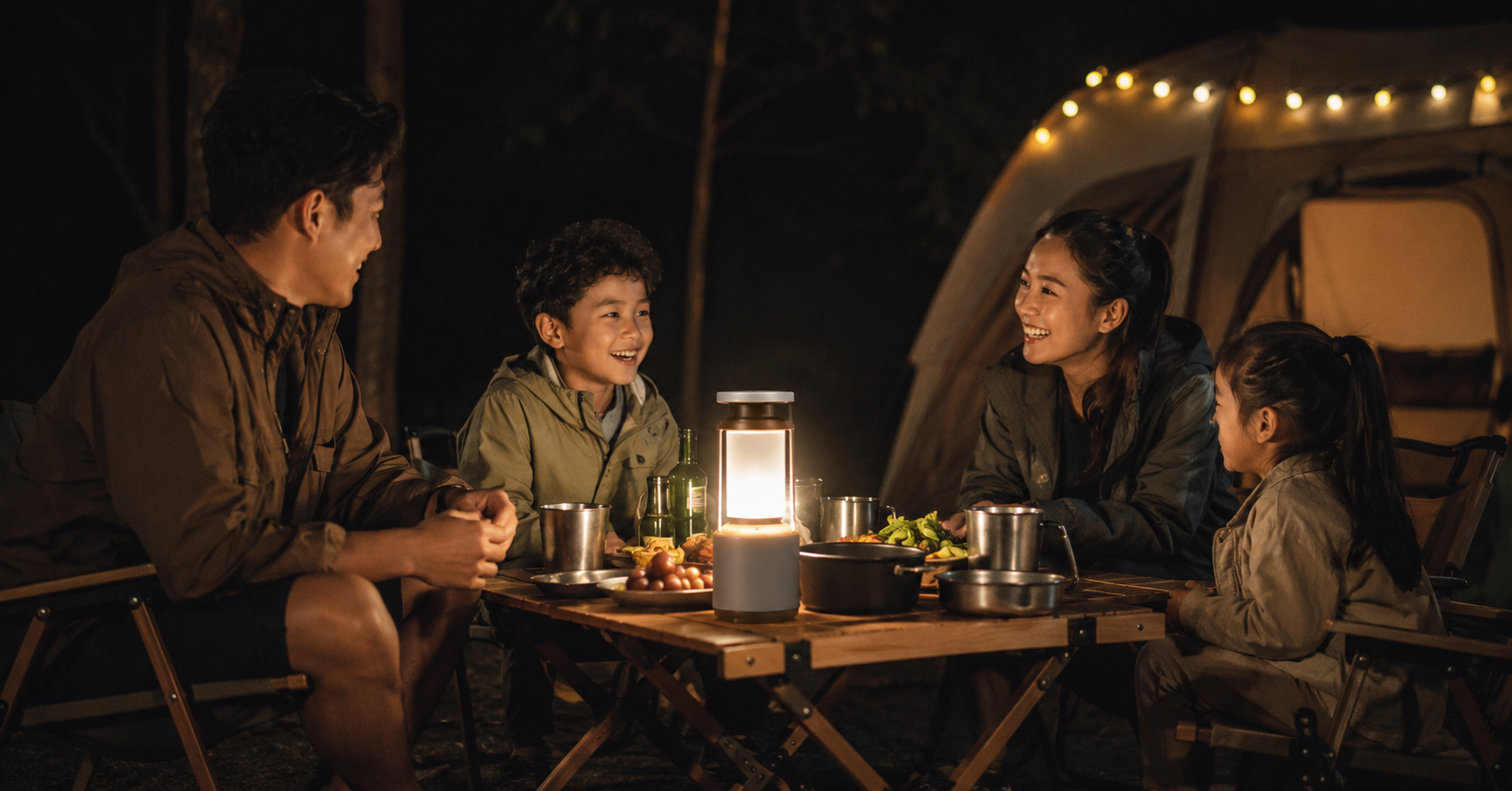
A camping lantern is no longer only a backup light for the corner of a tent. It may be used on a campsite table, during backyard dining, at a picnic, in a glamping setup, or as an emergency light during a power outage. This wider usage changes how buyers should evaluate suppliers. Brightness matters, but it is not the only deciding factor. The lantern also needs a stable base, comfortable light diffusion, convenient operation, and a design that looks presentable in visible social settings.
The product style shown in the source appears compact and freestanding, with a broad round base, a vertical translucent light chamber, and a flat top cap or handle area. That suggests a table-friendly ambient lantern rather than a narrow-beam task light. Buyers comparing suppliers should keep this use case in mind from the start.
How the Product Will Be Used in Real Outdoor Settings
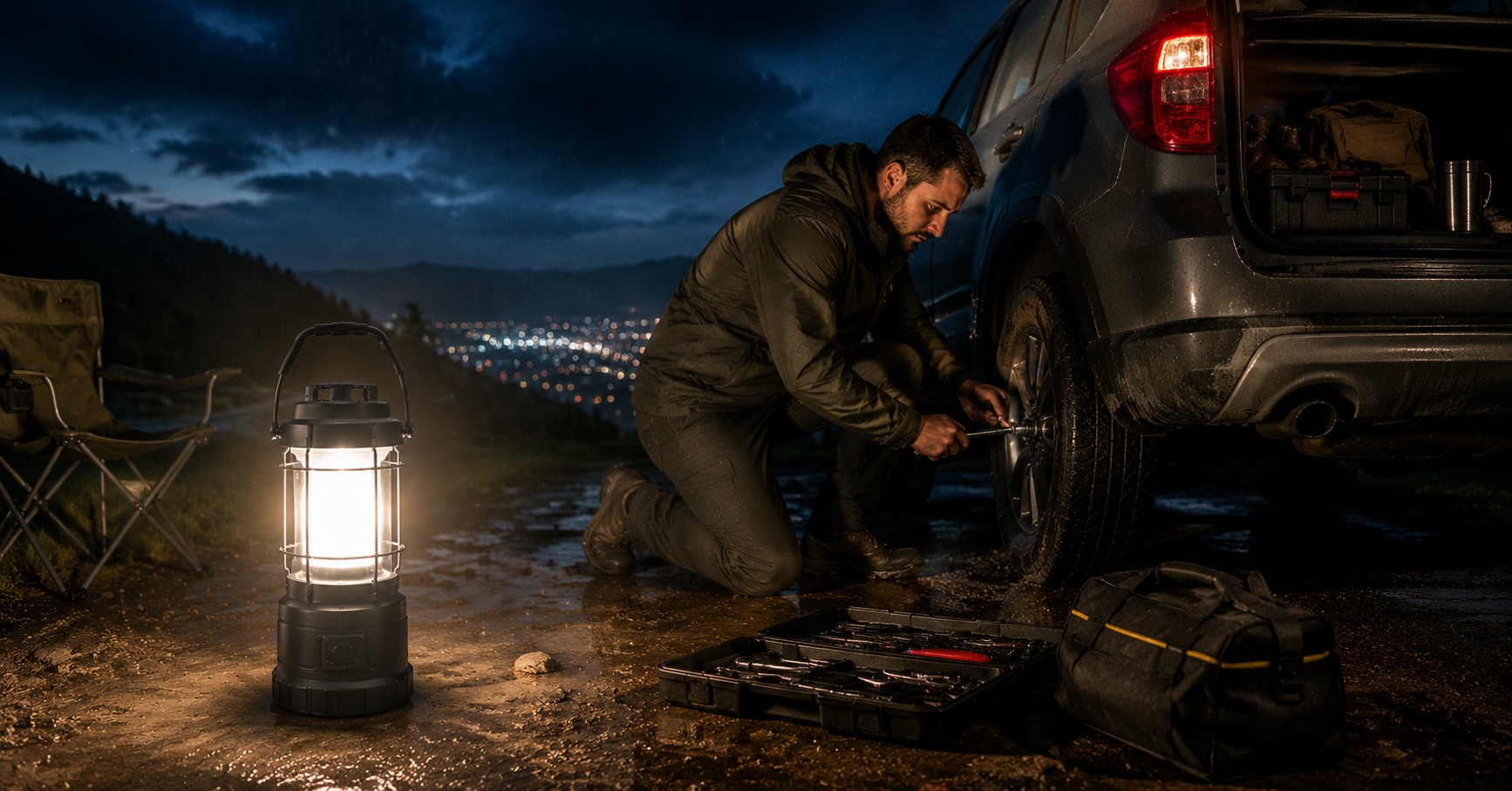
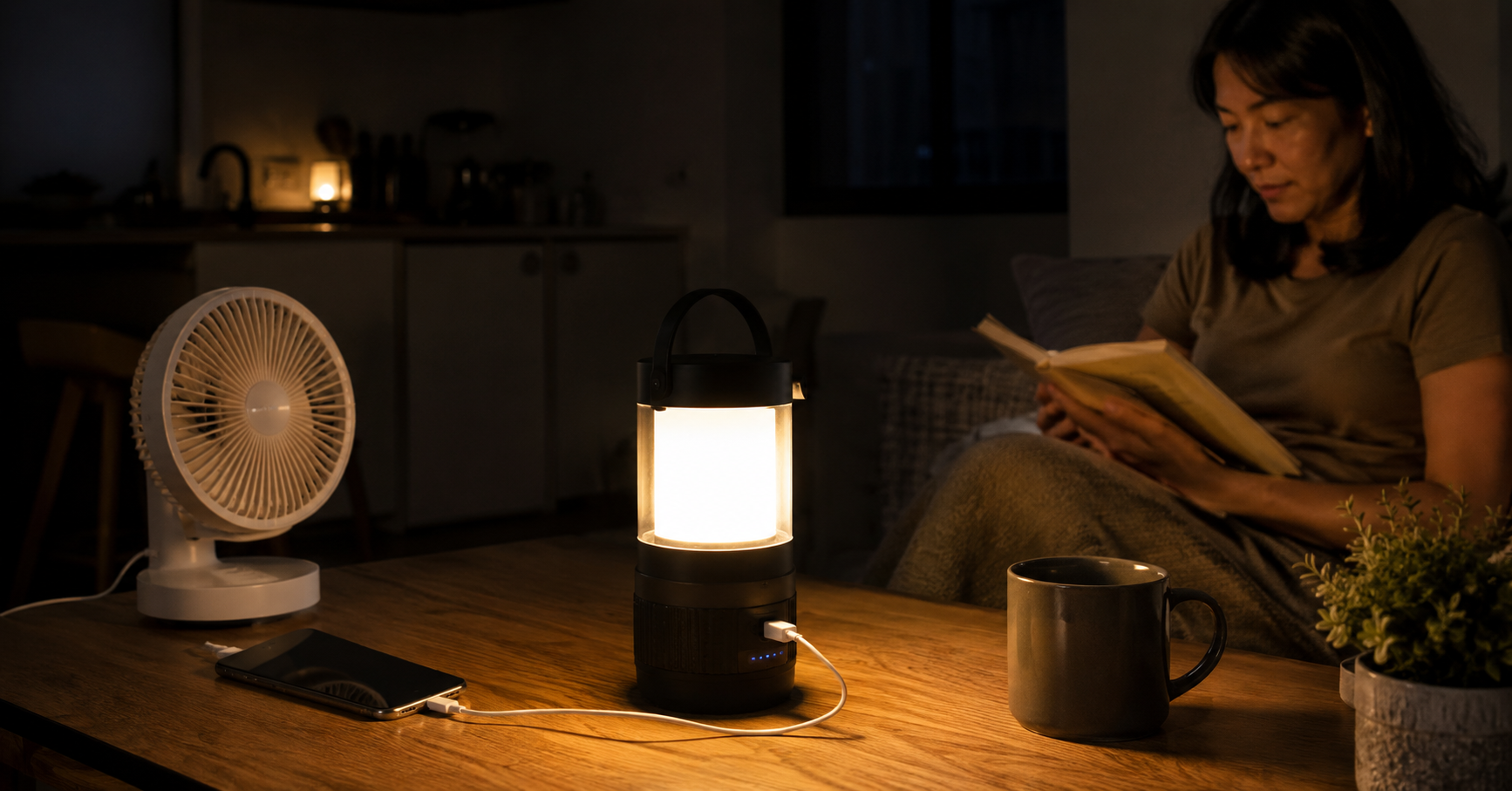
Outdoor lighting sits between utility and lifestyle. A rechargeable camping lantern must provide dependable illumination, but it also has to feel appropriate when placed among people, food, gear, and furniture. In a tent, users often prefer softer light. On a picnic table, they want a lantern that feels steady and does not create harsh hotspots. During a power outage, the same item may be used by people who simply want clear, intuitive operation.
This is why a buyer should avoid treating every lantern as a generic plastic shell with LEDs inside. Housing shape, diffuser quality, surface finish, and user ergonomics all affect perceived value. A compact cylindrical body and broad footprint may sound simple, yet these details help determine whether the product feels useful, decorative, or disposable in the customer’s hands.
Core Evaluation Points for Supplier Shortlisting
Before comparing samples, sourcing teams should define what matters most for the target channel. A family camping product, a patio light, and an emergency backup item may share the same basic form, but buyers will judge them differently. A supplier should understand those differences and discuss the lantern as a complete product, not only as a list of parts.
| Evaluation area | What to check |
|---|---|
| Stability | Does the base feel secure on a table or uneven outdoor surface? |
| Light quality | Does the translucent chamber spread light evenly without distracting hotspots? |
| Appearance | Does the design suit social camping, picnic, patio, or gift channels? |
| Repeatability | Can the supplier keep finish, assembly, and alignment consistent across orders? |
| Feature fit | Do charging or power bank functions match real user expectations? |
Buyers can review related product directions at Brightenlux products before building a shortlist.
Design, Light Quality, and User Experience
Design consistency should be checked carefully. For a freestanding lantern, small differences in the base, diffuser fit, or top cap alignment can affect both appearance and stability. If the product uses molded parts, mold quality and process control matter because visible gaps or uneven fitting can make a sample feel less reliable.
Light quality is equally important. The source describes a style suited to ambient table use, so buyers should look beyond raw brightness claims. A pleasant glow may be more useful than an aggressive beam in camping and dining settings. The diffuser should soften the LED output and distribute it comfortably around the lantern. If the light chamber looks cheap, creates glare, or shows distracting bright spots, the product may disappoint end users even if the basic function works.
Construction, Materials, and Durability Questions
The visible finish suggests a light gray or white outer housing with a translucent diffuser window. Exact material cannot be confirmed from the image, so buyers should verify the housing structure directly with the supplier rather than assuming a specific material. In this category, plastic or plastic-heavy construction is common because weight, moldability, and cost efficiency are important considerations.
The real question is whether the construction supports the intended use. A camping lantern supplier should be able to explain why the housing approach was chosen, how the light module is positioned, and how parts are assembled to resist loosening during transport. Appearance alone is not enough. Outdoor users pack, unpack, move, and share these products repeatedly. If a supplier emphasizes styling but cannot explain internal structure clearly, buyers should request more technical detail before moving forward.
Charging Options, Features, and Customization Control
Many buyers now expect rechargeable models, and some also look for a USB camping lantern with power bank functionality. These features can be attractive, but they should not distract from the primary job: dependable portable illumination. Added functions may increase cost, complexity, and potential failure points, so they need to match the end user and the sales channel.
If power bank capability is required, the supplier should be able to explain how that function affects the battery arrangement, enclosure design, and user interface. Vague answers are a warning sign. The same applies to customization. Color, branding, packaging, and feature variations may be useful, but a strong supplier should manage them without turning every change into a new sourcing project. To discuss project requirements, buyers can contact Brightenlux through contact us or send an inquiry.
Common Buying Mistakes to Avoid
One common mistake is choosing a lantern only because the brightness claim sounds impressive. For social camping or patio use, comfortable light diffusion may matter more than raw output on paper. Another mistake is ignoring base stability. A lantern used on a dining table should not wobble whenever someone moves equipment nearby or places items on the table.
Buyers also sometimes overvalue complexity. Extra modes or power bank functionality can be useful, but not every customer wants a complicated product. Some users prefer a simple lantern that turns on easily, looks good, and works reliably. Finally, do not assume all suppliers are interchangeable. A rechargeable camping light manufacturer with product knowledge can usually answer questions about housing, optics, assembly, and repeatability more clearly than a supplier with limited technical understanding.
FAQ
What type of buyer is this camping lantern style best suited for?
This style appears suitable for buyers serving camping, picnic, patio, glamping, and emergency-use channels. Its visible form suggests a compact ambient lantern for table placement rather than a highly directional work light. Buyers should confirm the final application, packaging needs, and expected user environment before selecting a supplier.
Should every buyer choose a rechargeable camping lantern?
Not always. Rechargeable designs are often preferred because they are convenient for many modern users, but the best option depends on channel positioning and customer expectations. Buyers should check whether the charging design is clear, practical, and well integrated instead of assuming rechargeability alone makes the product better.
Is power bank functionality necessary in a USB camping lantern?
Power bank functionality can add value for some outdoor and emergency-use markets, but it is not automatically necessary. Extra features can also add complexity. Buyers should ask whether their customers want multi-function convenience or a simpler lantern with fewer controls and a more straightforward user experience.
What should sourcing teams check first when reviewing samples?
Start with the fundamentals: base stability, diffuser performance, switch feel, finish quality, and overall assembly. If these basics are weak, added features will not solve the core product problem. A strong sample should feel steady, look consistent, and provide comfortable ambient light in a realistic setting.