

Camping Lantern Supplier: What Buyers Should Check Before Ordering
Choosing a camping lantern supplier is not as simple as comparing product photos. Many lanterns share the same basic look: a round body, carry handle, white diffuser, and claims of outdoor usefulness. For B2B buyers, the real difference appears in use. A good sourcing decision depends on how the lantern handles wet conditions, charges consistently, spreads light, and survives repeated handling in tents, gear bags, retail kits, or emergency packs.
Why Similar-Looking Camping Lanterns Can Perform Differently
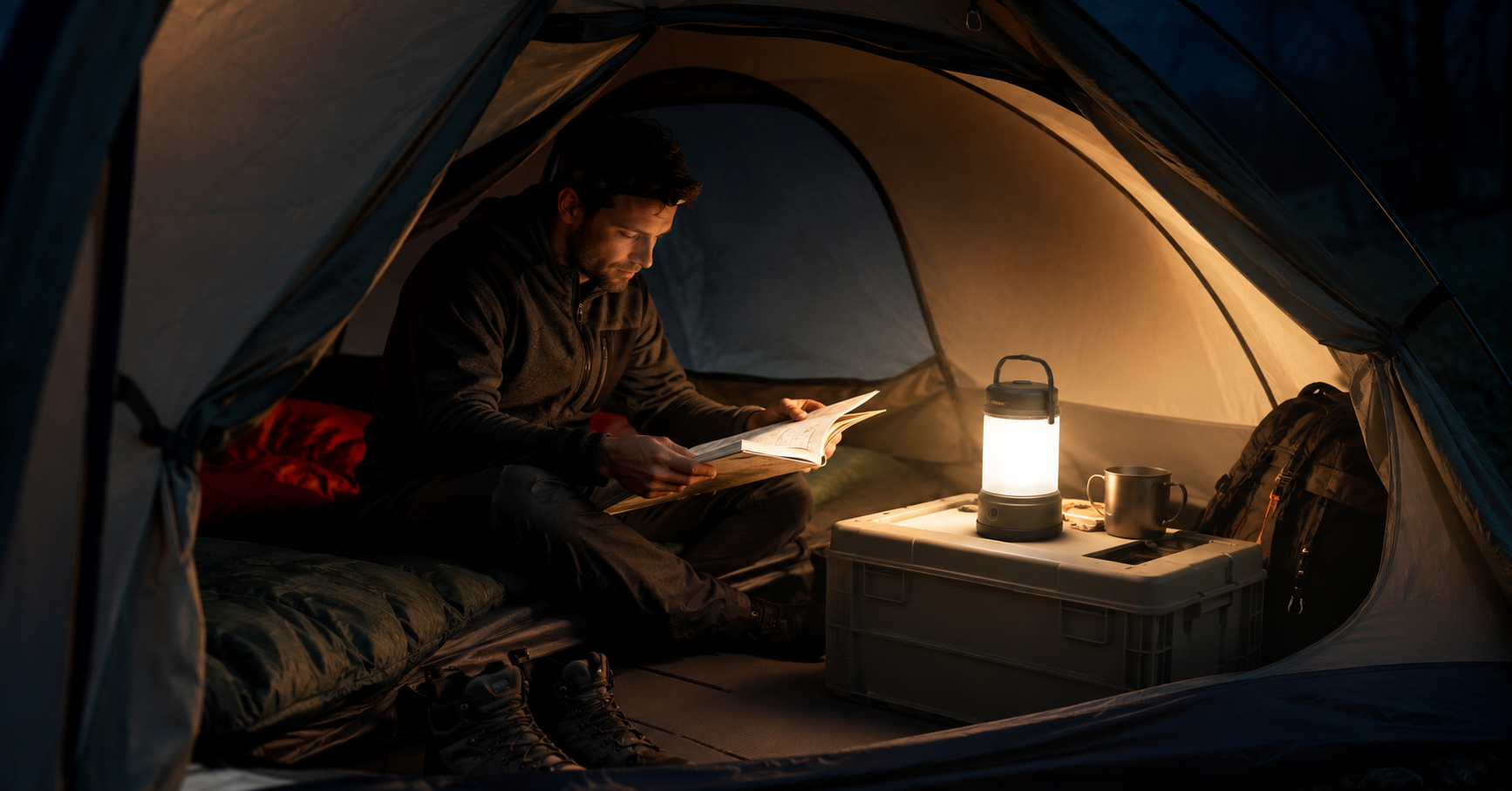
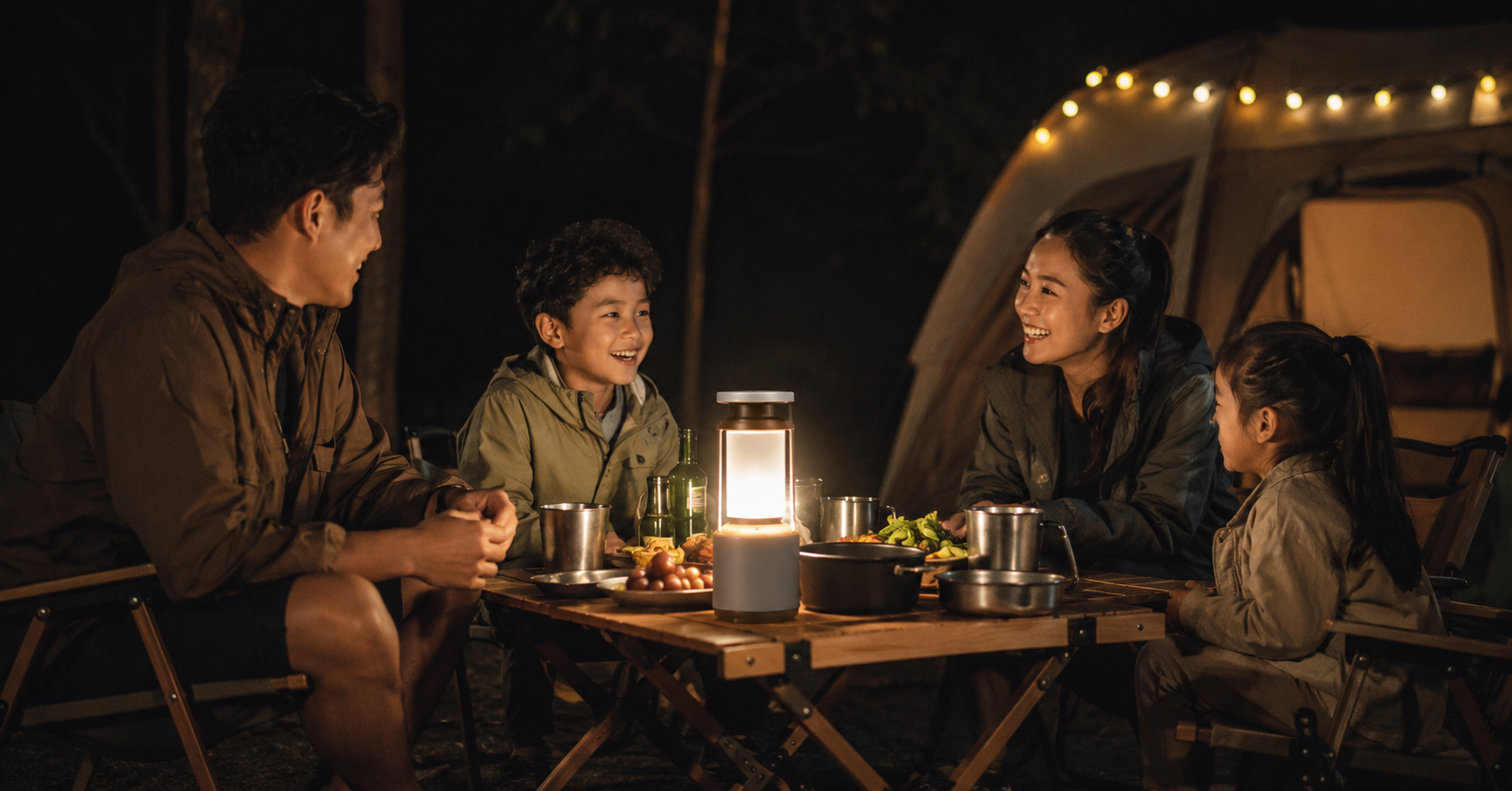
Camping lanterns often look interchangeable online because the category uses familiar forms. A cylindrical body, molded top loop, translucent center diffuser, and darker cap or base are common because they work for outdoor use. The shape is easy to carry, place on a table, or hang in a tent. However, similar appearance does not confirm similar performance. Housing strength, switch feel, charging stability, diffuser quality, and moisture control can vary widely between suppliers. For retail buyers, promotional programs, private-label outdoor ranges, and emergency-preparedness kits, those hidden differences affect customer satisfaction. Before comparing cosmetic options, buyers should define where the lantern will be used: campsite tables, tent interiors, storm backup, or portable task lighting near damp ground.
What the Visible Product Design Tells Buyers
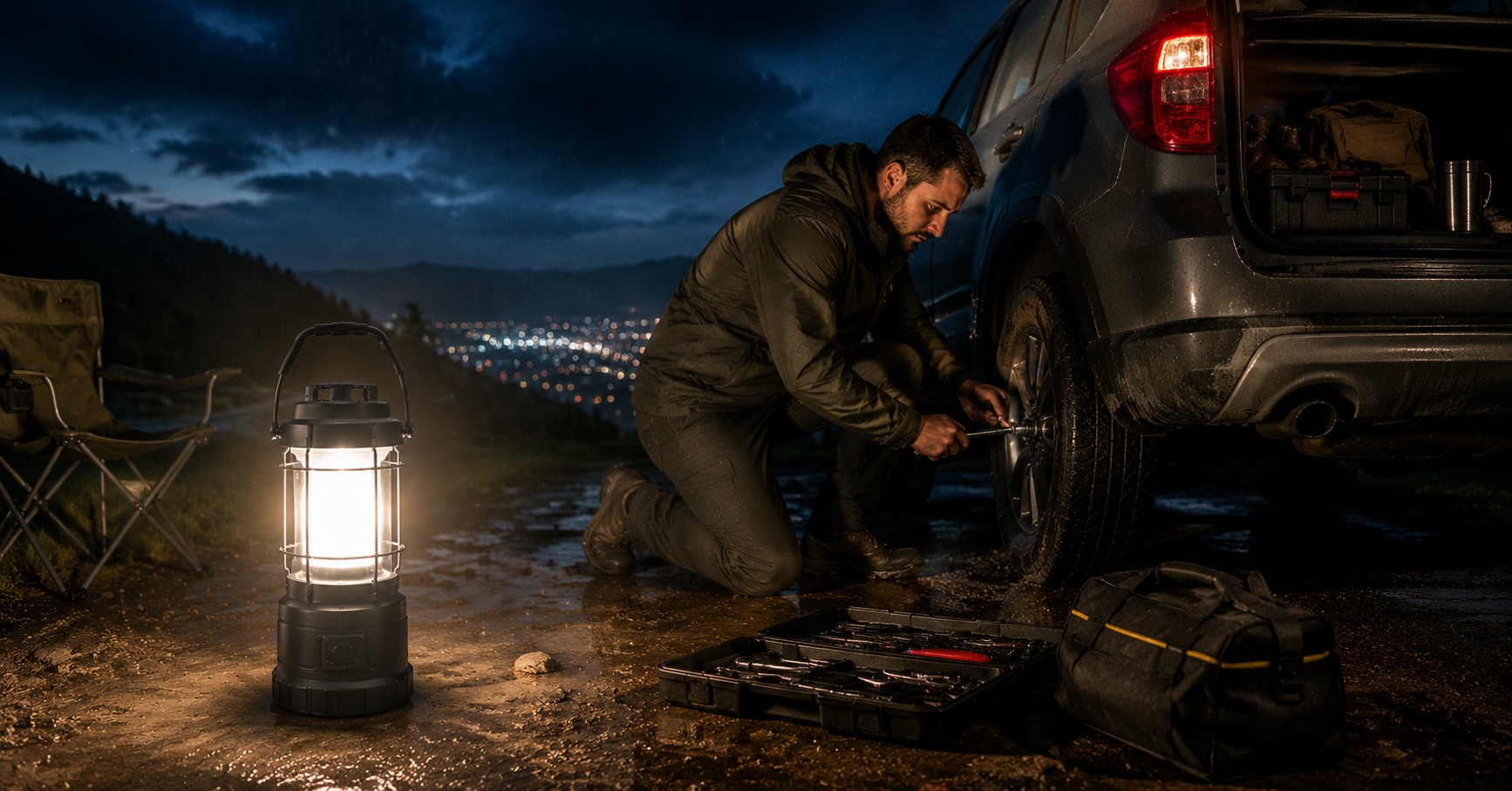
The product shown in the source is a portable rechargeable camping lantern with a practical, battery-powered format. It has a dark top handle or loop, a translucent white center diffuser, and a darker base and cap. This geometry suggests a focus on broad ambient lighting rather than a narrow directional beam. That type of light is useful for shared spaces, tent interiors, family camping, and general portable illumination. The lantern is also shown operating in heavy rain. No exact IP rating is provided, so buyers should not assume a specific ingress protection level. Still, the wet environment makes weather tolerance an essential topic. Water exposure, damp hands, and outdoor handling can quickly reveal weak seals, poor port protection, or fragile housing choices.
Core Checks Before You Place an Order
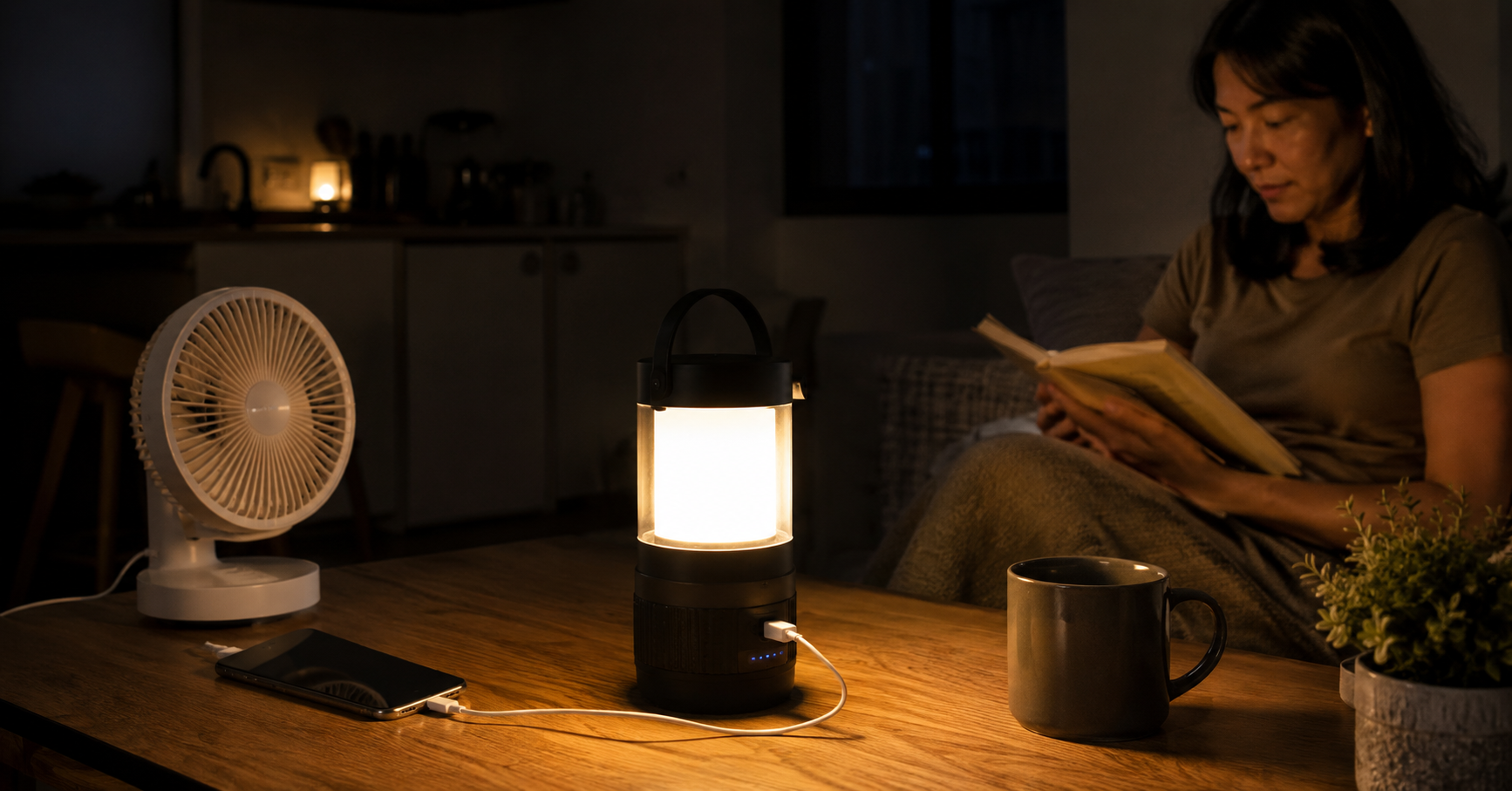
Before sending a purchase order, sourcing teams should compare the product beyond catalog images. A rechargeable camping light manufacturer or LED camping lantern supplier should be able to explain how the lantern is built for its intended use. Buyers should also confirm which accessories are included, because the source image shows a separate black power bank or battery pack with a cable nearby, but it is not confirmed as part of the kit. The table below keeps the first review practical and focused.
| Check | What to Ask | Why It Matters |
|---|---|---|
| Housing and diffuser | Does the body resist cracking, warping, and surface wear? | A solid look online may still feel weak in hand. |
| Wet-use design | How are the switch and charging port protected? | Rain and damp handling expose weak construction. |
| Charging setup | What is the charging interface and workflow? | Inconsistent charging creates service issues. |
| Light distribution | Is the output broad ambient light or directional? | Different use cases need different beam behavior. |
Why the Lantern Form Factor Remains Popular
Lantern-style outdoor lights remain popular because they solve a simple problem: one device can sit, hang, or be carried without extra setup. The top loop is a modest design feature, but it matters when users have cold fingers, limited space, or poor visibility. A cylindrical diffuser also helps spread light around a campsite more evenly than a narrow flashlight beam. For merchandising, the form is easy to understand and easy to display. Retail buyers like clean silhouettes, while industrial and emergency-kit buyers often prefer predictable pack-out. Still, the same simplicity can hide quality variation. Two lanterns may share the same outer shape but differ in internal components, charging behavior, moisture resistance, and the comfort of the light they produce.
Common Sourcing Mistakes to Avoid
One common mistake is assuming every outdoor lantern is designed for the same job. A fair-weather camping light may disappoint when used during rain, blackouts, or long storage in an emergency kit. Another mistake is focusing too heavily on exterior finish while overlooking the charging and power system. Rechargeable products can create hidden after-sales problems if the battery, connector, cable, or pack-out varies from lot to lot. Brightness claims can also distract buyers from usability. For lanterns, light quality matters as much as light quantity. Harsh glare inside a tent is uncomfortable, and uneven diffusion can make a product feel cheaper. Buyers comparing options can review broader categories at Brightenlux products before narrowing the use case.
How to Evaluate the Supplier Conversation
A strong supplier conversation should move beyond the catalog sheet. Ask what campsite scenario the lantern was designed around. Is it mainly for tent interiors, general campsite lighting, storm backup, or portable use in wet conditions? Ask whether the supplier can explain the housing finish, handle style, diffuser shape, and charging arrangement. If customization is needed, confirm which parts are standardized and which can be adjusted for your program. For private-label buyers, the best conversations focus on product behavior, not just appearance. Discuss switch feel, handling with wet hands, stability on uneven ground, and performance after repeated charging. If answers are vague, consider that a warning sign before moving forward with samples or an inquiry.
A Practical Buying Path for B2B Teams
Start with the environment, not the cosmetic brief. If the lantern is intended for wet-weather camping, emergency preparedness, or field kits, ask for samples and handle them like customers would: with wet hands, on uneven surfaces, during quick setup, and in low light. Check whether the diffuser creates comfortable ambient output and whether the body feels sturdy in a gear bag. Confirm the charging workflow and whether any visible accessory, such as a cable or separate power pack, is included or optional. A suitable camping lantern supplier should align product shape, recharge system, diffuser performance, and ruggedness with the buyer’s actual market. To discuss product fit for a sourcing program, buyers can contact Brightenlux.
FAQ for Camping Lantern Sourcing Teams
Is a camping lantern better than a flashlight for campsite use?
For area lighting, a camping lantern is usually more practical because it spreads light around a shared space and can sit or hang without being held. A flashlight is better for directional spotting, walking, or focused inspection. Many outdoor programs treat the two products as complementary rather than interchangeable.
Should buyers prioritize rechargeable camping lanterns?
Rechargeable models often fit modern outdoor programs because they reduce reliance on disposable batteries and match consumer expectations. However, rechargeability alone is not enough. Buyers should review charging convenience, connector consistency, battery behavior, storage expectations, and whether the supplier can clearly explain the complete power workflow.
What should buyers ask if the lantern may be used in rain?
Ask how sealing is handled around the switch, charging port, housing joints, and any removable parts. Since no exact IP rating is provided in the source, buyers should avoid assumptions and request clear supplier documentation or sample validation for repeated wet handling and realistic outdoor use.
Do all LED camping lanterns with similar shapes perform the same?
No. Similar-looking lanterns can differ in diffuser quality, housing feel, charging stability, moisture tolerance, and comfort of light. The outer form may be easy to copy, but product behavior depends on component choices and supplier control. That is why sample review and detailed questioning matter.