

Camping Lantern Supplier Guide for Buyers and Sourcing Teams
Choosing a camping lantern supplier is not just about finding a portable light that looks good in a catalog. For B2B buyers, the real question is whether the product is practical, stable, comfortable to use, and suitable for the intended sales channel. A compact lantern with a diffused body, carry handle, and freestanding base can serve camping, travel, and backup lighting needs. This guide explains what sourcing teams should review before samples, negotiation, and private-label planning.
Why Buyers Source Camping Lanterns
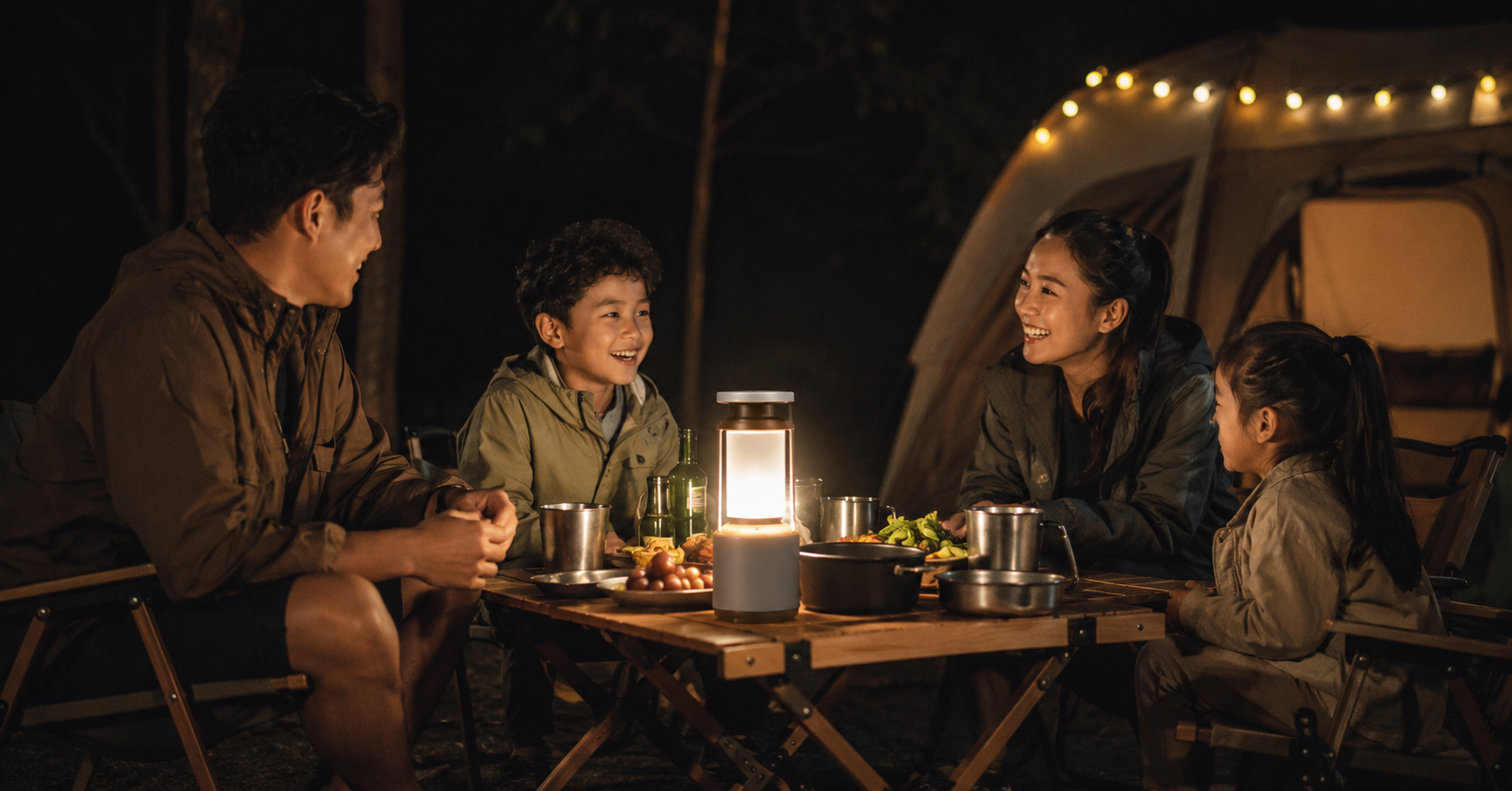
Most buyers searching for a camping lantern supplier are trying to solve a practical outdoor lighting problem. The product must be compact enough for a gear bag, bright enough to make a tent usable after dark, and soft enough to avoid harsh glare at close range. Unlike a flashlight, a lantern works more like a small room lamp, spreading ambient light around a tent, table, or campsite.
The visible lantern style in this category is usually an upright cylindrical design with a frosted diffuser, top handle, and stable base. For procurement teams, the key question is not only whether a factory can make a lantern. It is whether the supplier can deliver the right structure, lighting comfort, housing quality, and packaging consistency for the target channel.
Best Use Cases for This Lantern Type
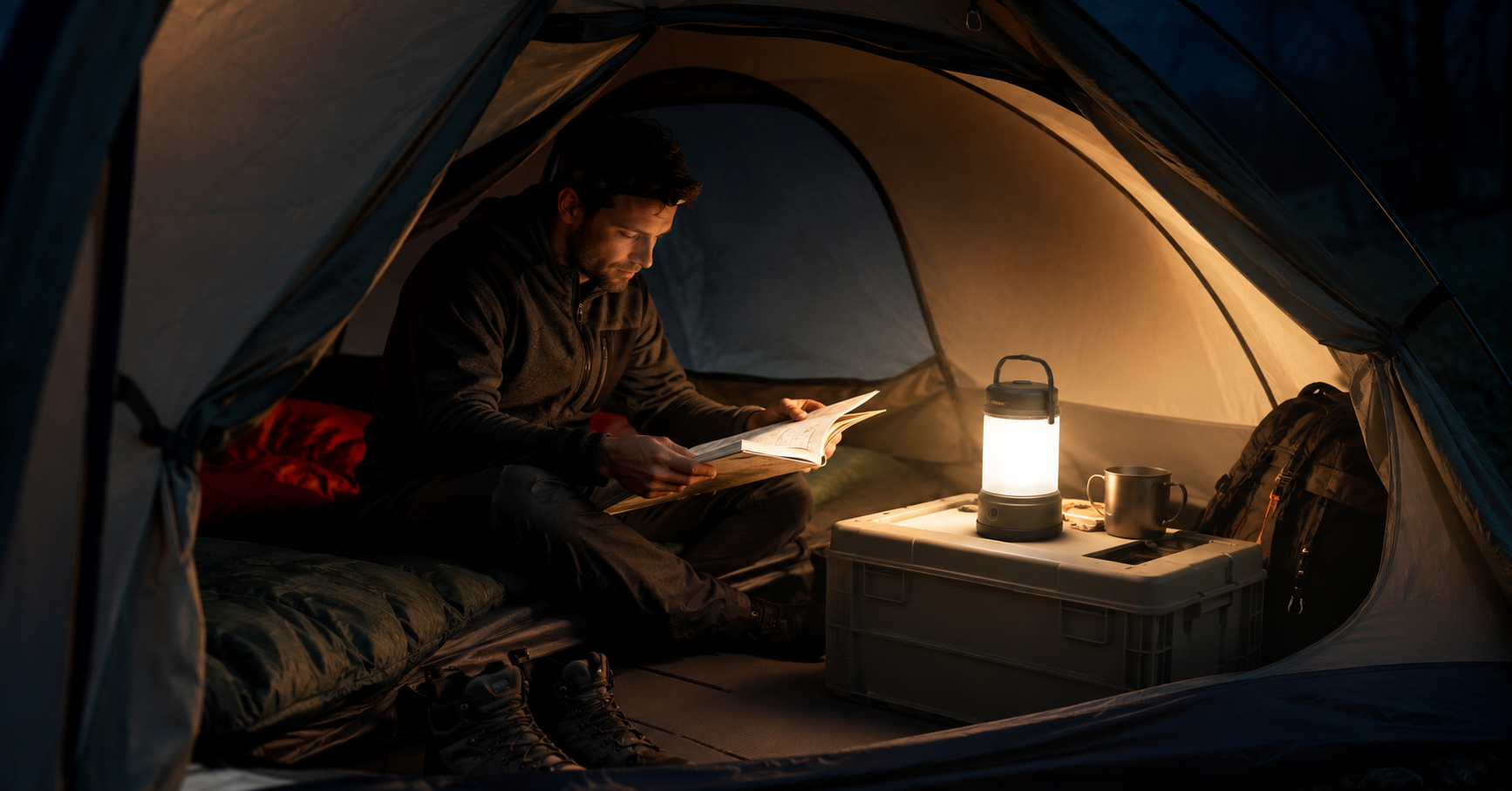
A portable LED camping lantern is useful because it covers several consumer needs without changing the core product concept. Inside a tent, diffused light is usually more comfortable than a direct beam. Users can place the lantern on a crate, folding table, or tent floor while sorting gear, reading, or changing clothes. The freestanding shape also helps when users need both hands free.
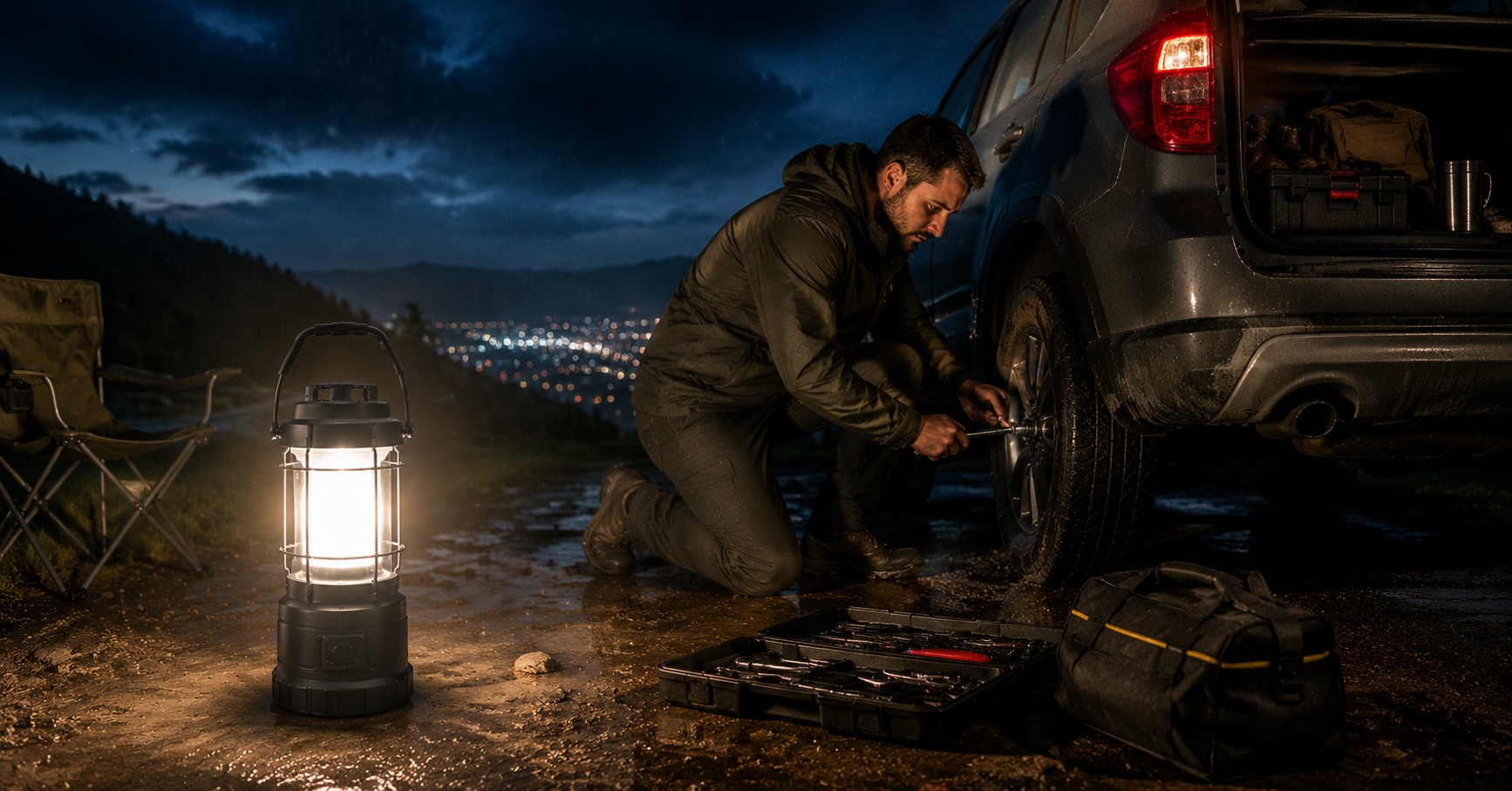
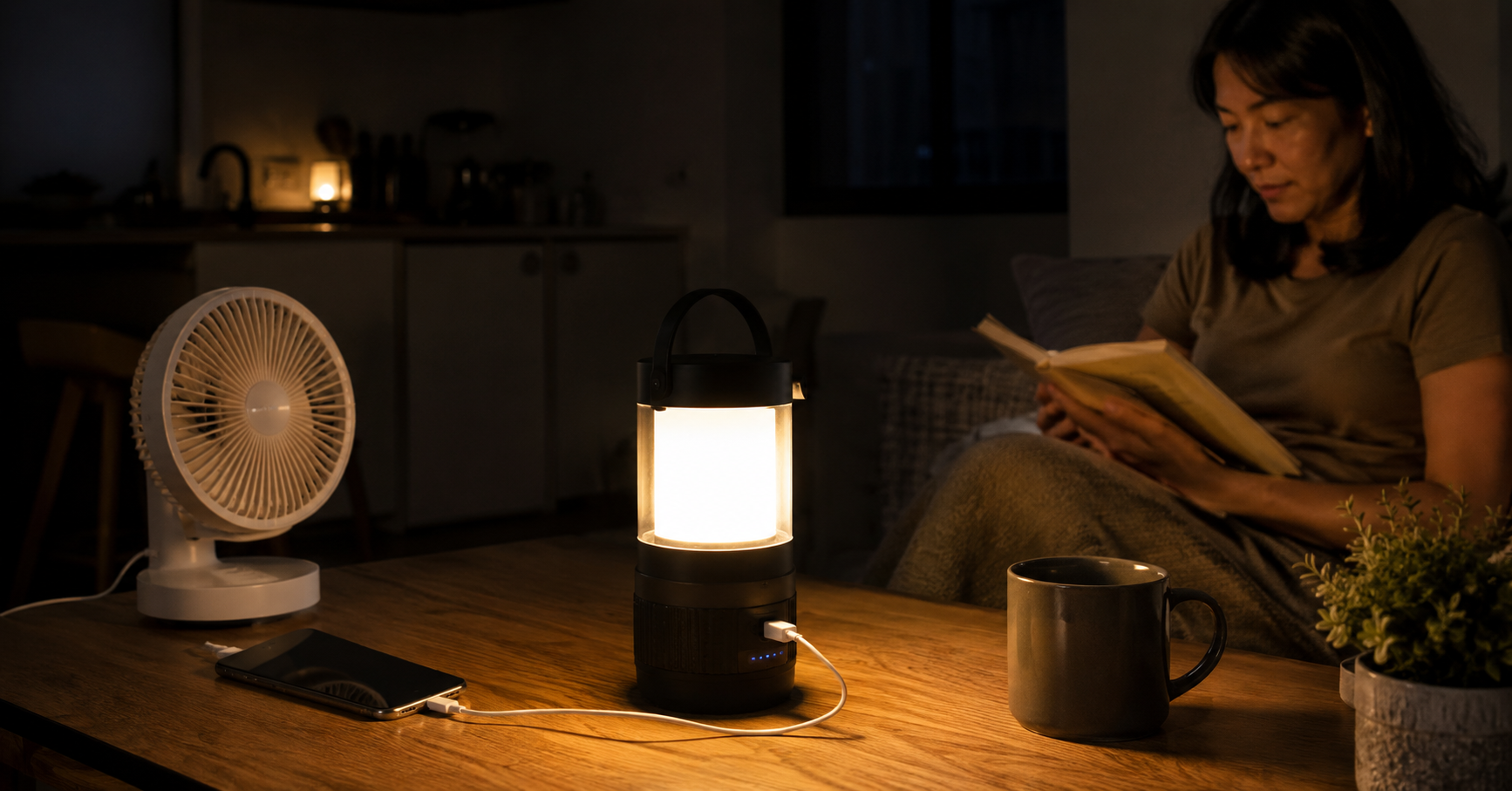
This product category also crosses into emergency and backup lighting. A compact lantern can be marketed for camping, but it may also be kept at home for power outages. Travel and general outdoor use are another fit because the upright body and carry handle make storage and movement simple. Buyers reviewing product ranges can compare similar outdoor lighting options at Brightenlux products.
Key Product Traits to Check
Because product photos confirm only general form, sourcing teams should verify the details that affect everyday performance. Light quality is one of the first checks. A frosted translucent diffuser is not only decorative; it spreads output and softens glare. A lantern can appear strong on paper but feel uncomfortable if the light is uneven or creates harsh hotspots in a small tent.
Housing structure is equally important. The round base suggests the product is designed to stand upright, but buyers should still check balance and stability on camp tables, tent floors, and slightly uneven surfaces. The handle should feel secure when the lantern is carried or hung. Materials also need confirmation during sampling. The diffuser may appear plastic or polycarbonate, while the top and base may look like molded plastic or coated metal, but exact materials should always be verified with the supplier.
Supplier Evaluation Checklist
A dependable LED camping lantern supplier should be able to discuss product construction clearly, even when final specifications vary by model. Buyers should not treat every similar silhouette as the same product. Small differences in diffuser design, assembly quality, switch feel, base geometry, and packaging can influence user satisfaction and return risk.
The table below gives sourcing teams a compact way to compare suppliers during early review:
| Area to Review | What to Ask or Check |
|---|---|
| Light diffusion | Does the diffuser create soft, usable ambient light? |
| Stability | Does the lantern remain upright on realistic surfaces? |
| Handle design | Does it feel secure for carrying, hanging, and storage? |
| Power format | Is the model rechargeable or battery-powered? |
| Materials | Are housing, diffuser, and finish confirmed during sampling? |
| Packaging | Can the supplier support retail or e-commerce handling needs? |
This type of review keeps the process focused on use-case fit instead of surface appearance alone.
Power Format, Materials, and Customization
The source product has no visible cord, so the power system cannot be confirmed from appearance alone. It may be battery-powered or rechargeable, but buyers should verify the exact configuration for each model. Rechargeable designs may suit frequent-use campers and modern retail channels. Replaceable-battery options can make sense for emergency kits or long-storage situations. The right choice depends on how the product will be sold and used.
Customization should also be discussed early. A capable supplier should explain whether changes in body shape, handle style, color, finish, or branding placement are possible without weakening the structure. For private-label buyers, these details matter because visual differentiation must not create instability, poor balance, or assembly issues. If your sourcing team is preparing a custom program, you can submit project details through the inquiry page for review.
Common Buyer Mistakes to Avoid
One common mistake is focusing only on brightness claims while ignoring beam comfort. A lantern can be bright yet unpleasant if the diffuser does not control glare well. For tent users, soft and even light is often more valuable than a harsh beam that creates hard shadows. Buyers should review real-use lighting behavior rather than relying on the first impression from a showroom or photo.
Another mistake is treating the handle and base as minor details. The handle affects carrying, hanging, and storage, while the base determines whether the lantern feels safe and convenient on a campsite. Buyers also sometimes assume that all portable lanterns are equally rugged. Outdoor products are tossed into crates, carried with other gear, and used on uneven surfaces. If the diffuser, housing, or seams feel weak during sampling, that risk may increase after mass shipment.
How to Review Samples Before Ordering
Sample review should imitate real use as closely as possible. Place the lantern inside a tent or enclosed room, not only under office lighting. Set it on rough or slightly uneven surfaces and check whether it stays stable. Carry it by the handle to see whether it feels balanced or top-heavy. Look at the light against nearby objects to judge whether the diffuser creates a comfortable glow.
Inspect the transition points between the diffuser, top cap, and base. Outdoor lighting products often show weaknesses at seams and joins rather than in the center of the housing. If the unit is rechargeable, verify the charging interface and user operation separately from lighting performance. A product can produce acceptable light yet still frustrate users if controls are unclear. For sourcing discussions or sample planning, buyers can contact the team through Brightenlux contact.
FAQ for Camping Lantern Sourcing
Is a camping lantern better than a flashlight inside a tent?
For shared tent space and general ambient light, a camping lantern is usually more practical than a flashlight. It can stand on a surface and spread softer light across a wider area. A flashlight is still useful when users need a focused beam for walking, searching, or directional tasks.
Should sourcing teams choose rechargeable camping lanterns?
Rechargeable models can suit frequent-use campers and modern retail programs, but they are not automatically the best option for every channel. Replaceable-battery lanterns may still appeal for emergency kits or long-storage applications. Buyers should confirm the actual power format of each model before building specifications or packaging claims.
What should buyers ask a camping lantern supplier first?
Start with the essentials: light source design, diffuser structure, housing materials, base stability, handle strength, packaging format, and available branding options. These questions reveal whether the supplier understands real outdoor use. If answers are vague, it is better to slow down before approving samples or purchase orders.
How can buyers judge sample quality efficiently?
Test the sample in conditions close to actual use. Place it in a tent or dim room, carry it by the handle, check balance on uneven surfaces, and inspect seams around the diffuser, top, and base. This simple review often reveals more than product photos or basic catalog descriptions.