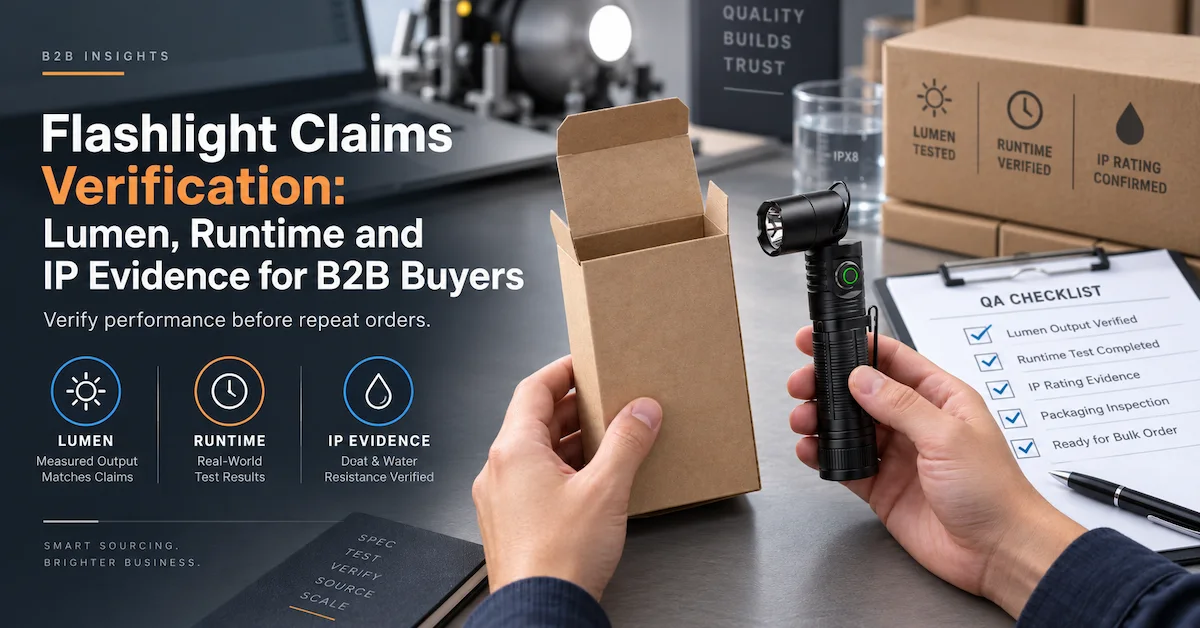


Quick Answer: A reliable emergency light factory should demonstrate how it controls materials, approved samples, assembly, rechargeable batteries, light output, final inspection, and shipment release. For B2B buyers of portable backup lighting, the strongest supplier is one that can repeatedly deliver an approved configuration and support critical product claims with traceable evidence—not just a competitive price or a bright showroom sample.
When sourcing portable emergency lights from China, overseas distributors often compare price, advertised brightness, battery capacity, and minimum order quantity. These details matter, but none proves whether a factory can keep a product consistent through a full OEM production run.
Two rechargeable flashlights may look identical but use different cells, drivers, seals, or charging circuits. Such differences can affect runtime, charging behavior, output stability, and after-sales performance.
For importers, preparedness brands, industrial suppliers, and wholesale distributors, the real question is whether the factory can manufacture, inspect, document, and deliver the exact product approved by the buyer. This guide uses practical control points and published examples from Brightenlux to explain how to assess that capability.
1. What Should Buyers Expect from an Emergency Light Factory?
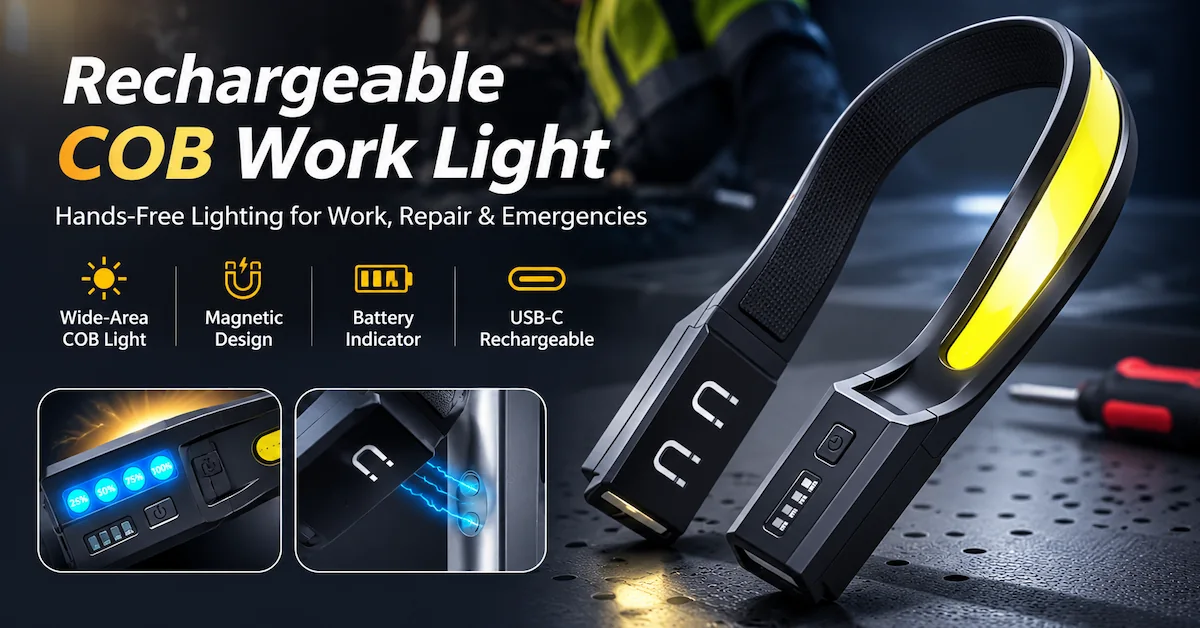
An emergency light factory may manufacture portable rechargeable flashlights, battery-powered lanterns, headlamps, or regulated emergency luminaires. These are not interchangeable product categories.
Portable backup lighting
Portable lighting is used for household blackout preparation, temporary inspection, outdoor activity, and non-critical service tasks. Relevant formats include flashlights, lanterns, headlamps, and selected work lights.
Building emergency lighting
Code-required escape and evacuation luminaires are a separate category involving specific installation, operating, and regulatory requirements. A factory making consumer or industrial portable lighting should not automatically be described as qualified to supply those systems.
Which buyers should audit manufacturing controls?
Factory-level evaluation is especially relevant to repeat-order importers, private-label brands, preparedness distributors, industrial MRO suppliers, retail chains, and OEM purchasing managers. Buyers needing only a few retail units may not require the same depth of review; buyers requiring a regulated product must confirm the manufacturer's actual scope first.
2. Quick Comparison: Seven Production Quality Gates
A factory audit becomes useful when it connects each product requirement to a specific production control and a record the buyer can examine.
| Production gate | Main purchasing risk | Evidence to request |
|---|---|---|
| 1. Incoming components | Unapproved LEDs, batteries, electronics | Approved parts list; incoming inspection |
| 2. First-article approval | Production differs from sample | Signed sample approval; revision-controlled specification |
| 3. Assembly and workmanship | Electrical or mechanical defects | Work instructions; in-process checks |
| 4. Battery and charging | Wrong cells; unstable charging | Cell identity; electrical and functional records |
| 5. Lighting performance | Unsupported lumen or runtime claims | Defined output and runtime testing |
| 6. Final inspection and packing | Missing accessories; wrong labeling | Finished-goods inspection; pack-out checks |
| 7. Batch release | Undetected defects; unauthorized changes | Lot traceability; release authorization |
Manufacturing principle: The approved sample, bill of materials, operating specification, inspection plan, and finished shipment should all describe the same product.
3. Quality Gate 1: Incoming LED, Battery, and Housing Inspection
Manufacturing consistency begins before final assembly. Portable emergency lighting combines electrical, optical, and mechanical components: an LED emitter, driver, battery, charging system, lens or reflector, housing, switches, and sometimes seals.
LED and optical components
The factory should define an approved LED and optical configuration. A change to the emitter or reflector may alter beam distribution, thermal demand, and perceived brightness. Ask how alternate parts are qualified and who can authorize substitutions.
Rechargeable batteries
Battery selection affects runtime, charging, safety considerations, and transport paperwork. Specify the approved cell type, electrical characteristics, protection arrangement, and relevant identification. A similarly labeled mAh capacity does not make two cells technically interchangeable.
Housing and seals
Portable lights may use aluminum, plastics, elastomers, or combined materials depending on the model. Inspection may need to address dimensions, lens condition, thread engagement, surface finish, charging covers, and seal fit.
| Component | Critical incoming check | Risk if uncontrolled |
|---|---|---|
| LED | Approved type and characteristics | Brightness or electrical variation |
| Battery | Correct cell and pack configuration | Charging and runtime inconsistency |
| Driver board | Approved PCB revision | Mode or output instability |
| USB connector | Fit and specified component | Intermittent charging |
| Housing | Material, dimension, finish | Poor assembly or durability |
| Seals | Approved material and dimensions | Reduced water resistance |
| Carton and labels | Approved artwork | Retail or regulatory errors |
Ask how rejected material is identified and kept out of the production line.
4. Quality Gate 2: First-Article and Golden Sample Approval
Before volume production, the buyer should approve a representative sample and the written specifications behind it. A golden sample is a physical reference, not a substitute for a controlled bill of materials.
The approval package should identify the model and revision, LED and lens configuration, battery, charging input, lighting modes, housing finish, logo placement, packaging artwork, included accessories, and agreed testing requirements.
An external sample can look identical to a later production unit while containing different electronics. Consequently, revisions affecting safety, claimed performance, or contractual requirements must be reviewed before implementation.
Buyer action: Request a signed first-article record. List any open issues, their owners, and the evidence required before the production configuration is frozen.
5. Quality Gate 3: Assembly Process and Workmanship Control
Assembly quality can affect long-term performance even when a finished light passes a brief switch-on test.
Electrical assembly
Review controls for polarity, connectors, soldering, driver installation, and firmware or mode configuration where applicable. The manufacturer should explain which checks are performed during assembly and which are reserved for final testing.
Optical alignment and thermal management
LED position, reflector geometry, lens alignment, and thermal contact influence usable beam quality. For high-output models, assess whether the proposed configuration has been validated under realistic operating conditions.
Mechanical assembly
Threads, battery compartments, switches, straps, handles, and charging-port covers must be fitted consistently. For models carrying an ingress-protection claim, sealing assembly should follow the validated product design.
What to ask: Which characteristics are checked on every unit? Which use sampled inspection? How are reworked products retested, and who signs off the result?
6. Quality Gate 4: Battery and Charging System Verification
Rechargeable emergency lighting needs an energy system that behaves predictably. A bright light that charges inconsistently can still be a poor product for backup use.
Battery configuration
Confirm the actual cell type, nominal voltage, capacity, protection features, and installation arrangement for the selected SKU. If a flashlight offers more than one power option, test and document each approved configuration separately.
USB-C charging
A Type-C connector identifies the physical interface; it does not guarantee a certain charging protocol or fast-charge rate. Verify permitted input voltage/current, supplied cable, status indication, and the product's charging behavior.
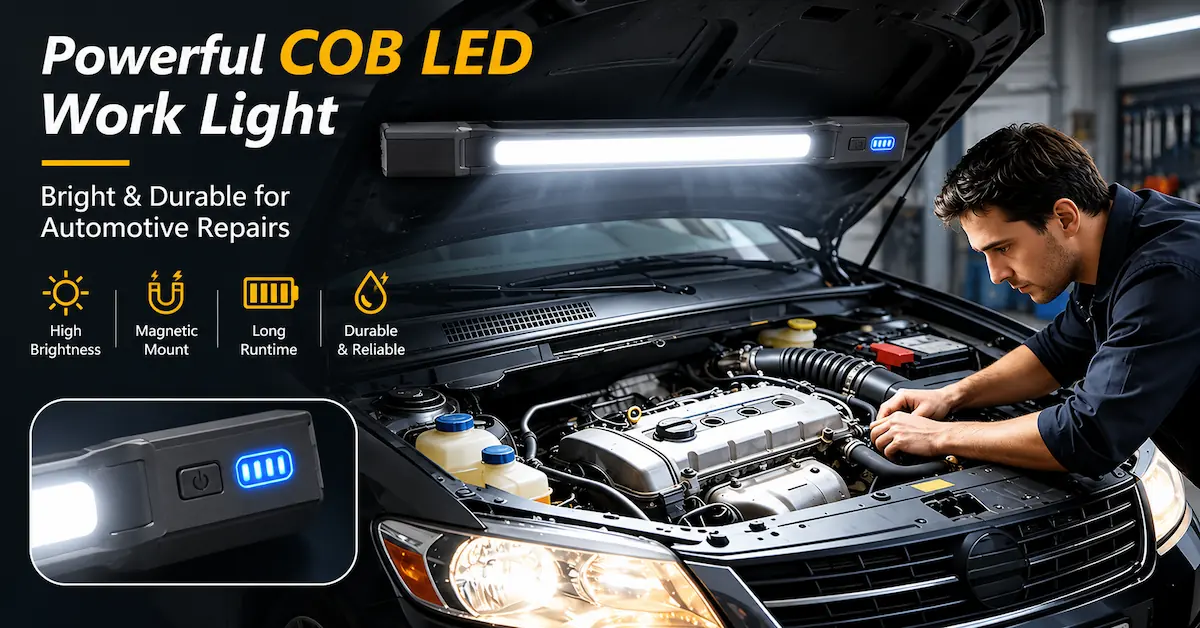
Battery indication
A charging icon or percentage display can help users, but it is not automatically a calibrated measurement of remaining usable energy. Confirm what the indicator shows and how it responds to low battery and charging states.
| Charging test | Recommended acceptance reference |
|---|---|
| Input | Approved electrical specification |
| Port and cable | Fit, inclusion, and repeatable connection |
| Charging status | Documented LED or display behavior |
| Battery | Correct approved configuration |
| Light modes | Approved control sequence |
| Runtime | Defined output mode and test conditions |
| Protective behavior | Requirements relevant to the design |
Lithium battery shipment documentation should match the supplied configuration and destination requirements. A generic battery certificate is not proof for every possible replacement cell.
7. Quality Gate 5: Lumen Output, Runtime, and Environmental Testing
An emergency light factory should be able to explain how its important product claims are verified.
Maximum output versus sustained output
Peak lumens may not represent the illumination sustained throughout a complete battery discharge. Request results specifying the mode, sample, ambient conditions, instrument or method, and test endpoint.
ANSI/PLATO FL 1-2025 offers a recognized reporting framework for applicable portable lighting performance. Mentioning it does not mean a particular Brightenlux product has been independently tested to that standard.
Runtime
Runtime varies with battery energy, mode selection, driver behavior, and environmental conditions. Do not infer medium- or low-mode working time from a headline brightness figure.
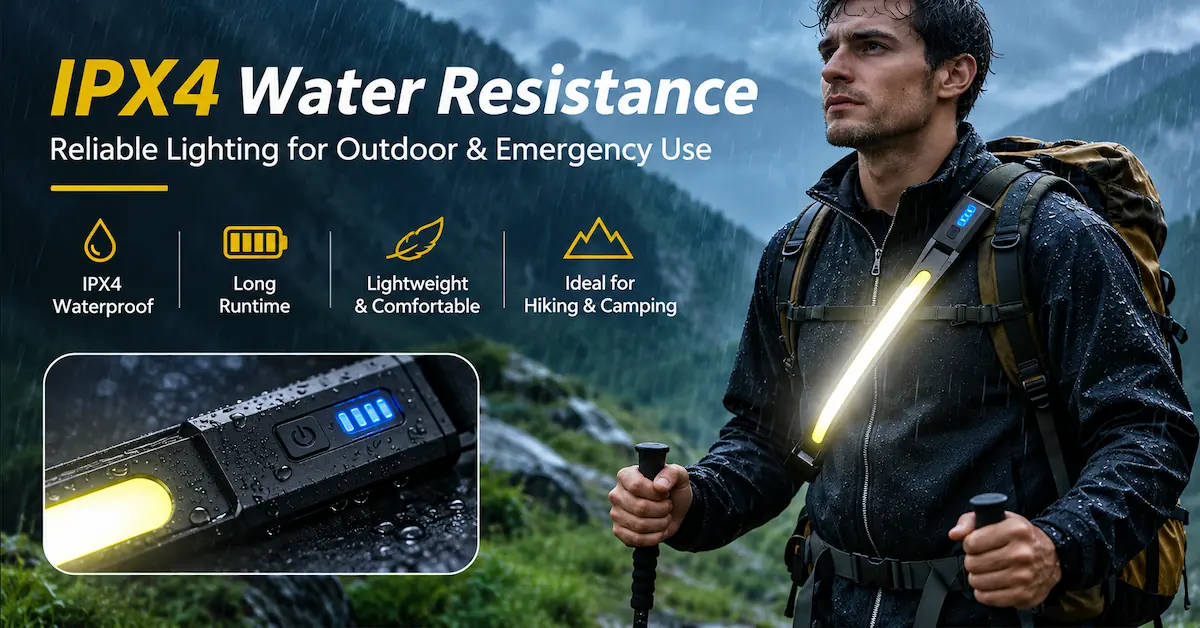
Water and dust protection
If the product advertises an IP rating, request model-specific evidence relating to IEC 60529. That classification does not cover every chemical, impact, or long-duration exposure.
| Advertised claim | Supplier verification question |
|---|---|
| Maximum lumens | Which mode and method produced the figure? |
| Runtime | What was the initial battery state and endpoint? |
| Beam distance | Which optical method was used? |
| Water resistance | What evidence covers this enclosure? |
| Charging time | Which input and battery were tested? |
| Power-bank function | What output limitations apply? |
Audit rule: Claims on packaging should match the exact configuration and conditions used in the supporting evidence.
8. Quality Gate 6: Final Inspection and OEM Packaging
Finished-product approval covers operation, appearance, pack-out, and branding. A light that powers on may still be unsuitable for sale if it has the wrong cell, absent USB cable, incorrect instructions, or outdated barcode.
| Inspection area | Acceptance reference |
|---|---|
| SKU and revision | Approved production specification |
| Appearance | Golden sample and cosmetic criteria |
| Controls and modes | Documented functional requirements |
| Charging | Approved interface and electrical behavior |
| Battery | Exact allowed configuration |
| Accessories | Signed packing list |
| Branding | Approved logo and artwork |
| Cartons | Quantity, protection, shipping marks |
Define how nonconforming units are separated, corrected, retested, and recorded. For branded goods, artwork approval deserves the same discipline as product approval.
9. Quality Gate 7: Traceability and Shipment Release
The final gate connects finished units to their manufacturing lot and the evidence used to approve shipment.
A useful release package may include the SKU and revision, work order, relevant component lot references, inspection results, applicable test records, approved packaging, accepted deviations, and authorized release decision.
Traceability matters when a buyer investigates a charging issue or battery concern. Without appropriate records, identifying affected inventory may be unnecessarily difficult.
When a lot fails inspection, the factory should contain potentially affected goods, examine the cause, implement corrective actions, and provide evidence before release. A tight shipping deadline does not replace acceptance criteria.
10. Which Brightenlux Models Can Buyers Evaluate?
Brightenlux is the brand of Ningbo Brightenlux Electric Appliance Co., Ltd., a supplier of portable LED lighting and OEM/ODM products. Its published catalog provides examples for reviewing manufacturing requirements and potential backup-lighting applications.
These are manufacturer-published configurations, not independently verified test outcomes or certifications for code-required evacuation lighting. Confirm the proposed SKU and current availability before ordering.
| Product | Published details | Practical sourcing use | Validation priority |
|---|---|---|---|
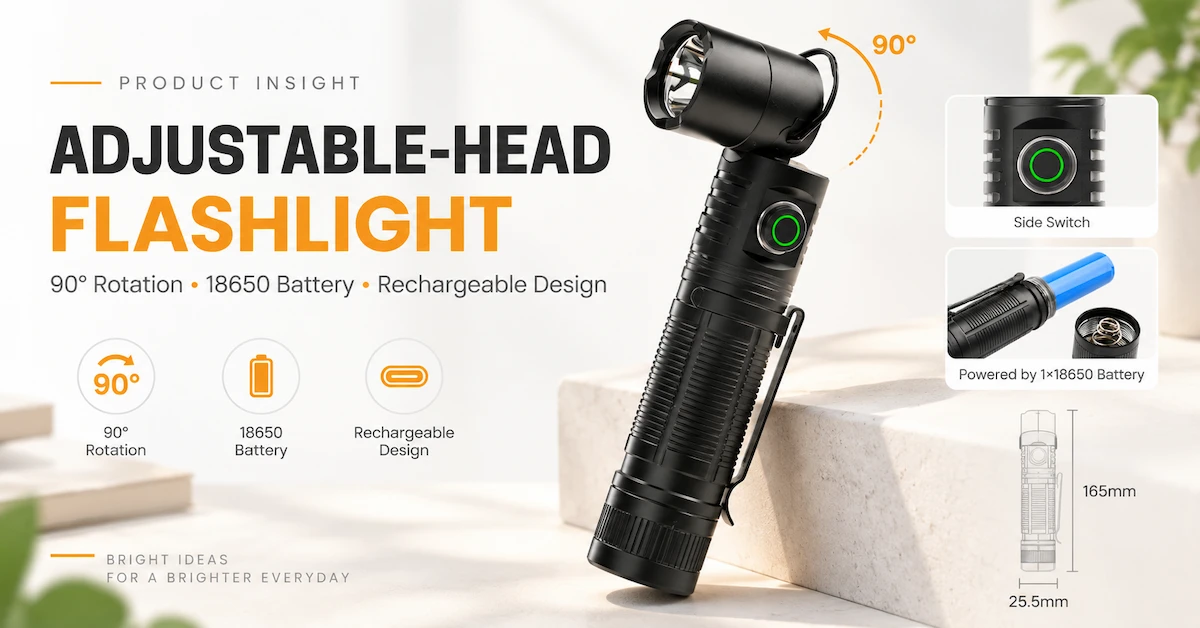
| BT-FL8104 Rechargeable Flashlight | Up to 1000 lm; 18650 2200mAh cell or 3 AAA; Type-C; adjustable beam | Inspection and portable backup | Battery options, charging, beam, seals |
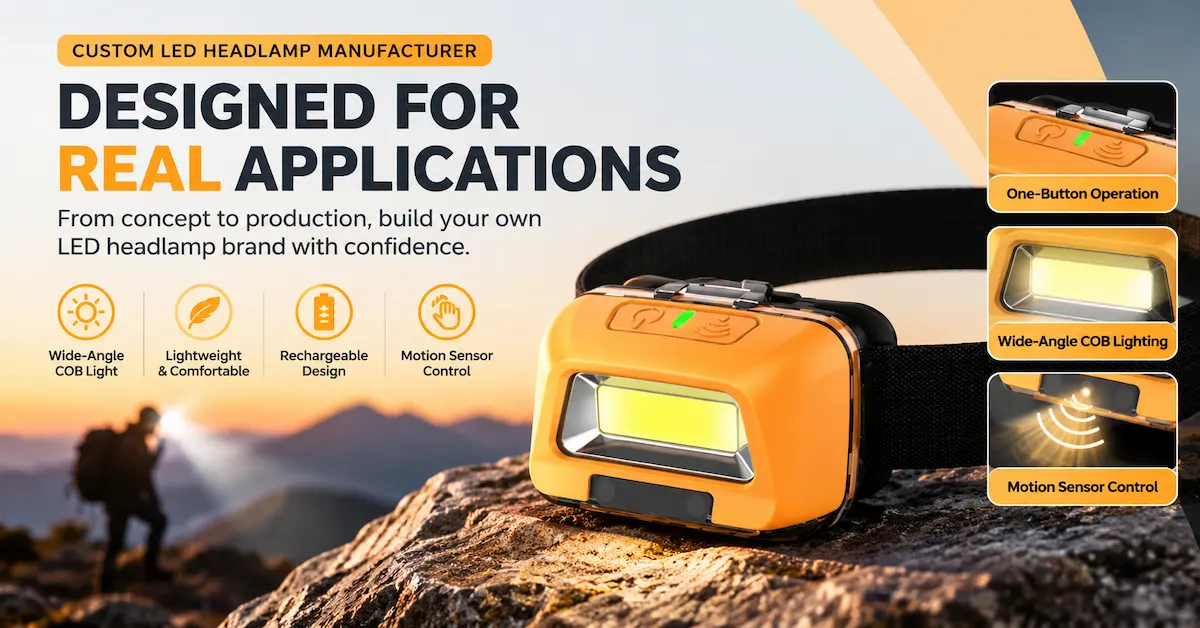
| BT-HL9040 Rechargeable Headlamp | Up to 800 lm; OSRAM P9; 18650 2200mAh; Type-C | Hands-free maintenance | Headband, controls, usable runtime |
| BT-PL4031R Rechargeable Lantern | Up to 2000 lm; COB; three 2200mAh cells; dimming; power-bank function | Temporary area lighting | Battery setup, diffuser, modes |
| 1000-lumen Rechargeable Lantern | Up to 1000 lm; 4000mAh battery described; adjustable white modes | Preparedness and outdoor retail | Battery identity, USB output, pack-out |
Product selection: Use these models to establish a shortlist, then request current datasheets and physical samples. For regulated building emergency-lighting projects, seek products with the applicable verified approvals instead of assuming a portable lantern qualifies.
Compare the actual product platforms
Ask for current datasheets, battery options, packaging configurations, and sample availability.
View Rechargeable Products ›Ask for Model Datasheets ›11. How to Evaluate Factory Capability Beyond the Showroom
Factory floor area, catalog breadth, or a single product demonstration does not by itself establish production capability for a specific order.
Define who does what
Ask which operations are internal and which are outsourced: housing production, electronics procurement, battery sourcing, printing, assembly, inspection, and laboratory testing. Outsourcing is not inherently a problem if responsibilities and acceptance controls are documented.
Verify a model-specific schedule
Request separate milestones for component procurement, sample approval, assembly, inspection, packaging, and dispatch. Capacity figures should relate to the chosen SKU, order quantity, and production period.
Review repeat-order discipline
Ask how the supplier responds when a cell, LED, PCB, connector, or carton material becomes unavailable. Critical substitutions should receive buyer review instead of being silently introduced.
Factory audit takeaway: Evaluate evidence for the exact configuration and quantity you intend to buy, rather than generic claims of maximum monthly output.
12. OEM/ODM: Convert Requirements into a Controlled Build
Brightenlux discusses OEM/ODM outdoor lighting services. The available scope, MOQ, timing, and cost must be confirmed for each project.
Standard private-label changes
Logo printing, carton graphics, labeling, and instructions may be feasible on existing products. Confirm available techniques, quantities, and approval requirements.
Product configuration changes
Battery, driver, LED, charging, or enclosure modifications can change performance and required validation. These are engineering changes, not merely decoration.
Original design development
A new ODM product may require drawings, prototypes, tooling, additional testing, and a separate approval schedule.
Recommended sequence: Application brief → Existing-platform review → Engineering assessment → Sample approval → BOM freeze → Pilot build → Test evidence → Volume production → Batch release.
A factory quotation should clearly distinguish standard components, customized components, development work, and optional services.
Build a repeatable OEM specification
Discuss logos, packaging, pilot samples, bills of materials, and controlled product revisions.
Explore OEM / ODM Services ›Discuss a Private-Label Order ›13. Manufacturing Cost, Pilot Orders, and Delivery Risk
The lowest bare-unit quote may not represent the lowest complete purchasing cost. One supplier may include an approved lithium battery and USB cable, while another assumes those are separate items.
Total Sourcing Cost = Light + Battery + Accessories + Branding/Packaging + Testing/Inspection + Freight, Duties, and Handling + Buyer-Specific After-Sales Costs.
Compare prices using one approved specification, and request model-specific MOQ and production milestones. Avoid assigning a universal failure rate or fixed lead time without evidence.
Illustrative pilot-order calculation
Suppose a buyer inspects 100 pilot units and 92 pass all agreed checks on the first attempt. First-pass yield would be 92 ÷ 100 × 100 = 92%. This is only a hypothetical calculation—not a Brightenlux manufacturing result.
The buyer should investigate the eight failures, evaluate corrective action, and make a separate shipment-release decision. Passing the pilot stage is not a substitute for the final production inspection plan.
14. Factory RFQ Checklist: What to Send Before Requesting a Quote
A strong RFQ lets the manufacturer recommend the right platform and give a comparable commercial offer. Include the following information:
- Application: Household backup, maintenance, outdoor retail, or another portable-use case.
- Destination market: Countries, sales channels, and required documentation.
- Product format: Flashlight, headlamp, rechargeable lantern, or a coordinated kit.
- Optical needs: Working distance, light distribution, modes, and usable runtime.
- Power system: Battery format, charging interface, inputs, and alternatives.
- Mechanical needs: Materials, mounting, handling, and exposure conditions.
- Branding: Logo, packaging, labels, manuals, and additional accessories.
- Evidence: Required tests, declarations, battery documents, and inspection reports.
- Commercials: Pilot quantity, forecast, MOQ, pricing basis, and delivery destination.
- Timeline: Artwork, sampling, production, inspection, and shipping milestones.
Ask the manufacturer to separate confirmed standard features from optional customization or new development. This reduces specification ambiguity before a purchase order is signed.
Ready to send your purchasing brief?
Share your target market, product format, expected quantity, desired customization, and quality acceptance criteria.
Request Factory Pricing ›Review Manufacturer Background ›15. Frequently Asked Questions
1. What does an emergency light factory manufacture?
Depending on specialization, it may produce portable rechargeable flashlights, lanterns, headlamps, or regulated emergency luminaires. Confirm the precise category and intended use before buying.
2. How can I verify an emergency light factory in China?
Check company identity, actual production responsibility, relevant sample quality, inspection records, documentation, and repeat-order controls. Significant orders may justify a factory visit or independent audit.
3. Which quality checks matter most for rechargeable emergency lights?
Battery identity, charging operation, LED and driver configuration, assembly quality, actual runtime, mechanical integrity, accessories, and packaging accuracy all deserve attention.
4. Can Brightenlux support private-label portable lighting?
Brightenlux describes OEM/ODM services for portable LED lighting. Branding, product changes, samples, MOQ, and timing require confirmation for the selected model.
5. What is the difference between OEM and ODM lighting?
OEM commonly refers to producing an established configuration with agreed buyer requirements; ODM involves more design and development support. Scope varies by contract and supplier capability.
6. How do I check flashlight lumen claims?
Request test conditions, mode, method, sample identification, and measured results. Relevant ANSI/PLATO FL 1 methods can help frame the discussion, but a supplier's actual test evidence is still essential.
7. Should the factory provide battery documentation?
Yes, request documents appropriate to the actual battery and transport configuration, shipment route, and destination. Generic documents should not be assumed to cover every pack variant.
8. How can I prevent changes between the first and repeat orders?
Use a controlled BOM, golden sample, revision history, and a contractual notification-and-approval process for important component changes.
9. What affects MOQ and factory lead time?
Selected model, battery availability, electronics, customization, tooling, packaging, testing, and quantity. Request written terms for your exact SKU rather than applying one number to the whole catalog.
10. How do I request an OEM factory quotation from Brightenlux?
Send your application, target market, desired model, technical requirements, customization, quantity, and timeline through the Brightenlux contact page.
Conclusion
Choosing an emergency light factory is a decision about production control, consistency, and repeat-order reliability—not simply the lowest product price. A dependable portable lighting program should connect approved components, golden samples, assembly, rechargeable battery tests, light output evidence, finished-goods inspection, and shipment release.
The seven quality gates above provide a practical framework for assessing those controls. Brightenlux offers portable rechargeable flashlights, headlamps, and lanterns for OEM/ODM discussions, while project-specific specifications, certifications, MOQ, and timelines still require confirmation.
Before placing a bulk order, define the intended portable-lighting application, approve a representative sample, agree on acceptance criteria, and request a complete production and pricing proposal.
Source portable emergency lighting with clarity
Use the seven quality gates to structure your evaluation, then request a model-specific OEM proposal.
Get an OEM / Wholesale Quote ›Explore All Lighting Products ›