

Wholesale Flashlight Supplier Guide for Work Lights and Emergency Use
Choosing a wholesale flashlight supplier is rarely about buying a simple accessory. For B2B buyers, flashlights may support technicians, warehouse teams, utility crews, field service staff, and emergency-response planning. A poor choice can slow inspections, frustrate users, and create repeated replacement issues. A better choice helps teams see clearly in cabinets, plant rooms, vehicles, and outage situations. This guide explains how to evaluate work-light style flashlights for bulk purchase without relying on vague claims, unsupported performance numbers, or appearance alone.
Why B2B Buyers Source Flashlights in Bulk
Bulk flashlight purchasing usually starts with a practical operational need. Maintenance departments need dependable handheld lighting for panels, equipment rooms, and indoor service areas. Distributors may need a work-light product that fits channel customers. Facility managers may want emergency units ready for power-loss situations. In each case, the buyer is not selecting one light for casual use; they are standardizing a tool across people, locations, or kits.
That standardization affects more than the purchase order. It can influence user training, inventory control, replacement planning, and the number of complaints procurement receives. If the flashlight is hard to hold, difficult to operate, or poorly matched to confined work areas, users notice quickly. The sourcing goal is therefore simple: match the tool to the task before committing to volume.
What This Work-Light Flashlight Is Designed to Do
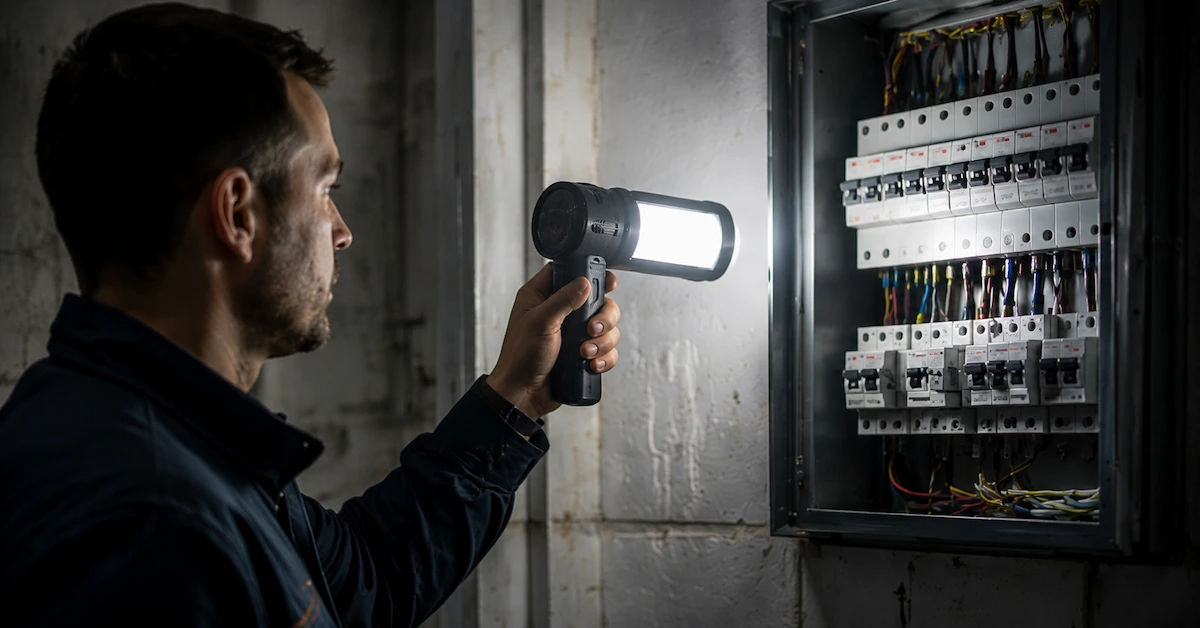
The product category shown in the source is closer to a handheld inspection or work light than a generic cylindrical torch. Its compact pistol-grip body, rectangular LED head, and front diffuser suggest a design intended for controlled illumination during practical tasks. That makes sense for electrical maintenance, troubleshooting, and inspection work where the user may need to direct light precisely with one hand.
For this kind of flashlight, the question is not only whether it appears bright. Buyers should ask whether it places useful light where technicians are looking and working. A beam that is too scattered may reduce detail, while a beam that is too narrow may remove context. In cabinets, service kits, trucks, and indoor utility areas, beam usefulness often matters more than dramatic product claims.
Buyers comparing options can begin with related product categories on the Brightenlux products page before narrowing the specification discussion.
Bulk Buying Checklist for Flashlight Programs
A wholesale flashlight program should be evaluated with simple, repeatable criteria. The checklist below helps procurement teams, engineers, and product managers compare models without getting distracted by decorative features or unsupported claims. It is especially useful when the same light will be used by many people in different daily work conditions.
| Check Point | Why It Matters |
|---|---|
| Form factor | Supports one-handed use in cabinets, vehicles, and service bags. |
| Beam behavior | Helps users inspect labels, wiring, terminals, and nearby details. |
| Housing feel | Indicates whether the unit feels like a work tool rather than a toy. |
| Switch placement | Should be easy to find in low light or while wearing gloves. |
| Power arrangement | Battery type, replacement, charging, and runtime must be confirmed by the supplier. |
| End-use fit | Industrial maintenance, utility work, and emergency kits have different priorities. |
This kind of structured comparison helps separate a practical procurement decision from a simple visual preference.
Where the Flashlight Fits: Work, Field, and Emergency Use
In electrical and industrial maintenance, a directed handheld light can help users inspect breakers, terminals, wiring runs, labels, and dark equipment areas. The value is not only visibility; it is control. A pistol-grip shape allows the technician to aim the light like a tool and reposition it quickly as the inspection changes.
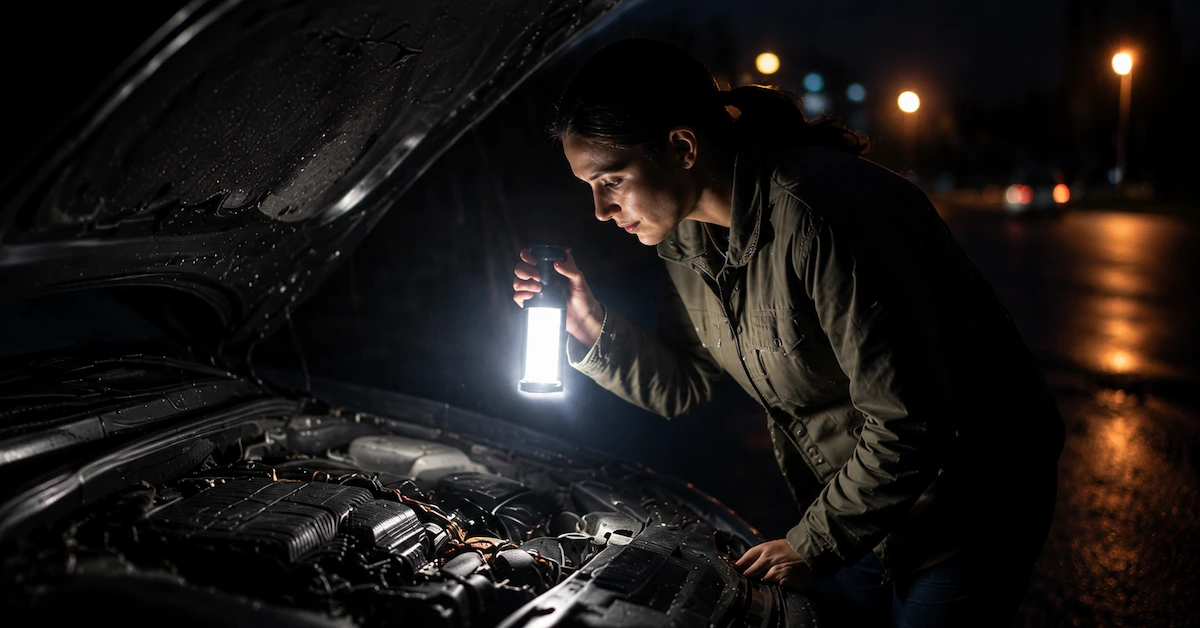
Field service and utility crews have similar needs. They may carry the light throughout the day, store it in a vehicle, or use it repeatedly in indoor service locations. For these users, compact handling and reliable operation are more important than recreational styling. The flashlight becomes part of a standard kit, not an occasional accessory.
Emergency preparedness is another valid use case when the design is simple to find and operate. A power outage emergency light should help people respond quickly under stress. If it is confusing, bulky, or awkward, it may be ignored until the moment it is needed most.
How to Evaluate a Wholesale Flashlight Supplier
When reviewing a supplier, ask for clear answers instead of broad marketing language. Start with intended application: is the light meant for inspection, worksite tasks, emergency kits, or general use? Then ask how the housing is produced and assembled. The visible product type suggests a molded plastic body with an LED module, diffuser, and battery compartment or internal pack, which is common for portable LED lighting.
Quality control matters because small inconsistencies become large issues in volume. Mold fit, switch action, battery compartment integrity, and grip comfort can all affect user satisfaction after repeated handling. Buyers should also clarify power details before placing a bulk order. Battery type, runtime, charging method, and replacement approach are not confirmed in the source, so they should be treated as required supplier questions rather than assumptions.
If your team needs direct clarification for a sourcing project, use the Brightenlux contact page to discuss application fit and product details.
Common Sourcing Mistakes to Avoid
One common mistake is buying only on brightness language. For inspection work, a controlled beam can be more useful than a stronger-looking but scattered light. Another mistake is treating every flashlight as interchangeable. A general-purpose torch may not support the one-handed handling, beam placement, and confined-space control needed by maintenance teams.
Procurement teams can also underestimate service expectations. When hundreds of units are distributed, small issues such as awkward switches or weak housing fit can create repeated complaints. A professional supplier should be able to discuss product consistency, packaging needs, sample review, and replacement handling in straightforward terms.
The lowest-priced option may not be the best value if it creates extra work later. Before buying, get samples into the hands of actual users. Ask them to test the grip, switch, beam direction, and carrying convenience in realistic areas such as cabinets, plant rooms, vehicles, or emergency kits.
Practical Buying Advice for Sourcing Teams
The best purchasing decision begins with the job environment. If the end users are technicians, choose a light that helps them inspect the work surface rather than simply holding a bright object. If the end users are emergency-kit users, prioritize simple operation and easy access. If the end users are field crews, focus on handling, durability expectations, and one-handed control.
Appearance can identify the general product category, but it cannot confirm runtime, long-term durability, power serviceability, or user acceptance. Those details should come from supplier communication and sample review. Buyers building a product line may also need to ask whether the design can suit different customer groups through grip, switch, housing color, or packaging adjustments.
When you are ready to move from evaluation to quotation, submit project details through the Brightenlux inquiry page. Share the use case, user group, and any packaging or channel requirements so the discussion stays practical.
FAQ for Wholesale Flashlight Buyers
Is this type of flashlight the same as a general consumer flashlight?
No. The shape and likely application point toward inspection and maintenance use, where controlled illumination and one-handed handling are important. A consumer flashlight may be useful for casual tasks, but a work-light style unit should be judged by how well it supports real job environments.
Can this flashlight type be used in emergency preparedness kits?
Yes, if the design is simple to operate, easy to locate, and supported by a power arrangement that fits the preparedness plan. For power outage emergency light applications, usability under stress can matter more than feature count or decorative design details.
What should buyers confirm before placing a bulk order?
Buyers should confirm the intended application, housing construction, switch behavior, beam suitability, battery arrangement, packaging details, and sample availability. Runtime, charging method, replacement approach, and durability expectations should come directly from the supplier, because those details cannot be safely assumed from appearance alone.
Should procurement choose the cheapest flashlight available?
Not automatically. A flashlight may look simple, but poor ergonomics, inconsistent switches, or weak component choices can create user complaints and replacement work. For bulk sourcing, value comes from matching the product to the task and confirming details before the order is placed.