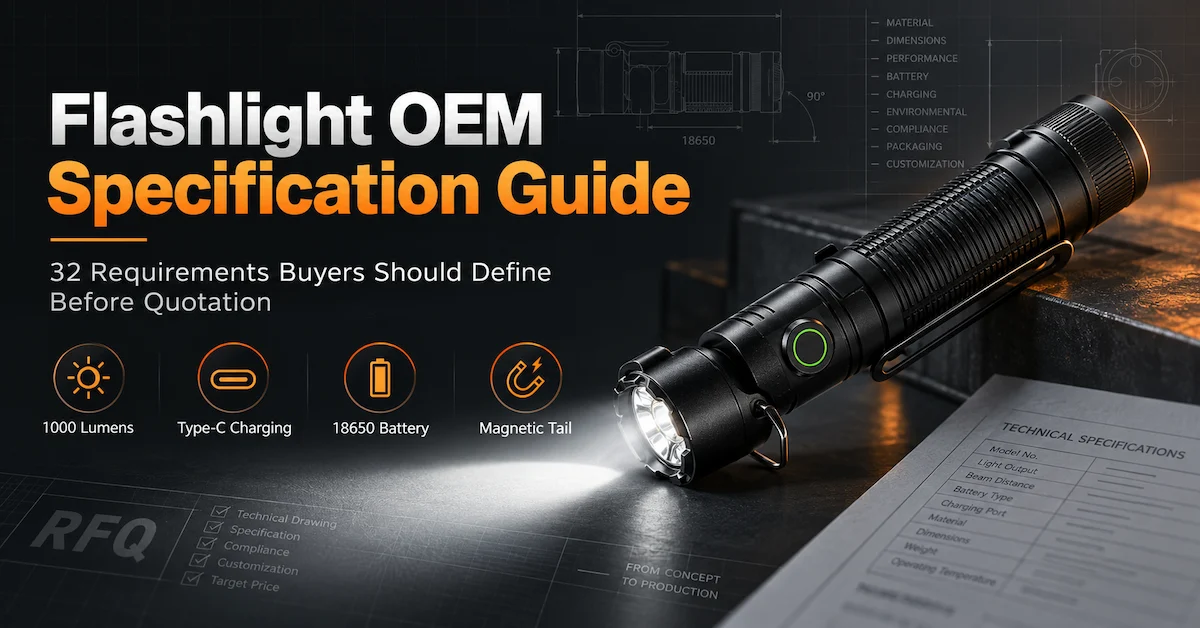


Choosing an OEM LED work light manufacturer takes more than comparing lumens, battery capacity and unit price. Two work lights can appear equally bright yet produce noticeably different whites or render colored objects differently. These differences matter for automotive tool distributors, industrial maintenance suppliers and private-label brands that need repeatable products across wholesale orders.
A production-ready specification should connect the intended work task, measurable light-color requirements, the approved component configuration and a repeatable inspection method. This guide explains how to build that specification without paying for performance claims that the application does not require.

1. Why Does Color Consistency Matter in OEM Work Lights?
Color differences become a commercial problem when an approved sample looks neutral white but a later shipment appears noticeably cooler, warmer or tinted. Even if all lamps switch on, inconsistency can undermine product photography, customer expectations and repeat orders.
Automotive repair and inspection
Mechanics inspect hoses, connectors, fasteners and fluid stains under varied workshop conditions. The lamp needs a useful beam pattern and enough illumination at the work surface. Where distinguishing subtle color differences is important, the quality and consistency of the light spectrum also deserve attention. A high CRI number alone, however, does not qualify a product for professional paint matching or other color-critical work.
Equipment maintenance and industrial distribution
Technicians may inspect colored markings, labels and components. A predictable lighting appearance can support visibility, but perceived wire color must never be the sole basis of electrical identification or safe-work decisions. For distributors, a consistent product across orders reduces disputes about whether a replacement batch matches the catalogue description.
Private-label brand consistency
Buyers should document acceptable color variation rather than describe the target as only “bright white.” A photographed sample and a nominal CCT value are useful starting references, not complete manufacturing acceptance criteria.
2. What Do CCT, CRI and Color Consistency Actually Measure?
These terms measure different characteristics. A professional RFQ should not treat them as interchangeable.
Correlated color temperature (CCT)
CCT, expressed in kelvin (K), describes the relative warm-to-cool appearance of white light. Typical nominal choices include warm white around 2700–3000 K, neutral white around 3500–4500 K and cooler daylight-like whites around 5000–6500 K. These are common reference ranges, not compulsory targets or verified Brightenlux product values. Higher CCT does not automatically mean higher brightness or better color rendering.
Color rendering index (CRI)
CRI Ra is a general measure of how a source renders the colors of selected reference samples compared with an appropriate reference illuminant. It does not describe every hue-specific difference, glare, beam uniformity or battery runtime. A high-CRI requirement should be justified by an actual inspection task.
Additional color-rendering information: IES TM-30
The IES method for evaluating light source color rendition (ANSI/IES TM-30-24) provides a more detailed assessment than general CRI alone. Its fidelity index Rf and gamut index Rg help explain why lights with similar nominal CCT or Ra can make colors look different. These metrics should be interpreted in context, not turned into a universal pass/fail claim.
Color consistency and LED binning
Two LEDs sold under the same nominal CCT may occupy different chromaticity positions. LED binning, component sourcing and the complete optical/electrical design influence the finished work light. Buyers should agree on tolerances and how measurements will be taken.
| Metric | What it tells the buyer | What it does not prove |
|---|---|---|
| Lumens (lm) | Total luminous flux | Even illumination across a workbench |
| Lux (lx) | Illuminance received at a surface | Accurate color rendering |
| CCT (K) | Warm or cool white appearance | CRI or spectral quality |
| CRI Ra | General color-rendering behavior | Every hue-specific response |
| TM-30 Rf / Rg | Fidelity and gamut characteristics | Complete product suitability |
| Chromaticity / SDCM | Ways to describe color position or variation | Battery performance or overall quality |
Procurement takeaway: Define the required visual task first. Only then choose metrics that can meaningfully be measured and accepted.
3. Which Color Specifications Match Real Work-Light Applications?
Different markets need different combinations of beam coverage, visual comfort, color fidelity, runtime and cost.
| Target market | Principal lighting priority | OEM sample evaluation |
|---|---|---|
| Automotive tool distributors | Useful repair-area visibility | CCT appearance, glare, beam distribution |
| General workshop retailers | Predictable performance at a viable cost | Defined CCT range and sample comparison |
| Industrial inspection suppliers | Reliable visibility of relevant materials | Application test; CRI or TM-30 if justified |
| Mobile field-service teams | Portable and positionable light | Color, mounting, usability and runtime |
| Private-label work-light brands | Repeat-order appearance consistency | Controlled LED configuration and batch tolerance |
Do not automatically specify 90+ CRI, an extremely tight SDCM band or multiple CCT modes for every application. More demanding targets may narrow component choice and increase the validation burden. The customer should be able to explain why each technical requirement improves the actual job.
4. What Causes One OEM Work-Light Batch to Look Different From Another?
A reliable OEM process identifies the parts and operating conditions that influence the light output.
LED bins and COB configuration
LED manufacturers may categorize devices by chromaticity and other measured characteristics. A COB package does not by itself guarantee a particular CCT, CRI, uniformity or consistency. Ask for the approved LED/COB identification, permitted bin ranges and rules for alternate parts.
Driver settings and operating current
Different drive currents and modes can affect thermal conditions and therefore the source's operating characteristics. A high-output mode should not be assumed to have the same color appearance as a lower-output mode without evidence.
Heat management
LED characteristics can shift as components warm. Measurements immediately after switch-on may not describe the product after sustained use. Define the measurement timing and operating state for production acceptance.
Diffusers, reflectors and protective covers
Optics influence the delivered beam. Changing diffuser material, lens geometry or a protective cover can alter the appearance and distribution of light. Proposed changes may require renewed optical verification.
Component substitutions
An alternate LED of comparable nominal power or CCT is not necessarily visually equivalent. A good repeat-order agreement requires review of changes to LEDs, drivers, optics and other color-critical components.
5. What Should an OEM Work-Light Color Specification Include?
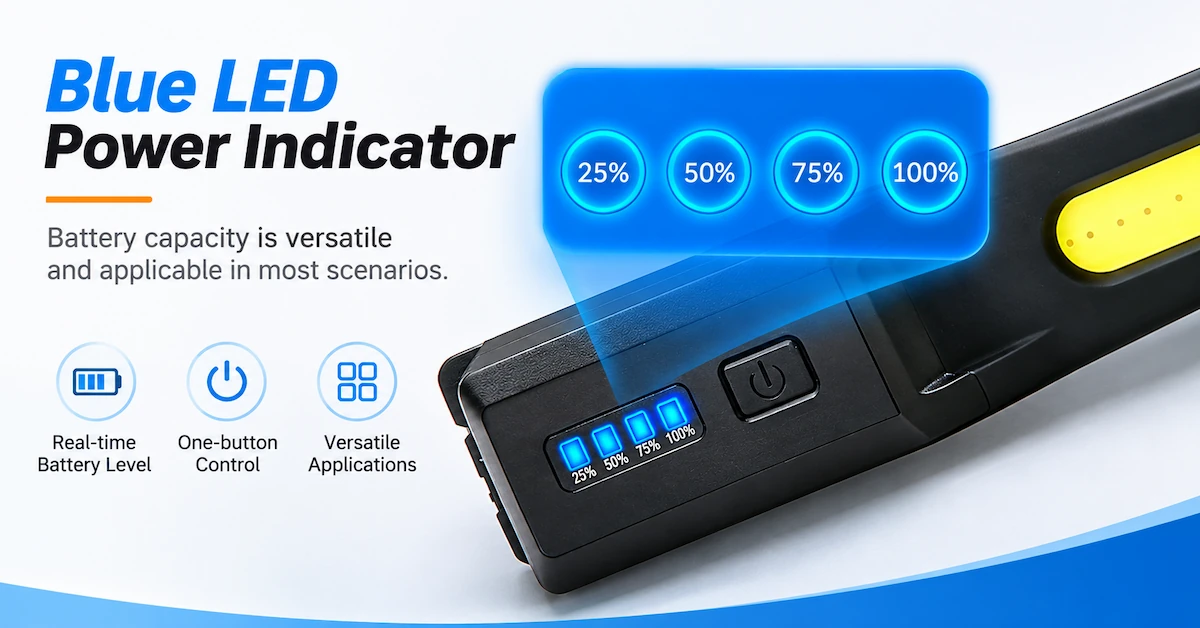
Avoid an incomplete instruction such as “4000 K high-CRI COB light.” Convert requirements into fields that a proposed factory and an independent buyer can both test.
| Specification field | Illustrative buyer requirement | Suggested evidence |
|---|---|---|
| Application | Automotive component inspection | Representative task review |
| Light source | Approved COB LED or agreed alternative | Part identification |
| Nominal CCT | Example: 4000 K | CCT/chromaticity measurement |
| Example CCT acceptance band | Example: 3800–4200 K | Defined measurement procedure |
| CRI | Example: Ra ≥ 90, only if needed | Appropriate spectral report |
| Color consistency | Agreed chromaticity / SDCM limit | Measurements on multiple samples |
| Operating state | Defined inspection mode and thermal condition | Test record |
| Electrical configuration | Approved driver and battery | Controlled bill of materials |
| Optical configuration | Approved diffuser, cover and housing | Drawings and sample matching |
| Production reference | Approved golden sample and revision | Signed approval record |
Every value above is an illustrative purchasing example, not a Brightenlux model specification, promise or universal compliance threshold.
A manufacturer should explain what can actually be delivered, which instruments or laboratories are available, and what cost or lead-time implications the requested tolerances may create.
6. How Can Buyers Verify Color Quality Before Approving Bulk Orders?
A repeatable sample test is more meaningful than a promotional photograph or a one-unit demonstration.
Step 1 — Identify the configuration
Record model, revision, LED/COB identification, driver, optics, battery/power supply, sample date and sample number. The same specification must appear on the report and the approved purchasing file.
Step 2 — Define the test conditions
Agree on the operating mode, source condition, ambient temperature, thermal stabilization or measurement timing, and measurement geometry. Rechargeable products may need checks at relevant battery states.
Step 3 — Measure the appropriate characteristics
The ANSI/IES LM-79-24 method for optical and electrical measurements of solid-state lighting products provides recognized procedures for suitable products and measurements. Ask the testing party to state the actual sample configuration and method. A report for an unrelated or earlier design is not automatic evidence for a revised OEM lamp.
Step 4 — Compare multiple production-intent samples
Inspect more than one unit. Where commercially justified, sample different LED lots or pilot runs, record the spread and compare it with the agreed tolerance. Visual inspection may help identify obvious differences but does not replace suitable technical measurements.
Step 5 — Check the actual task
Use representative automotive parts, workshop conditions or inspection materials, while controlling ambient light where needed. Color measurements and practical task usability are complementary.
Step 6 — Document the decision
Record accepted, rejected, conditionally accepted and unresolved items. An unverified claim should remain open—not become a printed claim on an OEM package.
7. Which Brightenlux Lighting Platforms Are Relevant to OEM Work-Light Development?
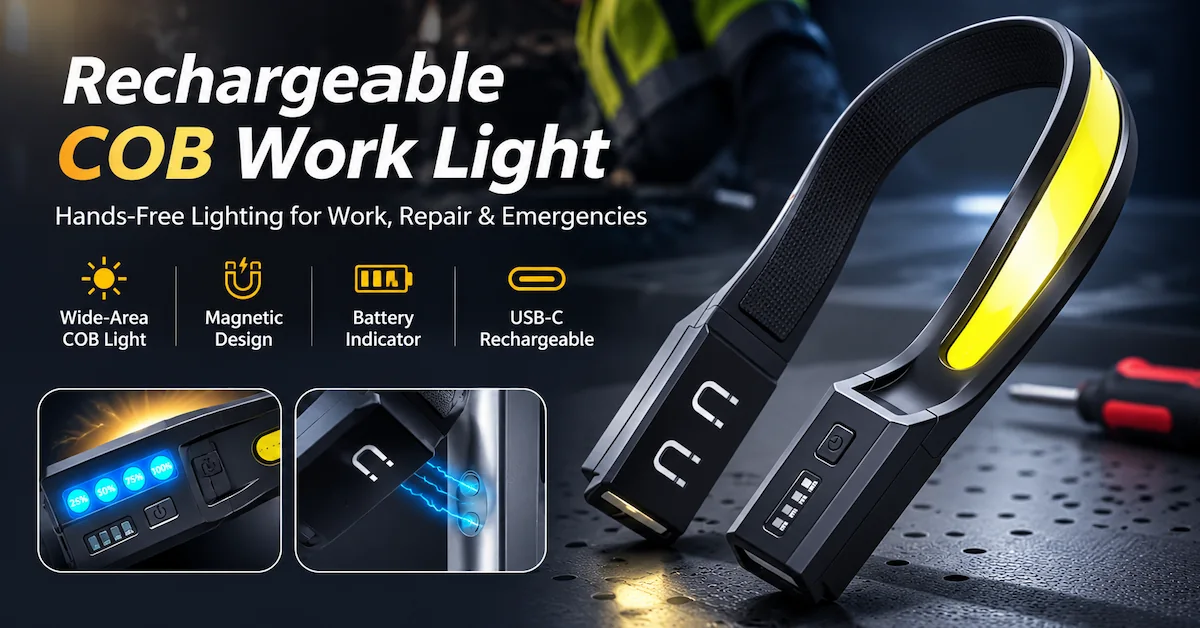
Brightenlux describes lighting solutions for work, repair and field service. Before requesting a dedicated COB workshop model, compare how different lighting formats support the intended task.
| Lighting format | Example application | Optical priority | Main verification point |
|---|---|---|---|
| COB flood work light | Workbench or engine bay | Wide task coverage | Diffuser, glare, uniformity and color |
| Magnetic inspection light | Vehicle or steel equipment | Local hands-free beam | Mounting and beam direction |
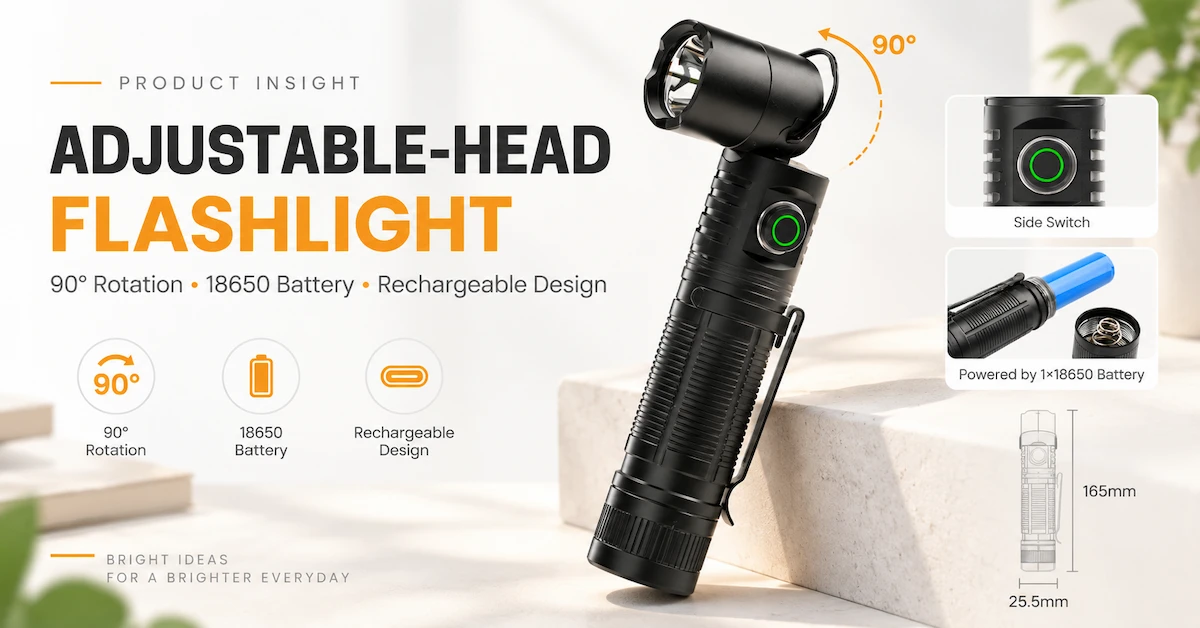
| Adjustable-head flashlight | Confined inspection point | Focused positioning | Aiming, light output and battery |
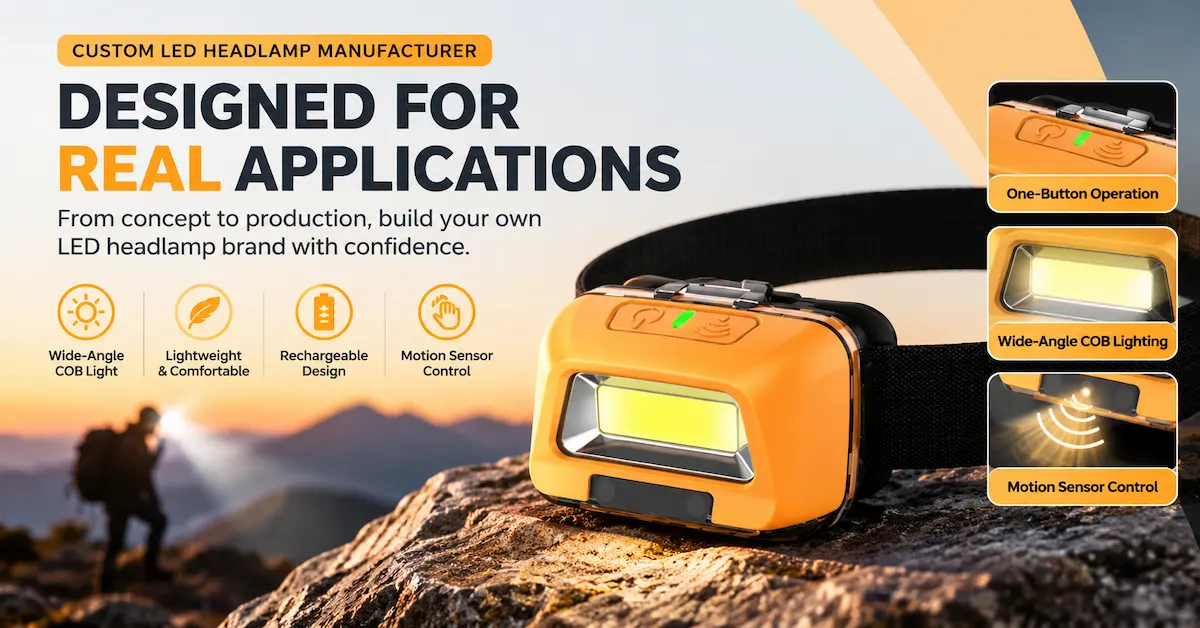
| Warm/cool COB headlamp | Mobile close-up task | Selectable light appearance | Mode-by-mode consistency |
| Portable area light | Temporary work zone | Spatial coverage | Distribution, stability and power |
Adjustable-Head SST40 Flashlight
Positionable lighting and a published magnetic-tail concept for maintenance-area evaluation. Not a certified high-CRI COB work light.
View Product Details →90° Magnetic SST25 Flashlight
Compact directional rechargeable reference for inspection and hands-free placement concepts.
View Product Details →Warm / Cool COB Headlamp
Wearable example of selectable light appearance; product-specific CCT and CRI tolerances require confirmation.
View Product Details →These are format comparisons, not proof that every format is currently listed as a dedicated Brightenlux work-light SKU.
Adjustable-head rechargeable flashlight
Brightenlux's published 1000-lumen SST40 adjustable-head rechargeable flashlight illustrates a positionable portable beam and a magnetic-tail concept for maintenance tasks. It should not be represented as a validated high-CRI COB floodlight.
Right-angle magnetic rechargeable flashlight
The published SST25 right-angle rechargeable flashlight is a reference for compact directional inspection, magnetic positioning and wearable options. Confirm its actual operating performance for the application.
Warm/cool COB headlamp
The published hybrid-power COB headlamp with warm/cool modes is a reference for selectable light appearance in a wearable format. Its public listing does not establish the CCT/CRI tolerances proposed in this guide.
Important: These linked models are flashlights/headlamps. They are not evidence that a specific dedicated high-CRI COB work light is currently stocked or certified. Request the current model catalogue and model-specific test information before quoting a new OEM work-light program.
8. How Should a Manufacturer Control Color Quality in Production?
Passing an engineering sample test is only the starting point. The purchasing team should ask how that approved configuration will be reproduced in a real shipment.
| Control point | What to check | Evidence to request |
|---|---|---|
| Incoming LED/COB | Approved part and permitted bin | Component identification record |
| First-article assembly | Initial color and optical behavior | First-article report |
| Driver and power | Correct approved configuration | Controlled BOM and functional checks |
| Diffuser and lens | Approved material and installation | Drawing and visual sample comparison |
| Finished units | Agreed color acceptance criteria | Sample-based measurement records |
| Packaging | Correct CCT/CRI claims and labels | Approved artwork and manual |
| Repeat production | Engineering and component changes | Revision / change-control record |
The ISO 2859-1:2026 standard on acceptance sampling by attributes can inform appropriate lot-by-lot attribute inspection plans. It does not replace optical engineering validation or electrical safety work. For measured numerical variables such as exact CCT coordinates, buyers need to define the appropriate measurement and decision method rather than assume a generic AQL plan solves every requirement.
For a wider manufacturing audit, review the existing Brightenlux LED Work Light Factory Quality Guide.
9. How Do Tighter Color Requirements Affect OEM Cost and Delivery?
Technical requirements should solve a customer problem—not be added because a number sounds premium.
| Cost driver | Standard color target | More demanding target |
|---|---|---|
| LED selection | Potentially broader part/bin choice | May restrict available bins or suppliers |
| Engineering | Existing design may be usable | Additional evaluation may be required |
| Optical testing | Agreed baseline checks | More detailed spectral/color testing |
| Production acceptance | Standard approved inspection plan | Extra color-related measurements |
| Repeat orders | Basic approved component control | Stricter change and substitution review |
A supplier quotation should identify the precise LED/COB revision, packaging, measurement scope, sample requirements, expected quantity, separate engineering costs and any project-specific MOQ or lead-time conditions.
Commercial decision: Prefer a color specification that has clear end-user value and can be validated. Do not assume every application needs the tightest possible chromaticity limit or that a high CRI value guarantees a better product.
10. What OEM and Private-Label Changes Should Buyers Discuss?
Brightenlux describes OEM/ODM portable lighting support, but the availability of any specific change depends on the selected model and engineering assessment.
Branding and retail presentation
Potential project requirements include logo marking, labels, housing finish, retail boxes, instructions and approved accessories. Each option requires confirmation of feasibility, cost and minimum quantities.
Functional design choices
Changes to LED color quality, lighting modes, drive electronics, battery systems or optics can require redesign and new validation. Do not classify these automatically as simple logo customization.
A controlled development sequence
Application brief → Color and task-lighting specification → Existing-platform review → Feasibility and prototype → Sample measurements → Approved parts and tolerances → Pilot production → Lot inspection → Shipment release.
This is a recommended buyer-side sequence, not a claim about fixed internal Brightenlux procedures or delivery times.
11. What Should Be Included in an OEM LED Work Light RFQ?
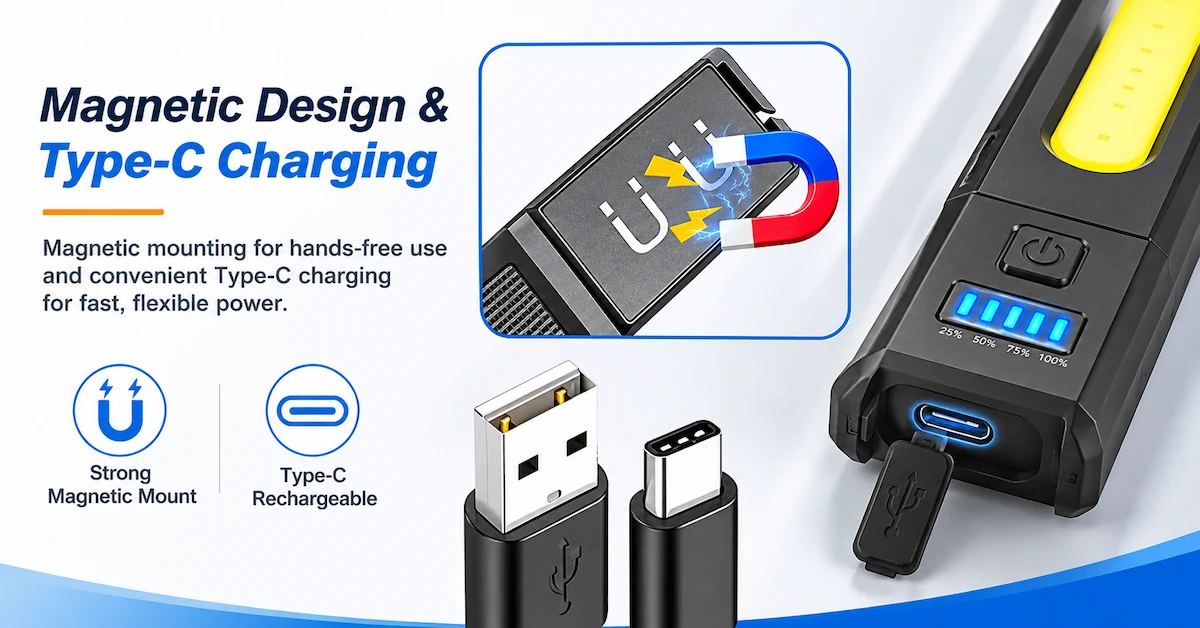
A well-defined RFQ lets a supplier separate essential performance requirements from optional preferences. It also makes competing quotations easier to compare.
| RFQ field | Buyer information to supply |
|---|---|
| Buyer / target market | Company, destination and sales channel |
| Main application | Vehicle repair, maintenance, industrial inspection or field service |
| Lighting format | COB floodlight, magnetic lamp, adjustable head or wearable light |
| CCT / color appearance | Target CCT and proposed acceptance tolerance |
| Color rendering | CRI requirement; TM-30 information if justified |
| Beam and output | Task surface, distance, light mode and glare requirements |
| Battery and charging | Target operating period, configuration and input |
| Product construction | Housing, mounting, materials and dimensions |
| Branding | Logo, packaging, manual and accessories |
| Quality requirements | Sample method, validation, traceability and acceptance |
| Purchasing plan | Sample quantity, first order and realistic forecast |
| Commercial terms | MOQ, quoted configuration, cost, milestones and shipping basis |
Ask the proposed factory which platform is available, which figures are verified, which attributes require development, what changes trigger new sample approval, and which reports are part of the quotation.
12. Frequently Asked Questions About OEM LED Work Light Manufacturers
1. What should I look for in an OEM LED work light manufacturer?
Look for an identifiable product configuration, an honest description of customization capability, traceable technical data, representative sample testing, and a documented method for controlling components and production acceptance. For color-sensitive orders, also ask about CCT, CRI, LED binning and change control.
2. What CCT is best for automotive LED work lights?
There is no universal best CCT. Neutral white can be a practical starting point for many repair tasks, but beam distribution, glare and the actual environment matter. Evaluate samples at the intended working distance rather than choosing based on a higher Kelvin number.
3. Is a high-CRI light necessary for industrial inspection?
Only where the task justifies higher color fidelity. Other tasks may benefit more from good beam coverage, usable lux and operating time. For specialized color inspection, additional spectral data and controlled references may be needed beyond Ra.
4. How is CCT different from CRI?
CCT describes the warm/cool appearance of white light. CRI describes aspects of color rendition compared with a reference. A lamp can share the same CCT with another lamp yet render objects differently.
5. How can buyers reduce color differences across production batches?
Agree on approved LED/COB parts, relevant bin or chromaticity requirements, a test method, sampling, production reference and change-notification rules. Inspect representative units rather than relying on a single approved photograph.
6. Does COB technology guarantee uniform color?
No. COB is a light-source packaging approach, not a color-consistency certification. The emitter, optical design, driver, thermal conditions and component sourcing all influence performance.
7. Can Brightenlux provide a custom high-CRI COB work light?
Brightenlux publicly describes OEM/ODM portable lighting support. Specific high-CRI COB work-light availability, configuration, testing, MOQ and cost require product-specific confirmation before claims or quotations are made.
8. Should color tests be repeated if the LED is changed?
An alternate LED may affect chromaticity, spectral behavior, light output or thermal performance. Ask for an engineering impact assessment and retest the relevant characteristics as agreed in the approved specification.
9. Can one product serve automotive maintenance and camping?
Possibly, but use conditions differ. Workshop buyers may prioritize mounting and accurate task visibility; camping buyers may prioritize comfort, portability and battery endurance. Test the chosen configuration for each intended use.
10. How can I request a Brightenlux OEM work-light quotation?
Send the target market, application, proposed lighting form factor, requested CCT and color performance, battery and charging needs, mounting, branding, quantity and schedule. Ask for available models, engineering feasibility and a model-specific quotation.
Conclusion
Selecting an OEM LED work light manufacturer is not only about the advertised lumen figure or the lowest factory price. For automotive tool brands, maintenance suppliers and private-label importers, repeatable color appearance and appropriate color rendering can materially affect the user experience and consistency between purchases.
Start with the actual task, set measurable requirements, verify a representative production-intent sample, agree on acceptable component and color variation, and document how the supplier will manage changes. Use standards and laboratory measurements where they genuinely support the application; do not claim that reference to a standard certifies a product.
Brightenlux offers portable LED lighting platforms and discussions about OEM/ODM solutions. Buyers seeking a dedicated COB work-light specification should request the current product range, available test data, model-specific customization options and an itemized quote before committing to production.