

Quick Answer: A reliable magnetic work light supplier should help buyers evaluate corrosion resistance, magnetic component protection, and mounting performance after exposure to relevant workshop conditions. Moisture, damaged coatings, and accumulated metal particles can affect magnetic assemblies over time. Before bulk orders, buyers should identify critical materials, approve representative samples, define appropriate corrosion and functional tests, and establish clear acceptance criteria for repeat production.
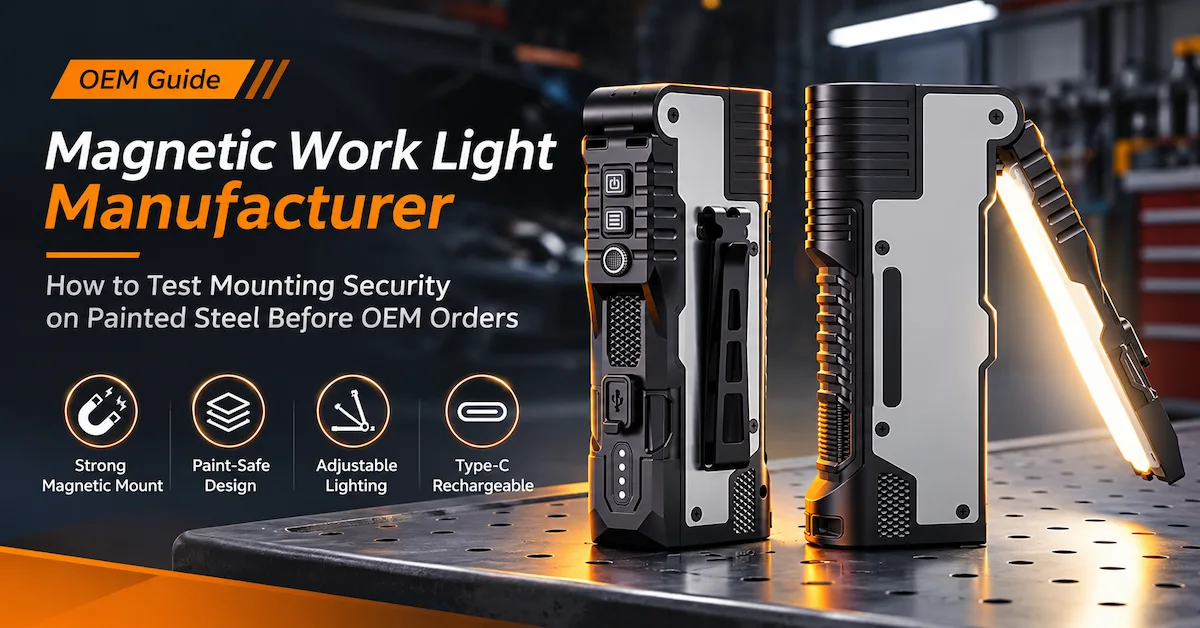
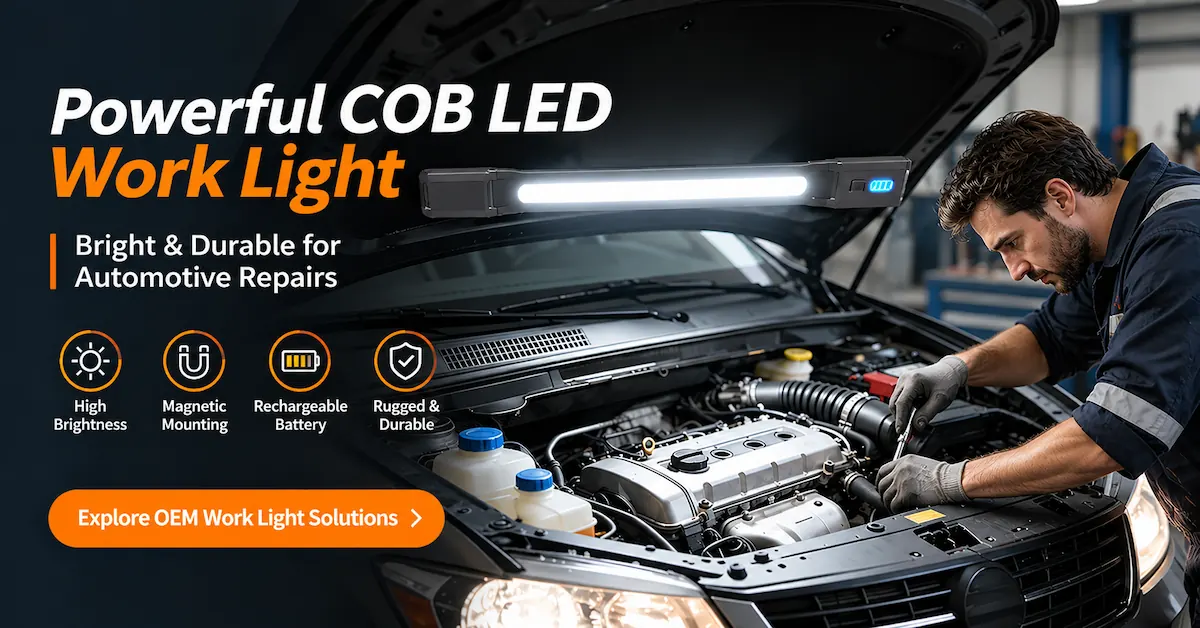
Magnetic LED work lights are widely used in automotive repair, equipment maintenance, and portable inspection applications because they allow technicians to position lighting without continuously holding it.
However, a magnetic base that performs well during an initial demonstration may develop problems when exposed to moisture, cleaning chemicals, metallic debris, or repeated handling.
A supplier may demonstrate strong attachment to a clean steel plate. Yet this demonstration provides limited information about the condition of the magnetic assembly after extended exposure to a damp workshop environment.
For overseas importers, automotive tool distributors, and private-label lighting brands, this raises an important purchasing question:
Will the approved magnetic mounting system continue functioning as intended under the environmental conditions experienced by customers?
The answer requires more than a waterproof claim or an advertised magnetic holding-force value.
Buyers should examine materials, coatings, contact interfaces, corrosion risks, sample testing, and production consistency.
This guide provides a practical procurement framework for evaluating these factors before committing to wholesale orders.
For general product selection and mounting geometry, see the Brightenlux Magnetic Work Light Manufacturer Guide for Automotive Maintenance.
1. Why Does Corrosion Matter When Choosing a Magnetic Work Light Supplier?
Corrosion is the deterioration of a material resulting from chemical or electrochemical interaction with its environment.
For a magnetic work light, the concern is not limited to visible rust on the housing.
Corrosion can also affect exposed or poorly protected magnetic components, fasteners, clips, springs, and other metallic parts.
Automotive repair environments
Repair workshops may expose portable lighting products to:
- Moisture carried into the workshop.
- Wet vehicle surfaces.
- Road salt residues.
- Oil and cleaning-product contamination.
- Metal particles generated during mechanical work.
- Repeated attachment and removal from steel surfaces.
The actual exposure depends on the workshop, geographical market, maintenance procedures, and user behavior.
A product intended for a dry indoor repair bench may need different environmental protection from one routinely used in wet fleet-maintenance areas.
Industrial maintenance environments
Maintenance teams may use magnetic lights near machinery, pumps, steel enclosures, and equipment undergoing cleaning.
These applications introduce additional considerations such as humidity, condensation, surface contamination, and repeated mechanical handling.
Outdoor field-service environments
Portable work lights used around service vehicles or outdoor equipment may encounter rain, damp storage compartments, and changing temperatures.
Buyers should not automatically assume that a product suitable for occasional rain is also suitable for long-term salt exposure or chemical cleaning.
Who Should Prioritize Corrosion Resistance?
| Buyer Type | Typical Application | Main Purchasing Concern |
|---|---|---|
| Automotive tool distributor | Repair shops and service centers | Mounting reliability after repeated workshop exposure |
| Fleet maintenance supplier | Vehicle depots and service vans | Moisture and road-salt contamination |
| Industrial MRO distributor | Equipment inspection | Corrosion of mounting and mechanical components |
| Private-label lighting brand | Rechargeable work-light ranges | Consistent materials and protective finishes |
| Field-service equipment supplier | Outdoor maintenance | Wet storage and repeated handling |
| OEM tool brand | Customized magnetic lighting | Approved materials and production consistency |
Procurement takeaway: Environmental suitability should be defined by the customer's actual work conditions rather than by generic descriptions such as "professional-grade" or "heavy-duty."
2. Which Components of a Magnetic Work Light Are Most Vulnerable?
A magnetic work light is a complete mechanical and electrical assembly.
Its environmental durability depends on how different components interact.
Magnetic elements
Depending on the magnet type and construction, environmental exposure can affect an insufficiently protected magnetic assembly.
Some magnet materials rely on surface treatments or protective housings to reduce corrosion risk.
Buyers should request information about the selected magnetic element, coating or protective design, and relevant environmental limitations.
Magnetic mounting interfaces
A magnet may be recessed within a housing or positioned behind a protective contact surface.
The geometry influences how the product interacts with steel surfaces.
Damage to the protective interface can expose vulnerable materials or create areas where contamination accumulates.
Clips, hooks, and fasteners
Metal clips and fasteners may have different coatings and corrosion characteristics from the main lamp body.
A corrosion-resistant aluminum housing does not guarantee that every screw or spring has equivalent environmental performance.
Charging interfaces
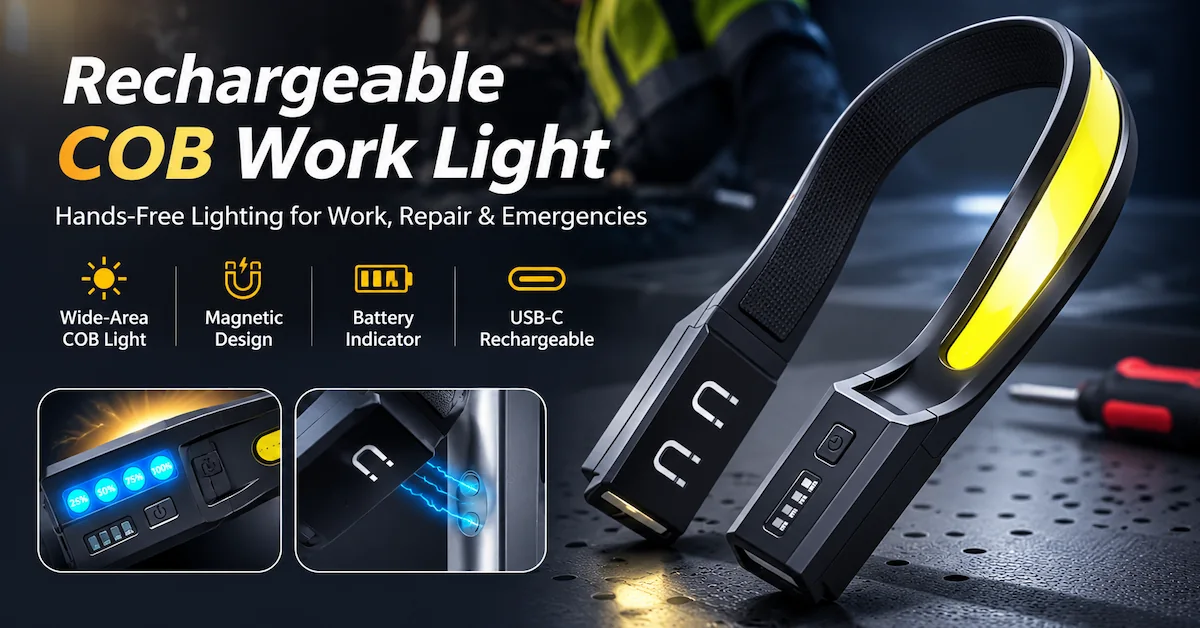
Rechargeable work lights often include a USB-C charging port and a protective cover.
Moisture exposure can affect electrical connections or contact surfaces if the design and intended operating conditions are not adequately controlled.
Housing and sealing components
Housing joints, protective covers, and seals influence environmental protection.
Their performance should be considered alongside the manufacturer's published ingress-protection claims.
Component Risk Matrix
| Component | Potential Risk | Buyer Verification |
|---|---|---|
| Magnet | Coating deterioration or corrosion | Material and protective-finish documentation |
| Magnetic base | Contact wear or contamination | Repeated attachment and surface inspection |
| Pocket clip | Corrosion or loss of function | Material review and handling test |
| Fasteners | Corrosion or loosening | Approved component and finish inspection |
| Charging contacts | Moisture-related deterioration | Electrical and charging verification |
| Charging-port cover | Poor sealing or mechanical wear | Closure and environmental inspection |
| Housing | Finish deterioration | Surface and material evaluation |
| Adjustable joints | Corrosion or movement problems | Repeated operation after conditioning |
The objective is to identify components whose condition could affect product performance, not to assume that every metal part requires the same coating or test.
3. How Should Buyers Match Corrosion Protection to Different Work Environments?
A magnetic work light supplier should help clarify the intended exposure conditions before recommending a product.
The severity of the environment can vary considerably.
Dry indoor workshops
In relatively dry, temperature-controlled environments, ordinary handling and mechanical wear may be more important than aggressive corrosion exposure.
Buyers should still verify construction quality and mounting reliability.
Wet automotive service bays
Vehicle-washing activities, wet vehicles, and workshop cleaning can introduce repeated moisture exposure.
Products should be evaluated for relevant ingress protection and the condition of exposed mechanical components.
Road-maintenance and fleet-service environments
In regions where road de-icing salts are used, service equipment may encounter salt contamination.
This can introduce different corrosion risks from clean freshwater exposure.
Outdoor equipment servicing
Field-service lighting may encounter condensation, rain, storage humidity, and changing temperatures.
The appropriate product specification should reflect actual environmental exposure.
Environmental Risk Assessment Matrix
| Environment | Primary Exposure | Recommended Review |
|---|---|---|
| Dry workshop | Ordinary handling and dust | Mechanical construction and mounting |
| General vehicle repair | Intermittent water and contaminants | Sealing, materials, surface protection |
| Wet fleet-maintenance bay | Moisture and possible salt residues | Corrosion screening and functional testing |
| Outdoor field service | Rain, humidity, temperature changes | Model-specific environmental validation |
| Salt-exposed maintenance area | Chloride contamination | Coating selection and corrosion testing |
| Chemical-cleaning area | Cleaning chemicals | Material compatibility and approved cleaning procedure |
This is a buyer-oriented risk framework, not an official environmental classification or a claim that Brightenlux products are approved for every listed environment.
Important: Specialized environments involving explosive atmospheres, electrical hazards, or other regulated conditions require appropriately evaluated equipment. Ordinary portable lighting should not be assumed suitable.
4. How Can Buyers Evaluate Magnet Coatings and Surface Protection?
Magnetic attachment performance depends on more than the nominal strength of the magnet.
The complete mounting assembly should be evaluated, including any protective coating, housing, contact pad, and mechanical retention arrangement.
Identify the magnetic material
Ask the supplier to identify the magnet type used in the proposed product.
Different magnetic materials can have different environmental and temperature characteristics.
Avoid accepting an unspecified "strong magnet" claim as a complete technical description.
Review the protective finish
Depending on the design, magnetic components may use metallic coatings, polymer protection, encapsulation, or other protective arrangements.
Buyers should confirm the actual construction rather than assume a particular treatment is used.
The supplier should identify whether the proposed protective system is suitable for the intended environment.
Evaluate coating damage
A protective coating can be affected by mechanical contact, handling, or manufacturing defects.
Scratches, pores, or damaged edges may introduce locations where corrosion begins.
Where coating integrity is important, include appropriate visual and environmental inspection.
Consider contact pads
Some magnetic mounting systems incorporate protective materials between the lamp and the mounting surface.
These interfaces can help manage contact and surface protection, but their geometry and thickness may also influence magnetic attachment.
A change to the contact material can require renewed mounting evaluation.
Confirm cleaning compatibility
Cleaning procedures should be appropriate for the approved housing, magnet, coatings, and seals.
Do not assume that a work light tolerates solvents, strong detergents, or aggressive cleaning solely because it has a water-resistance rating.
5. What Can Salt-Spray Testing Tell Buyers About Magnetic Work Lights?
Salt-spray testing is a recognized method for evaluating selected corrosion-protection characteristics under controlled laboratory conditions.
The official ISO 9227:2022 standard for salt-spray testing describes neutral salt spray, acetic acid salt spray, and copper-accelerated acetic acid salt spray procedures for assessing the corrosion resistance of relevant metallic materials and protective coatings.
The standard also explains that such tests can help identify coating defects, including discontinuities or pores.
For magnetic work-light projects, these methods can be relevant when evaluating suitable metallic components or protective finishes.
What should buyers test?
Depending on the design and risk assessment, possible test specimens include:
- Magnet assemblies.
- Protective coatings or material samples.
- Metal clips and fasteners.
- Relevant mounting components.
- Representative assembled subcomponents.
The manufacturer and testing specialist should determine which specimens and procedures are appropriate.
An assembled rechargeable product containing a lithium battery should not automatically be placed into a corrosion chamber without a specific safety and engineering assessment.
What should the report identify?
A useful report should record:
- Test standard and edition.
- Specimen identification.
- Material or coating configuration.
- Test method.
- Exposure duration.
- Test conditions.
- Relevant observations.
- Defined acceptance criteria.
- Final evaluation.
- Relationship to the approved production configuration.
Can salt-spray hours predict product lifespan?
No.
The official ASTM B117-26a standard for operating salt-spray apparatus explains that performance in natural environments cannot reliably be predicted from salt-spray results alone.
Similarly, ISO 9227 does not establish universal product-specific exposure durations or acceptance limits.
Therefore, claims such as "48 hours of salt spray equals one year of outdoor use" should not be made without an independently justified correlation.
B2B purchasing value: Salt-spray testing can help screen coating quality and identify weaknesses, but it must be combined with appropriate functional and application-specific evaluation.
6. How Can Buyers Check Magnetic Holding Performance After Corrosion Exposure?
Initial magnetic holding performance and post-exposure mounting performance are separate evaluation questions.
A work light might satisfy its original mounting requirement but behave differently after environmental conditioning or repeated mechanical handling.
Establish baseline performance
Before conditioning, record:
- Approved product model.
- Battery and accessory configuration.
- Complete product weight.
- Magnet and contact-surface arrangement.
- Test surface material and thickness.
- Surface orientation.
- Pull-off or positioning test method.
- Initial measured results.
Apply the agreed environmental conditioning
Use a procedure appropriate to the selected components and intended environment.
The method may involve controlled corrosion screening, humidity conditioning, or another relevant approach approved by the buyer and testing specialist.
Repeat the functional evaluation
After conditioning and any defined recovery or cleaning procedure, inspect the component or product.
For relevant assemblies, evaluate:
- Visible corrosion or coating damage.
- Magnetic attachment behavior.
- Sliding or rotational stability.
- Clip or hinge operation.
- Contact-surface condition.
- Electrical function where applicable.
Example: Comparing Initial and Post-Exposure Results
Suppose a buyer-defined test produces the following hypothetical results:
| Measurement | Before Conditioning | After Conditioning |
|---|---|---|
| Perpendicular pull-off force | 18 N | 15 N |
| Visible coating defects | None observed | Localized deterioration |
| Mounting interface | Intact | Requires further examination |
The measured pull-force retention is:
15 ÷ 18 × 100 = approximately 83.3%
This value describes only the change in that particular measurement.
It does not prove the product is safe or suitable for a given application.
A purchaser must define acceptable performance limits using the actual mounting geometry, load conditions, and intended use.
All figures are hypothetical teaching examples. They are not Brightenlux test results or universal acceptance limits.
Why post-exposure evaluation matters
A corrosion test that records only visible appearance may miss changes to the product's functional mounting behavior.
Conversely, a stable mounting result does not automatically prove that all coatings or electrical components remain acceptable.
A complete assessment should therefore distinguish cosmetic, mechanical, and functional requirements.
7. Does an IP Rating Guarantee Corrosion Resistance?
No.
Ingress protection and corrosion resistance are different characteristics.
The IEC 60529 standard for enclosure protection classifies degrees of protection provided by electrical enclosures against specified access, solid-object, and water-ingress conditions.
An IP rating does not establish resistance to road salt, chemical cleaners, corrosion, or every form of environmental deterioration.
IPX4 versus corrosion protection
An IPX4 rating addresses specified water-splash exposure.
It does not establish a magnet's corrosion resistance after repeated salt contamination.
What about IP44?
An IP44 rating describes specified protection against solid objects and splashing water.
It should not be interpreted as evidence that the product is suitable for immersion or long-term exposure to aggressive chemical environments.
What about IP67?
Even a product with an appropriately supported IP67 rating does not automatically have verified corrosion resistance.
The standard addresses defined enclosure protection conditions rather than the lifetime performance of every metal component.
Environmental Claims Comparison
| Claim or Test | What It Addresses | What It Does Not Automatically Establish |
|---|---|---|
| IPX4 | Specified water-splash protection | Corrosion resistance |
| IP44 | Defined solid-object and splash protection | Salt-spray performance |
| IP67 | Defined dust and temporary immersion protection | Long-term chemical durability |
| Salt-spray test | Corrosion screening under a defined procedure | Real-world service life |
| Magnetic pull test | Attachment force under a defined geometry | Universal mounting security |
| Functional inspection | Operation under specified test conditions | Performance in every environment |
Before approving packaging claims, buyers should request documentation that identifies the exact model, test conditions, and supporting evidence.
8. Which Brightenlux Products Are Relevant to Magnetic Work Light Sourcing?
Brightenlux provides rechargeable portable lighting products, including magnetic-tail flashlights suitable for evaluation in selected maintenance and inspection applications.
The company also describes OEM/ODM support through its outdoor lighting solutions.
For specialized magnetic COB workshop lamps, buyers should confirm current model availability and product specifications separately.
The following models are documented rechargeable flashlights rather than confirmed dedicated COB work lamps.
Brightenlux Magnetic Lighting Platform Comparison
| Product | Published Features | Potential Application | Environmental Verification |
|---|---|---|---|
| BT-FL8078 | 1000lm SST25, 16340 800mAh battery, magnetic tail, Type-C, IPX4 | Compact maintenance inspection | Magnet protection, charging port, splash rating |
| BT-FL8088 | 1500lm SST40, 21700 4000mAh battery, magnetic tail, Type-C, IPX4 | Portable repair lighting | Magnetic assembly, metal components, moisture exposure |
| 1000lm SST40 Adjustable-Head Flashlight | Adjustable head, magnetic tail, Type-C, published IP44 | Directional workshop inspection | Hinge components, mounting interface, enclosure |
Specifications are based on Brightenlux's published product information. They are not independent test results or confirmation of salt-spray resistance.
BT-FL8078: Compact magnetic inspection platform
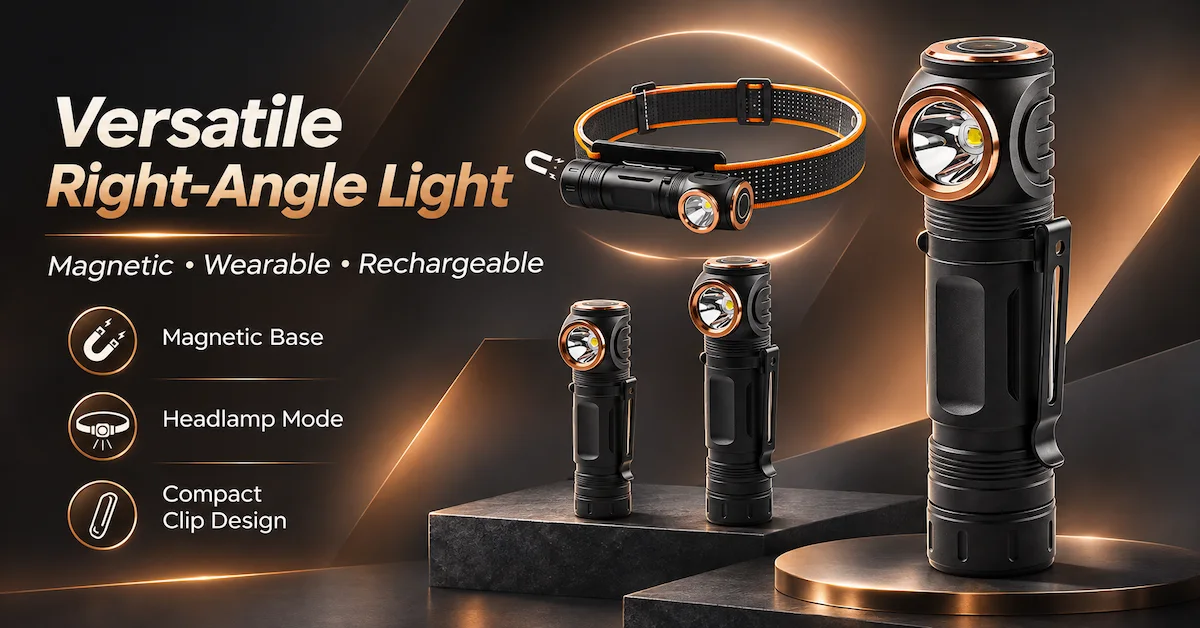
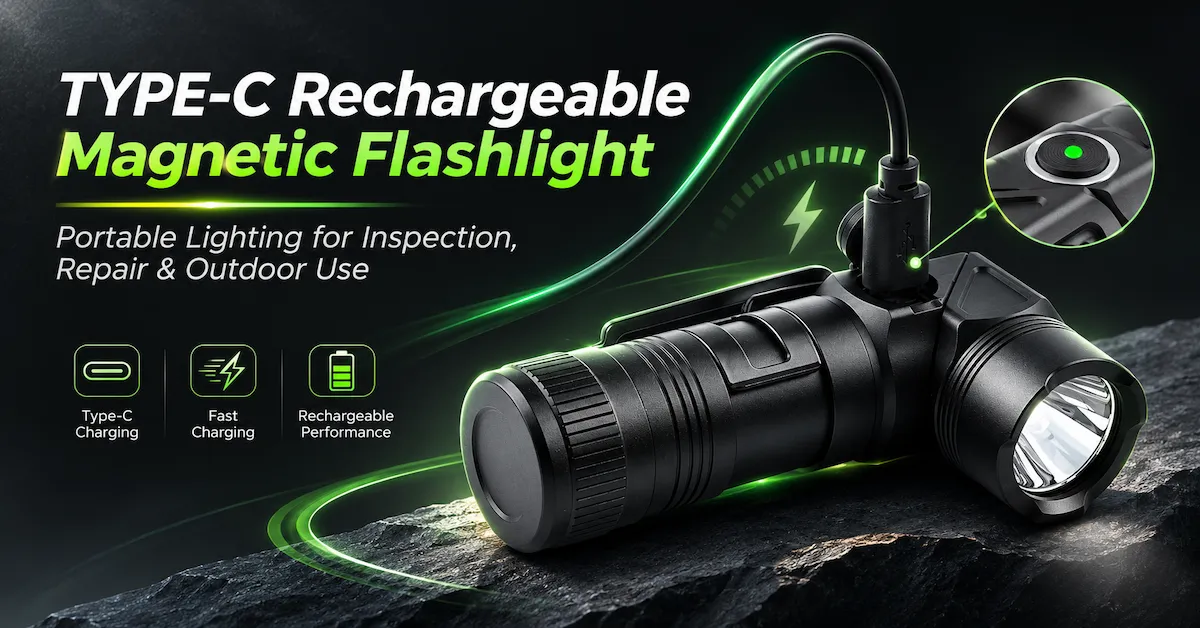
The Brightenlux BT-FL8078 Right-Angle Rechargeable Flashlight features a magnetic tail, 90-degree lighting structure, Type-C charging, and a published IPX4 rating.
For an automotive distributor, its compact construction provides a useful starting point for discussing moisture exposure, contact materials, and magnetic attachment.
Buyers should request specific information about the magnetic assembly and protective finish before assuming corrosion-related performance.
BT-FL8088: Rechargeable magnetic-tail flashlight
The Brightenlux BT-FL8088 Rechargeable Flashlight uses a published 21700 lithium battery, magnetic tail, and Type-C charging.
Its configuration provides a reference for evaluating magnetic attachment alongside battery weight, housing materials, and electrical interfaces.
The supplier should confirm the relevant environmental limits for the exact ordered model.
Adjustable-head magnetic flashlight
The Brightenlux 1000-Lumen SST40 Adjustable-Head Flashlight offers an adjustable lighting head and magnetic tail.
For maintenance applications, buyers may evaluate both the magnetic contact interface and the condition of the adjustment mechanism after relevant environmental exposure.
What if the project requires a dedicated magnetic COB work lamp?
Request the current product catalogue, mechanical drawings, available battery systems, and model-specific test evidence.
Do not assume that performance claims from one magnetic flashlight apply to a different COB work-light design.
Explore Brightenlux Portable Lighting Products
9. What Quality Control Should a Magnetic Work Light Supplier Provide?
A corrosion-resistant design is commercially useful only if the agreed construction can be reproduced consistently.
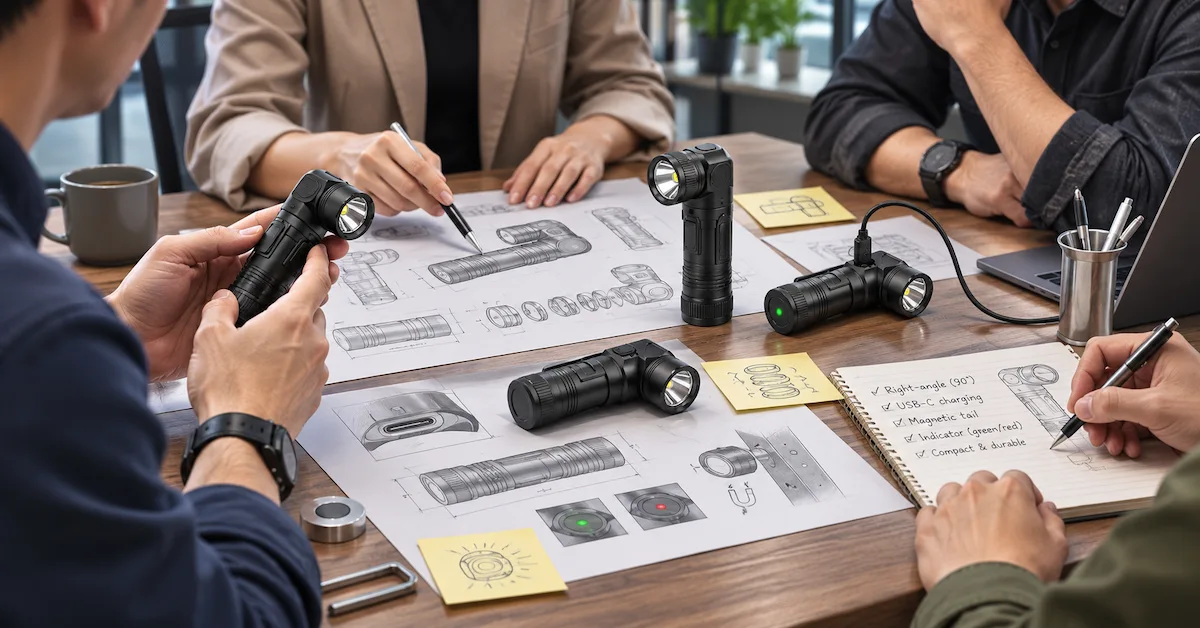
Therefore, OEM buyers should establish component specifications and appropriate inspection methods before bulk production.
Incoming component verification
Relevant components may include:
- Magnets and magnetic assemblies.
- Protective coatings.
- Contact pads.
- Metal clips and fasteners.
- Housing components.
- Charging interfaces.
- Seals and protective covers.
The supplier should identify critical components that require additional control.
Coating and appearance checks
Where appropriate, incoming or production inspection may include visual checks for damaged finishes, exposed metal, coating defects, or unsuitable component conditions.
Assembly verification
Confirm that protective components are installed according to the approved design.
For example, an approved magnetic assembly should not be replaced with a visually similar but technically different arrangement without review.
Finished-goods inspection
Finished-product inspection should focus on the requirements that can be reasonably verified during production.
Routine visual and functional inspections should be distinguished from more specialized environmental qualification tests.
Not every finished lamp must undergo a destructive corrosion test.
Instead, buyers can agree on suitable component qualification, production control, and periodic verification.
Production Quality-Control Matrix
| Control Stage | Main Requirement | Evidence |
|---|---|---|
| Incoming materials | Approved magnet and protective components | Component specification |
| Assembly | Correct mounting and protective arrangement | Assembly inspection |
| Initial production | Matches approved reference | First-article report |
| Functional testing | Approved lighting and mounting behavior | Test record |
| Environmental qualification | Defined corrosion-related evaluation | Applicable test report |
| Finished goods | Appearance and functionality | Inspection record |
| Repeat orders | Controlled changes | Revision and approval documents |
Why component traceability matters
A magnet's external appearance may not identify its material, coating, or production source.
If a critical component changes, previous environmental test evidence may no longer represent the new configuration.
Therefore, buyers should agree on which substitutions require renewed evaluation.
10. How Can OEM/ODM Customization Affect Corrosion Resistance?
Brightenlux publicly describes support for OEM/ODM lighting development and branding discussions.
For magnetic work-light programs, changes to product design can influence environmental performance.
Housing modifications
A new housing shape may alter how water, contaminants, or metal particles collect around the mounting assembly.
Changes should be reviewed for their effect on the complete product.
Magnetic base changes
Changing magnet dimensions, protective materials, or the mounting interface can affect both corrosion behavior and attachment performance.
These modifications should be treated as engineering changes rather than simple cosmetic options.
Surface finishes
Different colors or decorative finishes may require changes to coating processes.
Buyers should confirm whether the proposed finish is compatible with the intended application and manufacturing method.
Charging-system modifications
A change to the charging connector, protective cover, or internal arrangement may introduce new environmental considerations.
Recommended OEM Development Workflow
Application requirements → Environmental risk assessment → Product-platform selection → Material and coating review → Engineering sample → Relevant corrosion and mounting tests → Approval → Production control → Shipment
This is a recommended procurement sequence rather than a claim that every Brightenlux project follows an identical manufacturing process.
11. How Do Corrosion Requirements Affect Wholesale Cost and Supplier Quotations?
Environmental protection can affect the total product cost, but the relationship is not always straightforward.
A more expensive component or protective finish may be worthwhile in one application and unnecessary in another.
Potential cost drivers
| Cost Area | Possible Commercial Effect |
|---|---|
| Magnet material | Component availability and price |
| Protective coating | Processing, inspection and qualification |
| Contact pads | Material and assembly requirements |
| Housing construction | Manufacturing and tooling |
| Fasteners | Material and finish selection |
| Environmental testing | Sample and laboratory expenses |
| OEM customization | Engineering and production setup |
| Quality control | Inspection and documentation |
Why total cost matters
Consider a hypothetical importer purchasing 3,000 magnetic work lights.
Suppose an avoidable product issue affects 2% of the shipment and creates an additional $18 in average handling and replacement expense per affected unit.
The illustrative expense would be:
3,000 × 2% × $18 = $1,080
This does not establish an actual Brightenlux defect rate or prove that a particular coating upgrade would prevent those costs.
The calculation simply shows why buyers should consider possible quality-related expenses alongside the initial purchasing price.
Compare equivalent supplier quotations
Ask each supplier to identify:
- Exact product model.
- Approved magnet and mounting configuration.
- Protective material requirements.
- Battery and charging specifications.
- Environmental testing scope.
- Included accessories.
- Branding and packaging.
- Quality-control requirements.
- MOQ and delivery conditions.
A lower quotation should not be considered equivalent if it omits required components or testing.
12. What Should Be Included in a Magnetic Work Light RFQ?
A useful RFQ should clearly describe the environment, product requirements, and supporting evidence expected from the supplier.
Recommended RFQ Specification
| RFQ Field | Buyer Information |
|---|---|
| Buyer profile | Company, destination market, sales channel |
| Main application | Automotive repair, industrial maintenance, field service |
| Lighting format | Magnetic flashlight, inspection lamp, COB work light |
| Environmental exposure | Humidity, rain, salt residues, cleaning conditions |
| Magnetic assembly | Required mounting design and protection |
| Contact surface | Steel type, coating, curvature, orientation |
| Corrosion evaluation | Applicable component tests and acceptance conditions |
| Lighting requirements | Beam, modes, output and runtime |
| Battery system | Type, inclusion, charging arrangement |
| OEM customization | Logo, housing, packaging, accessories |
| Quality control | Sample approval, component identification, inspection |
| Commercial terms | Quantity, MOQ, quotation basis, lead time |
| Supporting documents | Product specification and available reports |
Questions to Ask Before Approving Samples
- Which magnet and mounting construction does the proposed model use?
- What protective materials or coatings are applied?
- Which environmental conditions has the configuration been evaluated for?
- Are there relevant corrosion or coating test reports?
- Do the reports identify the actual components and product revision?
- Can mounting performance be evaluated after suitable environmental conditioning?
- Which component changes require additional approval?
- What are the agreed inspection and repeat-order controls?
Request a model-specific quotation
When contacting Brightenlux, provide the intended work environment, mounting conditions, expected order quantity, and required customization details.
Ask the supplier to identify available models and distinguish confirmed specifications from proposed engineering requirements.
13. Frequently Asked Questions About Magnetic Work Light Suppliers
1. What should I look for in a magnetic work light supplier?
Look for a supplier that can identify the proposed product configuration, explain the magnetic mounting design, provide relevant material and environmental information, and agree on practical sample testing. For bulk orders, confirm production consistency, customization options, documentation, MOQ, and delivery conditions.
2. Can magnetic work lights rust?
Some metallic components can corrode under certain environmental conditions. The risk depends on material, protective finish, construction, moisture exposure, and contamination. Buyers should evaluate the complete magnetic assembly rather than assume every magnet or housing has the same corrosion characteristics.
3. Does a waterproof magnetic work light resist road salt?
Not necessarily. An IP rating describes specific enclosure protection conditions, while corrosion resistance involves different materials and environmental mechanisms. Buyers should request separate supporting evidence when the intended application involves salt contamination or corrosive environments.
4. What is the purpose of salt-spray testing?
Salt-spray testing provides a controlled method for evaluating selected corrosion-related characteristics of materials and coatings. It can help identify coating defects, but the result does not directly predict product life in actual outdoor or workshop environments.
5. How can buyers test magnetic holding performance after environmental exposure?
Record the baseline mounting behavior under defined conditions, apply appropriate environmental conditioning, then repeat relevant mechanical and functional checks. Compare the results against buyer-defined acceptance criteria for the exact product and intended application.
6. Are magnetic work lights suitable for automotive repair?
They can be useful where compatible ferromagnetic mounting surfaces are available. Suitability depends on product geometry, lighting requirements, attachment stability, surface protection, and environmental conditions. The selected product should be evaluated in representative repair situations.
7. Can Brightenlux provide customized magnetic work lights?
Brightenlux publicly describes OEM/ODM portable lighting support and offers magnetic-tail rechargeable flashlight products. Specific magnetic work-light models, coating options, engineering modifications, MOQ, and environmental test availability require project-specific confirmation.
8. Does a higher magnetic pull-force rating mean better environmental durability?
No. Pull force describes a particular mechanical measurement under defined conditions. Environmental durability depends on additional factors, including materials, corrosion protection, contact interfaces, and handling. Higher initial pull force does not establish long-term corrosion resistance.
9. Should coating or magnet changes trigger new testing?
A change affecting critical mounting materials or protective finishes may make previous test results unrepresentative of the new configuration. The buyer and supplier should assess the change and determine whether additional component, corrosion, or mounting tests are required.
10. How can I request a wholesale magnetic work light quotation?
Provide the intended application, environmental conditions, preferred lighting format, magnetic mounting requirements, battery and charging preferences, customization needs, inspection expectations, and purchasing quantity. Contact Brightenlux for a model-specific proposal and available supporting information.
Conclusion
Choosing a magnetic work light supplier requires more than comparing magnetic holding-force claims, LED brightness, rechargeable battery capacity, and wholesale prices.
For automotive repair, industrial maintenance, and outdoor servicing, the environmental condition of the magnetic assembly can influence long-term product usability.
A practical sourcing process should therefore begin with the real working environment and evaluate relevant materials, protective coatings, mounting interfaces, and corrosion risks.
Buyers should distinguish initial mounting performance from post-exposure behavior, use appropriate testing methods, and establish measurable acceptance requirements before bulk production.
Salt-spray testing can provide useful information about coating quality, but it must not be interpreted as a direct prediction of years of service.
Similarly, an IP rating does not replace corrosion-related evaluation.
Brightenlux offers documented magnetic-tail rechargeable flashlight platforms and discusses OEM/ODM solutions for international buyers.
For buyers developing magnetic lighting ranges, the next step is to identify the intended environment, confirm available product configurations, and request the relevant technical evidence and commercial terms.
By connecting environmental requirements with sample approval, component control, and production inspection, overseas buyers can make more informed purchasing decisions and reduce avoidable sourcing risks.
Explore lighting products: Brightenlux Product Catalogue
Review lighting applications: Brightenlux Work and Repair Lighting Solutions
Request a supplier proposal: Contact Brightenlux for a Magnetic Work Light Quote