

Choosing an LED Flashlight Supplier for Roadside, Workshop, and Inspection Use
When buyers search for an LED flashlight supplier, they are rarely shopping for a simple handheld torch. They are usually trying to solve a practical lighting problem: how to see clearly inside an engine bay, under a chassis, or across a wet roadside repair scene without tying up both hands or dragging a power cord into the job. That is why the supplier conversation matters. The right partner is not just selling light output; they are supplying a tool that has to survive vibration, rain, repeated handling, and the kind of rough treatment that comes with fleet maintenance and emergency service work.
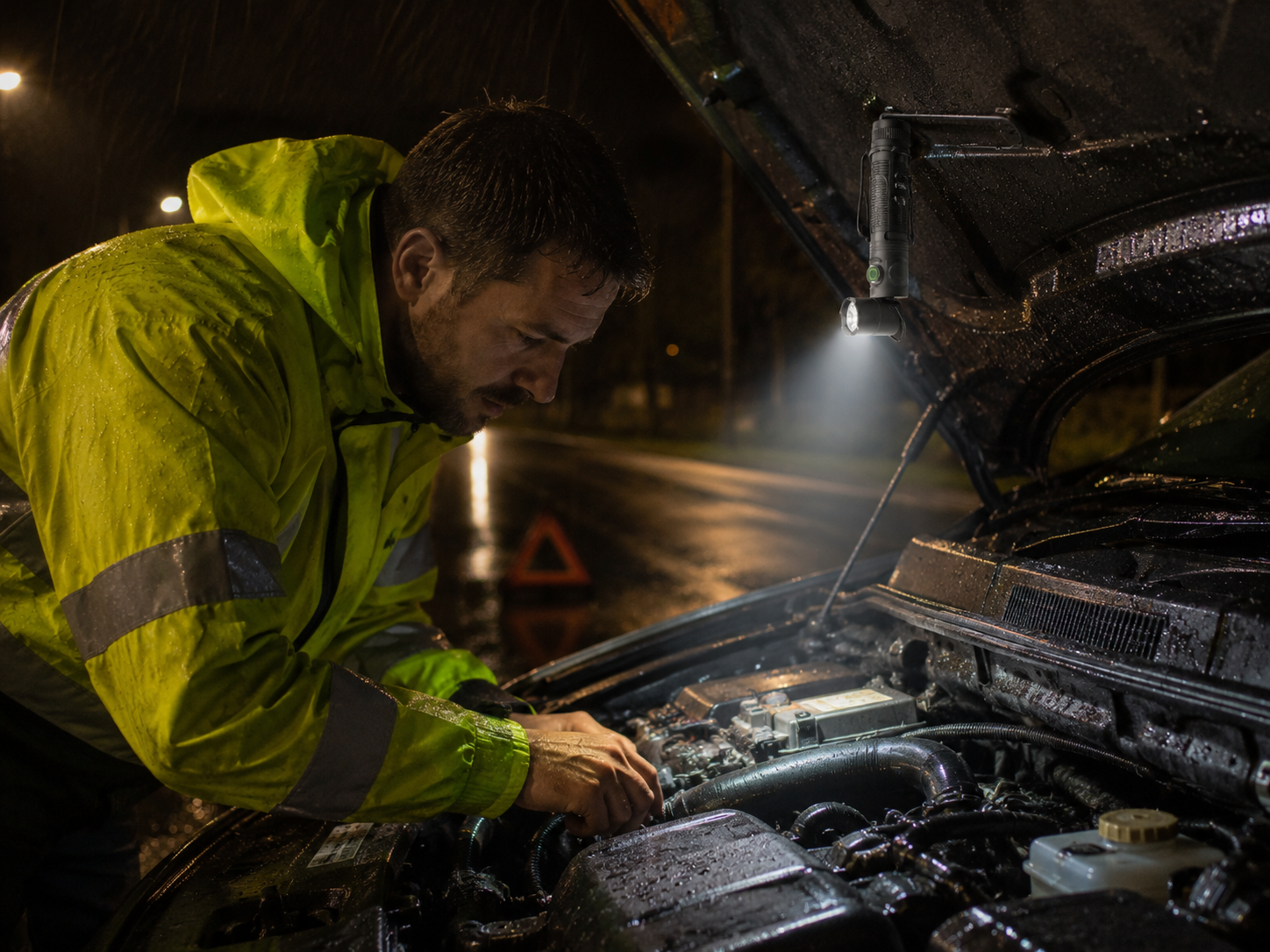
The image of a compact lamp mounted at the hood edge says a lot about the market. Buyers need directional illumination, hands-free use, and a body that can tolerate real field conditions. In that sense, choosing a supplier is closer to selecting a work tool partner than buying a consumer flashlight off a shelf.
What this buying decision is really about
If you are sourcing lighting for roadside mechanics, mobile technicians, or emergency responders, the decision usually comes down to a few questions: Will the light stay in place? Is the beam focused enough for inspection work? Can the housing handle wet weather and dirty environments? Does the design support one-handed setup when the user is already carrying tools?
A supplier that understands those use cases will talk differently about the product. They will focus on clamp design, beam direction, switching access, and the durability of the housing. A supplier that only talks in broad consumer language may leave out the details that matter once the product is in service. That gap is where many purchases go wrong.
What the visible product tells us
The product shown is a compact, cylindrical LED work light or inspection lamp mounted inside an engine bay. It appears to use a black textured housing, a visible front LED emitter, and a bracket or clip that allows it to attach near the hood edge. The beam is directed downward into the compartment, which is exactly what mechanics need when checking belts, connectors, fluid leaks, or hard-to-see components.
That setup suggests a few practical strengths:
Directional output rather than broad ambient light
Hands-free operation once mounted
Compact size for storage in a service vehicle or tool bag
A form factor suited to wet night work, at least from the visible use case
Those are not small things. In field work, a light that is awkward to position often gets left behind. A better-designed inspection lamp gets used every day.
LED flashlight supplier vs. tactical flashlight supplier
The market often overlaps, which can confuse sourcing teams. A tactical flashlight supplier may focus on rugged handheld lights for security, law enforcement, outdoor use, or general emergency carry. Those products can be useful, but they are not always the best fit for engine-bay inspection or under-hood repair.
Here is the practical difference:
A tactical-style light often prioritizes grip, impact resistance, beam throw, and one-handed carry.
A work-oriented LED light often prioritizes mounting options, beam placement, hands-free use, and coverage of a confined task area.
If your end user needs to keep both hands on a wrench, test lead, or diagnostic tool, a supplier that understands mounted work lights may be more valuable than one that only sells carry lights. The best LED flashlight supplier can often support both categories, but only if they know how the products will be used.
Where a zoomable LED flashlight fits, and where it does not
A zoomable LED flashlight is sometimes appealing because it promises flexibility: wide flood when needed, tighter focus when you want to inspect a specific point. That can be useful for general-purpose carry or emergency kits. But zoom mechanisms also add moving parts and may not be the first choice for harsh maintenance environments.
For engine work, buyers should ask whether zooming is actually necessary. If the light is mounted close to the work area and aimed at a specific component, a fixed beam may be enough. Fewer adjustments can mean fewer failure points. On the other hand, a zoomable beam can be helpful if the same light must serve multiple tasks in a service truck.
The point is not that zoomable lights are bad. It is that the beam shape should match the job. Too many sourcing teams buy for theoretical versatility and end up with a tool that is slightly compromised at everything.
What to ask a supplier before you place an order
You do not need a long checklist, but you do need the right questions. A practical buyer should ask about the following:
1. Mounting method
Does the light use a clamp, clip, magnet, or a hybrid attachment? How securely does it stay fixed when the hood vibrates or a technician leans into the bay? The visible product appears to use a mounting bracket or clip, which is often a good fit for controlled under-hood use.
2. Beam direction and coverage
Is the beam narrow and focused, or does it spread widely enough for general inspection? A work light that is too concentrated can create bright spots and shadows, while one that is too diffuse may not reach the actual fault area.
3. Housing and surface finish
The pictured unit has a black cylindrical body with a grippy surface. That is useful in the real world because hands are often oily, wet, or gloved. Ask whether the housing is plastic, metal, or a combination. If the supplier cannot say clearly, that is usually a sign to slow down.
4. Weather resistance
The image suggests rain use, but you should not assume a specific ingress rating unless it is documented. For roadside and emergency applications, weather resistance matters. A light that survives dry shop conditions may not survive a storm stop on the shoulder.
5. Switching and user access
Can the side button be reached easily when the light is mounted? Is it usable with gloves? Small interface details become large annoyances when a technician has to adjust them dozens of times a day.
6. Power and charging format
This should be confirmed with the supplier. Do not guess battery type, runtime, or charging method from a photo. Those details affect fleet planning, spare inventory, and total cost of ownership.
Common mistakes buyers make
One common mistake is buying for lumen numbers alone. Brightness matters, but it does not solve poor beam placement or weak mounting. A very bright light that slides out of position is less useful than a moderate light that stays exactly where it should.
Another mistake is treating all portable lighting as interchangeable. A handheld flashlight, a clamp-mounted inspection lamp, and a tactical-style torch may all come from the same supplier, but they serve different users. If you do not define the use case clearly, you may end up with a product that looks right in a catalog and feels wrong in a real repair bay.
A third problem is ignoring the conditions of use. Night work, rain, vehicle vibration, and dirty surfaces are not edge cases for roadside service teams. They are the job. The supplier should understand that from the outset.
How to evaluate supplier fit for B2B programs
For sourcing managers and product teams, the best supplier is one that can speak in operational terms. They should be able to discuss the lighting form factor, the mounting arrangement, and the intended work environment without drifting into vague marketing language.
You are looking for a partner who can support:
Product consistency across batches
Clear specification sheets
Customization discussion if your program needs it
Realistic advice on use cases, not just feature lists
Responsiveness when a field issue appears
That last point matters more than many teams admit. Lighting products often look simple until a deployment reveals a weak clip, a poor switch location, or a body that is awkward for gloved hands. Suppliers who know the category well usually anticipate these issues early.
FAQ for first-time buyers
Is a mounted inspection lamp better than a handheld flashlight?
For under-hood repair and inspection, often yes. A mounted lamp frees both hands and keeps the light aimed at the work area.
Should I choose a tactical-style product for workshop use?
Only if the actual work requires handheld carry and beam throw. For hands-free inspection, a work-oriented lamp is usually a better fit.
Do I need a zoomable beam?
Not always. If the light is used close to the task area, fixed beam output may be simpler and more reliable.
Can I judge water resistance from a photo?
No. Visual use in rain suggests suitability, but formal protection details should come from the supplier’s specifications.
What to do next
If you are evaluating an LED flashlight supplier for fleet service, roadside kits, or mobile repair tools, start with the work environment rather than the product image. Define where the light will be used, how it will be mounted, and who will handle it. Then ask the supplier to match those conditions with the right design.
That approach saves time and reduces avoidable surprises. It also pushes the conversation toward the details that matter: beam placement, attachment security, housing durability, and ease of use in bad weather. For this category, those details are the product.
If you are comparing options now, make the supplier explain how their light performs in the exact job you have in mind. A good one will answer directly. A weak one will stay vague.