

Quick Answer: A reliable industrial inspection light manufacturer should help buyers evaluate material compatibility with the oils, lubricants, and approved cleaning agents encountered during intended use. Before bulk purchasing, assess housing finishes, transparent lenses, switch components, seals, and mechanical functions after controlled exposure and repeated cleaning. Water-resistance ratings alone do not establish chemical compatibility. Buyers should approve representative samples against documented material, functional, and environmental requirements.
An industrial inspection light may operate correctly when first delivered but develop problems after repeated use in a maintenance workshop.
The lens may become cloudy. A flexible switch component may change its shape or texture. Housing markings may deteriorate after cleaning, while contamination around a moving joint may affect operation.
These problems are not necessarily related to LED brightness or battery capacity.
They may arise from interactions between the product's materials and its intended operating environment.
For industrial tool distributors, maintenance equipment importers, and private-label lighting brands, material-related failures can create customer complaints, replacement costs, and repeat-order quality problems.
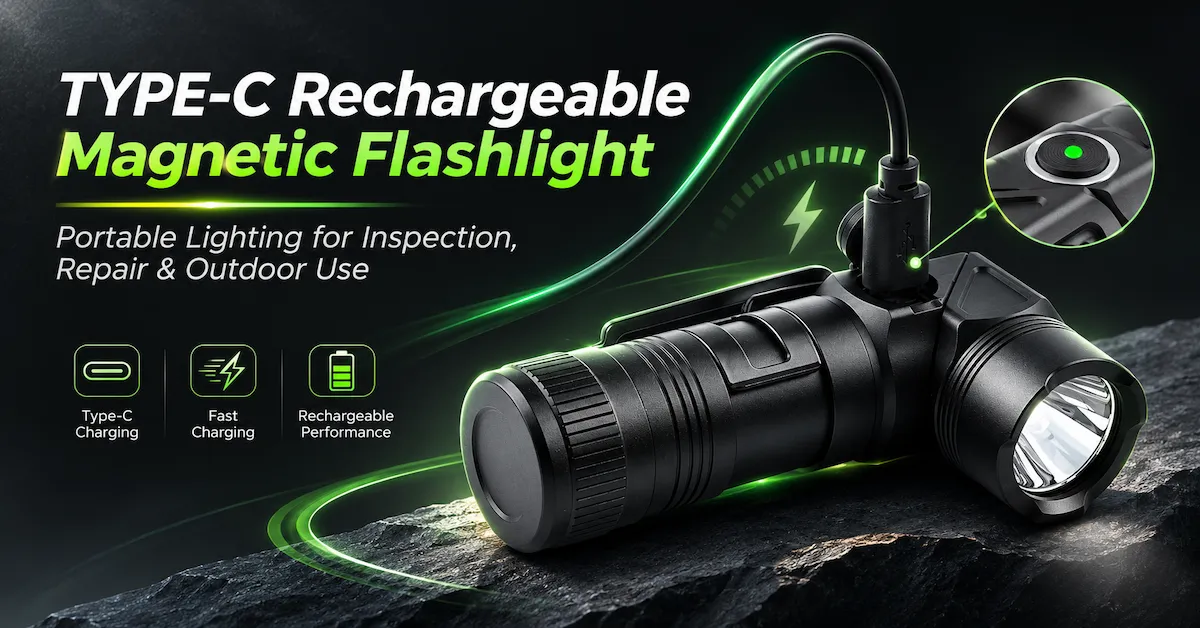
Ningbo Brightenlux Electric Appliance Co., Ltd. manufactures portable LED lighting products and provides OEM/ODM development services. Its rechargeable magnetic, adjustable-head, and right-angle flashlight platforms offer practical starting points for industrial inspection lighting projects.
This guide explains how purchasing teams can evaluate environmental compatibility before approving a production configuration.
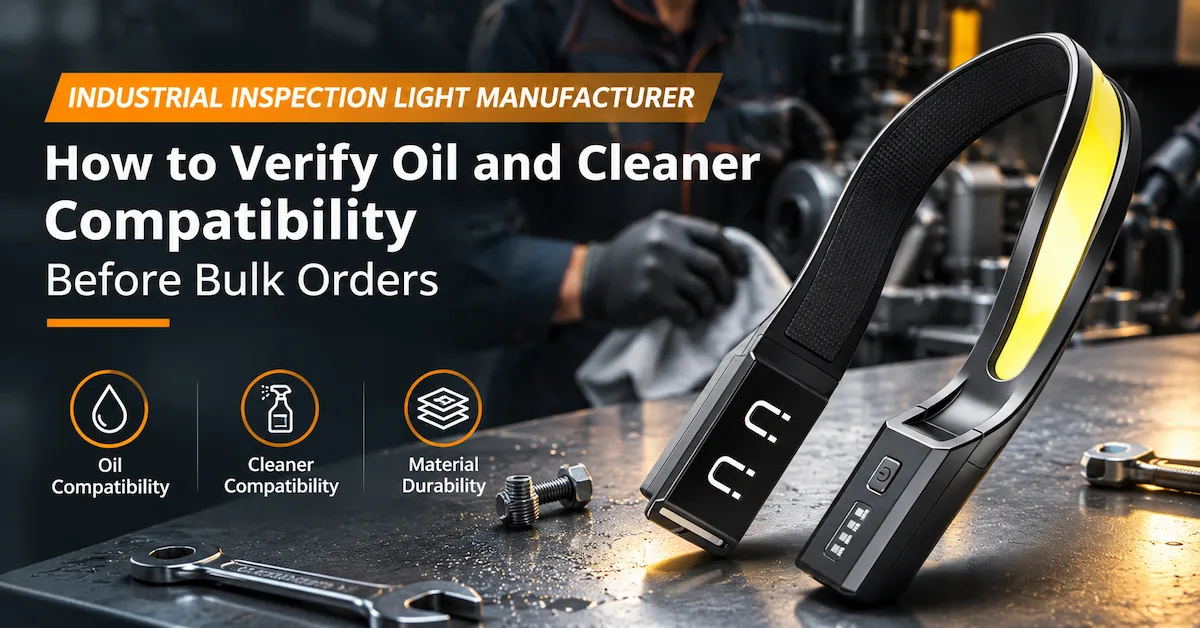
1. Why Should Buyers Evaluate Fluid Compatibility When Choosing an Industrial Inspection Light Manufacturer?
Industrial inspection lights are frequently handled in environments that contain lubricants, workshop dust, metalworking residues, and cleaning products.
Even when technicians follow appropriate maintenance procedures, portable lighting equipment may experience incidental contamination during normal handling.
A general-purpose rechargeable flashlight may provide suitable illumination without necessarily being suitable for every industrial fluid exposure.
Material Deterioration Can Reduce Product Usability
Potential changes include:
- Clouding or discoloration of transparent lenses.
- Swelling or hardening of flexible components.
- Deterioration of protective surface finishes.
- Reduced visibility of printed control markings.
- Changes in switch operation.
- Increased resistance in adjustable joints.
The actual outcome depends on the material, liquid formulation, exposure conditions, and product construction.
Cleaning Can Become a Recurring Purchasing Concern
Industrial users may clean inspection tools repeatedly to remove fingerprints, dust, or workshop residues.
A cleaning method that appears harmless during one application may produce different results after repeated use.
For this reason, buyers should define the expected cleaning procedure as part of the product specification.
Material Compatibility Influences Total Procurement Cost
An inspection light with a lower initial purchase price may become more expensive to distribute if its materials are unsuitable for the customer's intended application.
Potential commercial consequences include additional quality investigations, returned products, replacement costs, and revised packaging instructions.
Procurement principle: Evaluate the complete inspection light under representative, approved use and cleaning conditions rather than relying exclusively on catalogue brightness and waterproof claims.
2. Does a Waterproof Inspection Light Automatically Resist Oil and Cleaning Agents?
No. Water resistance and chemical compatibility describe different performance characteristics.
The IEC 60529 standard establishes the IP Code framework for classifying enclosure protection.
An IP rating addresses defined ingress-protection conditions. It does not independently establish resistance to lubricants, cutting fluids, degreasers, alcohol-based cleaners, or other chemical formulations.
Water Resistance vs Chemical Compatibility
| Performance Area | What It Evaluates | Evidence Buyers Should Request |
|---|---|---|
| Water ingress protection | Enclosure performance under specified water-exposure conditions | Applicable IP test report |
| Dust protection | Resistance to defined solid-particle ingress conditions | Model-specific ingress-protection evidence |
| Oil compatibility | Material response to specified oils | Material or product compatibility report |
| Cleaning-agent compatibility | Changes after exposure to an identified cleaner | Controlled exposure evaluation |
| Wipe-down durability | Effects of repeated approved cleaning | Repeated-cleaning test record |
| Functional reliability | Operation after permitted environmental conditioning | Post-exposure inspection results |
What Does IP44 Mean for Industrial Buyers?
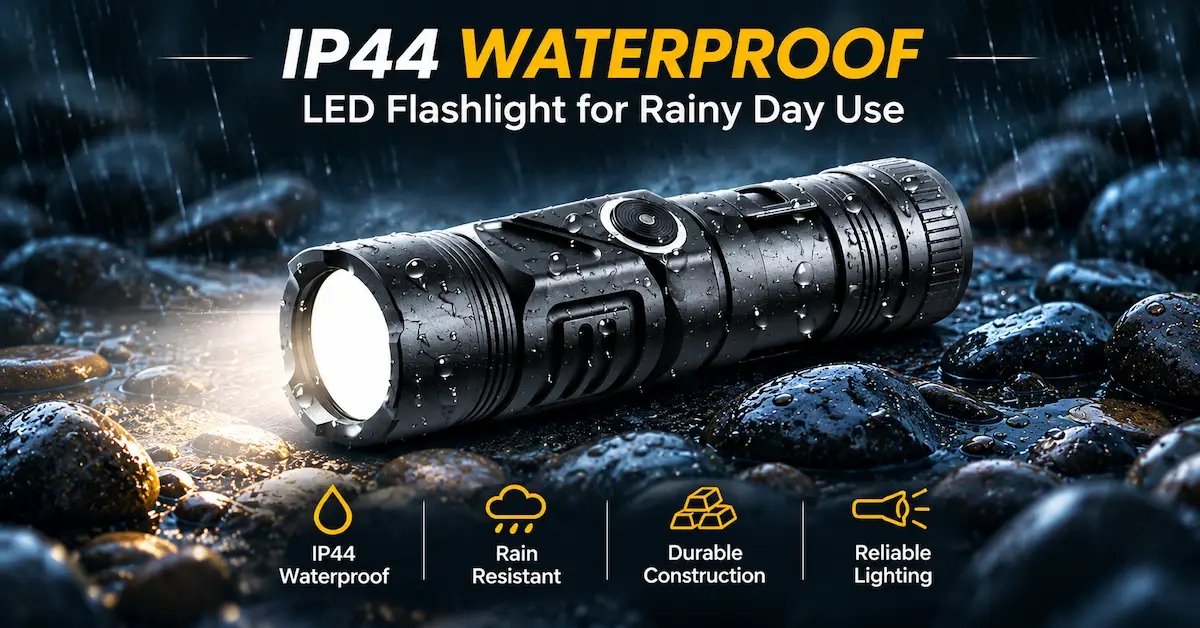
An IP44-rated product provides defined protection against access or ingress involving solid objects and splashing water under applicable test conditions.
It does not establish protection against immersion, pressure washing, or chemical exposure.
An industrial inspection light manufacturer should therefore distinguish between documented enclosure protection and additional material requirements requested by the buyer.
If the application involves specific industrial fluids, those conditions should be separately evaluated.
3. Which Industrial Applications Require Additional Material Compatibility Checks?
Different inspection environments create different contamination and cleaning risks.
The purchasing specification should begin with the end user's actual workplace rather than a general description such as "industrial use."
Industrial Inspection Lighting Application Matrix
| Application | Potential Exposure | Main Evaluation Priority |
|---|---|---|
| Mechanical equipment maintenance | Lubricating oil and workshop residues | Housing finish and grip condition |
| CNC machining support | Metalworking-fluid residues | Lens clarity and material compatibility |
| Hydraulic equipment inspection | Hydraulic-fluid contamination | Seals, flexible components and cleaning |
| Automotive servicing | Grease and approved workshop cleaners | Switch usability and surface durability |
| Manufacturing line maintenance | Dust, fingerprints and maintenance residues | Repeatable cleaning and identification markings |
| Warehouse equipment servicing | General dirt and maintenance oils | Housing condition and functional reliability |
| Mobile field service | Variable environmental contamination | Cleaning instructions and product portability |
| Industrial assembly stations | Repeated handling and localized contamination | Lens visibility and control consistency |
Which Buyers Benefit from This Approach?
This sourcing method is especially relevant to industrial maintenance equipment distributors, professional tool brands, automotive supply companies, factory procurement teams, and OEM lighting developers.
It is less suitable for applications requiring specialist hazardous-location lighting, chemical-process equipment, hygienic washdown systems, or dedicated optical inspection instruments unless the proposed product has the necessary documented qualification.
Application limitation: A conventional portable LED inspection light must not be represented as intrinsically safe, explosion-protected, or suitable for energized electrical work without appropriate product-specific evidence.
4. Which Brightenlux Products Can Buyers Evaluate for Industrial Inspection?
Brightenlux publishes several rechargeable LED lighting products suitable for consideration as portable manual inspection platforms.
The following products differ in lighting direction, housing construction, and positioning options.
Brightenlux Inspection Lighting Platform Comparison
| Product | Published Output | LED Source | Published Construction and Power | Main Evaluation Priority |
|---|---|---|---|---|
| 1000LM Adjustable-Head Flashlight | 1000 lm | SST40 | Aluminum body, 18650 2200mAh battery | Adjustable joint, housing finish and lens |
| BT-FL8078 Right-Angle Flashlight | 1000 lm | SST25 | Hard-anodized aluminum and ABS, 16340 800mAh battery | Mixed materials and compact charging assembly |
| 700LM Compact Magnetic Flashlight | 700 lm | SST20 | Anodized aluminum and ABS, Type-C rechargeable | Surface condition, clip and control components |
Specifications are based on published product information. Oil resistance, cleaning-agent compatibility, and repeated wipe-down durability have not been established by this comparison.
1000LM Adjustable-Head LED Flashlight
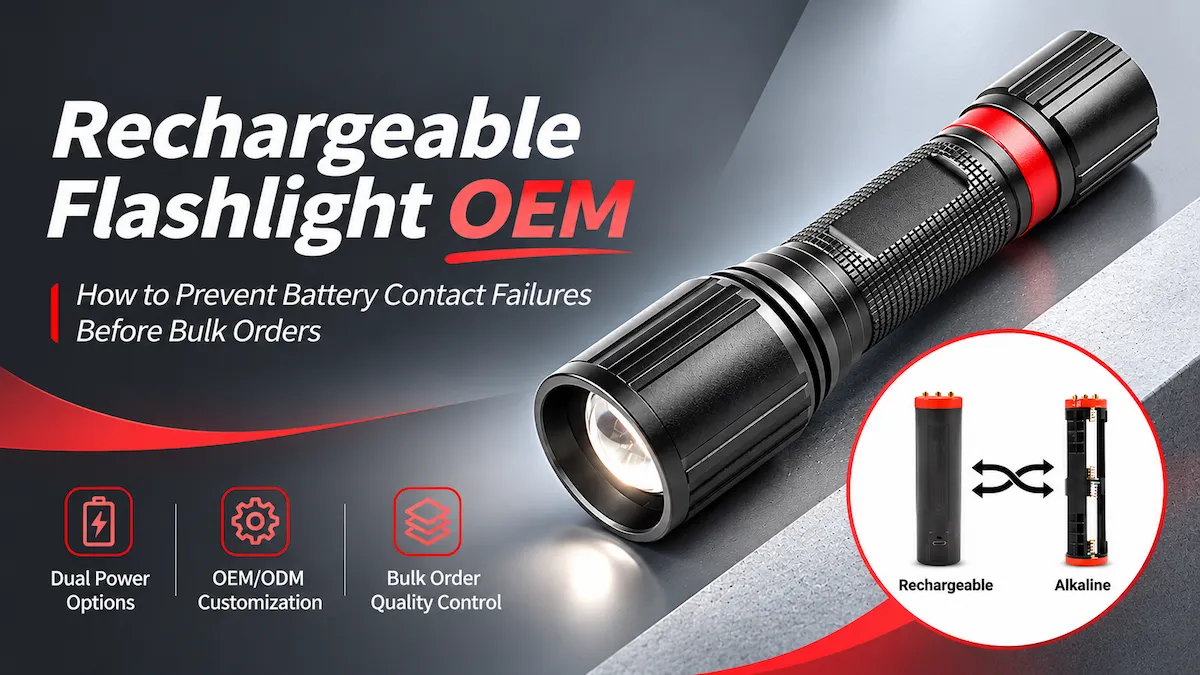
The Brightenlux 1000LM Adjustable-Head LED Flashlight features an SST40 LED, adjustable lighting head, magnetic tail, aluminum housing, and rechargeable 18650 battery.
Its product page identifies an IP44 enclosure rating.
For industrial purchasing, this platform provides a useful reference for evaluating external surface finishes, accessible moving interfaces, and cleaning around the adjustable head.
Buyers should confirm the permitted cleaning method and relevant material specifications before approving use in maintenance environments.
BT-FL8078 Right-Angle LED Flashlight
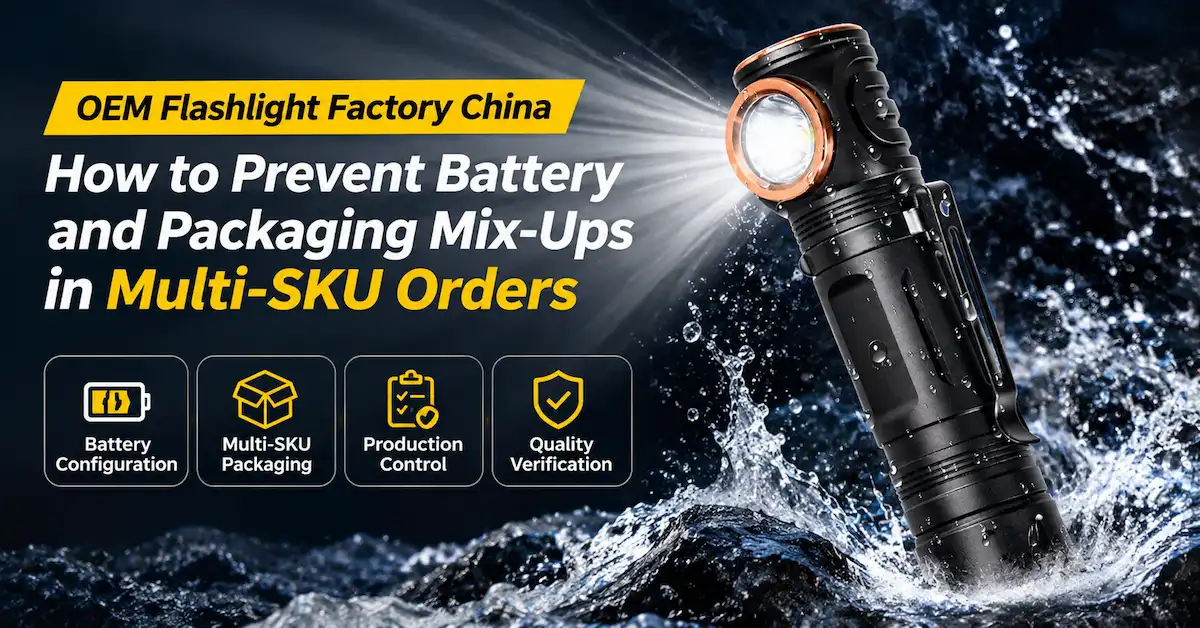
The Brightenlux BT-FL8078 Right-Angle LED Flashlight combines an SST25 LED, 90-degree structure, magnetic tail, Type-C charging, and an included 16340 battery.
Its published construction includes hard-anodized aluminum and ABS.
For compact industrial inspection applications, buyers may wish to evaluate the behavior of different external materials, accessible interfaces, and removable accessories after approved cleaning.
700LM Compact Magnetic LED Flashlight
The Brightenlux 700LM Compact Magnetic LED Flashlight features an SST20 LED, compact right-angle construction, magnetic mounting, and Type-C charging.
Its product page identifies anodized aluminum and ABS construction.
This model is another reference platform for buyers developing compact maintenance and inspection lighting ranges.
How Should Buyers Shortlist These Products?
Start with physical size, positioning requirements, lighting performance, and the expected operating environment.
Then confirm the exact materials and permitted exposure conditions.
A product should not be classified as oil-resistant or chemical-resistant simply because it uses an aluminum housing.
Find the Right Inspection Lighting Platform
Explore Brightenlux rechargeable LED lighting products and discuss your industrial maintenance, workshop inspection, and OEM purchasing requirements.
Explore LED Lighting Products Request Product Information5. Which Materials Determine Industrial Inspection Light Compatibility?
The environmental performance of a portable inspection light depends on the complete product assembly.
Metal housing components, plastic parts, flexible seals, optical elements, adhesives, and markings may respond differently to the same liquid.
Aluminum Housing and Surface Treatments
Aluminum provides a practical structural platform for portable lighting products.
Anodizing can influence surface properties and appearance, but the material designation alone does not establish compatibility with every industrial cleaner.
Buyers should request information about the actual surface treatment and any relevant limitations.
Plastic Housing Components
ABS, polycarbonate, and other engineering plastics may be used in different portable lighting architectures.
Material response varies with resin grade, additives, manufacturing conditions, mechanical stress, and liquid formulation.
The ISO 175:2010 standard describes methods for assessing changes in plastic materials after immersion in liquid chemicals.
Its methods concern material specimens rather than automatically qualifying a complete electronic lighting product. Environmental stress cracking requires separate consideration.
Flexible Seals and Switch Components
Where a product incorporates elastomeric seals, flexible covers, or rubber switch components, liquid exposure may affect physical properties.
Possible changes include swelling, hardening, softening, or dimensional variation.
The ISO 1817:2026 standard provides methods for evaluating how liquids affect vulcanized or thermoplastic rubber materials.
An appropriate elastomer should be selected according to the actual liquid and application rather than a generic claim of chemical resistance.
Optical Components
The lens is essential to effective inspection lighting.
Surface deterioration, persistent haze, scratches, or discoloration may affect the quality of transmitted light.
Buyers should identify the actual lens material and establish suitable post-cleaning acceptance criteria.
Material Risk Assessment Matrix
| Component | Potential Material-Related Concern | Recommended Evaluation |
|---|---|---|
| Aluminum housing | Finish degradation or discoloration | Surface inspection after conditioning |
| Plastic housing | Softening, cracking or deformation | Material-specific compatibility review |
| Transparent lens | Haze, discoloration or surface damage | Optical appearance and functional checks |
| Flexible switch component | Changes in texture or elasticity | Visual and operating evaluation |
| Sealing component | Swelling or dimensional changes | Qualified material and enclosure review |
| Printed logo | Fading or loss of adhesion | Repeated-cleaning inspection |
| Charging-port protection | Changes in material or fit | Inspection of the approved assembly |
| Adjustable joint | Contamination or altered movement | Mechanical operation check |
The relevance of each component depends on the selected flashlight design.
6. What Specifications Should an Industrial Inspection Light Manufacturer Confirm?
A purchasing specification should clearly define the expected operating conditions and product configuration.
General instructions such as "oilproof," "heavy-duty," or "industrial-grade" are not sufficient acceptance criteria.
Industrial Inspection Light Technical Specification Table
| Specification | Buyer Requirement |
|---|---|
| Product identity | Exact model and approved revision |
| Housing material | Confirmed material and relevant grade |
| Surface treatment | Approved finish and appearance |
| Lens material | Identified optical material |
| Flexible components | Approved material where applicable |
| LED configuration | Approved emitter and optical assembly |
| Battery | Defined cell or pack configuration |
| Charging system | Approved connector and charging conditions |
| Intended exposure | Identified fluids and contamination sources |
| Permitted cleaners | Exact formulation or approved product |
| Cleaning method | Approved cloth, procedure and frequency |
| Exposure conditions | Defined duration and environmental conditions |
| Acceptance requirements | Mechanical, visual and functional criteria |
| Documentation | Applicable reports and approved instructions |
| Change control | Review requirements for material substitutions |
Define the Exact Fluid
The purchasing team should identify the actual fluid encountered during use.
A general category such as hydraulic oil or workshop degreaser may include multiple formulations.
Where appropriate, obtain the relevant safety data sheet and consult the fluid manufacturer or qualified technical personnel.
Compatibility with one formulation should not be extended automatically to other products.
Define the Intended Exposure Scenario
Different conditions require different evaluations.
Occasional incidental contact, repeated wiping, sustained contact, and immersion are not equivalent.
For ordinary rechargeable inspection lights, the proposed evaluation must remain within the manufacturer's approved operating and cleaning limits.
More demanding exposure requirements should be referred to qualified testing personnel before a product is selected.
7. How Should Industrial Inspection Light Samples Be Evaluated Before Bulk Production?
A useful validation plan should separate material-level compatibility from complete-product functionality.
The following workflow is a recommended procurement framework, not a report of testing already performed by Brightenlux.
Step 1: Approve the Product Configuration
Record the sample model, component revision, housing material, finish, lens construction, battery, and relevant accessories.
Photograph the initial condition and identify the components requiring evaluation.
Step 2: Establish an Unexposed Reference Sample
Keep a representative sample that has not undergone the proposed environmental conditioning.
This reference helps buyers distinguish changes associated with the evaluation from normal manufacturing variation.
Step 3: Confirm Material Compatibility Requirements
Identify the relevant materials and approved fluids.
Where necessary, qualified personnel can determine whether material specimens should be evaluated using appropriate methods, including relevant ISO standards.
Step 4: Define the Finished-Product Evaluation
Determine whether the intended application requires an approved wipe-down evaluation or another suitable controlled assessment.
Follow the manufacturer's permitted cleaning procedure and workplace safety requirements.
Do not immerse, spray, energize, charge, or expose a complete rechargeable light to chemicals in ways that have not been approved for that product.
Step 5: Inspect After Conditioning
Compare the sample with its original condition and the reference product.
Record visible changes, including:
- Surface discoloration.
- Lens haze.
- Cracking or deformation.
- Changes in flexible components.
- Deterioration of markings.
- Changes in accessible mechanical interfaces.
Step 6: Verify Functionality
After the product has been safely assessed and is in an approved condition for operation, qualified personnel should verify relevant lighting, switch, charging, and mechanical functions.
A product showing suspected liquid ingress, battery damage, or compromised electrical components should not be energized or charged.
Step 7: Review Enclosure Requirements
If environmental conditioning may affect sealing components or enclosure construction, determine whether additional ingress-protection verification is appropriate.
This assessment should be performed using the relevant method and qualified personnel.
Step 8: Document the Approval Decision
The report should identify the tested sample, approved exposure method, observed changes, functional results, corrective actions, and final disposition.
Recommended Compatibility Test Matrix
| Evaluation Stage | Main Check | Evidence |
|---|---|---|
| Initial inspection | Original product condition | Photographs and specification |
| Material review | Approved material identities | Material records |
| Reference sample | Unconditioned comparison | Sample identification |
| Controlled evaluation | Compatibility with specified conditions | Test record |
| Surface inspection | Finish and lens condition | Comparison photographs |
| Mechanical review | Switch and joint operation | Functional observations |
| Electrical verification | Approved lighting and charging functions | Qualified test record |
| Environmental review | Applicable enclosure performance | Relevant test report |
| Final approval | Compliance with agreed criteria | Signed approval record |
The required sample quantity, exposure conditions, and inspection methods should reflect project risk.
8. How Can Buyers Evaluate Repeated Cleaning and Wipe-Down Durability?
Repeated cleaning is particularly important for inspection lights sold to professional users.
A single successful cleaning operation does not establish long-term material compatibility.
Estimate the Expected Cleaning Frequency
Suppose a maintenance team expects to clean an inspection light three times per working week.
Using an illustrative annual schedule of 50 working weeks:
This example helps translate an expected use pattern into a potential validation discussion.
It is not a universal cleaning test requirement, service-life prediction, or published Brightenlux durability rating.
Establish a Repeatable Cleaning Definition
The approved specification should identify:
- The permitted cleaner.
- The approved cleaning material.
- The defined cleaning action.
- The inspection intervals.
- The permitted condition of the product during cleaning.
- The applicable recovery or drying requirements.
- The final visual and functional acceptance criteria.
The supplier and buyer should agree on these details before qualification.
What Should Buyers Consider a Failure?
| Observation | Recommended Acceptance Approach |
|---|---|
| Lens develops persistent haze | Evaluate against approved optical appearance and performance criteria |
| Housing finish deteriorates | Compare with agreed cosmetic limits |
| Control marking becomes unreadable | Reject where identification is required |
| Flexible component deforms | Assess fit, operation and potential enclosure impact |
| Switch becomes unreliable | Reject functional failure |
| Adjustable mechanism no longer operates correctly | Investigate and reject unacceptable mechanical changes |
| Protective component loses its intended fit | Conduct an engineering and enclosure review |
| Evidence of liquid ingress or electrical damage | Stop use and refer for qualified assessment |
For critical functional or safety-related defects, cosmetic acceptance criteria alone are insufficient.
Illustrative Sample Approval Decision
Consider two hypothetical inspection light samples:
| Evaluation | Sample A | Sample B |
|---|---|---|
| Housing appearance | Acceptable | Acceptable |
| Lens condition | No unacceptable change observed | Persistent haze |
| Control markings | Legible | Legible |
| Switch operation | Meets agreed requirement | Intermittent operation |
| Final disposition | Eligible for further approval | Requires investigation and corrective action |
This is an illustrative decision-making example, not actual test data from Brightenlux.
Even if both samples provide acceptable brightness before conditioning, their suitability for the proposed industrial application may differ.
9. How Should Manufacturers Control Material Consistency During Production?
An approved inspection light sample is only valuable if subsequent production follows the same controlled configuration.
Material changes between orders can create environmental compatibility problems even when the finished product looks similar.
Incoming Material Inspection
Identify the critical housing materials, optical components, flexible parts, finishes, and other relevant assemblies.
Verify that supplied materials correspond to the approved specification.
Production Process Control
Manufacturing conditions may influence component dimensions, surface quality, mechanical fit, and assembly consistency.
The buyer should discuss the relevant machining, molding, finishing, and assembly processes with the supplier.
First-Off Inspection
Initial production units should be compared with the approved configuration before routine production release.
Relevant checks may include external appearance, critical dimensions, markings, mechanical operation, and lighting functions.
Finished-Goods Inspection
Routine inspection should distinguish between normal product-function verification and specialized material qualification.
A functional lighting test does not establish resistance to chemical exposure.
Production Quality Control Matrix
| Manufacturing Stage | Recommended Control | Evidence |
|---|---|---|
| Material approval | Confirm critical material specifications | Approved material list |
| Incoming inspection | Check component identity and condition | Inspection record |
| Housing production | Control dimensions and finish | Manufacturing inspection |
| Optical assembly | Confirm approved lens and assembly | Optical inspection record |
| Mechanical assembly | Verify relevant fit and operation | Assembly checks |
| First-off approval | Compare with approved sample | Approval record |
| Finished-goods inspection | Verify agreed visual and functional criteria | Final inspection report |
| Repeat orders | Review relevant material substitutions | Change-control documentation |
These are recommended purchasing controls rather than a claim that Brightenlux performs every listed specialized test on all products.
Brightenlux describes CNC and injection-molding production resources, product development capabilities, and finished-product quality management on its official website.
Buyers can review the company's manufacturing background and discuss project-specific inspection requirements.
What Documentation Should Buyers Request?
For the selected inspection light, request relevant material specifications, product configuration records, applicable compliance documents, and agreed test evidence.
Documents must correspond to the actual model, materials, and destination market.
General factory compliance information cannot independently establish product-level chemical resistance.
Prevent Unapproved Substitutions
Changes involving lens material, plastic resin, elastomer grade, surface treatment, adhesive, or protective components should receive an engineering impact assessment where relevant.
A commercially available alternative material is not automatically equivalent to the original approved component.
10. How Do Material Compatibility Requirements Affect OEM Costs and Lead Times?
An industrial inspection light manufacturer may offer existing product platforms or develop customized configurations.
The commercial implications depend on the difference between the existing product and the buyer's environmental requirements.
Existing-Platform Procurement
If a standard product meets the approved application requirements, customization may be limited to branding, packaging, documentation, and selected accessories.
This approach can reduce unnecessary development work.
Material Modification Projects
A more demanding application may require evaluation of alternative lens materials, plastic components, seals, or surface treatments.
Such changes may affect tooling, component availability, engineering validation, and production inspection.
OEM Cost Evaluation Table
| Cost Area | Potential Cost Driver |
|---|---|
| Housing material | Alternative material or finish requirements |
| Optical component | Different lens construction |
| Flexible components | Application-specific material selection |
| Tooling | Modified geometry or processing requirements |
| Prototype development | Additional engineering samples |
| Compatibility testing | Material or product qualification |
| Production inspection | Additional acceptance criteria |
| Packaging and instructions | Approved cleaning and use information |
| Documentation | Material identification and change control |
How Should Buyers Compare MOQ?
Minimum order quantities depend on the selected platform, customized components, branding, packaging, and production arrangement.
A logo-only order may have different requirements from a project involving new lens or sealing materials.
Brightenlux offers OEM/ODM services, but the applicable MOQ must be confirmed for the proposed configuration.
How Should Buyers Evaluate Lead Time?
Request separate milestones for:
- Application and specification confirmation.
- Existing product or material selection.
- Sample development.
- Required technical validation.
- Sample approval.
- Production and inspection.
- Shipment preparation.
Material availability, production capacity, and any specialized laboratory requirements can influence the schedule.
A project-specific quotation provides more meaningful commercial information than an assumed universal delivery period.
Why Total Procurement Cost Matters
Consider the combined cost of the finished product, engineering changes, sample evaluation, inspection, packaging, and potential replacement risk.
A more expensive material does not automatically produce a better inspection light. The objective is to approve a configuration appropriate for the actual application.
11. How to Evaluate an Industrial Inspection Light Manufacturer Before Requesting a Quote
A qualified supplier discussion should connect product construction with the buyer's environmental and commercial requirements.
Supplier Evaluation Scorecard
| Evaluation Area | What Buyers Should Confirm |
|---|---|
| Product understanding | Ability to identify a suitable inspection lighting platform |
| Material transparency | Identification of relevant housing, lens and flexible components |
| Environmental limitations | Clear permitted use and cleaning conditions |
| Engineering support | Ability to review requested material changes |
| Sample availability | Representative production-intent samples |
| Testing support | Available compatibility and functional evaluation options |
| Manufacturing control | Approved components and production inspection |
| Change control | Review of relevant substitutions |
| Commercial transparency | Project-specific MOQ, costs and delivery milestones |
| Documentation | Applicable product reports and instructions |
Recommended RFQ Checklist
| RFQ Field | Buyer Information to Provide |
|---|---|
| Company and destination | Business type and target market |
| Sales channel | Industrial distribution, professional tools or private label |
| Application | Equipment inspection or maintenance environment |
| Reference model | Preferred Brightenlux product platform |
| Lighting requirements | Beam, operating distance and useful runtime |
| Product format | Handheld, magnetic, adjustable-head or wearable |
| Expected exposure | Identified oils, lubricants or workshop residues |
| Cleaning requirements | Approved cleaning agent and expected frequency |
| Housing requirements | Material and finish preferences |
| Optical requirements | Lens appearance and performance criteria |
| Battery and charging | Required power configuration |
| Customization | Logo, color, packaging and approved product changes |
| Qualification | Required sample evaluation and documentation |
| Order quantity | Initial order and estimated repeat demand |
| Commercial terms | MOQ, tooling, sample costs and delivery schedule |
What Should Buyers Ask Before Approving Samples?
Ask the manufacturer whether the proposed product is already suitable for the defined application or requires additional technical evaluation.
Confirm which materials are fixed, which components may be changed, and what supporting evidence is available.
Do not request a general chemical-resistance guarantee covering unidentified liquids.
Develop Your OEM Inspection Lighting Project With Brightenlux
Ningbo Brightenlux Electric Appliance Co., Ltd. provides portable LED lighting products and OEM/ODM customization support for overseas purchasing programs.
For industrial inspection projects, buyers can begin with an existing product platform and discuss the technical requirements associated with their intended workplace.
Provide representative application information, the expected exposure conditions, the required product format, estimated order quantity, and sample approval criteria.
Brightenlux can then discuss available configurations, customization feasibility, and project-specific commercial arrangements.
Request an Industrial Inspection Light Quotation
Share your intended application, material requirements, cleaning conditions, estimated order quantity, and customization needs to discuss suitable lighting platforms and sample evaluation options.
Request a Quote Explore OEM/ODM Solutions Browse Lighting Products12. Frequently Asked Questions
1. What Should I Look for in an Industrial Inspection Light Manufacturer?
Evaluate the manufacturer's product configurations, material specifications, engineering capabilities, quality-control processes, sample support, and commercial terms. For contaminated workshop environments, clarify permitted exposure and cleaning conditions before ordering.
2. Are Waterproof LED Inspection Lights Also Oil-Resistant?
Not necessarily. An IP rating describes specified enclosure-protection performance. Oil compatibility requires separate evaluation of relevant materials and the actual exposure conditions.
3. Can Every Aluminum Inspection Light Withstand Industrial Cleaners?
No. Compatibility depends on the aluminum surface treatment, cleaner formulation, exposure conditions, and other materials incorporated into the complete product.
4. Why Can an Inspection Light Lens Become Cloudy?
Potential causes include surface contamination, abrasion, incompatible cleaning agents, material deterioration, or other damage. Persistent haze should be investigated rather than treated as a normal product characteristic.
5. Can ISO 175 Be Used to Evaluate Flashlight Housing Materials?
ISO 175 provides methods for assessing changes in applicable plastic specimens after liquid immersion. It does not automatically establish compatibility or safety for a complete rechargeable flashlight assembly.
6. Which Standard Addresses Rubber Compatibility With Liquids?
ISO 1817:2026 provides methods for evaluating the effects of liquids on vulcanized or thermoplastic rubber materials. The appropriate liquid and evaluation conditions must reflect the intended application.
7. How Many Cleaning Cycles Should an Industrial Inspection Light Withstand?
There is no universal cycle count suitable for every inspection light. Buyers should establish requirements based on expected cleaning frequency, intended service conditions, project risk, and approved test methods.
8. Should Material Substitutions Trigger Additional OEM Testing?
Potentially, yes. Changes involving lenses, plastics, flexible seals, adhesives, or housing finishes may affect environmental performance. An engineering review should determine whether renewed qualification is necessary.
9. Can Brightenlux Customize an Industrial Inspection Light for a Specific Application?
Brightenlux offers OEM/ODM lighting development and customization services. Material changes, optical requirements, mechanical configurations, and specialized validation must be reviewed for the selected project.
10. How Can I Request Industrial Inspection Light Samples or Bulk Pricing?
Provide your intended application, reference product, environmental conditions, cleaning requirements, lighting specifications, estimated order quantity, branding needs, and required documentation. Request confirmation of available product platforms, sample costs, MOQ, and production arrangements through the Brightenlux Contact Us page.
Conclusion
Selecting an industrial inspection light manufacturer requires evaluating more than maximum brightness, battery capacity, and purchase price.
For professional maintenance environments, the compatibility of housing materials, lenses, flexible components, surface treatments, and approved cleaning procedures can influence long-term product usability.
A documented sample evaluation helps buyers identify potential material-related problems before approving bulk production.
Water resistance should not be confused with chemical compatibility, and material-level test results should not automatically be extended to complete electronic products.
By establishing realistic exposure conditions, approved cleaning methods, clear acceptance criteria, and controlled production components, industrial distributors and private-label brands can make better-informed purchasing decisions.
Brightenlux offers rechargeable portable lighting platforms and OEM/ODM development support for overseas B2B customers.
Whether you are sourcing compact inspection flashlights, adjustable-head magnetic lights, or a customized professional maintenance lighting range, begin with the intended operating environment and measurable product requirements.
Choose an inspection lighting platform based on verified application suitability—not simply its advertised brightness or waterproof rating.
Build Your Industrial Inspection Lighting Product Range
Discuss available product platforms, OEM customization, sample evaluation, material requirements, and wholesale purchasing options with Brightenlux.
Contact Us for Samples and Quotations Explore Our Products