

How to Evaluate a Professional Outdoor Lighting Manufacturer in China for Industrial Inspection Lights

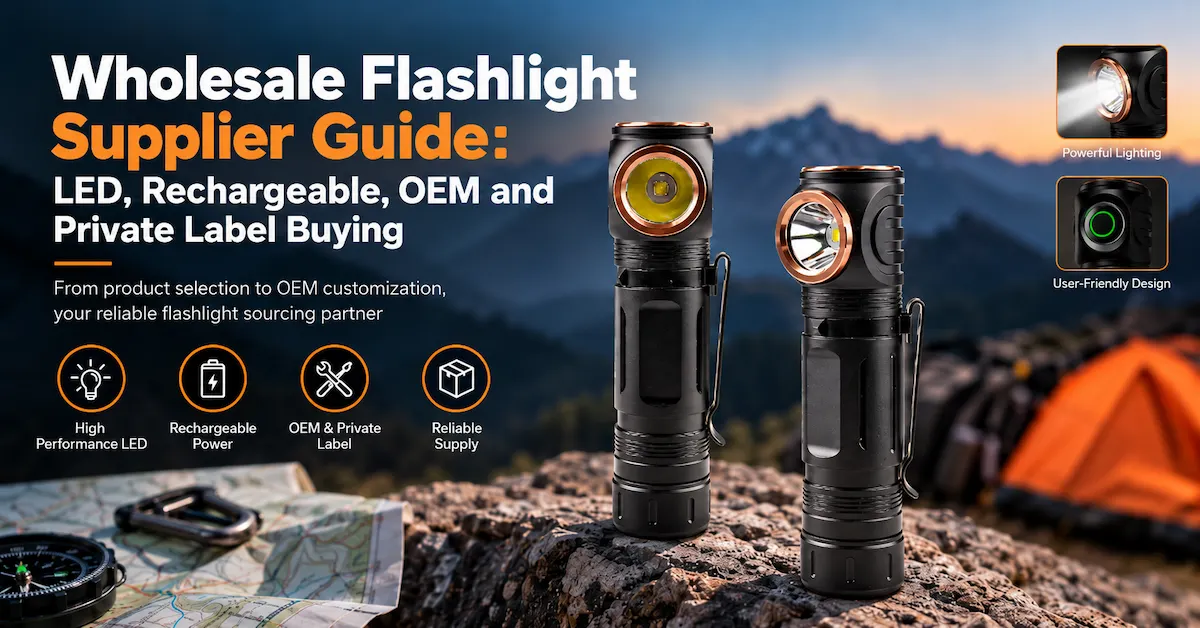
Choosing a professional outdoor lighting manufacturer China can be difficult when the product is intended for maintenance work rather than streets, façades, or public spaces. A compact handheld industrial inspection light may look simple, but its usefulness depends on much more than whether it produces a bright white beam. Engineers and sourcing teams need to understand the product category, confirm the construction, and separate visible features from specifications that still require verification. This article explains how to assess a supplier for portable inspection lighting and when a factory suited to commercial outdoor lighting may not be the right production partner.
The purchasing question is larger than brightness
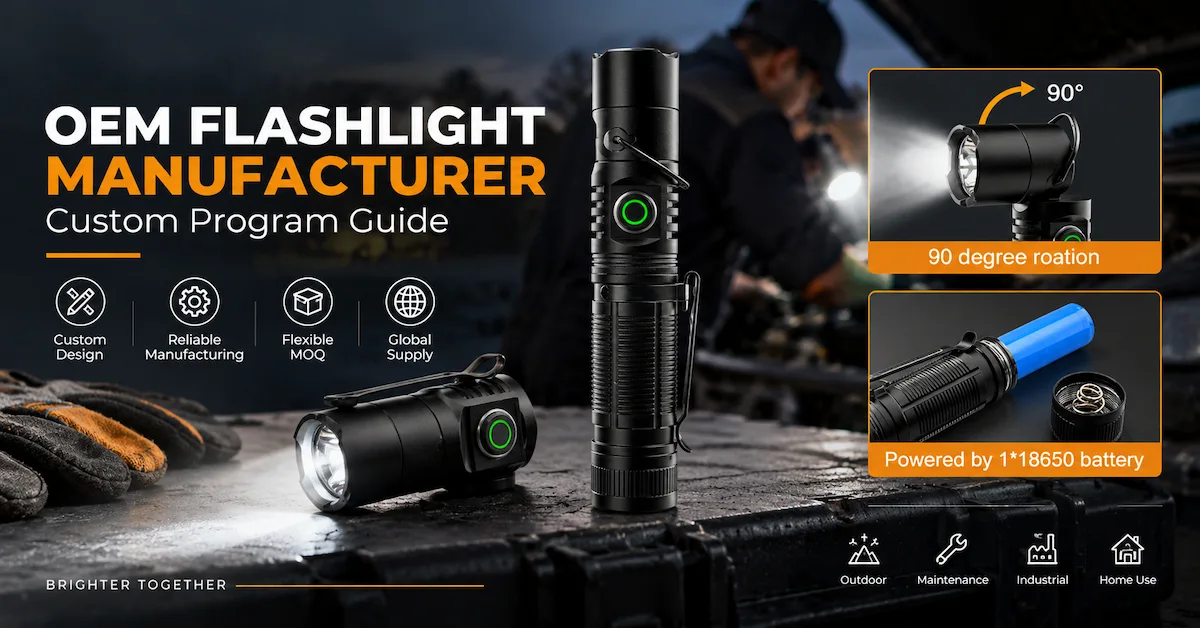
Industrial technicians use handheld lights around pipes, valves, pumps, tanks, fittings, and mechanical assemblies where ambient lighting is weak or blocked. The light must be easy to hold while the other hand operates a tool, opens an access panel, or checks a component. A concentrated beam is useful for close-range inspection because it can direct attention toward a joint, valve stem, surface defect, or equipment label.
That practical use case changes the way a buyer should evaluate the manufacturer. A supplier may be capable of producing attractive LED outdoor lighting for buildings or landscapes, yet have limited experience with battery-powered handheld products. Portable lights involve additional questions about the housing, lens, switch, battery compartment, charging system, thermal behavior, assembly quality, and serviceability. These details are not always visible in a product photograph.
Quick reference: what the visible product suggests
| Observed or likely feature | What it may mean for the buyer | What must be confirmed |
|---|---|---|
| Compact cylindrical body | Suitable for one-handed close-range inspection | Actual dimensions, weight, grip ergonomics, and balance |
| Front lens or reflector | Likely produces a focused white beam | Beam pattern, optical performance, color temperature, and lumen output |
| Dark smooth or lightly textured housing | May be molded polymer or coated metal | Material, finish durability, heat resistance, and impact behavior |
| Industrial inspection application | Useful around pipes, valves, pumps, tanks, and equipment bays | Operating environment, temperature range, ingress protection, and drop resistance |
| Portable LED-based design | Potentially efficient and compact | LED type, battery capacity, runtime, charging method, and thermal management |
The product information available for this type of light does not establish brightness, wattage, beam distance, runtime, ingress protection, impact resistance, hazardous-area certification, battery type, or operating temperature. Those are not minor omissions. They are core purchase specifications and should be included in a written technical review before approval.
Understand the product before comparing factories
Housing and grip design
The visible design is a compact cylindrical light body held in one hand. The rear or side body appears dark and may have a smooth or lightly textured finish. However, the exact housing material cannot be confirmed from the image. It could be a molded polymer, coated metal, or a combination of components. The front bezel also appears darker and possibly metallic, but that point requires confirmation from the manufacturer.
For maintenance teams, housing material is not simply a cosmetic decision. A polymer body may reduce weight and offer design flexibility. A metal body may provide a different level of mechanical robustness and heat transfer, depending on its construction. In either case, the buyer should ask how the housing is produced, how the finish is applied, and whether the design has been evaluated for repeated handling in plant environments.
Optics and inspection performance
A focused white beam is a visible selling point for this product category. It can help a technician illuminate a narrow area of pipework or examine a fitting without flooding the entire workspace with light. Yet “focused” is not a sufficient optical specification. The beam may be narrow, broad, sharply defined, or uneven. Each pattern serves a different job.
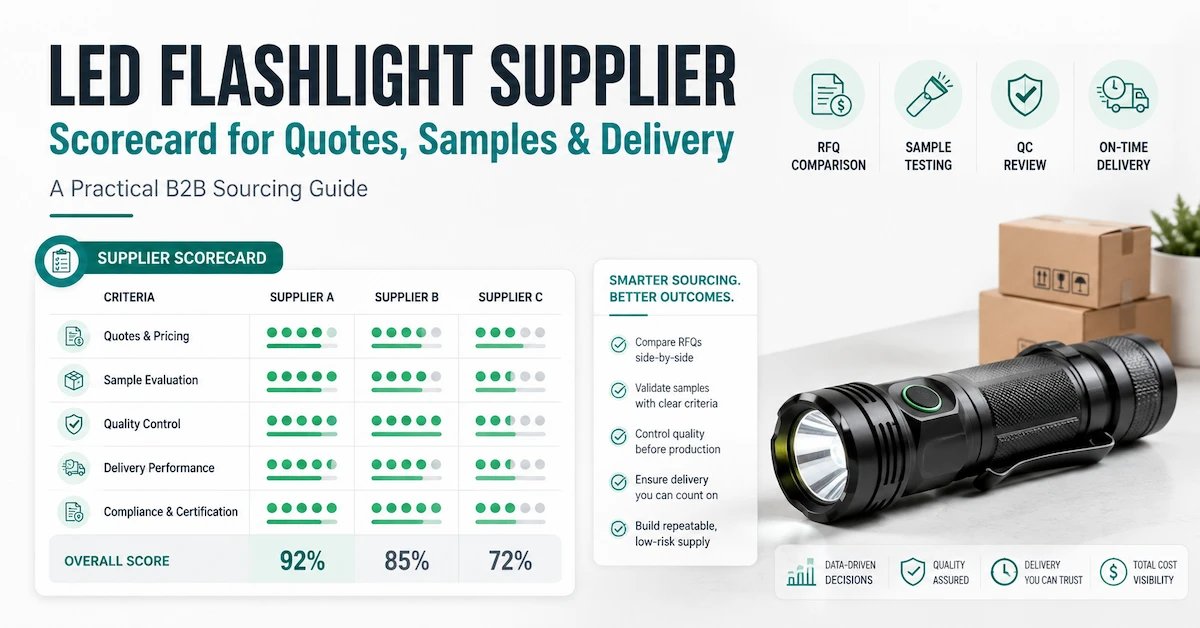
Request a beam photograph or test sample under realistic working conditions. Ask for the stated lumen output, beam distance, color temperature, and LED details if these are important to the application. A high lumen figure alone does not guarantee useful inspection performance. Glare, hot spots, poor color rendering, and rapid output reduction from heat can make a nominally powerful light less effective in practice.
Power, controls, and serviceability
The controls, battery compartment, clip, magnet, and charging port are not clearly visible in the available product information. They should therefore be treated as open design questions. A sourcing team should confirm whether the light uses a replaceable or integrated battery, how it is charged, whether charging status is indicated, and what happens when the battery reaches a low state.
Control placement matters in gloves and low-visibility conditions. A switch that is easy to find by touch can be more valuable than a complex mode system. Buyers should also ask whether the light can be operated while wearing common industrial gloves and whether accidental activation during transport is possible. These are practical details that rarely appear in a short catalogue description.
How to assess a professional outdoor lighting manufacturer China
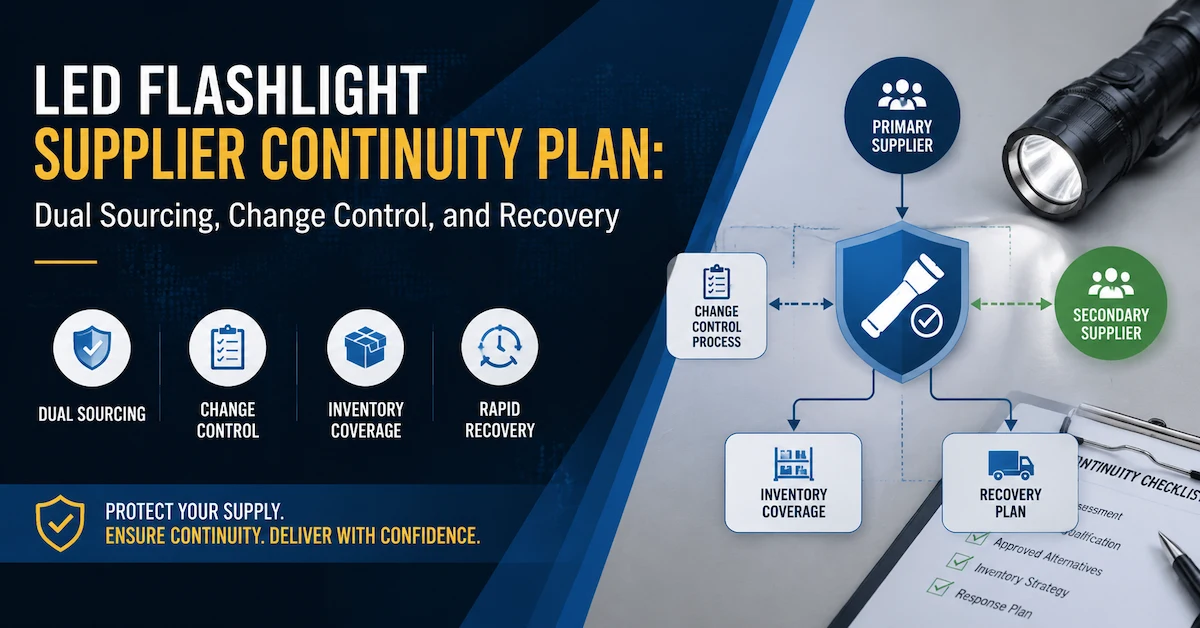
Start by determining whether the supplier actually manufactures portable industrial lighting or mainly produces fixed luminaires. A company experienced in commercial outdoor lighting may understand LED assembly, optical components, and enclosure production, but handheld inspection products introduce different design and quality-control demands.
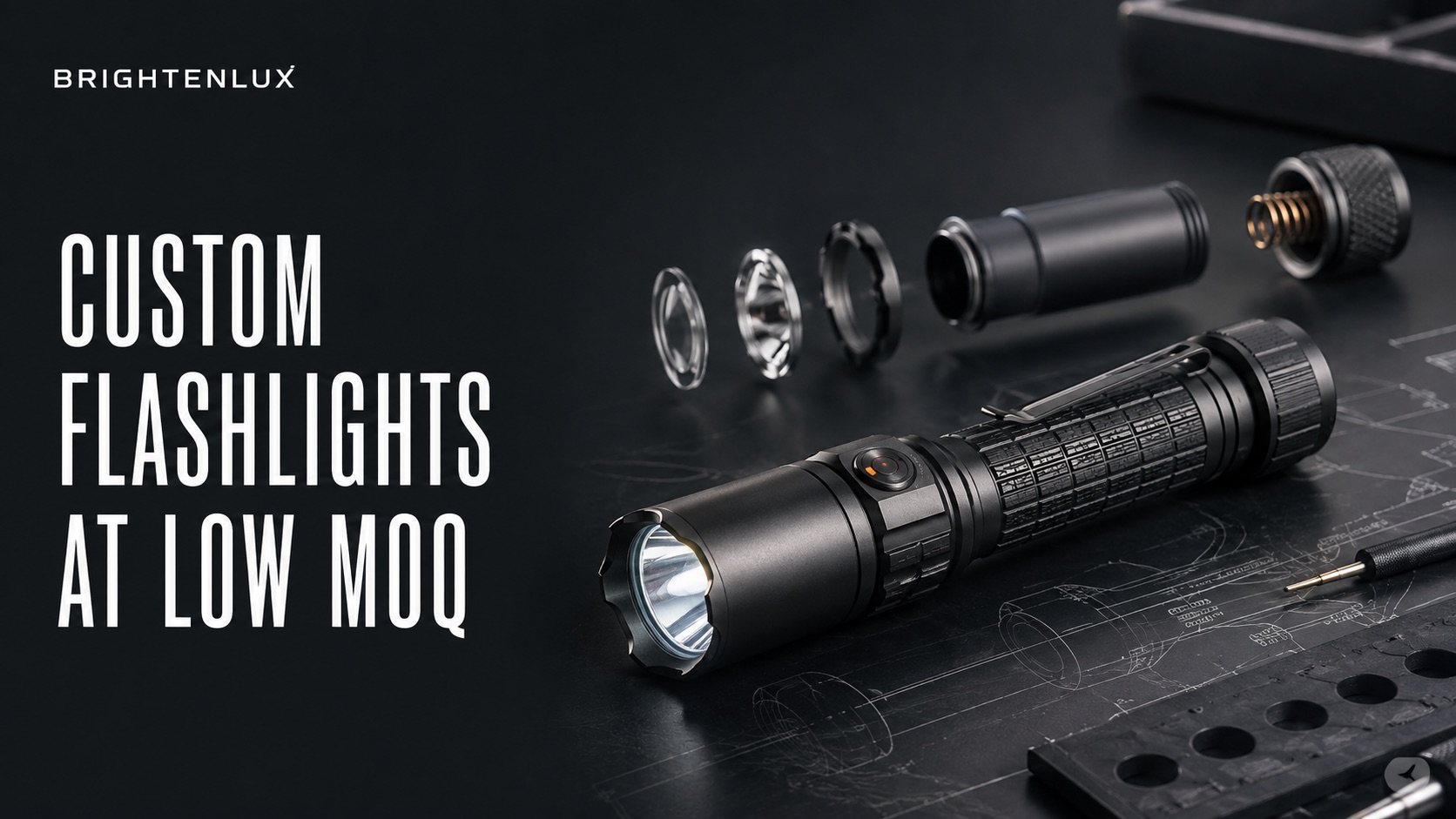
Ask the manufacturer to describe its production route without relying on broad marketing language. If the housing is polymer, injection molding may be involved. If it is metal, machining or die casting may be used. LED, lens, battery, switch, and wiring assembly then create a separate set of process controls. These manufacturing routes are plausible for the product, but they are not confirmed for this specific light, so the supplier should identify the actual materials and operations.
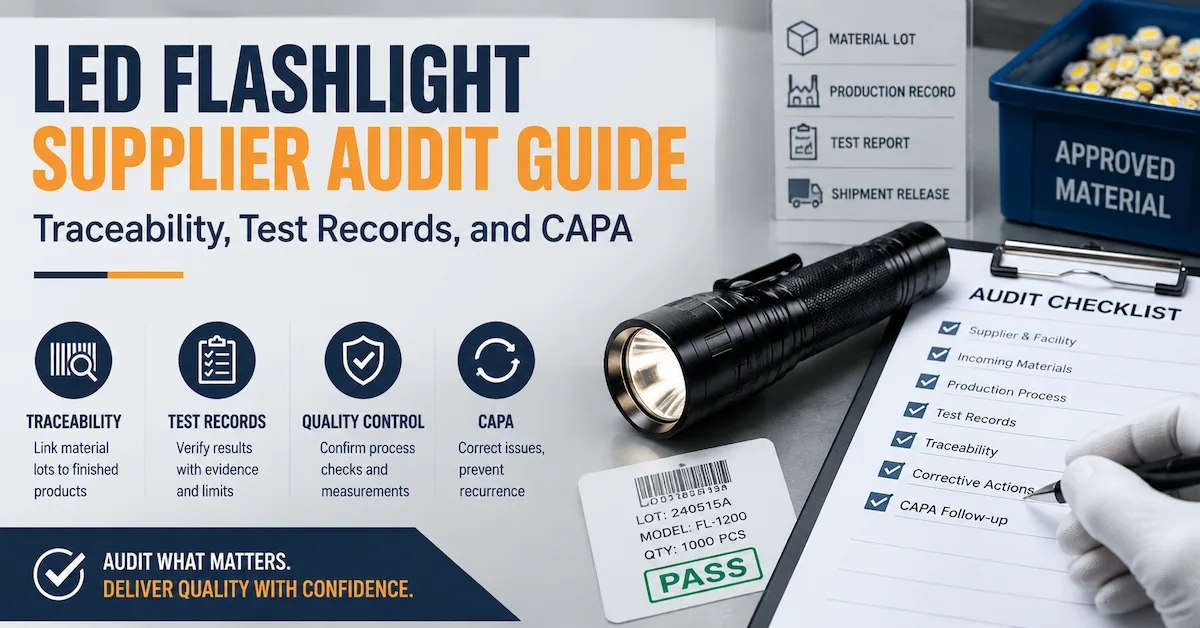
A useful supplier review should cover:
- Whether the design is an existing product, a private-label model, or a custom development.
- Which parts are made in-house and which are purchased from external vendors.
- How incoming LED, battery, lens, switch, and housing components are checked.
- How the assembly line verifies polarity, charging, switching, and light output.
- Whether the supplier can provide a sample for hands-on evaluation before volume production.
- How product revisions are controlled once the design has been approved.
Do not assume that a supplier of fixed LED outdoor lighting has validated battery safety or handheld durability. Those capabilities may exist, but they need evidence in the form of technical documentation, sample inspection, and a clear production description.
Specifications to put into the RFQ
An effective request for quotation should describe the working environment, not just request a “strong flashlight.” Include the intended users, approximate inspection distance, expected duty cycle, preferred beam behavior, and whether the light will be used indoors, outdoors, or in areas with dust, moisture, heat, or oils.
Request the following information where relevant:
- Housing material and surface finish
- Overall dimensions and product weight
- Lumen output, wattage, LED type, and color temperature
- Beam pattern and rated beam distance
- Battery chemistry, capacity, replaceability, and runtime
- Charging method, charging time, and charging indicator
- Operating temperature and storage temperature
- Ingress protection and impact or drop performance
- Switch design, mounting features, clip, magnet, or lanyard options
- Any applicable industrial, electrical, or hazardous-location certification
Certification deserves particular care. The available product information does not establish ATEX, IECEx, or any other hazardous-area approval. If the light will be used near flammable gas, vapor, dust, or process equipment with a classified area, do not rely on appearance or supplier wording. Ask for the exact model-specific certificate and confirm that its marking matches the intended operating zone. If no such documentation is available, the product should not be treated as certified for that application.
Common buying mistakes
The first mistake is comparing suppliers by lumen claims alone. The second is approving a sample without checking the battery and charging arrangement. The third is treating a black metal-looking body as proof of a particular housing material or durability level. A photograph can show form and general use, but it cannot verify impact resistance, waterproofing, thermal performance, or operating life.
Another frequent error is specifying an industrial light without defining the inspection task. A technician checking a pump seal may need a broad, comfortable beam. Someone reading a recessed valve label may prefer a more concentrated pattern. The application should guide the optical design.
Finally, avoid approving a product before confirming how changes are controlled. A later substitution of the LED, battery, lens, or charging component can affect performance even when the external housing remains unchanged. Put the approved component list and key specifications into the purchase documentation.
FAQ for industrial lighting buyers
Is this product the same as fixed LED outdoor lighting?
No. The described product is a portable handheld inspection light, while fixed outdoor luminaires are generally installed on buildings, poles, walls, or other structures. Some manufacturing capabilities overlap, but battery operation, ergonomics, switching, and portable durability require separate evaluation.
Can the light be used in a hazardous area?
That cannot be determined from the available information. Hazardous-area use requires model-specific certification and suitable markings. Do not infer compliance from the product’s industrial appearance.
What should be requested before placing an order?
Request a technical datasheet, sample, housing and battery details, optical specifications, environmental ratings, and any applicable compliance documents. Confirm which features are standard and which would require a design change.
Next step: evaluate the sample against the real job
A capable professional outdoor lighting manufacturer China may be able to support this type of portable industrial product, but the decision should rest on verified construction and application fit rather than catalogue appearance. Begin with a written specification, then inspect a sample around representative pipes, valves, pumps, and equipment bays. Check the grip, switch, beam behavior, charging process, and handling with gloves. Record the unanswered items and obtain written confirmation before moving to production.
For buyers comparing portable industrial lighting suppliers, the most efficient next step is a focused RFQ that separates confirmed features from requested requirements. That approach gives engineering, procurement, and product teams a reliable basis for comparing factories—and reduces the risk of buying a light that looks suitable but is not qualified for the environment where it will be used.