

Camping Light Supplier Guide for Outdoor Lantern Buyers
If you are sourcing a camping light supplier, the main question is not which lantern looks best in a catalog. It is whether the supplier can deliver a portable light that holds up to outdoor handling, packs easily, and performs consistently when customers use it at a campsite, lakeside, or as backup light at home. A simple lantern can still create sourcing problems if the supplier cannot explain how the product is built, assembled, and intended to be used.
Why the supplier matters more than the light itself
A compact camping lantern may seem straightforward, but it sits at the intersection of plastics, electrical parts, assembly discipline, and outdoor expectations. That means supplier quality often affects the end product more than the shape or styling does. A stable base, enclosed light chamber, and durable outer body matter when the lantern is placed on uneven ground, near cooking gear, or in a tent area where it may be moved around often.
For sourcing teams, the key is to compare supply capability before comparing feature lists. A supplier should be able to explain what the product is designed to do, what it is not designed to do, and how it will hold up in actual field use. If that conversation stays vague, the buying risk rises quickly. For buyers reviewing a broader range, it can help to start with the product lineup at Brightenlux products.
What the product is really doing in the field
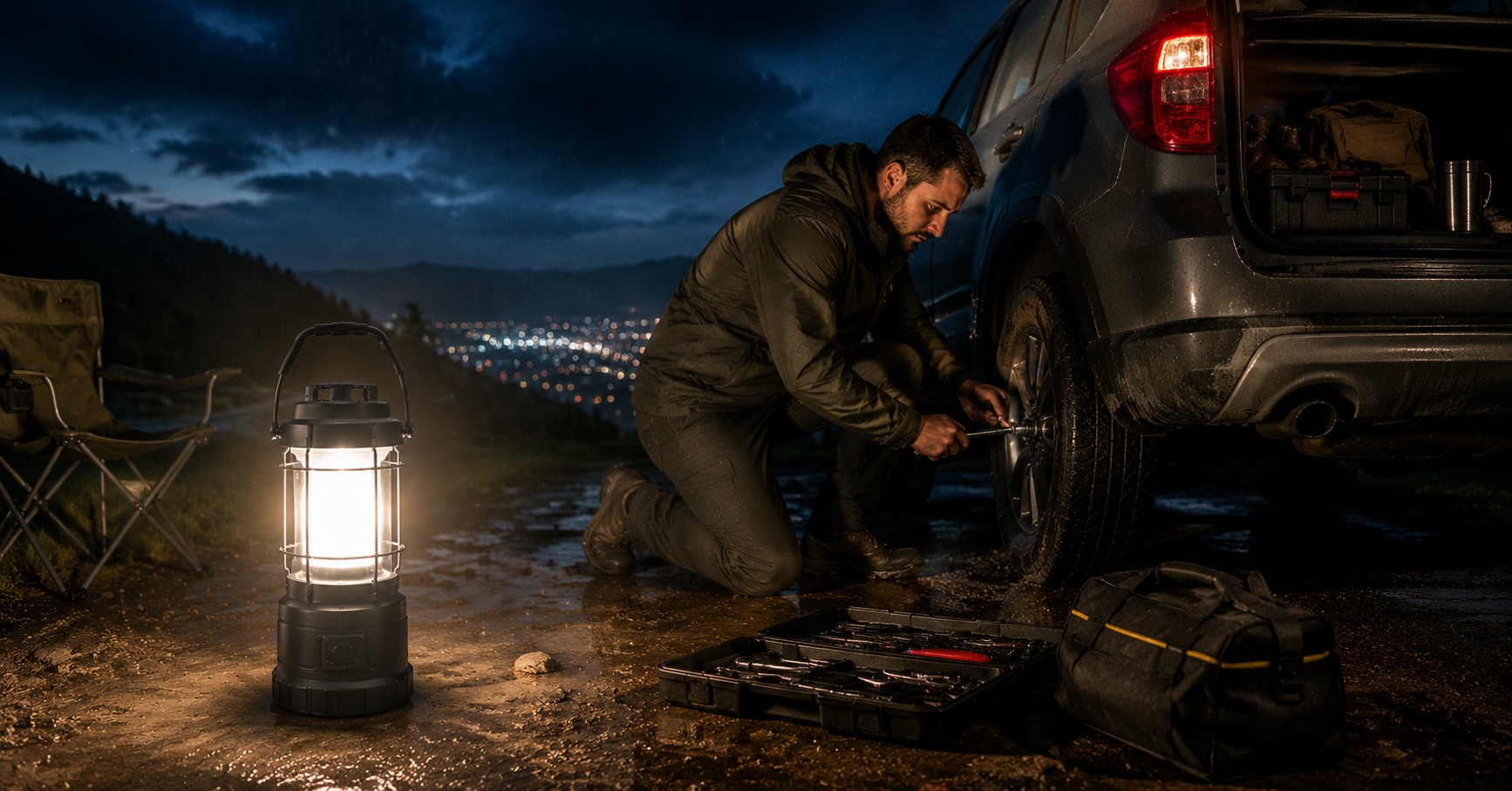
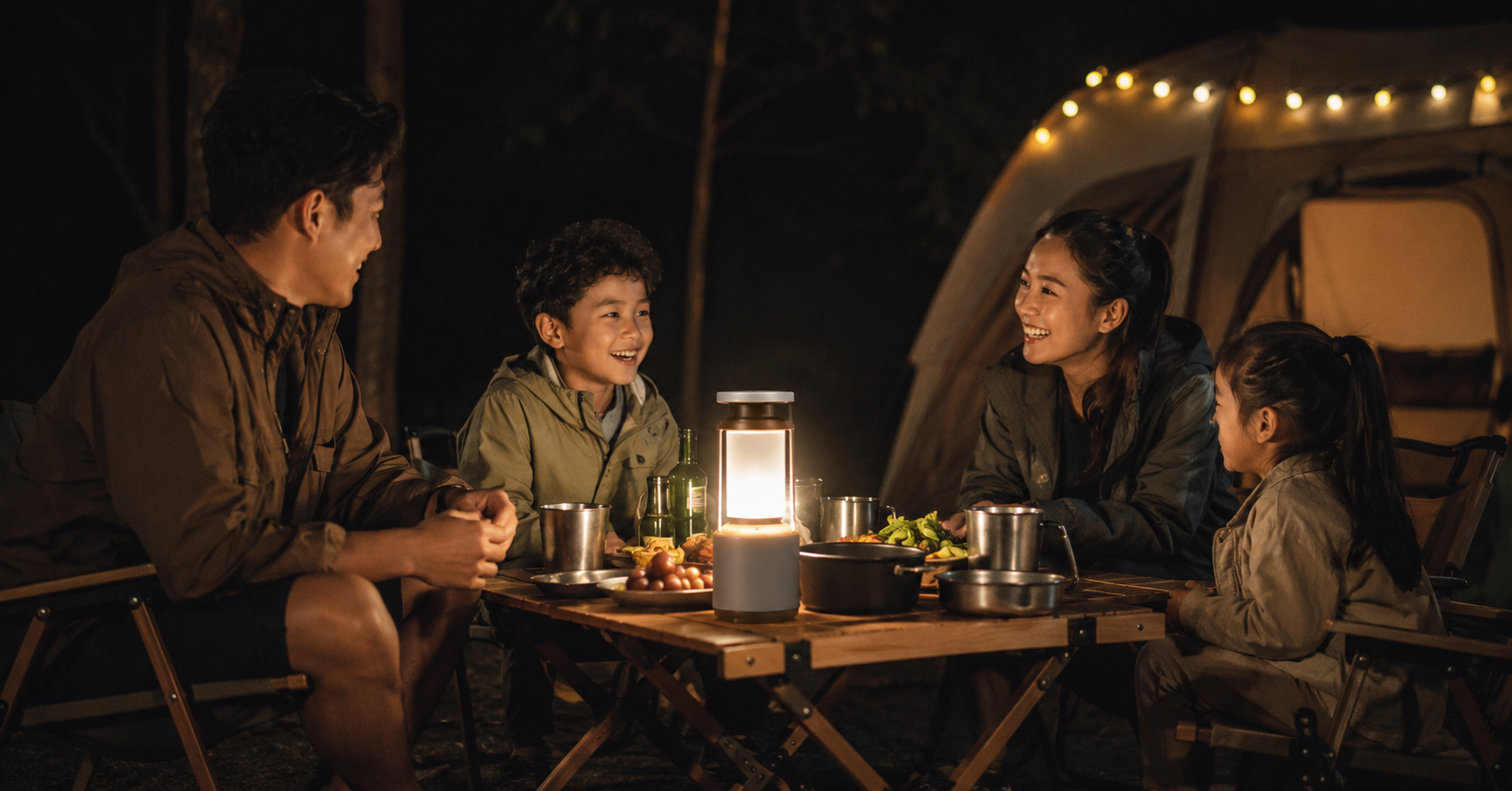
The product here is a portable camping lantern, sometimes described more broadly as an outdoor lantern. Its main role is area lighting rather than a narrow beam. That means it is expected to create usable ambient light around a table, tent entrance, fishing spot, or temporary outdoor setup. This is a different job from a handheld flashlight, so the sourcing criteria should also be different.
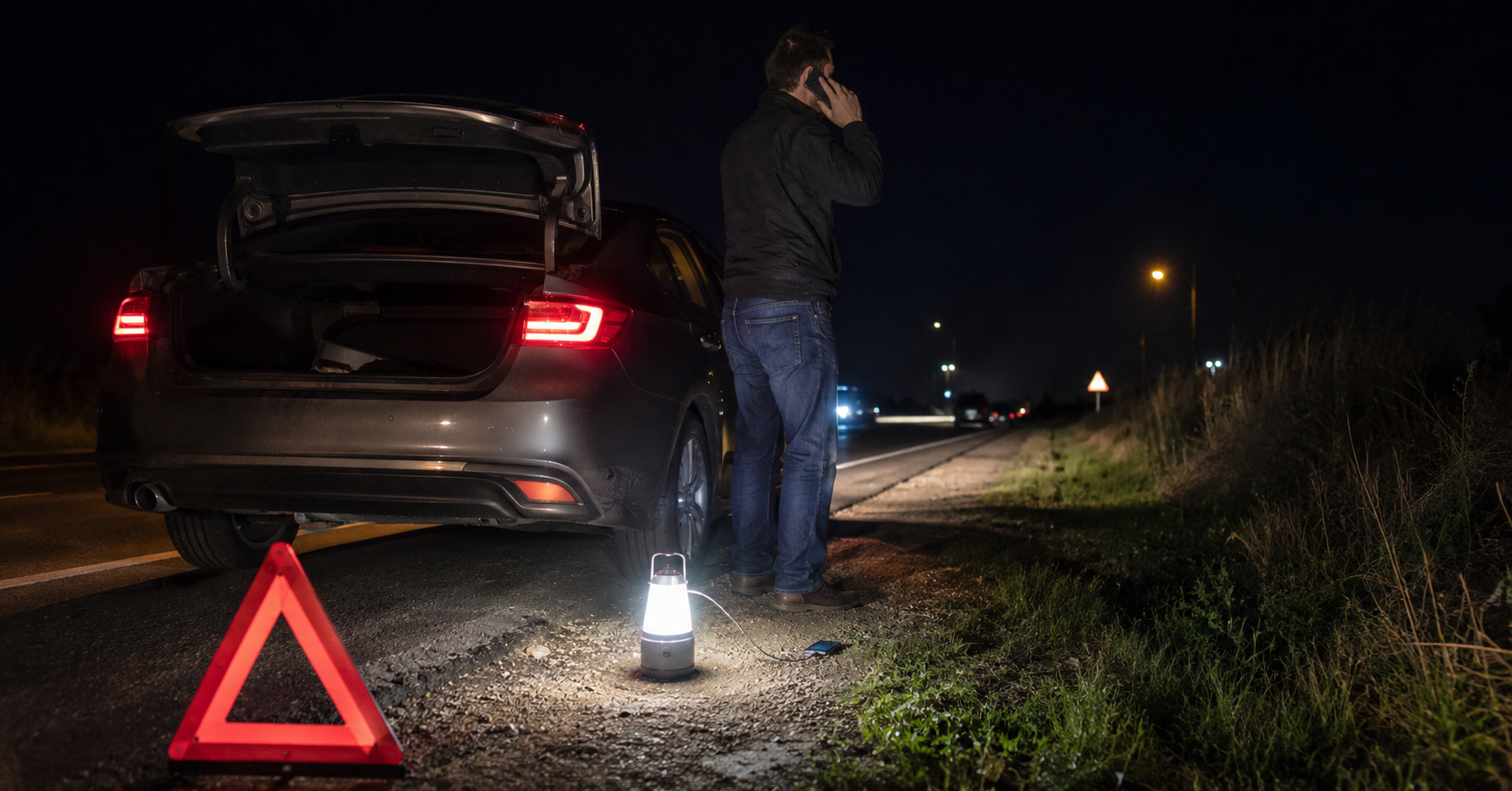
The compact cylindrical body shown in the source material suggests a design focused on portability and freestanding use. That makes sense for camping, but it also fits emergency backup light and casual evening use outdoors. The important point is clarity: a supplier should be able to explain whether the lantern is meant for ambient campsite lighting, decorative use, or another use case. If the intended purpose is unclear, the customer promise will be unclear too.
Build and materials: where quality usually shows up first
The product description points to a compact cylindrical lantern with a dark matte outer body, a clear transparent chamber, and a visible internal light element. The exact material is not confirmed in the source, but the overall structure suggests molded housing parts and a transparent cover. For buyers, the material question is not only about appearance. It affects impact resistance, clarity, assembly consistency, and perceived value.
A matte outer body can help hide fingerprints and scuffs, which matters on a product carried in bags or placed on rough surfaces. Buyers should also ask how the chamber is fixed, whether the seams stay aligned, and whether the cap or base feels solid in hand. Small lanterns often fail for ordinary reasons such as loose parts, poor fit, or a cap that shifts after a few uses. Those problems rarely look serious in a sample, but they can become return issues later.
LED camping light supplier or broader lantern supplier?
One useful sourcing distinction is whether you need a general camping lights supplier or an LED camping light supplier with stronger control over electronics and light-source consistency. The source does not confirm the exact lighting type, so buyers should not assume it. Some lanterns in this format use LED elements, while others may use different light-source designs with a similar appearance.
If your product line depends on efficient power use, lower heat, and repeatable output, an LED-focused supplier is usually the safer fit. If your goal is decorative outdoor ambient lighting or a simple backup product, the more important factors may be cost structure, assembly robustness, and visual consistency. The best supplier is the one that can explain the light source in plain language. If that explanation is unclear, it is worth slowing down before you place an order.
Quick reference: what to check before you compare samples
Before getting lost in detail, buyers should verify a few practical points. The table below keeps the early review stage simple and focused.
| What to check | Why it matters |
|---|---|
| Stable base | Helps the lantern stay upright on uneven ground or campsite tables. |
| Enclosed light chamber | Supports protection from incidental contact and everyday handling. |
| Body fit and seams | Loose seams or shifting caps often become quality complaints later. |
| Clear use case | Prevents confusion between decorative outdoor lighting and working campsite lighting. |
If a supplier can answer these points clearly, the review process becomes much easier. If they cannot, the sample may look fine while the production experience becomes inconsistent. Buyers who are still shaping their short list can use the same criteria while browsing the product range.
Common mistakes in sourcing camping lights
The first mistake is buying from catalog photos alone. A lantern can look polished online and still have weak fitment, poor switch feel, or unstable placement in the hand. The second mistake is treating all portable lanterns as if they serve the same purpose. A casual evening lantern and an emergency backup light may share a similar silhouette, but the customer expectation is not the same.
The third mistake is assuming the light source, power structure, or assembly approach without confirmation. The source material does not verify whether this model is LED-based or how its light system is built, so buyers should not fill in those gaps themselves. A fourth mistake is ignoring communication quality. If a supplier is evasive about components or build flow, that is usually a sign to pause rather than push ahead.
Questions to ask before you place an order
Start with the basics: What materials are used in the body and chamber? How is the product assembled? What are the intended use cases? Can the supplier provide a sample that matches production intent? If the answers feel fuzzy, stop there and get clarity before moving forward. These questions sound simple, but they often separate a useful supplier from a risky one.
You should also ask how the lantern is packaged for transport and retail presentation. A compact outdoor light can be damaged in transit if packaging is too loose. If your market cares about appearance, ask whether the finish can support a rugged look or a more decorative presentation. When you are ready to move from questions to action, send an inquiry or contact us directly.
What the right supplier relationship should feel like
A reliable camping light supplier is not just a factory that agrees to every request. It is a partner that helps narrow the product spec to what customers actually need. That includes being honest about uncertainties. If the light source is not confirmed, say so. If the chamber material can vary, say so. If the design is better suited to ambient camp use than harsh weather, say so.
That kind of candor saves time and reduces downstream confusion. It also prevents product teams from building claims that the lantern cannot support later. In outdoor lighting, disappointment usually comes from overpromising, not from the shape of the lantern itself. A supplier that communicates clearly is often the one that helps a buyer avoid the most costly mistakes.
FAQ
Is this type of lantern only for camping?
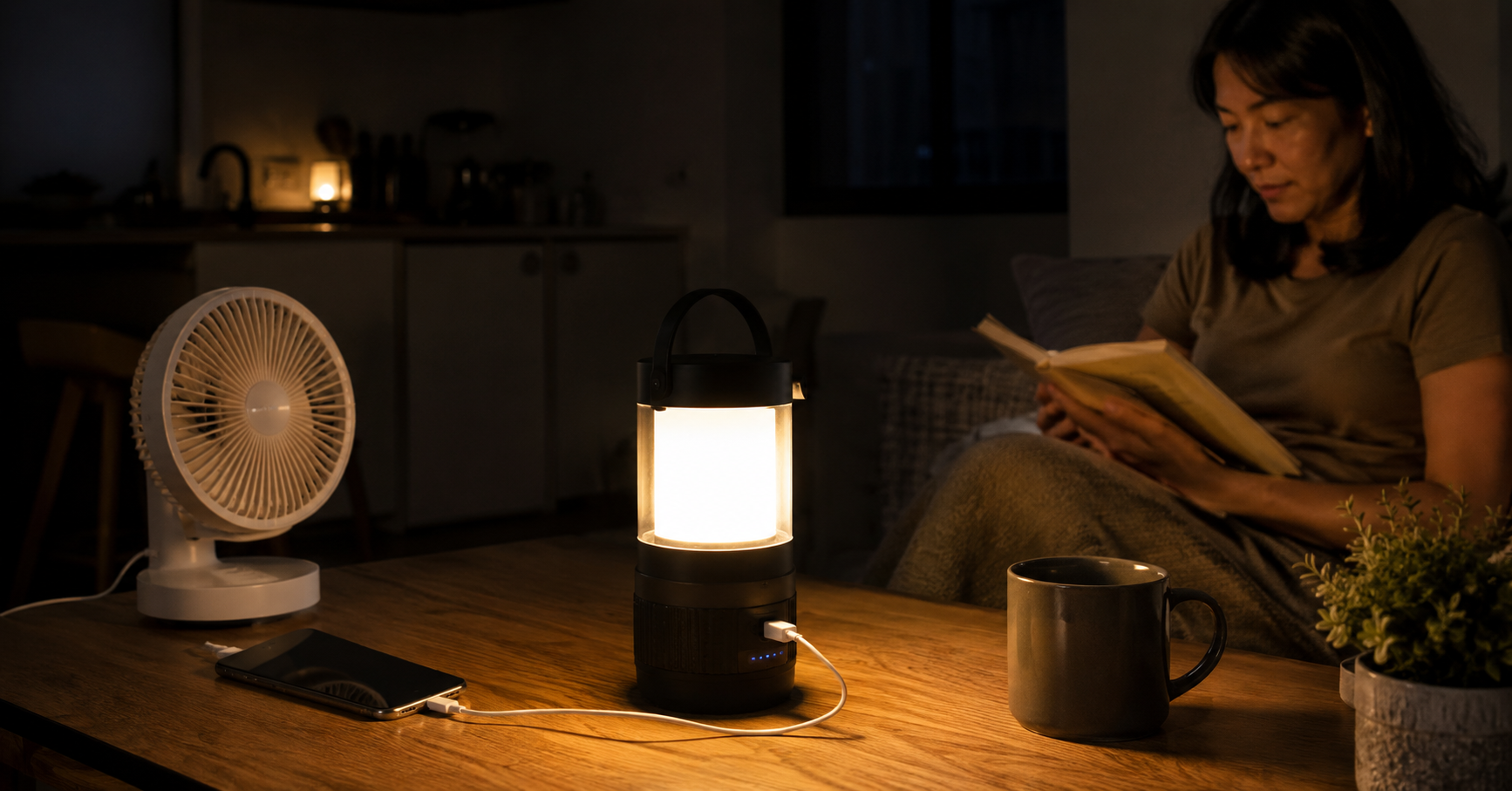
No. A compact outdoor lantern can also work for fishing, emergency backup, evening gatherings, or temporary lighting around a home during outages. The important point is matching the product’s intended use to the customer’s actual scenario, rather than assuming one lantern fits every case.
Should buyers focus on brightness first?
Brightness matters, but it is not the only factor. For a camping lantern, stability, enclosure, portability, and consistency often matter just as much as output. A lantern that is easy to place, carry, and use in a campsite can be more practical than one that looks strong in a spec sheet.
Can I assume the product is LED-based?
No. The available source does not confirm that, so buyers should verify the light source directly with the supplier. That is especially important if your buying plan depends on a specific light engine, repeatable performance, or a consistent product message for your market.
What makes one supplier better than another?
Usually it is not one dramatic feature. It is clearer communication, steadier assembly, better material control, and a realistic understanding of how the lantern will be used outdoors. A supplier that answers plainly and consistently is often easier to work with than one that relies on broad claims.