

Waterproof LED Flashlight Supplier Guide for Rescue and Wet Conditions
Choosing a waterproof LED flashlight supplier is not just a catalog decision. For rescue teams, patrol crews, shoreline inspectors, and industrial maintenance workers, lighting must remain practical when rain, spray, mud, gloves, and urgency are part of the job. A light that looks strong in product photos may still fail the real test if it is awkward to operate, poorly suited to the beam task, or hard to carry with protective equipment. This guide helps B2B buyers evaluate wet-condition lighting with a focus on application fit, supplier understanding, and field usability.
Why Waterproof Lighting Matters in Field Work
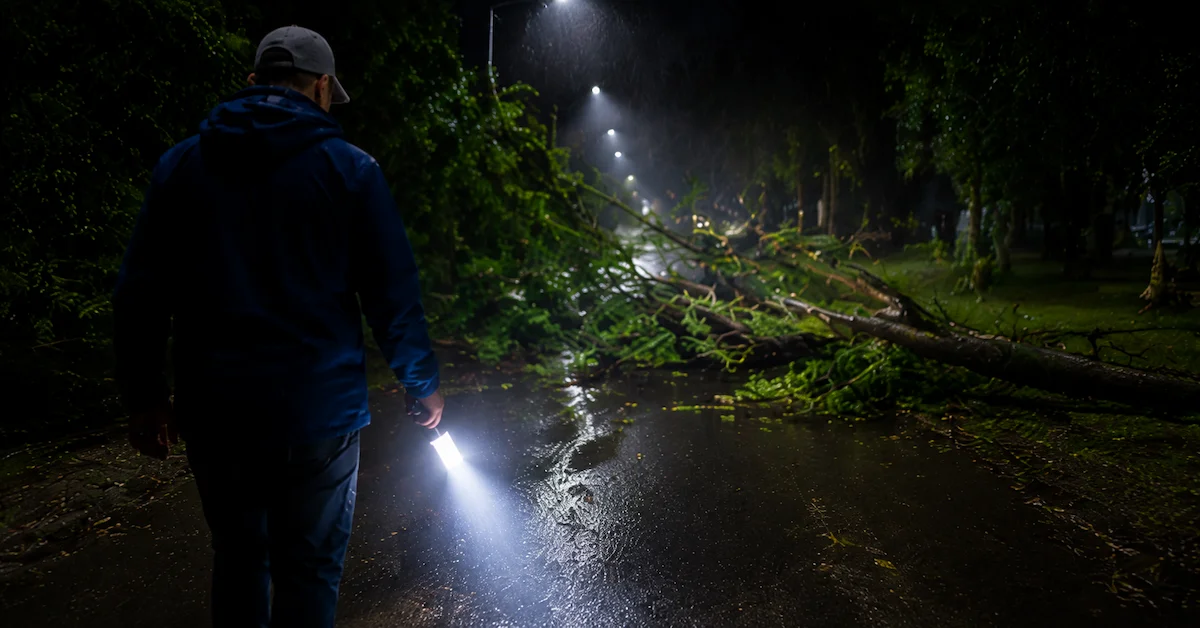
A waterproof LED flashlight supplier is often sourced for work that has little room for inconvenience. Typical use cases include night patrols in rain, flood response, shoreline inspection, industrial maintenance in wet zones, and rescue work where a dropped or soaked light cannot be dismissed as a small problem. If the lighting fails, the task slows down. If it fails at the wrong moment, risk can spread across the whole team.
Buyers therefore ask practical questions. Will the light keep working when weather turns? Can the operator manage it on a slippery surface? Does it support work when both hands are needed? The answer depends on more than brightness. Sealing, beam control, grip, battery handling, switch design, durability, and supplier experience all matter in wet, low-visibility environments.
What B2B Buyers Should Evaluate First
In this category, the sourcing decision rarely depends on one specification alone. A buyer may begin by comparing brightness, but the final choice usually comes from a balance of ruggedness, usability, and how the product behaves in the hand. A dependable waterproof torch supplier should be able to discuss wet-condition use, not just dry-site performance or indoor demonstrations.
Field crews often use both handheld flashlights and helmet-mounted headlamps because they solve different problems. A handheld beam helps inspect distance, edges, waterlines, and hazards. A headlamp keeps the work area visible while leaving both hands available. When a supplier treats those tools as interchangeable, it may indicate limited understanding of rescue or industrial workflows. Buyers should look for suppliers who can talk about the full lighting role inside a wider safety kit.
Core Product Requirements for Wet, Low-Visibility Conditions
There is no single universal specification for every rescue or wet-condition lighting project. Buyers should be cautious of suppliers who present one model as suitable for every scenario. The same product may behave differently during rain patrol, riverbank inspection, industrial repair, or flood response. The right discussion begins with exposure, beam purpose, user interface, and how the light fits protective clothing and carry gear.
| Requirement | Why It Matters |
|---|---|
| Water resistance matched to use | Rain, spray, brief immersion, and prolonged flood exposure are different conditions. |
| Useful beam pattern | Distance spotting, close inspection, and walking tasks need different beam behavior. |
| Glove-friendly operation | Wet gloves, cold hands, and urgency make small switches difficult. |
| Practical power handling | Battery access and charging should not create avoidable weak points. |
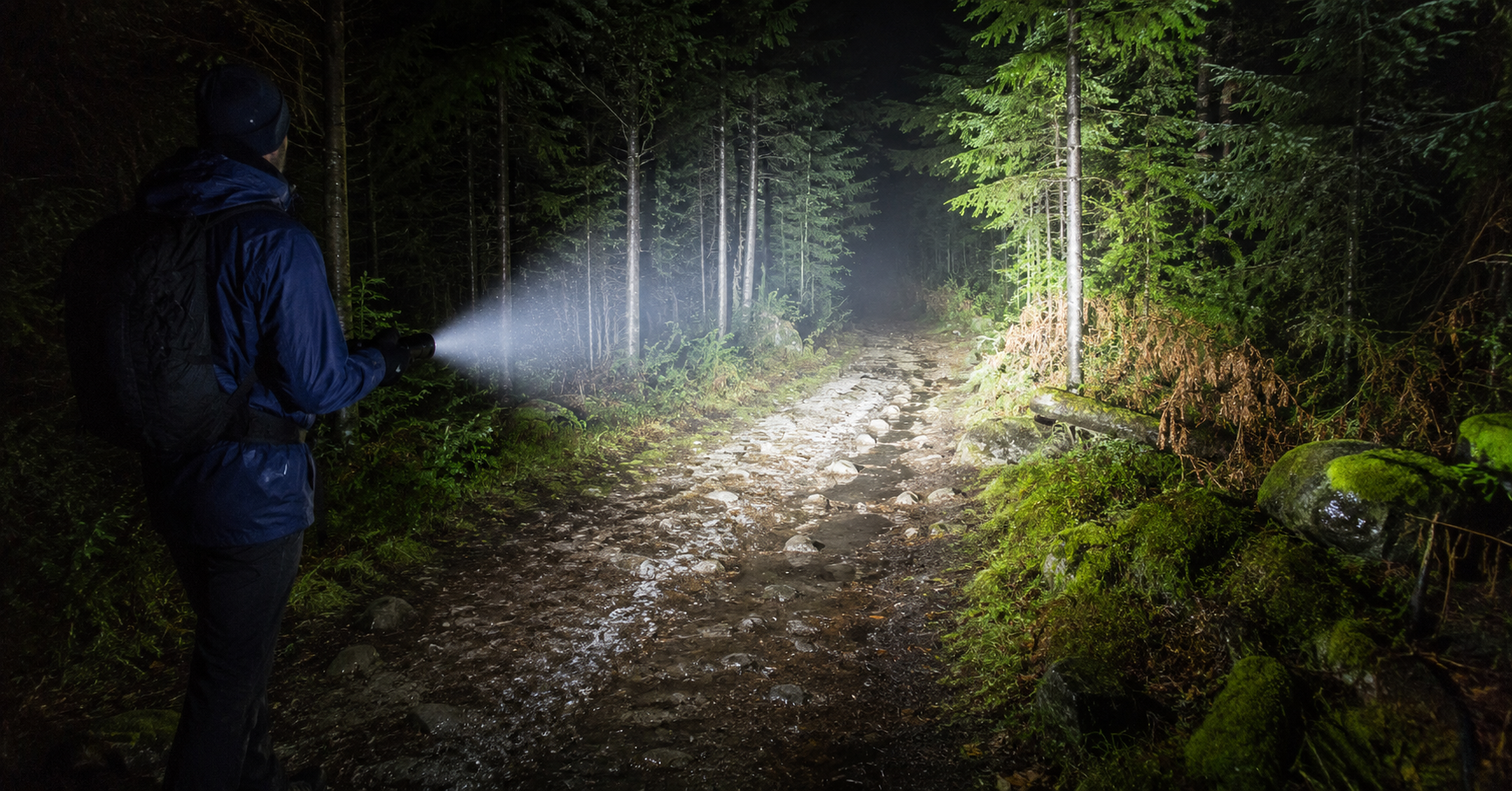
Raw brightness is not enough. A narrow beam can help identify distant objects or scan a river edge, while a broader beam may be better for walking, checking terrain, and inspecting equipment. Some teams prefer a focused center with enough spill for peripheral awareness.
How to Judge Supplier Understanding
A capable LED flashlight manufacturer usually starts with the use environment before recommending a product family. This matters because rescue and industrial buyers often need lighting that works with helmets, reflective clothing, gloves, waterproof trousers, and boots. In that setting, the flashlight is one layer in a visibility system, not an isolated accessory.
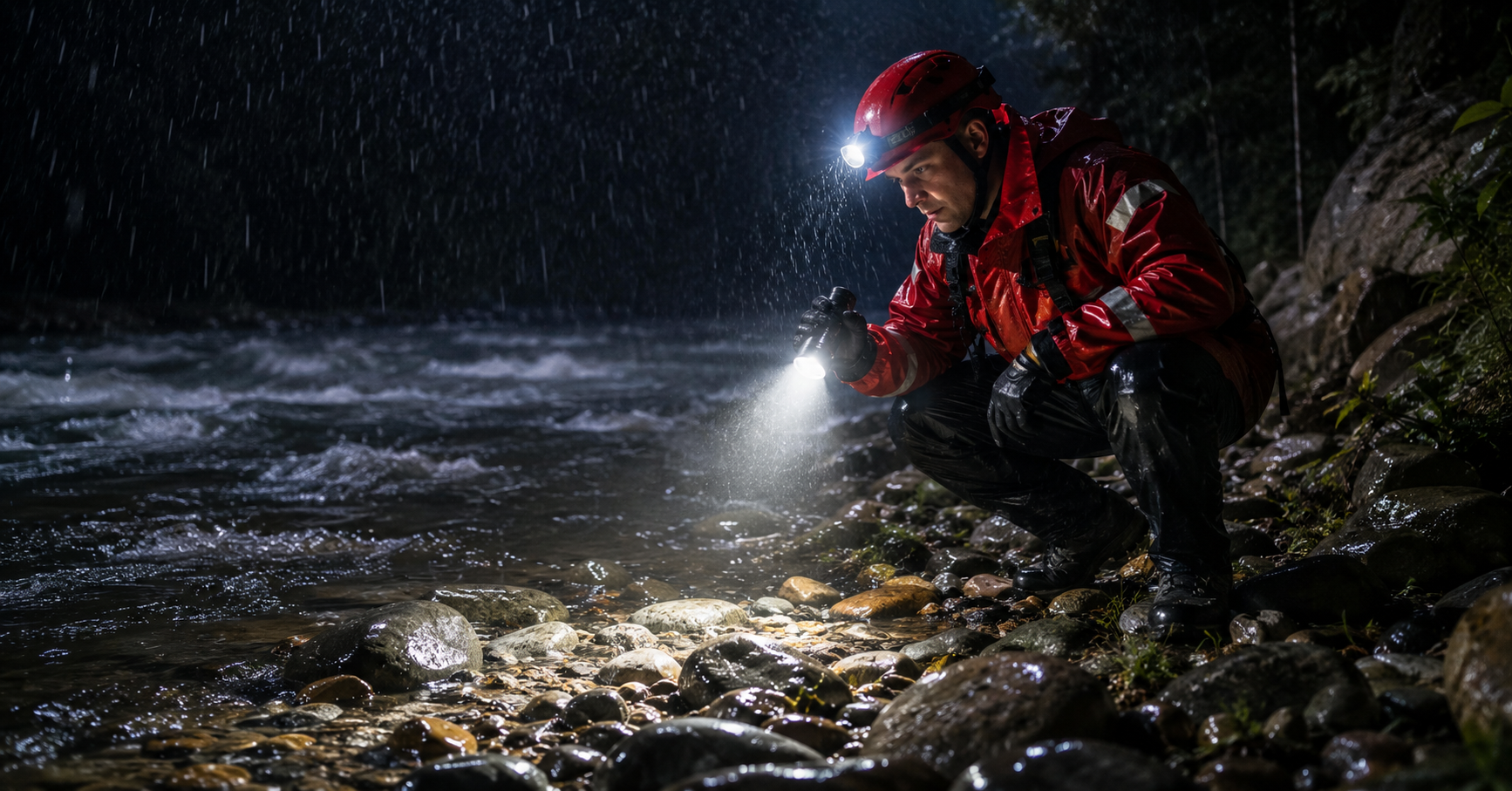
The image context shows a person working along a riverbank in heavy rain with a handheld flashlight, helmet-mounted headlamp, reflective outerwear, waterproof trousers, gloves, and boots. That combination suggests the light must support movement, team visibility, and inspection tasks at the same time. A supplier who understands this can discuss complementary products, package options, or form factors more realistically than one offering only a generic retail-style torch. Buyers can review related lighting categories at Brightenlux products before starting a shortlist.
Selection Criteria That Reduce Procurement Risk
Procurement teams should separate marketing claims from operational value. Start by matching the light to the task. Search and rescue, flood response, patrol, and industrial inspection do not all require the same size, beam, or carry method. Compact models may be easier to carry, while larger bodies may be easier to grip with gloves. The application should guide the product choice.
Next, ask about environmental exposure honestly. Rain is not the same as spray, and spray is different from immersion. Real use may also include mud, grit, cold, and repeated handling. Vague answers from a supplier should prompt follow-up questions. For B2B purchasing, repeat availability also matters. Rescue organizations and industrial users may need matching units, replacement parts, or follow-on orders. A stable product line is easier to manage than one based on whatever stock happens to be available.
Common Sourcing Mistakes to Avoid
The most common mistake is overbuying on brightness while underbuying on usability. A very bright flashlight can still be a poor field tool if it is uncomfortable to hold, awkward with gloves, or poorly designed around the switch and battery compartment. Equipment that frustrates users may stay in a vehicle instead of being carried when needed.
Another mistake is applying consumer expectations to professional wet-condition work. A product that suits a casual outdoor activity may not be appropriate for repeated rain exposure, abrasive handling, or emergency operations. Buyers sometimes discover this only during field testing, which is an expensive time to learn. A third issue is ignoring the rest of the kit. If teams already use reflective clothing and helmet-mounted lights, the handheld flashlight should complement that setup rather than duplicate it or complicate movement.
Questions to Ask Before Placing an Order
Before selecting a waterproof LED flashlight supplier, buyers should prepare questions that reveal whether the supplier understands the working environment. Useful questions include: What conditions is the light designed for: rain, spray, or immersion? Is it intended for patrol, rescue, inspection, or general utility work? How does the beam behave at short and long distances? Can it be used comfortably with work gloves?
It is also useful to ask about maintenance expectations for seals, switches, and battery compartments, as well as whether matching headlamps, PPE, or carry accessories are available. Not every supplier will answer every question in the same detail, but the response style is informative. Strong suppliers tend to explain limits clearly. Weak suppliers often rely on broad adjectives. If you are ready to discuss application needs, contact Brightenlux through contact us or send an inquiry.
FAQ
What should buyers mean by waterproof when sourcing LED flashlights?
Buyers should define the actual exposure instead of using the word waterproof alone. Rain, splashing, brief immersion, and prolonged flood-related exposure are different conditions. A reliable supplier should explain what the product is intended to handle and where its limits are, without turning the discussion into vague marketing language.
Is brightness the most important factor for rescue flashlights?
Brightness matters, but it should not be the only deciding factor. Beam pattern, grip, switch access, battery handling, and wet-condition usability often determine whether a light works in the field. A powerful beam that is uncomfortable, hard to control, or poorly matched to the task may not support rescue work effectively.
Why do teams use both handheld flashlights and headlamps?
Handheld flashlights and headlamps support different field tasks. A handheld light helps with distance checks, focused inspection, edges, hazards, and waterlines. A headlamp provides hands-free illumination for equipment handling or movement. In wet, low-visibility work, the best setup often combines both rather than treating them as substitutes.
How can procurement teams reduce sourcing mistakes?
Procurement teams should describe the use case in operational terms before comparing products. For example, shoreline inspection in rain with gloves and helmet lighting is more useful than simply asking for a waterproof torch. This helps suppliers recommend relevant options and helps buyers avoid mismatched substitutions later.