

LED Headlamp Supplier for Camping: What Buyers Should Know
If you are sourcing an LED headlamp for camping, you are not just buying a light. You are solving a field problem: keeping hands free, keeping the campsite usable after dark, and avoiding products that look good on paper but fail in real use. For buyers, the supplier question is really a fit question. Can the product support family camping, tent setup, food prep, and routine outdoor movement without adding risk to the line? For a quick view of current options, you can review the products first, then narrow the shortlist by use case.
Why buyers care about more than brightness
Brightness is usually the first number people ask about, but it does not tell the full story for camping. A headlamp can seem strong in a catalog and still frustrate campers if the beam is awkward, the controls are hard to find, or the strap feels uncomfortable after a short time. In camp, users switch between food prep, zipper checks, tent setup, and short walks around the site, so the light has to support small practical tasks rather than only shine hard.
That is why an LED headlamp supplier for camping should be judged on the whole user experience. The product needs to leave both hands free, direct light where the user is looking, and stay easy to wear while people move around the campsite. For family camping and casual outdoor retail, comfort and simplicity often affect satisfaction as much as output does.
What the campsite image says about real use
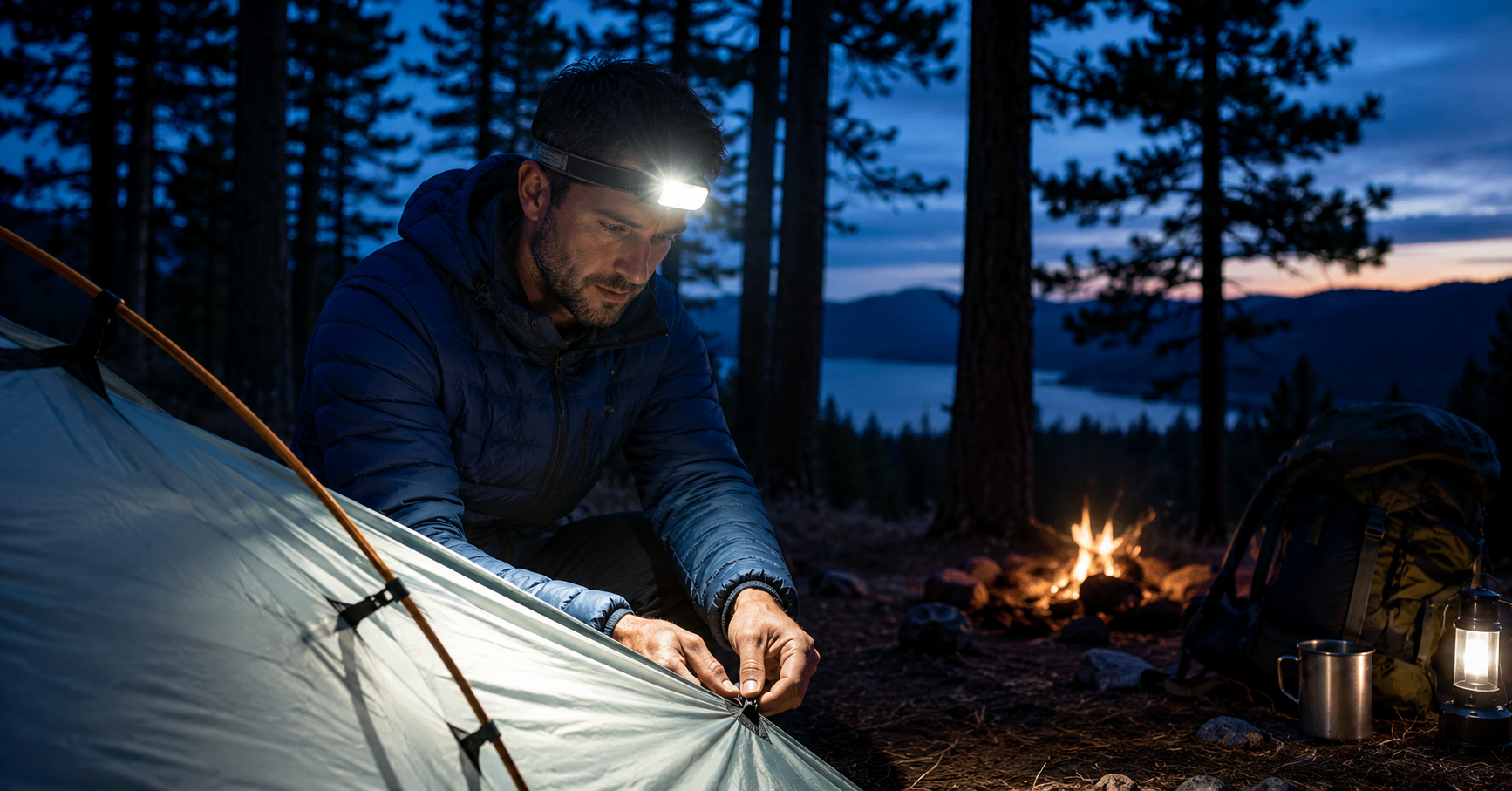
The campsite scene in the source is useful because it shows the setting buyers are really serving: a dome tent, folding chairs, a campfire ring, and an adult handling food with a headlamp on. That is a social, practical camp environment, not a remote expedition. In that setting, the lamp is part of a larger routine of setting up, cooking, and moving around after dark.
End users in this category usually want a light that is quick to aim, easy to understand, and comfortable enough for repeated wear. Too many modes or complicated controls can be a drawback for children, older campers, or first-time buyers. The product should feel natural in the moment, because campers use it while reaching, bending, and switching between tasks. That simple fit often matters more than technical language in a spec sheet.
How to evaluate an LED headlamp manufacturer
When you review an LED headlamp manufacturer, focus on whether the supplier can support a repeatable program, not just a single sample. Ask whether the product is intended for camping, general outdoor use, emergency use, or a broader consumer line. That context matters because a camping model should usually feel simple and comfortable, while a different use case may justify a different design balance.
Sample consistency is another important signal. If multiple samples vary in strap feel, switch action, housing finish, or overall build, production may be less stable than it appears. It also helps to ask about component sourcing and assembly consistency, because small differences often show up later in market performance. If you need a direct discussion of product fit, you can contact the team for a clearer conversation about scope and use case.
What to check in samples and packaging
Samples are where many purchasing assumptions get corrected. A lamp that looks acceptable in photos may feel different once it is worn, handled, and packed with other camping gear. Check how the strap sits, how the switch feels, and whether the housing seems sturdy enough for outdoor handling and transport in a bin or backpack. The goal is not to overcomplicate the review, but to catch the practical issues that campers notice first.
Packaging deserves attention too. In outdoor retail, packaging is part of shelf presentation and e-commerce protection, and it also helps explain the product’s intended use. A headlamp that arrives well protected but poorly presented can still underperform. Buyers should treat packaging as part of the product story, not only as a shipping layer. If you want to compare available formats before defining the final assortment, it helps to look at the current range and then decide what belongs in the camp line.
Compact checklist for buyer comparison
The following table keeps the decision process focused on the factors that matter most for camping programs.
| Buyer focus | Why it matters | What to ask |
|---|---|---|
| Beam behavior | Camping tasks need directed light, not only strong output. | Does it support close work and short walking paths? |
| Comfort | Casual campers may wear it longer than expected. | How do the strap and balance feel in use? |
| Use case | The product should match camping, not a generic light role. | Is it positioned for family camping or broader outdoor use? |
| Sample stability | Variation can create production and quality issues. | Do multiple samples feel consistent? |
| Packaging | Presentation and protection affect sales and damage risk. | Does the pack explain the product clearly? |
This kind of short comparison keeps the conversation practical and reduces feature drift. It also helps teams avoid over-specifying on details that may not improve the campsite experience or support the way shoppers actually make decisions.
Common mistakes buyers make with camping headlamps
One common mistake is chasing features that sound impressive but do little for the actual camper. Another is ignoring the basics: fit, comfort, and beam control. Buyers may also assume lower price alone will carry the item, but that usually lasts only until the first awkward campsite experience. Once users struggle with the light, the product may become a weak seasonal seller or earn negative review language.
A second mistake is treating the headlamp as separate from the rest of the camping assortment. In the source scenario, the lamp sits beside a tent, seating, and camp kitchen activity. That means it should complement lanterns and other camp gear, not compete with them. A third mistake is forgetting that mixed-use buyers do not all want the same thing. Family campers, weekend users, and more committed recreational campers may share a channel but not a single preference.
How to position headlamps in a wholesale assortment
For outdoor headlamp wholesale programs, a tiered approach is usually the cleanest path. A basic camping model should be easy to understand, comfortable enough for evening use, and durable enough for normal campsite handling. A second model can add more capability, but it should remain intuitive. The market rarely rewards complexity for its own sake, especially when the shopper is comparing several lights side by side.
Visual quality matters here as well because headlamps sit close to the face and are handled often. Rough edges, inconsistent strap stitching, or cheap-looking plastic can reduce perceived value quickly. If your line includes lanterns, the headlamp can be positioned as the hands-free task light, while the lantern serves shared space. That distinction helps buyers understand why both belong in the same kit. For controlled changes or private label discussions, submit an inquiry.
FAQ
What makes a headlamp suitable for camping?
A camping headlamp should be comfortable to wear, easy to operate, and useful for close tasks as well as short movement around camp. The most important point is practical performance at the campsite. If a user can cook, sort gear, or walk safely without struggling with the light, it is closer to the right fit.
Should buyers source headlamps separately from lanterns?
Usually, yes. Lanterns and headlamps solve different problems. Lanterns light shared space, while headlamps light the person doing the work. When buyers present both clearly, the assortment makes more sense to retailers and end users, and each item can play a distinct role in the camping setup.
Why does sample consistency matter so much?
Sample consistency is a strong early signal of production stability. If strap feel, switch action, housing finish, or overall build changes from sample to sample, buyers may face avoidable variation later. A stable sample set helps sourcing teams judge whether the product can support a repeatable program.
What should buyers ask before placing an order?
Ask how the product is positioned, what is standard versus optional, and how it fits camping rather than just general outdoor use. It also helps to ask about available variation handling, sample consistency, and packaging, because those details affect both market fit and day-to-day sourcing decisions.