

Waterproof LED Flashlight Supplier for Roadside Repair
Roadside repair rarely happens in ideal conditions. A vehicle may be stopped in rain, a wheel may be removed in poor light, and a mechanic may need to inspect a brake rotor, hub, tire sidewall, or fastener area while working quickly. In that setting, a waterproof LED flashlight supplier is not just a purchasing contact. The right supplier helps shops, mobile mechanics, fleet operators, and rescue teams source lighting that remains practical when weather, road grit, gloves, and time pressure all affect the job.
Why Waterproof Lighting Matters Beside the Road
A flashlight used for roadside repair is exposed to a harsher environment than a light used on a clean workshop bench. It may be placed on wet pavement, splashed by passing traffic, handled with dirty gloves, or moved repeatedly around a wheel well. If the body leaks, the switch fails, or the beam is difficult to control, the repair slows down immediately.
For buyers, brightness alone is not enough. The real question is whether the light continues to support the work after the first difficult job. A useful waterproof LED flashlight should help the technician see the brake area, locate tools, check parts, and keep working without treating the light as fragile equipment.
Reading the Roadside Repair Scene
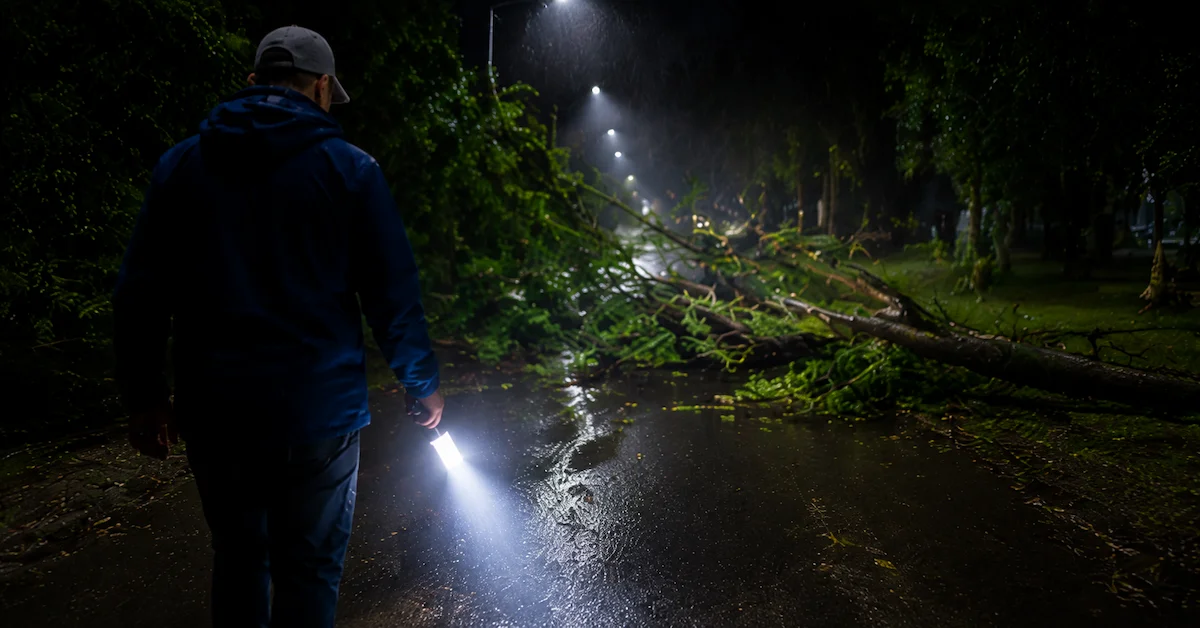
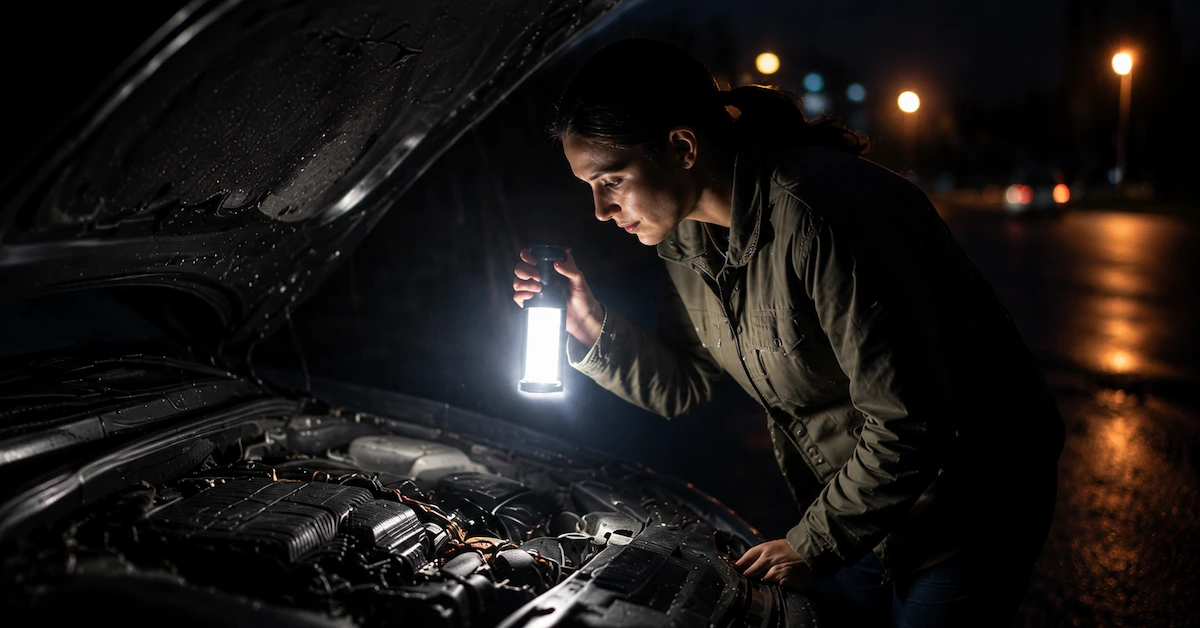
The source work scene is direct: a wheel is off a passenger car, the brake rotor is visible, tools are on the ground, and the repair is happening in heavy rain and low light. That combination shows why purchasing decisions should begin with the job, not with a product headline.
The mechanic may be kneeling in puddles, reaching behind a hub, checking hardware, or inspecting tire damage with one hand occupied. In this environment, the flashlight must be compact enough to carry, easy enough to reposition, and reliable enough to use in wet conditions. Poor visibility can lead to missed damage, slower diagnosis, and longer exposure to weather and traffic risk.
Core Requirements for Wet Automotive Work
Procurement teams should translate the work scene into simple product requirements. A roadside repair light does not need to look complicated; it needs to match the way mechanics actually work. The most useful models are often those that fit into a service bag, support gloved handling, and provide practical light for inspection and repair tasks.
| Requirement | Why It Matters |
|---|---|
| Useful beam | Helps inspect rotors, hubs, lugs, and tire areas. |
| Wet-use design | Supports work in rain, splash, and muddy conditions. |
| Secure grip | Reduces slipping when handled with wet gloves. |
| Portable size | Fits mobile tool kits, pockets, or vehicle storage. |
These requirements keep the discussion practical and prevent buyers from choosing a light only because a catalog page looks impressive.
Choosing the Right Flashlight Type
Different roadside tasks call for different lighting formats. Handheld inspection lights are often the most versatile choice because they are easy to aim at a brake rotor, caliper area, tire bead, or wheel hub. They can move from a glovebox to a tool bag without much planning.
Work lights and area lights can be useful when the job takes longer, such as wheel removal or repeated nighttime service calls. They reduce shadows and make dropped fasteners easier to find, but they may be less pocket-friendly. Compact emergency lights are the “always available” option for fleets and mobile kits. They may not be the most powerful style, but they are often the lights used first when the weather turns bad.
What “Waterproof” Should Mean in Procurement
Waterproofing should be treated as a field requirement, not a decorative claim. A light may be suitable for rain, splashing, or short-term wet use without being designed for every possible water exposure. Buyers should read product descriptions carefully and ask suppliers to explain the intended use in ordinary working terms.
For roadside wheel or brake work, practical questions matter: Can the light be handled with wet gloves? Can it sit near a vehicle during a stormy evening? Are switches and ports protected during repeated use? Water is also not the only concern. Road grit, mud, brake debris, and cleaning residue may reach the light as well, so rugged everyday handling should be part of the sourcing discussion.
How to Evaluate a Waterproof LED Flashlight Supplier
A B2B buyer is not only choosing a flashlight; they are choosing a supplier that may support repeated orders, product documentation, and downstream users. A dependable waterproof LED flashlight supplier should understand mobile repair, emergency response, wet-weather diagnostics, and nighttime inspection. The product conversation should include beam use, housing durability, grip, storage, and suitability for service kits.
If the supplier is also an LED flashlight manufacturer, that may help with product consistency and design control, but manufacturing capability is only one part of the decision. Buyers should also look for clear communication, sensible product positioning, and realistic claims. To review available lighting categories, visit Brightenlux products.
Sourcing Mistakes to Avoid
One common mistake is buying only for a bright-number headline. A powerful beam is not helpful if the light is slippery, awkward, or unable to keep working in wet conditions. Another mistake is treating all waterproof claims as equal. A model that handles occasional rain is not automatically the right choice for months of mobile repair kit use.
Buyers may also forget the person using the tool. Mechanics move between kneeling, standing, reaching, and repositioning tools. If a flashlight is too bulky, too delicate, or difficult to operate with gloves, it may stay unused in the bag. For sourcing support, buyers can contact Brightenlux before building a final shortlist.
Practical Buying Questions Before You Order
Before placing an order, ask direct questions that connect the product to the job. What wet conditions is the light intended for? Is it designed mainly for handheld inspection, area lighting, or emergency use? How does it perform with gloves and dirty hands? Is the housing suited to repeated field handling?
It is also worth asking whether the supplier can support recurring purchases if the light becomes part of a fleet, roadside kit, or distributor program. These questions quickly separate practical suppliers from sellers that rely only on catalog language. If your team already knows the application, you can submit details through the Brightenlux inquiry page for a more focused discussion.
FAQ
Why should roadside repair buyers prioritize waterproof LED flashlights?
Roadside repairs often happen in rain, low light, mud, and traffic-exposed areas. A waterproof LED flashlight helps mechanics continue inspecting wheels, brakes, hubs, and tires without losing visibility when conditions worsen. For B2B buyers, durability and practical handling are as important as brightness.
What type of flashlight is best for mobile mechanics?
Handheld inspection lights are often the most versatile because they are easy to aim and carry. Work lights may be better for longer jobs around a wheel well, while compact emergency lights are useful for fleet kits. The best choice depends on the service environment.
What should buyers ask a waterproof torch supplier?
Buyers should ask what wet conditions the light is intended for, how it handles gloved use, whether switches and ports are protected, and whether the housing suits repeated field handling. They should also confirm whether the supplier can support recurring orders for service kits.
Is brightness the main factor when sourcing repair flashlights?
Brightness matters, but it should not be the only factor. A roadside repair flashlight must also be easy to grip, practical to carry, suitable for wet conditions, and dependable during repeated use. A balanced product is usually more useful than an oversized light with weak usability.