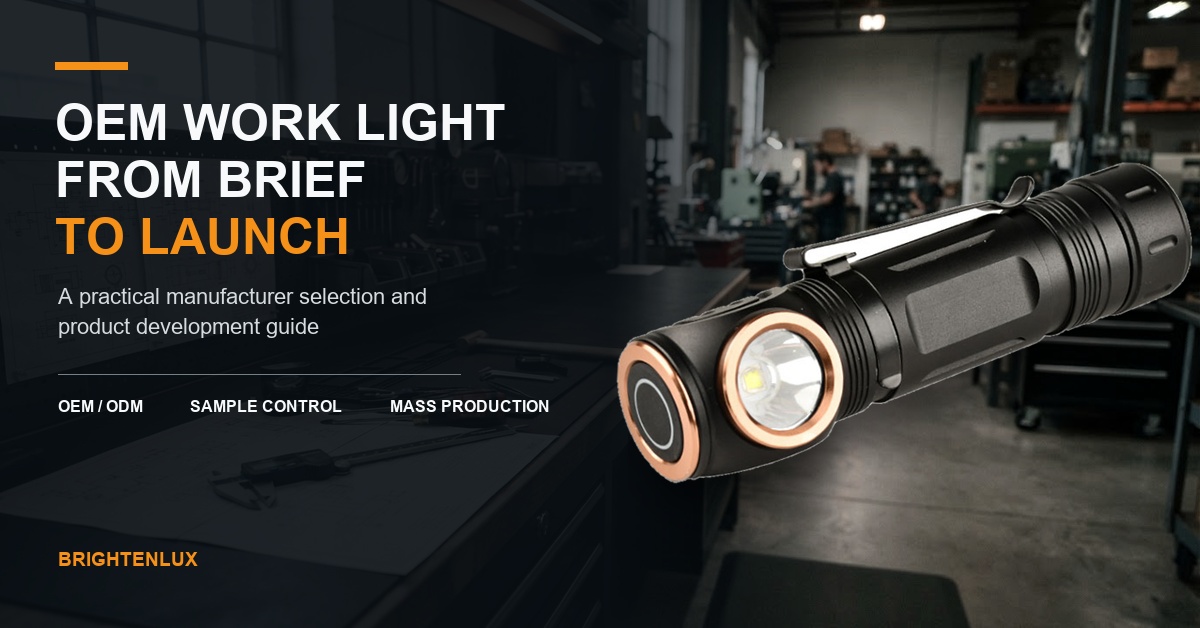


OEM Flashlight Manufacturer: What Buyers Should Compare Before Ordering
Choosing an OEM flashlight manufacturer is not only about finding a supplier that can make a handheld light. For B2B buyers, the real goal is a repeatable product that matches the use case, supports branding, and stays consistent from sample approval to batch delivery. A compact LED torch may look simple, but details such as grip texture, switch position, bezel assembly, finish, packaging, and inspection control can affect the user experience. Before placing an order, sourcing teams should compare how each supplier manages both product decisions and production discipline.

Why Buyers Look for an OEM Flashlight Manufacturer
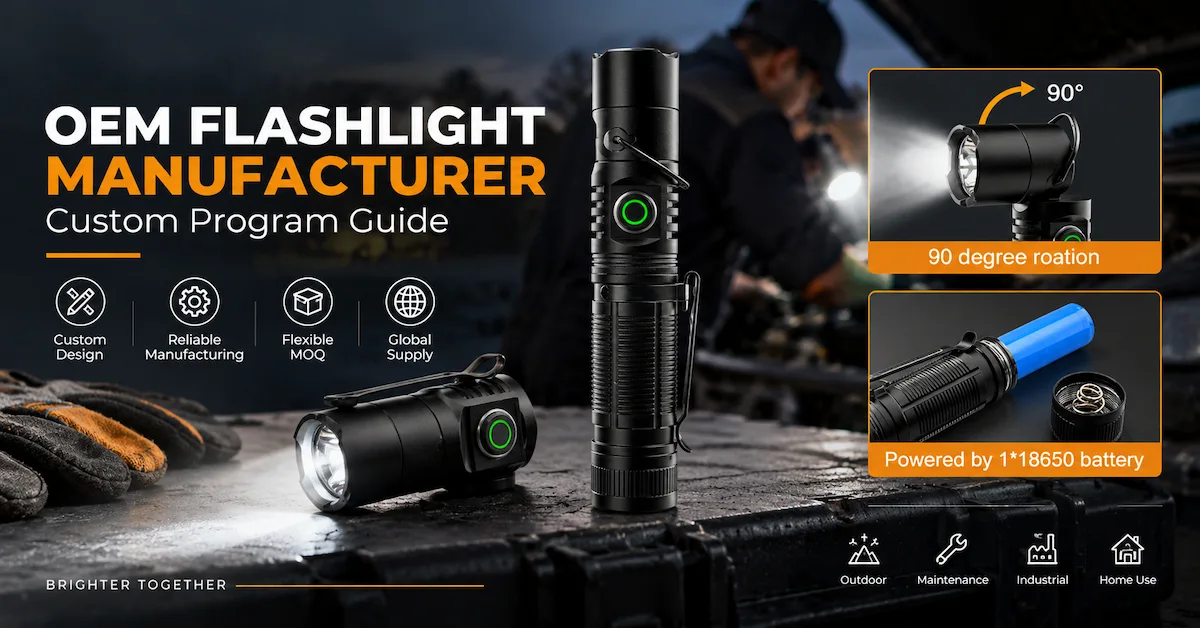
Procurement teams usually search for an OEM partner when they need more than a generic flashlight from a catalog. The requirement may come from factory maintenance, warehouse work, security patrol, emergency kits, equipment inspection, or general handheld task lighting. In these applications, the product has to feel dependable in daily use and must carry the buyer’s brand or packaging requirements cleanly. The visible product category here is a compact black cylindrical LED torch with textured grip areas, a reflective front bezel, and a side button. Several identical units appear together on a workbench, suggesting batch assembly or inspection. For buyers, that repeatability matters as much as appearance because inconsistent lighting products can damage user confidence quickly.
What a Flashlight OEM Supplier Helps You Decide
A capable flashlight OEM supplier should help turn a product brief into something that can be produced reliably. The supplier is not only assembling parts; it is helping define which details must be customized and which can remain standard. Buyers should compare form factor, grip design, switch position, reflector and bezel layout, housing finish, and packaging approach. These choices should match the end use rather than follow a generic trend. A flashlight for industrial inspection may need different handling priorities from an emergency backup light intended for occasional use. If you are reviewing options, start by comparing available structures on the Brightenlux products page before locking a specification.
Key Comparison Points Before Placing an OEM Order
Before discussing logos or packaging, buyers should examine the physical structure and production control. A smooth-looking sample is useful, but it does not prove that the full batch will be consistent. The housing should feel suitable for the intended environment, especially where users may work in low-light, dusty, or busy conditions. The visible textured grip sections suggest a focus on secure handling, while the side button shows that switch access is part of the user experience. Buyers should ask whether these details can remain consistent across units and future orders. The table below provides a compact starting point for supplier comparison.
| Area to Compare | Why It Matters |
|---|---|
| Housing and grip | Affects handling, comfort, and perceived durability. |
| Switch layout | Influences one-handed use and accidental activation risk. |
| Head and bezel assembly | Shows alignment discipline and cosmetic control. |
| Inspection process | Helps confirm batch consistency before packing. |
Where Customization Matters Most
In flashlight sourcing, customization is often most valuable in mechanical and visual details. Buyers may request logo placement, body color, surface texture, packaging style, or a particular switch feel. Some projects may require changes to lens style, bezel shape, or internal layout, but those changes can affect tooling, sourcing, assembly, and testing. A practical custom flashlight manufacturer should explain which changes are simple and which ones create complexity. For maintenance kits, promotional bundles, or resale programs, cosmetic consistency may be a priority. For industrial or security use, buyers often need to focus more on switch durability, housing feel, and assembly alignment. Clear priorities help prevent a project from becoming over-customized without improving the end user experience.
Materials, Construction, and Verified Details
The product shown appears to use a compact tubular body with black finishes and silver-colored front elements. From appearance alone, buyers can note the work-oriented shape, textured gripping zones, and repeated identical units, but they should not assume unverified specifications. Battery type, charging method, brightness, beam distance, waterproofing, impact resistance, runtime, and certifications cannot be safely inferred from an image. A serious sourcing process separates confirmed facts from visual impressions. Ask the supplier which features are standard, which are customized, and which still need final verification. This prevents teams from approving a flashlight that looks right but behaves differently from expectations in the field. If your team needs clarification on a configuration, contact Brightenlux through contact us.
Common Mistakes in OEM Flashlight Sourcing
The first mistake is buying mainly on appearance. A polished sample can hide weak process control if the head assembly, switch feel, or finish tone varies between units. The second mistake is over-specifying cosmetic features while ignoring the actual work environment. A warehouse maintenance team may care more about easy handling and dependable operation than a decorative finish. The third mistake is assuming the supplier already understands the target market. A flashlight intended for security patrol may not require the same priorities as one used for general task lighting. The fourth mistake is filling information gaps with assumptions. If the LED type, power source, protection rating, or runtime has not been confirmed, the buyer should not treat it as settled.
How to Evaluate a Supplier Without Getting Lost in Specs
A clear evaluation process is usually more useful than a long list of speculative claims. Start with the use case: maintenance, inspection, patrol, emergency readiness, or general work lighting. Then define the physical priorities, such as compact size, grip comfort, side-button access, or packaging requirements. Next, ask what can remain standard without hurting the user experience. If your brand does not need a unique internal structure, avoid paying for unnecessary complexity. After that, confirm production checkpoints, including visual inspection, functional checks, and packing verification. Finally, document sample approval in writing so appearance, function, packaging, and custom markings are aligned. For project discussion, buyers can submit details through the Brightenlux inquiry page.
Why Batch Consistency Matters More Than One Perfect Sample
The image of multiple identical flashlights on a workbench points to one of the most important OEM issues: repeatability. A first sample may look excellent because it has been assembled carefully and inspected closely. The real test is whether the next group of units looks, feels, and functions the same way. This is especially important for distribution programs, maintenance inventories, branded kits, and resale channels. Small differences in bezel fit, switch action, or finish tone may seem minor during sourcing, but end users notice them immediately. Buyers should ask how the supplier controls batch inspection before packing and whether the same appearance and assembly standards can be maintained across repeat orders.
FAQ
What should buyers compare first when choosing an OEM flashlight manufacturer?
Start with the application and product structure before discussing branding. Compare housing shape, grip design, switch location, bezel assembly, finish consistency, and inspection process. These details show whether the supplier can produce a reliable handheld flashlight that fits the intended use rather than only providing an attractive sample.
Can flashlight performance be judged from product photos?
No. Photos can show visible details such as body shape, grip texture, button position, and general finish, but they cannot confirm brightness, runtime, waterproofing, impact resistance, battery type, or beam distance. Buyers should ask the supplier to identify which specifications are verified before making purchasing decisions.
Which customizations are usually practical for OEM flashlight projects?
Common customizations include logo placement, body color, surface texture, packaging style, and sometimes switch feel or size adjustments. More complex changes, such as lens style, bezel shape, battery compartment, or internal layout, may affect tooling and production setup, so they should be reviewed carefully before approval.
Why is batch consistency important in B2B flashlight sourcing?
Batch consistency ensures that approved samples and delivered products match in appearance, handling, and basic function. If switch feel, bezel fit, or finish tone changes across units, the product line can feel unreliable. This matters for distributors, maintenance teams, branded kits, and any buyer managing repeat orders.