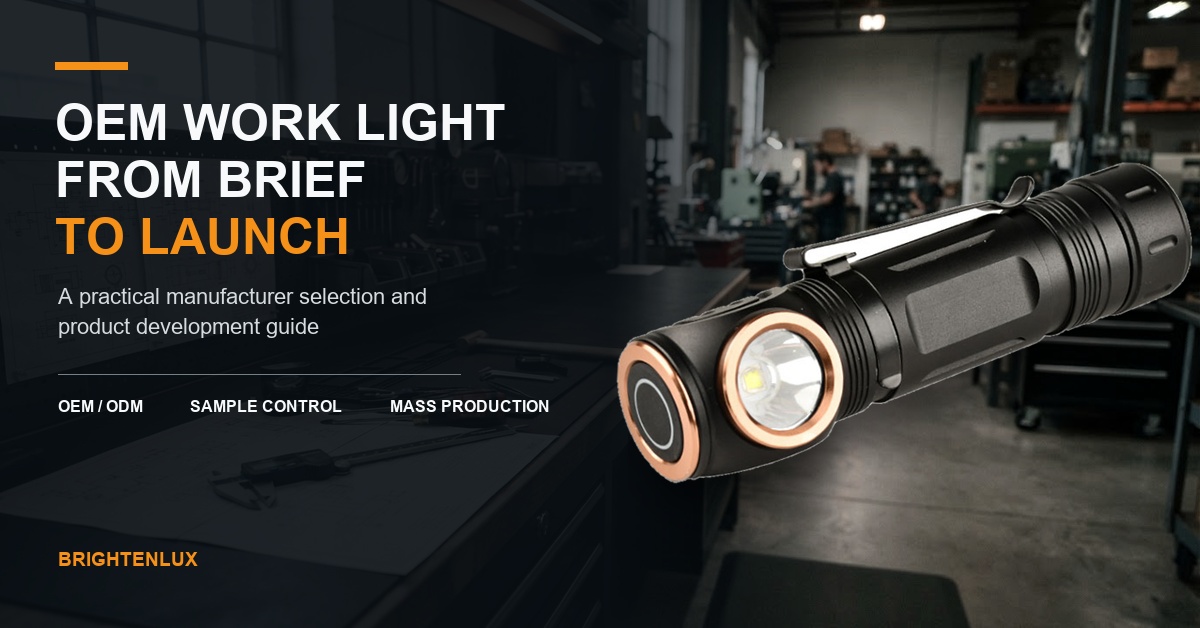


OEM Flashlight Manufacturer: How to Choose the Right Workshop Light
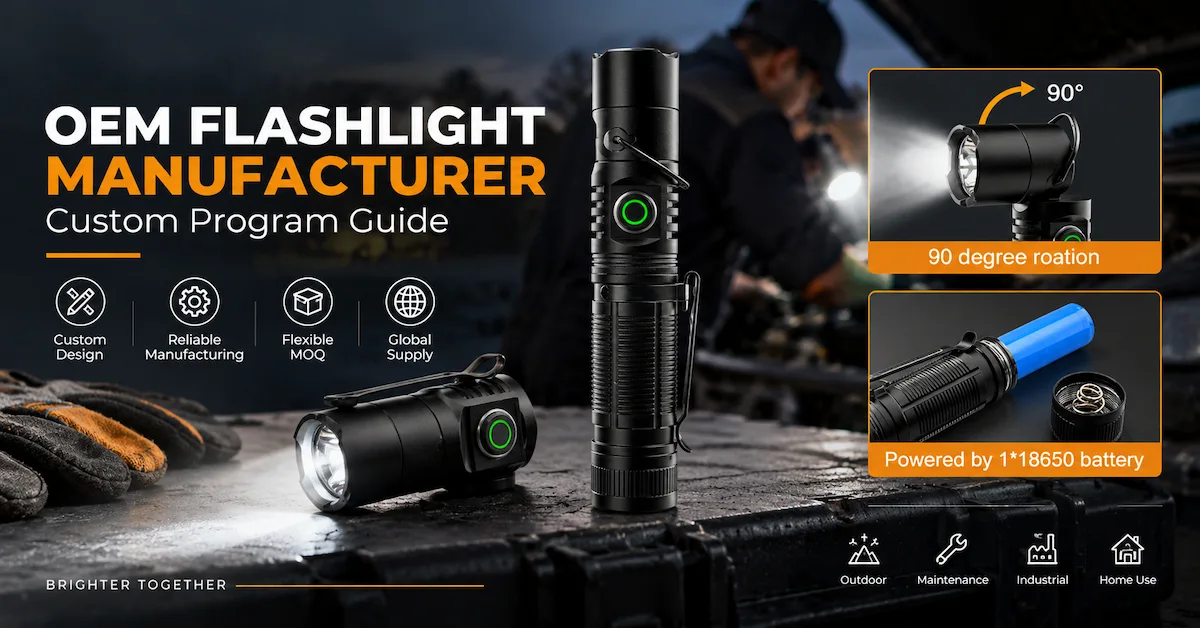
An OEM flashlight manufacturer is more than a hardware source. For workshops, auto-service brands, industrial distributors, and private-label buyers, the light must work in greasy hands, tight spaces, and low-light inspection jobs. The right product is not the one that looks best in a catalog. It is the one that keeps technicians moving when the task is awkward and time is short. If you are reviewing options, start with the job itself and compare the available products against that environment, not against a generic consumer light.
That simple shift in thinking helps buyers avoid common sourcing mistakes. Beam shape, body finish, switch feel, battery access, and the way the light sits in one hand all affect daily use. A workshop torch should feel like a tool, not an accessory.
Why flashlight sourcing matters in workshop and service channels
Workshop buyers do not purchase a flashlight for occasional use. They buy it for repeated tasks such as engine-bay checks, leak inspections, roadside repairs, and general maintenance. In those settings, the tool has to survive drops, vibration, grease, and constant handling. A supplier may offer a polished product page, but that does not tell you whether the light will remain useful after months of service work.
That is why sourcing decisions matter so much in this category. The wrong light slows technicians down, while the right one becomes a natural part of the job. A custom flashlight manufacturer should understand that difference and support a build that fits real workshop conditions. Buyers should look beyond appearance and ask whether the light is practical in dirty, cramped, and time-sensitive work.
What workshop users actually need from an OEM flashlight
Technicians usually use a flashlight at close range and with one hand. They need a beam that stays controlled enough to point at the problem area without flooding the whole bay. They also need a body shape that is easy to hold with gloves or damp hands. If the user has to fumble for the switch, the tool loses value fast.
Practical durability matters as much as illumination. A metal-bodied handheld light often feels more serious in service work, but metal alone is not the answer. The finish, grip texture, and overall handling matter in greasy environments. A light that looks good on a shelf but feels awkward in a tool bag will not earn daily use. For that reason, workshop buyers should judge comfort and control first.
A compact comparison table for OEM buyers
The fastest way to narrow choices is to compare the light against the job. Use the table below as a simple shortlist before asking for samples or discussing branding details.
| What to compare | Why it matters |
|---|---|
| Beam use case | Inspection, area lighting, flood, or hybrid use |
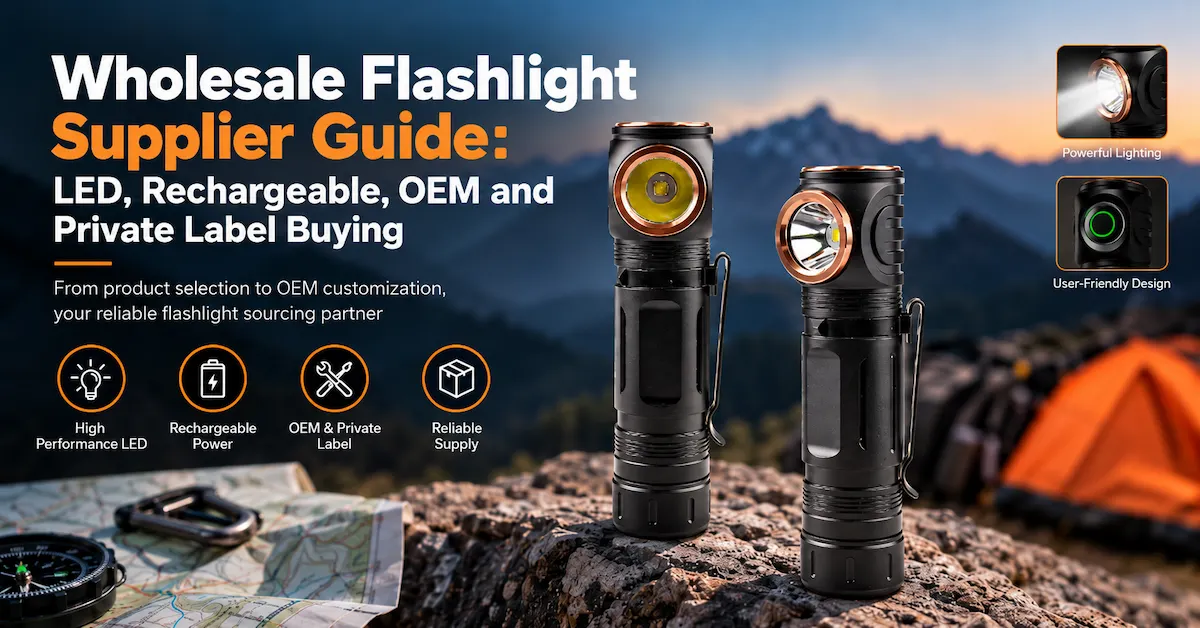
| Form factor | Pen light, compact handheld, right-angle light, or larger torch |
| Body material | Aluminum, reinforced polymer, or mixed construction |
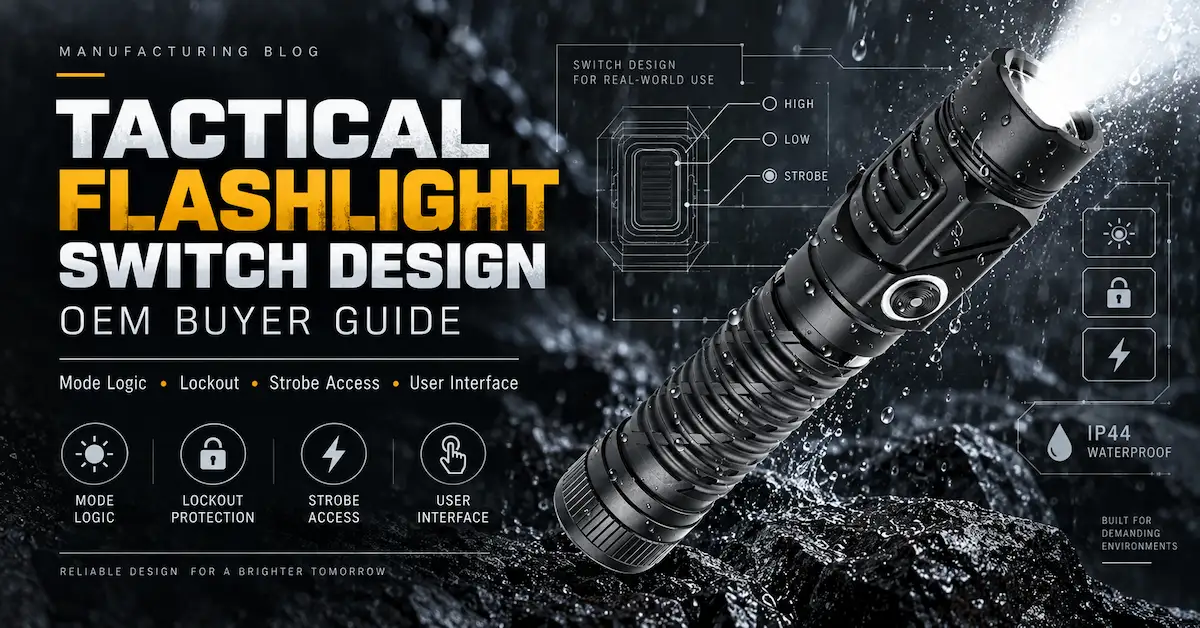
| Switch design | Tail switch, side switch, or protected button |
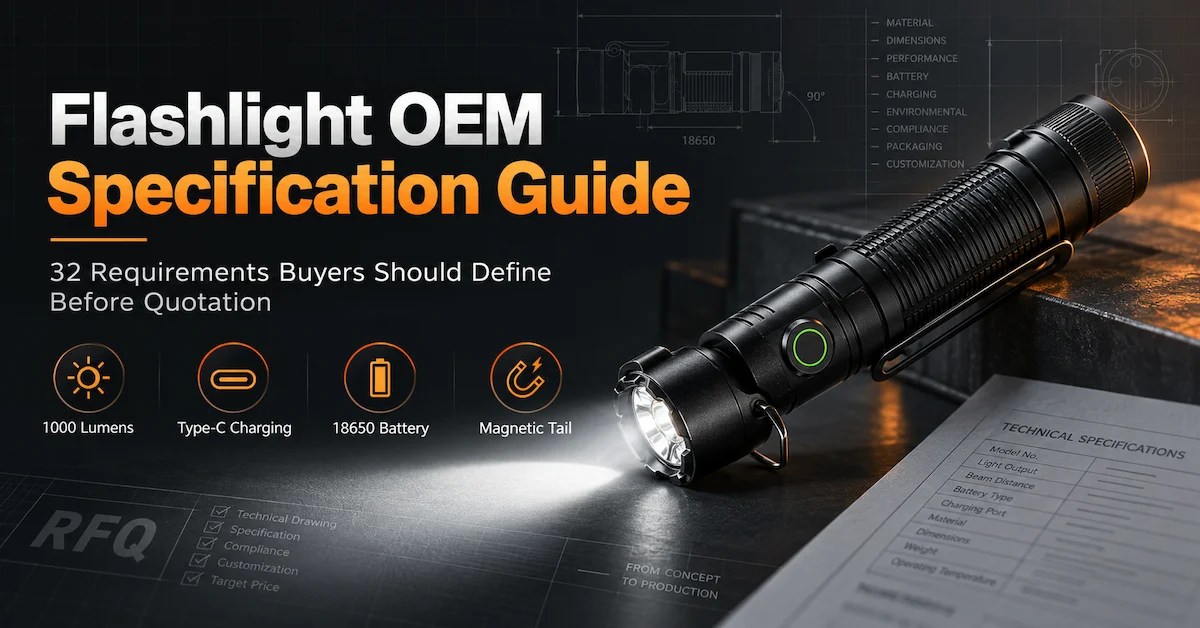
| Power source | Disposable battery, rechargeable, or replaceable cell format |
| Grip and surface finish | Knurled, rubberized, matte, or smooth metal |
| Use environment | Indoor workshop, roadside service, fleet maintenance, or field repair |
| Branding needs | Private label, color matching, packaging, and manual language |
This kind of comparison prevents a common mistake: choosing by output claims alone. In workshop use, usability often matters more than headline numbers.
How OEM flashlight projects usually differ by channel
OEM flashlight sourcing usually starts with application, because not every channel needs the same kind of light. A workshop inspection light is different from a camping lantern or a promotional giveaway item. The expected duty cycle is different, the handling is different, and the buyer’s tolerance for failure is much lower. That is why the same body style may work well in one channel and fail in another.
Inspection-focused handheld lights are often the closest fit for automotive service. They help technicians look into wiring runs, around hose clamps, and under covers without lighting up the whole bay. General-service torches are broader tools that can work across maintenance teams. Private-label retail models add packaging, logo placement, and color coordination. In those cases, a supplier must keep the product honest; a strong box cannot rescue a poor switch or awkward grip.
Selection criteria that matter in real use
The most reliable way to judge a workshop light is to test it in the same conditions where it will be used. An engine bay is a strong benchmark because it combines dark corners, reflective surfaces, narrow gaps, and dirty hands. If the flashlight works well there, it will usually handle many other service tasks too. That kind of test reveals more than a product sheet can.
Beam pattern deserves careful attention. A focused hot spot helps with pinpoint inspections, while a broader spill makes general searching easier. Battery strategy also matters. Some teams prefer rechargeable models to reduce consumable use, while others want replaceable batteries because they simplify emergency use. Material choice should also fit the job. Aluminum can feel professional, while polymer can be lighter for long shifts. The finish should resist scratches and grime, not just look clean in a photo.
If you are studying a shortlist, review the option set at the product page and compare it against the actual work scenario before making a decision.
Common sourcing mistakes to avoid
The most common mistake is asking for the brightest model and stopping there. Brightness matters, but workshop users usually care more about controlled illumination, battery convenience, and a body they can trust in one hand. A light that is difficult to hold or too awkward to aim can become a complaint even if it looks impressive in a sample review.
Another mistake is ignoring packaging and accessories until late in the process. A flashlight sold into automotive channels may need hanging boxes, insert cards, or compact packaging that survives distribution. If the product is for service departments, the emphasis may be on bulk packing and easy replenishment. Buyers also underestimate switch placement. A switch that feels fine on a desk can be frustrating with gloves or in a cramped engine compartment.
What to ask before you commit
Before placing a private-label or OEM order, ask questions that reveal production fit, not just sales polish. Can the body style be adapted for workshop handling? Can branding be applied cleanly without interfering with grip? Is the light suitable for inspection work, or is it better for general consumer use? What packaging and instruction-sheet options are available? Can the design be supported consistently across repeat orders?
It is also worth asking how the supplier handles consistency from sample to production run. Even when exact test data or formal certifications are not part of the brief, buyers should still expect a clear internal quality process. Small changes in switch feel or beam alignment can show up quickly in the field. If you want to discuss packaging, branding, or a workshop-focused lineup, use the contact page or send an inquiry.
FAQ for OEM flashlight buyers
Is an OEM flashlight different from a standard retail flashlight?
Usually, yes. OEM programs are often shaped around brand customization, channel requirements, and a specific use environment. The core hardware may look similar, but the sourcing decision is driven by how and where the product will be sold or used. That makes the application more important than the packaging alone.
Should workshop buyers prioritize lumens above everything else?
No. Lumens matter, but they are only one part of the decision. In day-to-day service work, beam quality, switch reliability, hand feel, and battery convenience often matter more. A light that is easier to use in a real engine bay can be more valuable than a stronger number on paper.
What product styles fit automotive inspection best?
Compact handheld torches and inspection-oriented lights are usually the best fit. They are easier to aim into tight spaces and less awkward when technicians move quickly between tasks. A focused beam and simple one-hand handling are especially useful in diagnostic and maintenance work.
How can buyers judge a supplier without formal test results?
Start with sample testing in real workshop conditions. Look at grip, switch behavior, battery choice, beam control, and packaging fit. Ask how the design is kept stable from sample to repeat order. A supplier with a clear internal quality process can still be evaluated carefully even without published test data.