

Quick answer for outdoor retail buyers: A successful LED headlamp wholesale program offers clearly differentiated products for close-up camping tasks, night hiking, adaptable all-round use, and higher-output activities. Evaluate beam comfort, sustained runtime, real weight, strap fit, battery backup, controls, weather claims, packaging, and repeat-order quality before comparing wholesale prices. Brightenlux publishes examples from 350 to 1,000 lumens; select the actual headlamp configuration and verify its claims with samples before approving a private-label launch.
Choosing LED headlamp wholesale for outdoor retailers is not simply a matter of selecting the product with the highest lumen rating or the most icons on its carton. An outdoor shop sells to people with different needs: a family camper who wants gentle light inside a tent, a backpacker trying to minimize carried weight, a hiker who needs a stable beam on uneven ground, and a buyer who wants an emergency backup source when USB charging is unavailable. Those customers will not assess value in the same way. A product that performs well in a static catalog photograph may cause returns if it slips during a walk, has confusing controls, or feels uncomfortable after an hour.
The purchasing opportunity is to build a limited but meaningful product range. A retailer does not need six near-identical headlamps competing for the same shelf space. It needs clearly described roles, a realistic price ladder, and consistent information that sales staff and customers can understand. The right supplier should help turn those decisions into specific samples, approved components, appropriate documentation, and repeatable deliveries.
Brightenlux is the portable-lighting brand of Ningbo Brightenlux Electric Appliance Co., Ltd. The company's official introduction describes lighting manufacturing and OEM/ODM services. This guide uses actual Brightenlux headlamp listings as examples, while distinguishing published catalog claims from measurements an importer should still request. It is not a claim that every product offers every feature or that every design is suitable for regulated rescue, industrial hazardous-area, or specialist sporting applications.
1. What Does LED Headlamp Wholesale for Outdoor Retailers Really Mean?
Wholesale retail sourcing combines product selection, purchasing terms, and customer expectations. Outdoor shops and e-commerce brands need headlamps that are intuitive to explain, appealing on a product page, easy to stock, and stable enough in quality to support repeat orders. A supplier's role is therefore wider than providing a unit price. It should clarify which feature belongs to which model, which battery and accessories are included, what the tests actually cover, and which requests would require custom development.
A buyer searching for an outdoor headlamp supplier may have informational questions about beam spread and battery technology, commercial questions about model differences and private-label options, and transactional questions about samples, MOQ, and lead time. A useful article has to answer all three without mixing them. Retail shoppers mostly ask, “Will it help me on my trip?” Purchasing teams ask a different question: “Can we make that promise accurately, at a margin and return rate our business can sustain?”
Retailers should also plan how the headlamp category relates to existing equipment. A rechargeable headlamp complements a handheld flashlight and a diffused camping lantern rather than automatically replacing them. Where customers need stationary table illumination, a lantern can be more comfortable. Where they need hands-free directional light, a headlamp is the natural choice. Brightenlux's outdoor lighting overview describes the broader product families that a buyer may consider for a coordinated collection.
2. Four Outdoor Shopper Groups Need Different Headlamp Features
Family campers and general outdoor shoppers
Families frequently use a headlamp near tents, picnic tables, and parked vehicles. A low setting, broad comfortable beam, simple controls, and sensible charging instructions often matter more than extreme throw. Warm lighting may be useful for close-up tasks where a harsh, concentrated hotspot would create glare. Easy adjustment and clear battery indicators support an everyday retail proposition without requiring exotic features.
Backpackers and light-travel customers
Weight is important, but the buyer must compare what is actually being weighed. A specification might refer to the lamp body without a headband, charging cable, or battery. Lightweight product claims should define whether the complete wearable set is included. Strap bulk, front-to-back balance, and whether the user can pack the light without accidental activation are relevant alongside grams.
Night hikers and active outdoor users
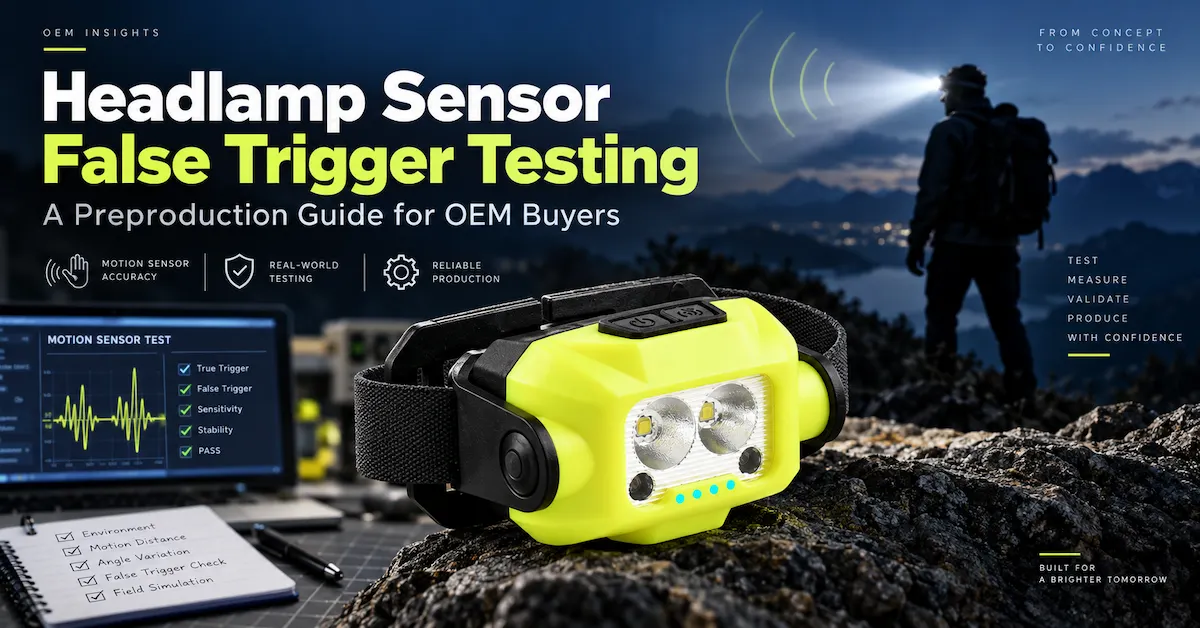
Motion makes beam stability visible. A headlamp with impressive output can bounce while walking quickly, point too low when the user looks ahead, or require two hands to adjust. This group often cares about usable medium-mode light, comfortable strap tension, beam aiming, glove-friendly controls, and resistance to rain and sweat. A sensor can be convenient, but inadvertent activation from nearby objects or other people should be tested.
Outdoor retail brands assembling multipurpose kits
Gift sets and multi-use kits may target campers, DIY users, vehicle owners, or emergency-preparedness buyers. A hybrid power architecture is attractive when customers may not have a charging source, but only if the alternative battery arrangement is practical and clearly documented. Multi-mode headlamps with red lighting can add differentiation, although a strobe feature alone should never be sold as a certified distress beacon.
These four groups support different assortment positions. The goal is to assign a real use case to each proposed SKU rather than treating every feature as essential for every shopper. That also prevents unnecessary development costs when a simpler existing platform would meet the customer's needs.
3. Brightenlux LED Headlamp Models: Real Product Comparison for Wholesale Buyers
Brightenlux's current public pages describe the six relevant platforms below. The listed lumen, battery, runtime, and IP values are manufacturer-published claims, not independent test results. Some product descriptions are internally inconsistent, especially on weight; the approved purchase specification and actual sample must resolve those differences before packaging is printed.
| Model / Format | Published Light and Power | Additional Features | Retailer Fit / Verification |
|---|---|---|---|
| 350 lm flexible COB + XPE | Up to 350 lm; 1200mAh built-in lithium polymer; USB-C; 70.1g listed | Wide COB and focused XPE; 50m claim; IPX2 listing | Compact, low-profile range; confirm wearing comfort and rain limitation |
| BT-HL9004 Sensor, 450+ lm | SST20; included 1100mAh lithium or 3 AAA; USB-C; IP44 listing | Twist focus, red modes, gesture sensor; up to 150m claimed | Versatile outdoor core model; confirm battery adapter and mode sequence |
| BT-HL9105C, 500+ lm | XTE plus COB warm/cool listings; included 1100mAh lithium or 3 AAA; USB-C; IP67 listing | Sensor, memory, separate warm/cool modes | Hybrid premium light; site lists 60g in specs and 100g in description—confirm |
| BT-HL9002, 600 lm | Dual XPG2 LEDs; included 1800mAh lithium; USB-C; up to 100m claimed | Red light, motion sensor, battery-level display | Feature-led mid-tier headlamp; request mode-specific runtime and IP evidence |
| 650+ lm OSRAM P8 multi-source | OSRAM P8 plus cool/warm side LEDs; included 1100mAh lithium or 3 AAA; USB-C; IP65 listing | White color options, red modes, mode memory | Multifunction premium tier; confirm size, mode logic and tests |
| BT-HL9041, 1000 lm | Two OSRAM P9 LEDs; included 2200mAh 18650; USB-C; IP44 listing | Concentrated beam; independent LED control; 90g listed | Higher-output focused-beam tier; test heat, balance and sustained output |
These platforms are not interchangeable. The 350-lumen COB/XPE model has a low-profile lighting arrangement suited to evaluating close-up comfort, while the 1000-lumen dual-P9 model is positioned around stronger concentrated output. Between them, buyers can compare red light, gestures, hybrid power, and warmer or cooler beam choices. More features are not automatically better: additional switching sequences, batteries, or sensors can also create new customer-support questions.
350-Lumen COB + XPE Headlamp
Flexible format, COB flood and XPE spot, built-in 1200mAh battery. Evaluate for compact outdoor and close-range retail positioning.
View 350 lm Product →BT-HL9004 | 450+ Lumen Sensor Headlamp
Twist-focus SST20, red modes, sensor, and rechargeable/AAA options. A reference for versatile hiking and camping assortments.
View 450 lm Product →BT-HL9105C | 500+ Lumen Headlamp
Warm/cool modes, motion sensor, memory, and lithium/AAA options. Confirm the inconsistent published weight before using it in retail copy.
View 500+ lm Product →BT-HL9002 | 600-Lumen Dual-XPG2 Headlamp
Rechargeable 1800mAh platform with red light, battery-level display, and sensor. Compare mode behavior for active customers.
View 600 lm Product →650+ Lumen OSRAM P8 Headlamp
Focused main LED, side cool/warm lighting, red modes, and lithium/AAA support. A candidate for feature-led outdoor retail shelves.
View 650+ lm Product →BT-HL9041 | 1000-Lumen Dual-P9 Headlamp
Two OSRAM P9 emitters, included 18650 cell, USB-C charging and individual LED control. Check sustained output and fit in motion.
View 1000 lm Product →4. Build a Three-Tier Outdoor Retail Headlamp Assortment Instead of Stocking Every Model
A good category has a clear entry, core, and premium proposition. The entry product is easy to understand and affordable enough to attract casual buyers; the core product answers common hiking and camping needs; the premium product adds a benefit that shoppers can actually notice. Without that logic, headlamps with overlapping features compete against each other and make staff training harder.
Entry tier: consider the flexible 350-lumen COB/XPE design where its low-profile format and two beam types suit the intended customer. Its published IPX2 specification is not equivalent to an all-weather immersion claim. This tier should emphasize comfortable nearby visibility and compact convenience rather than pretending it is a technical mountaineering lamp.
Core tier: the 450+ lumen BT-HL9004 offers a stronger feature story through adjustable focus, a red mode, motion sensing and rechargeable/AAA power. That can be useful for campers and hikers wanting a more flexible light. A buyer must still decide whether those functions are simple enough for its customer base, and whether the package will include the accessories needed to use both power modes.
Premium tier: choose one of the 500+, 600, 650+, or 1000-lumen platforms according to the retail differentiator, not merely the highest number. Warm and cool modes may suit customers who want versatile task lighting; a battery display may reduce uncertainty; focused higher output may be attractive where customers frequently look into the distance. A premium label requires proof of value, not just extra text on the front of a box.
A practical buying exercise is to write one sentence for each SKU that begins, “Choose this headlamp when….” If the same sentence fits three products, the range is probably not differentiated enough. Buyers can then validate the product ladder with a small retailer or customer trial before placing a large private-label order.
5. Headlamp Beam Quality: Lumens, Flood, Spot, Color and Sustained Output
Maximum lumens measure total luminous flux under stated conditions; they do not describe the whole beam or how comfortable it is to use. A narrow spot may help identify a trail marker farther away but cause glare while reading a map or finding an item inside a tent. A wide COB flood can illuminate the nearby work area with fewer harsh shadows. An outdoor retailer should therefore compare beam type and task fit before ranking models by brightness.
Brightenlux's 350-lumen COB/XPE platform illustrates the flood-versus-spot difference. The 450+ lumen twist-focus model offers a different approach, allowing the user to adjust optical focus. The 500+ lumen and 650+ lumen multi-source platforms introduce warm/cool choices. Such features can create meaningful product explanations, but buyers should confirm beam photographs at identical distances and camera settings. Automatic camera exposure can make one product appear superior without actually producing more useful light.
For an OEM program, request output on each relevant mode, beam images at one, three, and ten meters, and a runtime curve for the setting customers are likely to use most. Ask whether published peak output is maintained continuously or reduced after warming. Thermal step-down can be a normal protection strategy, but claims should make that distinction clear. ANSI/PLATO FL 1-2025 is a recognized industry reference for portable-light performance reporting; it does not make any Brightenlux model automatically certified to that standard.
Color temperature is another shopper-facing choice. Warm light can feel more comfortable during close camp tasks, while cooler output may be preferred by some users for contrast. Do not imply that all warm LEDs have excellent color rendering or that cool beams are universally brighter. If a retailer promises accurate color identification for maps or repairs, it should request actual LED and color-rendering data for the approved configuration.
6. Rechargeable and Hybrid Power Headlamps: What Retailers Must Verify
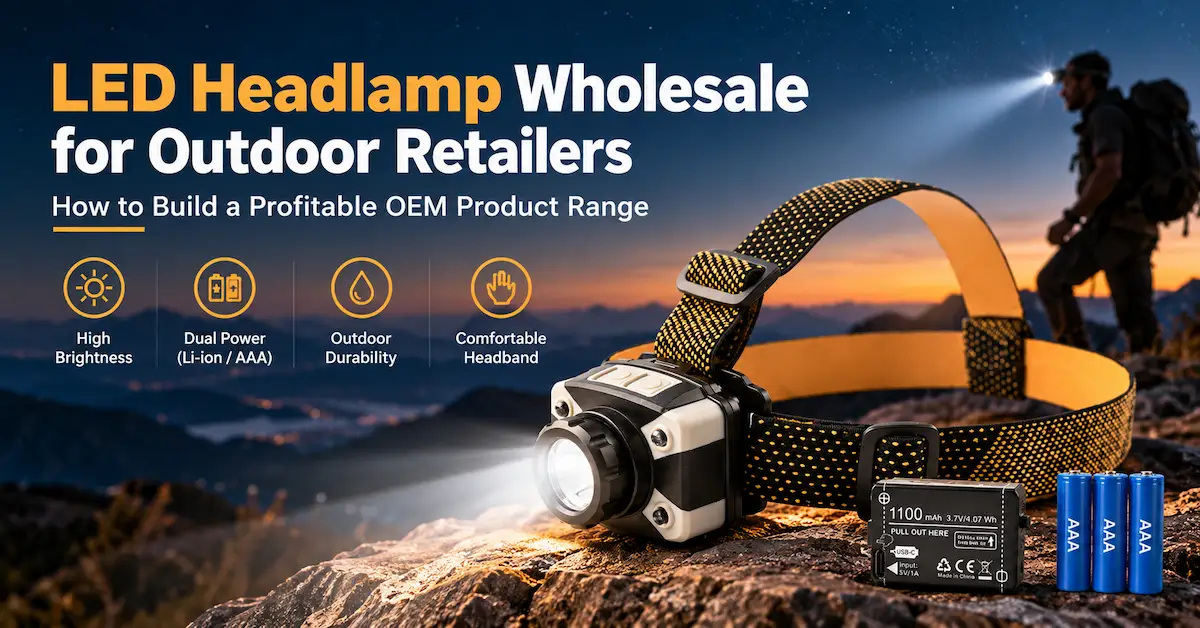
USB-C rechargeability reduces reliance on frequent disposable cell purchases for many customers, but it still requires access to electricity. Hybrid designs provide a second defined power method, which may add real value for camping and emergency shoppers. The Brightenlux BT-HL9004, BT-HL9105C and 650+ lumen OSRAM P8 products publish a rechargeable-lithium-or-three-AAA arrangement. The exact battery carrier, supplied accessories and permissible operating behavior must be checked for the order being quoted.
One critical distinction is that a headlamp supporting disposable AAA cells does not imply that its USB-C circuitry can recharge those alkaline cells. User instructions should clearly separate rechargeable operation and disposable-battery operation. Test switching between the supported power types, check polarity markings, and establish whether performance changes with the alternative supply. Buyers should never ask customers to improvise incompatible battery substitutions.
Capacity, expressed in mAh, is useful only with the cell voltage, power draw and operating mode understood. A larger advertised battery is not automatically a longer-running headlamp if the driver and output differ. For wholesale comparison, ask for a measured output-over-time curve, the exact supplied battery model and its transport documentation, and the conditions used to calculate runtime.
USB-C connector compatibility also requires validation. Test the approved headlamp with representative USB-A-to-C and USB-C-to-C cables and typical market chargers where appropriate. Confirm charging indicator behavior, charging termination, cable inclusion and access to the port while wearing or packing the product. Clear charging instructions can reduce returns as effectively as a more impressive feature list.
7. Why Real Weight, Headband Quality and Beam Stability Matter
Headlamps are wearable products. A difference that is insignificant for a handheld torch can become distracting on a forehead after thirty minutes. The retailer should compare complete wearable weight, strap width, adjustability, front-module bulk, headband elasticity and the lamp's ability to hold its aim during walking. A comfortable headlamp is more likely to be used frequently and less likely to be returned for subjective reasons.
Brightenlux's 350-lumen flexible model lists 70.1g. The 1000-lumen BT-HL9041 lists 90g. For BT-HL9105C, the published product information is inconsistent: the specification area gives 60g while the descriptive text says 100g. Do not choose the figure that produces the better advertisement. Request a current physical sample and a written confirmation of whether the measured weight includes the battery and strap.
Put each sample on several different testers, not only the purchasing engineer. Ask them to walk, look down, crouch, adjust the beam, and operate buttons while wearing a hat or thin gloves. Note whether the strap slips, whether sweat or hair affects stability, and whether the light points at a comfortable angle. Such evidence is not a substitute for formal tests, but it reveals use-case problems that a catalog specification will not show.
Retailers should also inspect the strap attachment points and the adjuster after repeated cycles. An expensive LED and battery offer little value if an inexpensive textile component fails first. For repeat orders, include strap material and adjustment hardware in the approved BOM or critical-component list.
8. Red Light, Motion Sensors, Multiple Modes and Memory: Useful or Confusing?
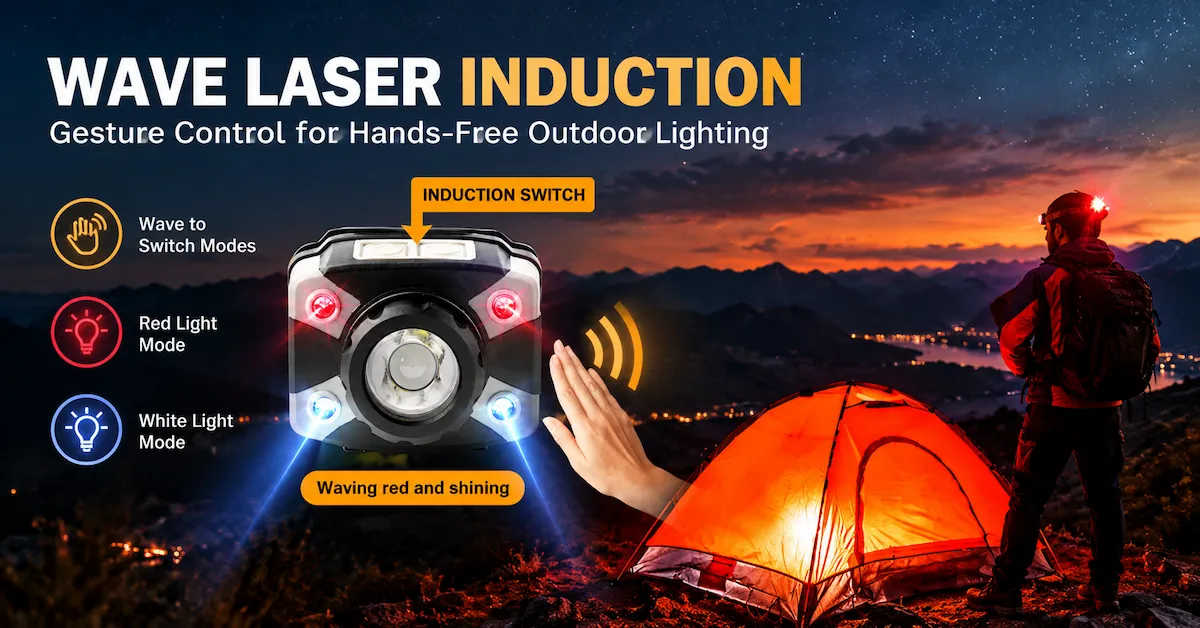
Special features should be evaluated by what they help the user accomplish. Red light can be practical for some low-light camp activities, but its benefit depends on brightness and task. A red mode does not automatically preserve night adaptation at every intensity, and a flashing mode is not proof of compliance with formal rescue or signaling requirements. Retail copy should describe the operating function rather than promise a safety outcome that has not been tested.
Motion sensing can be convenient for gloved or dirty hands, particularly when a user does not want to touch the housing. Brightenlux lists gesture activation on several models, including BT-HL9004 and BT-HL9002. Ask whether a wave triggers accidental operation when the user turns their head toward another person, walks near vegetation or places the light in a bag. Verify whether the sensor is clearly disabled during storage to avoid unplanned battery drain.
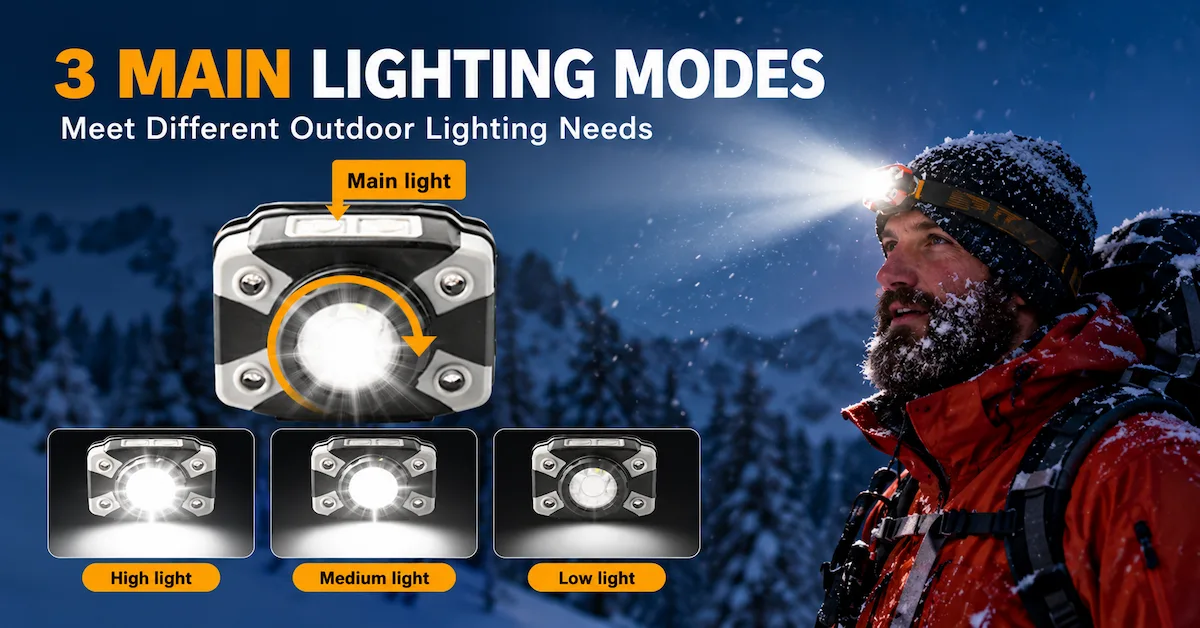
Mode memory has a similar trade-off. Remembering the last setting is convenient when users repeatedly perform the same task, but some customers may prefer a known low-brightness startup. For each product, map the control sequence: short press, long press, double press, sensor activation, red mode and power-off. Include a small diagram in the retail manual if the sequence is not immediately intuitive.
There is no evidence on the specific Brightenlux product pages reviewed here that the featured headlamps include app-linked Bluetooth adjustment or integrated solar charging. Those functions may be discussed as general category possibilities, but they should not appear as Brightenlux product selling points unless a matching SKU and technical document are confirmed.
9. Weather Resistance, IP Ratings and Outdoor Headlamp Durability
Outdoor customers reasonably expect a headlamp to handle sweat, damp bags and changing weather. However, “waterproof” is not one universal condition. Brightenlux currently publishes IPX2 for the 350-lumen model, IP44 for the 450+ lumen sensor model and the 1000-lumen BT-HL9041, IP65 for the 650+ lumen multi-source model, and IP67 for BT-HL9105C. These are product-page claims, not equivalent performance levels, and must be supported by matching tests before entering retailer documentation.
IPX2 concerns a limited water-drip test configuration and makes no dust-protection claim in the first position. IP44, IP65 and IP67 have different protection meanings under IEC 60529. IP67 does not mean indefinite underwater operation or resistance to every chemical. Any change to the charging cover, housing, battery compartment or seal may require a reassessment of the test evidence. An importer should request the report identifying the actual finished product and the condition of all openings during testing.
Housing materials such as ABS, TPR and aluminum components can contribute different mechanical properties. Durability also depends on enclosure geometry, seals, hinges, fasteners and assembly quality. Check obvious failure points: battery doors, charge-port covers, tilting mechanisms, switch membranes and strap mounts. If a distributor requires a drop claim, specify the test method and acceptable result rather than using vague terms such as “unbreakable.”
Outdoor positioning also has limits. A consumer headlamp should not be called explosion-proof, inherently safe for hazardous workplaces, or a certified emergency rescue device without separate verified approval. Clear boundaries build trust and protect a brand from disputes that begin with exaggerated sales language.
10. A Practical Retail Sample Test Plan for LED Headlamp Wholesale
Initial samples should be examined as products shoppers will actually wear, carry and recharge, not merely photographed on a studio table. The matrix below is a recommended buyer test plan. Numerical acceptance thresholds and sampling quantities should be agreed according to the target retailer, product risks and actual market; they are not claimed Brightenlux factory procedures.
| Test Area | Buyer Evaluation | Approval Evidence |
|---|---|---|
| Beam and modes | Same-distance beam images, usable flood/spot, red-light behavior and switching sequence | Photos, mode chart and output readings |
| Usable runtime | Monitor output throughout normal medium/low tasks and high-mode step-down | Battery, temperature and output-time record |
| Wearability | Walk, bend and adjust with different users, hats and gloves | Complete-set weight and fit observations |
| Hybrid battery | Install lithium and every declared AAA configuration | Approved cell/carrier list and safe operation record |
| USB-C system | Test common charging leads and adapter types as applicable | Compatibility, charge time and indicator records |
| Sensor and memory | Check deliberate and accidental activation, shutdown and restart behavior | Signed control-sequence specification |
| Ingress and drop claims | Obtain matching reports; test mechanical points required by the retailer | Model/revision-specific reports and inspection rules |
| Pack-out | Check lamp, headband, battery, cable, manuals and carton printing | Golden sample, artwork and accessory checklist |
Observe variation as well as average performance. A single attractive sample can hide an inconsistent strap supplier or battery substitution. For the production order, ask how incoming parts are checked, what operators test on the line, and which tests are performed on samples rather than every finished unit. A final inspection specification should be tied to the approved golden sample, not just a generic product photograph.
11. OEM and Private-Label Headlamp Programs: From Retail Brief to Approved Pack
Brightenlux advertises OEM/ODM services for outdoor lighting. For a wholesale headlamp project, start by deciding whether the brand needs a proven model with logo and packaging changes, a modification to existing accessories or modes, or a substantially new product. These paths have different sample, engineering and commercial requirements. A logo change should not be presented as a full custom-developed light; a new battery design should not be priced like a simple printed carton.
First, write a retailer-centered specification. Define target customers, preferred channel, retail price tier, beam type, weight, battery system, included accessories, package language and intended claims. Indicate whether the customer needs low-mode camping comfort, hybrid backup or high-output hiking performance. Then ask which existing Brightenlux platforms meet the mandatory items and which requirements need modification or testing.
Next, approve a sample and appearance standard. Record LED and mode configuration, battery model, USB-C board, housing, strap, finish, logo and packaging artwork. If the product is being sold under a private label, confirm logo placement and the legibility of warnings. Keep a signed physical reference and a revision-controlled BOM so reorders are compared with the same specification.
Finally, manage pilot production and shipment release. For larger or more customized orders, a pre-production pilot can identify assembly and packaging problems before all units are completed. Ask for a practical process showing sample approval, component procurement, manufacturing, inspection, carton checks and delivery coordination. The exact MOQ, sample charge, development time and production schedule are to be quoted; they should not be invented from a general company profile.
Build Your Brightenlux Headlamp Range
Tell Brightenlux which retail shoppers you serve, whether you prefer a compact COB, hybrid-power all-rounder or higher-output platform, and what branding and quantity you require. Ask for available sample configurations, current test evidence, packaging options and a wholesale quotation.
Discuss LED Headlamp Wholesale & OEM →12. Quality Control, Compliance and Battery Documentation
Technical evidence should match the exact SKU that will be shipped. For lighting performance, request appropriate measured output and runtime data; for ingress claims, a report under IEC 60529 or the relevant agreed test; for lithium cells, the documentation applicable to the supplied battery and destination market. The UN Manual of Tests and Criteria, subsection 38.3, is relevant to lithium transport testing. Product compliance requirements vary by country and finished configuration, so a factory-wide certificate or badge does not automatically validate each OEM variant.
Consumers may not notice a change in the LED driver or battery supplier until a product behaves differently. That makes component control a purchasing necessity. Ask the manufacturer to identify which components are critical, what substitutions require approval, how batches are labeled, and how defects are resolved. A replacement cell with the same printed mAh capacity is not necessarily identical in discharge behavior or protective electronics.
Packaging and manuals also require quality checks. Retailers need accurate battery-included statements, charger expectations, lumen and IP wording, warnings, barcode information and appropriate languages. Avoid unsupported sustainability, safety or durability promises. The strongest claim is the one that the approved product and its matching documents can support.
Warranty and support terms should be agreed as commercial obligations rather than invented marketing guarantees. Define the defect reporting window, photographic or testing evidence required, remedy process, spare components where feasible and how repeat-order corrective action is communicated. A retailer's customer-service policy should align with the sourcing agreement, not depend on assumptions about the supplier.
13. MOQ, Landed Cost, Retail Margin and the Price of Feature Overload
For LED headlamp wholesale, the lowest factory price is not necessarily the best retail decision. One offer may include the rechargeable cell, USB-C cable and branded carton, while another excludes a battery or offers a simplified strap. A third may appear similar until the buyer asks for mode-specific test records or a documented ingress rating. Normalize the BOM, pack contents, testing and Incoterms before comparing unit prices.
MOQ depends on whether the order uses a standard model, printed logo, special packaging, changed color, revised electronics or new tooling. Headlamp style, battery sourcing and seasonal capacity can also affect lead time. Brightenlux's public OEM statements do not establish a universal MOQ or guaranteed delivery schedule for every platform. Request price breaks based on realistic test and launch quantities, and separate one-time tooling or compliance costs from unit costs.
Retail gross margin should be evaluated alongside returns, freight, inspection and customer support. A feature-heavy headlamp may command a higher shelf price, but extra controls can increase support questions and raise the probability of misuse. A simpler model may be more profitable if it meets a clear need and avoids confusing instructions. Use your market's actual sales assumptions, rather than fabricated wholesale prices or profitability percentages.
Overstock is another avoidable cost. A buyer planning six near-duplicate headlamp styles may split demand across too many SKUs and spend more on labels, photography and warehousing. Start with a clear tier structure, collect sell-through and return data, then expand based on genuine shopper demand. The retailer's performance data—not merely a supplier catalog—is the most reliable basis for its second purchase order.
14. Copy-Ready RFQ Checklist for Outdoor Headlamp Retailers
A detailed inquiry helps a supplier offer a meaningful proposal. Send the same scope to every shortlisted partner and ask for written answers marked standard, customizable, development required or unavailable. That prevents a quotation from quietly substituting features across product models.
- Customer and market: retailer/brand, country, channel, audience, target launch window and forecast quantity.
- Assortment tier: entry COB, hybrid-power core, warm/cool multifunction, red-mode sensor or higher-output focused tier.
- SKU reference: Brightenlux 350, BT-HL9004, BT-HL9105C, BT-HL9002, OSRAM P8 650+, or BT-HL9041.
- Lighting: measured peak and mode output, sustained runtime, beam pattern, color options, red modes and switch sequence.
- Wearability: complete weight with battery and headband, adjustment range, strap material, beam tilt and fit.
- Battery: cell type, capacity and inclusion, AAA compatibility, carrier contents, USB-C inputs and test records.
- Durability: required IP classification, housing/strap tests, charging-cover design and target usage conditions.
- Custom work: logo, colors, headband printing, branded carton, manual language, barcode and accessory choices.
- Quality: golden sample, incoming and final inspection, critical-component control and compliance documentation.
- Commercial: MOQ tiers, sample fee, unit prices, tooling if relevant, lead-time stages, warranty and shipping terms.
Use the Brightenlux contact page to submit your brief. Buyers wanting a more general discussion of headlamp suppliers can also review the site's headlamp supplier guide; this article focuses specifically on outdoor retail assortment decisions and their commercial consequences.
15. Frequently Asked Questions About LED Headlamp Wholesale for Outdoor Retailers
1. What should outdoor retailers prioritize when buying LED headlamps wholesale?
Prioritize clear end-user roles, usable beams, comfortable wearing, reliable batteries, intuitive controls and documented quality. A store should know which headlamp it recommends for close camp tasks, general hiking or stronger focused output. Accurate specifications and repeat-order consistency matter more than the longest feature list.
2. How many headlamp models should a new retailer stock?
There is no universal number, but three differentiated tiers can be easier to manage than six similar SKUs. An entry-level compact model, a versatile rechargeable or hybrid core product, and one premium option create clear choices. Expand after reviewing actual sell-through, returns and customer feedback.
3. Is a 1000-lumen headlamp always better than a 350-lumen one?
No. Maximum output does not describe beam comfort, complete weight, sustained brightness or suitability for close-up use. A 350-lumen COB platform may be useful near a tent, while a focused 1000-lumen model may serve a different customer. Compare real task performance, not only initial lumens.
4. Which Brightenlux headlamps support rechargeable and AAA battery options?
The current BT-HL9004, BT-HL9105C and 650+ lumen OSRAM P8 listings describe rechargeable lithium or three AAA configurations. Verify the actual adapter and accessory inclusion, charging behavior and documentation on approved samples before making a retail claim.
5. Are sensor headlamps useful for hikers and campers?
They can be convenient when hands are busy or dirty, but sensors must be tested for accidental activation, storage behavior and usability with hats or gloves. A sensor is a benefit only when shoppers can control it reliably and understand when it is switched on.
6. How should a retailer interpret IP44, IP65 and IP67?
They represent different defined ingress-protection test conditions under IEC 60529 and are not interchangeable. An advertised rating should be linked to the exact assembled model and report. IP67 does not promise unlimited underwater use; modifications to covers or seals may change the result.
7. What is the difference between COB floodlight and focused LED headlamp output?
A COB area source commonly provides a broad nearby beam, while a focused LED and reflector or lens can direct light toward a narrower target. Retailers should compare beam images and intended distances. Neither technology is automatically superior for every outdoor task.
8. Can Brightenlux supply private-label headlamps?
Brightenlux publicly describes OEM/ODM services. Actual branding, housing color, strap printing, packaging and technical modifications depend on the chosen platform and quotation. Request a model-specific feasibility response and approve samples before assuming any customization is available.
9. What is the MOQ for wholesale rechargeable headlamps?
MOQ varies with product, branding, packaging, component sourcing and development scope. There is no verified single MOQ applicable to all listed models. Ask for quantity-based quotes that identify supplied batteries, accessories, inspection scope and any one-time expenses.
10. What should be approved before mass production?
Approve a representative sample, confirmed complete weight, light modes, battery and charger configuration, IP and performance evidence, approved packaging, labeling, inspection limits and a component change-control plan. That allows production and reorders to be compared with the same specifications.
Conclusion
A successful LED headlamp wholesale for outdoor retailers program starts with the customer, not a lumen ranking. Campers, backpackers, night hikers and general outdoor shoppers need different combinations of beam distribution, weight, comfort, backup power and controls. By turning those needs into entry, core and premium product tiers, retailers can explain their range more clearly and avoid buying multiple products with no meaningful difference.
Brightenlux's published models provide real starting points: a 350-lumen flexible COB/XPE light, hybrid 450+ and 500+ lumen platforms, a 600-lumen dual-XPG2 sensor model, a multifunction 650+ lumen design and a focused 1000-lumen dual-OSRAM P9 model. Their published ratings and features should be confirmed with current samples, particularly where the website has inconsistent weight information or where waterproofing, runtime and battery configurations affect retail claims.
Before committing to a private-label or bulk order, test beam usefulness and wearability, confirm included batteries and accessories, agree on packaging and compliance evidence, and establish repeat-order controls. Contact Brightenlux to discuss LED headlamp wholesale and OEM options with your planned assortment, destination market, expected quantity and target buyer needs. A detailed brief makes it easier to obtain samples and a quotation that reflects what your customers will actually use.