

Brightenlux LED Headlamp Supplier Guide for Emergency Kits and Field Use
When buyers search for an LED headlamp supplier, they are usually solving a broader problem than lighting alone. They need hands-free visibility for emergency kits, roadside repair packs, field inspections, and other low-light tasks where reliability matters. A strong supplier supports consistency, packaging, and repeatable ordering, not just a product photo.
If you are comparing Brightenlux products, the real question is how well a headlamp fits your final use case. For B2B buyers, the best choice is often the one that is easiest to standardize, pack, and re-order without surprises.
What buyers really need from an LED headlamp supplier
Buyers do not usually want a single lamp; they want a dependable component for a larger program. That may be a household preparedness kit, an evacuation bag, an outdoor gear bundle, or a field-use pack for maintenance teams. In each case, the supplier must support more than basic product sourcing.
The most important qualities are stable build quality, clear communication, and the ability to handle repeat orders with the same product definition. A headlamp that changes from one shipment to the next can create support problems later. In B2B sourcing, consistency often matters more than a dramatic spec sheet.
It also helps when the supplier understands how the product will be used after purchase. Emergency kits, portable work packs, and retail bundles all place different demands on packaging and assembly.
Why headlamps keep showing up in emergency and preparedness products
Headlamps are common in emergency kits because they solve a simple problem: people need light and free hands at the same time. During a power outage, evacuation, or shelter-in-place event, users may need to move supplies, read labels, help children, or navigate stairs. A headlamp supports those tasks better than a handheld light.
The same logic applies to institutional and commercial programs. Facilities teams, outdoor programs, retailers, and preparedness assemblers often include a compact light source with water, first aid items, and food. In a bag-style kit, a headlamp is practical because it is easy to store and quick to use when time matters.
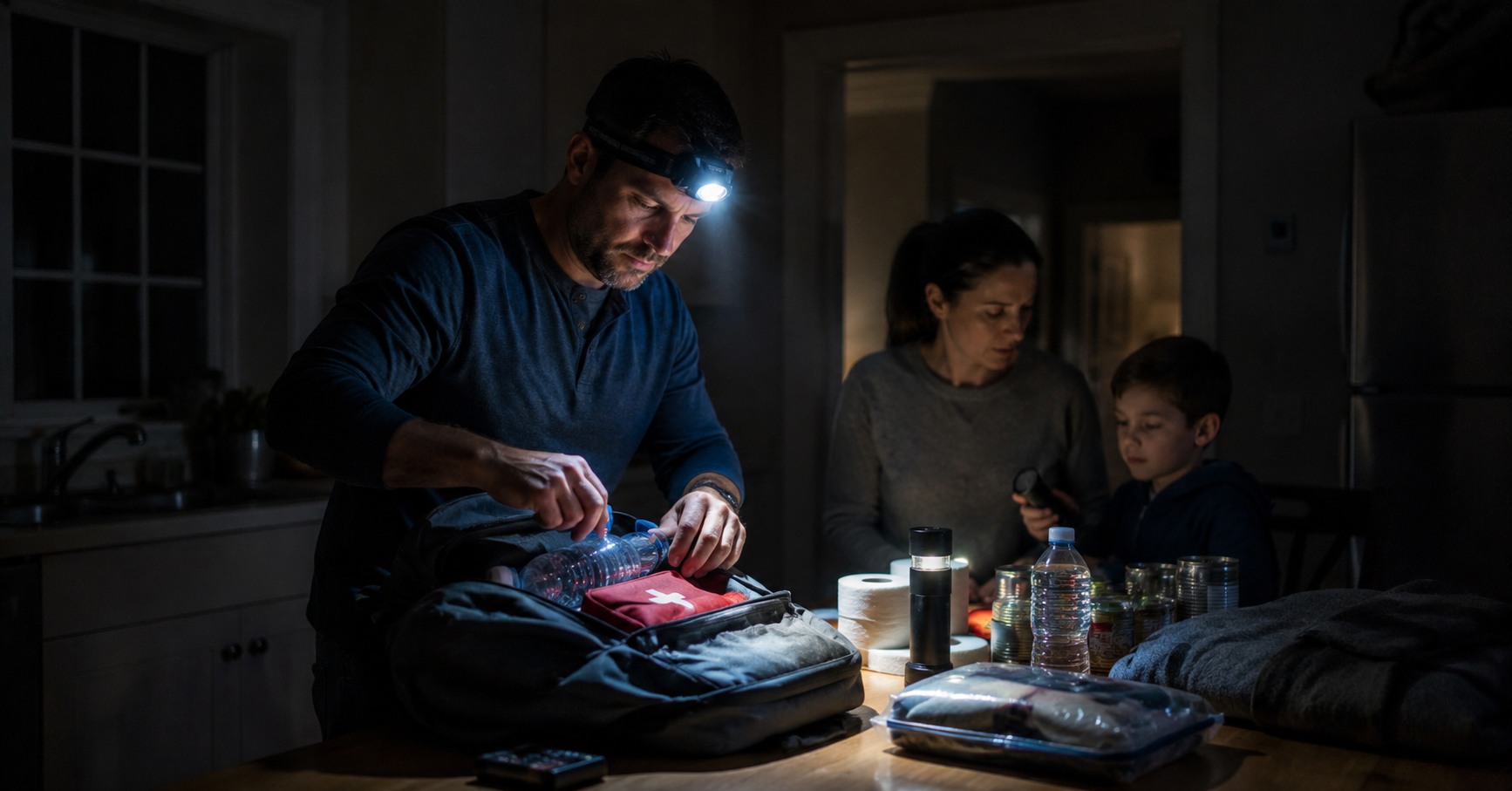
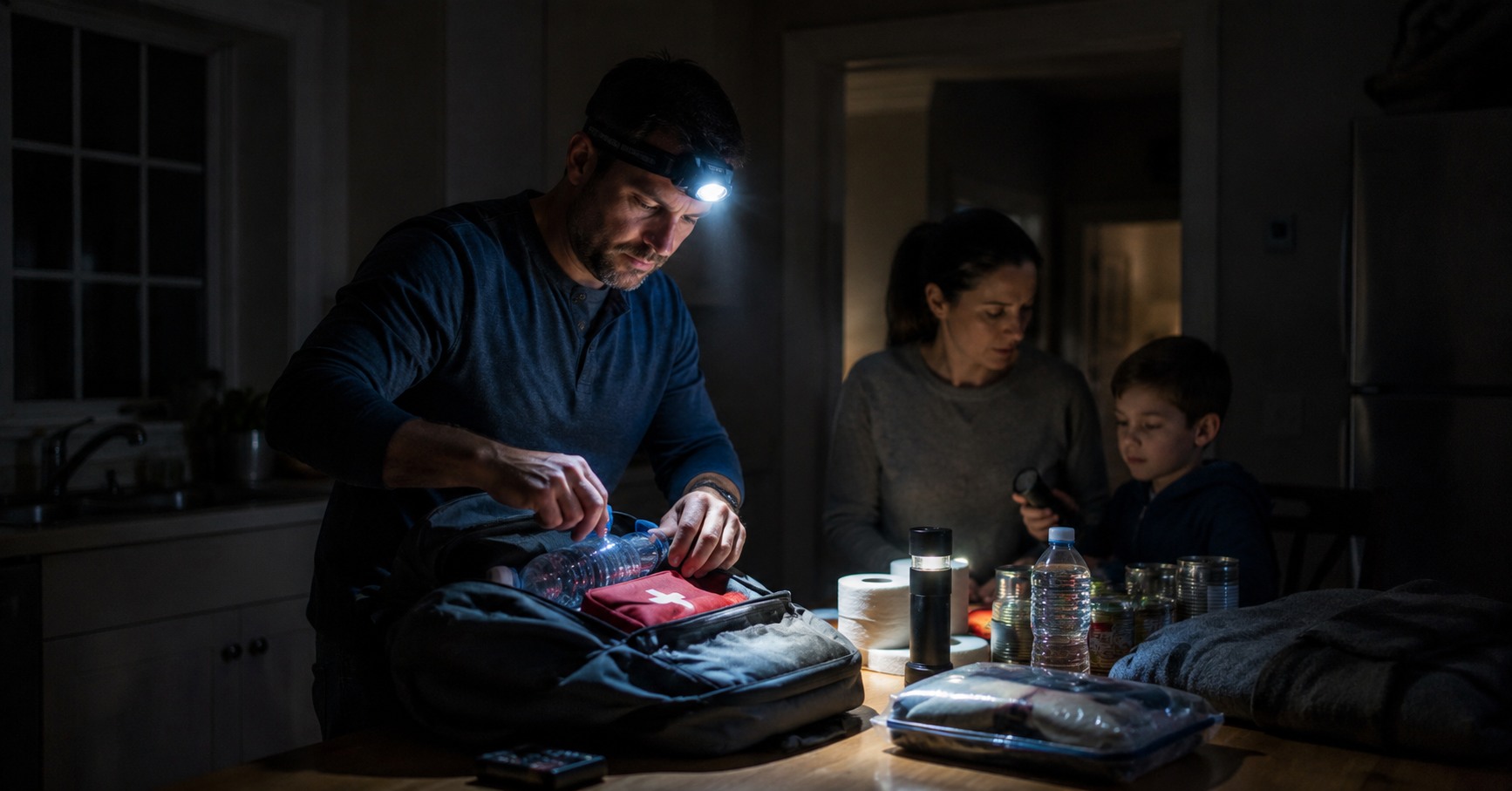
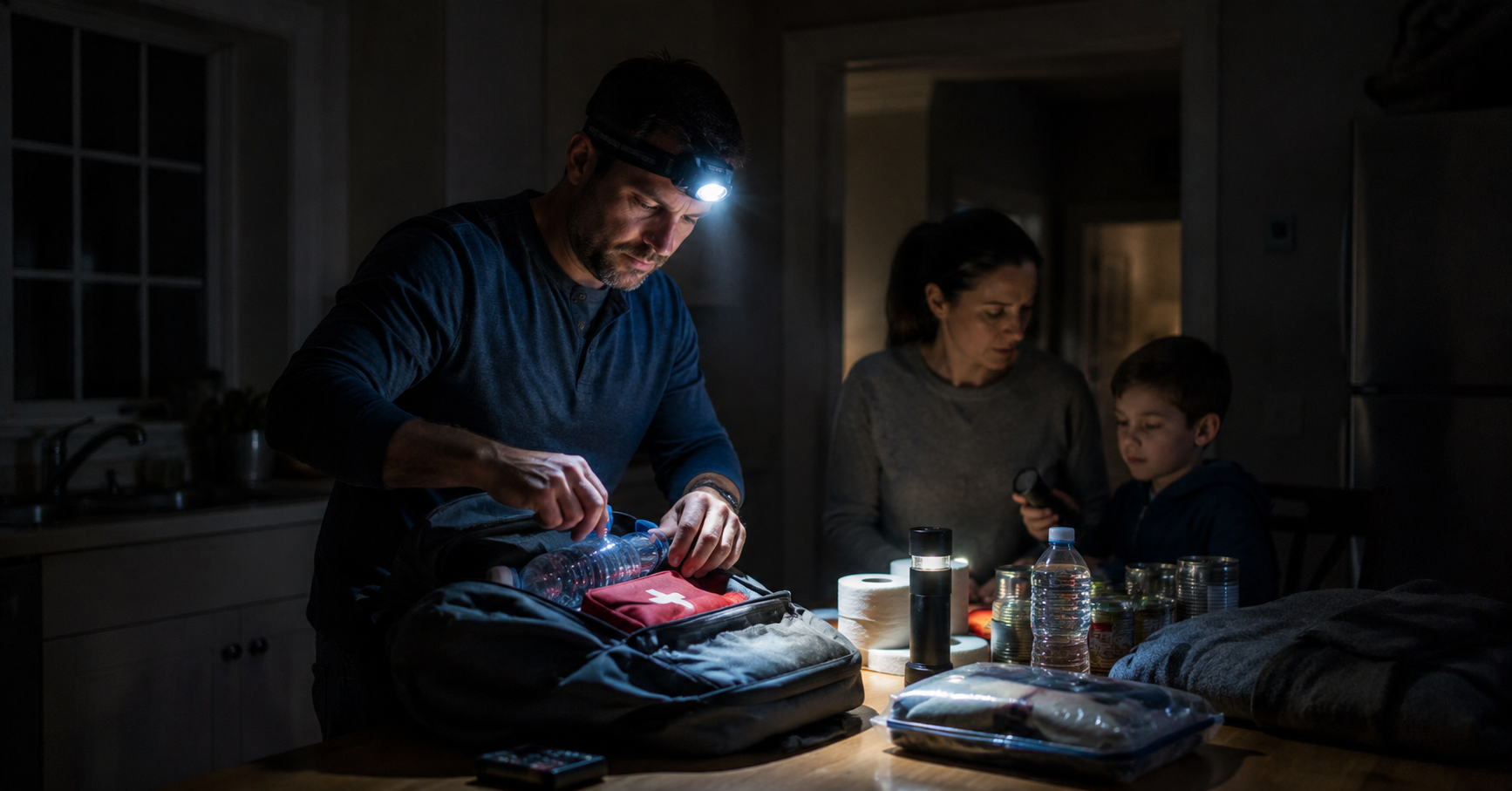
The source image reflects that broader kit environment: the light is one piece of a complete response package, not a standalone item.
What to compare before choosing a supplier
Not every supplier is a fit for every program. Some are better at generic consumer lighting, while others are better at private-label packing or emergency kit assembly. Before you decide, compare the supplier’s real strengths against your own buying needs.
Product consistency is one of the first checks. Beam pattern, switch feel, strap quality, and housing finish all affect the end user. If you are ordering repeatedly, small changes can become a problem. Packaging capability matters too, especially if the lamps need to arrive retail-ready or kit-ready.
For buyers who want a starting point, the main areas to review are simple:
| Buyer focus | What to confirm |
|---|---|
| Consistency | Same build and clear change control |
| Packaging | Fit for kit, bag, or retail use |
| Customization | Logo, color, or bundle options |
| Documentation | Part numbers and packing details |
| Communication | Sample and reorder clarity |
How headlamps fit into kit-based manufacturing
In kit-based manufacturing, the headlamp is one piece of a larger system. It may sit alongside a first aid pouch, bottled water, canned food, or other essentials in a soft-sided bag or box. Because of that, the lamp has to fit the pack-out as well as the use case.
That means the product should be easy to reach, simple to understand, and compact enough not to crowd out other items. It also needs to hold up to storage with other supplies. If the end user opens the kit during an emergency, they should not need instructions to figure out what the light does.
When the final bundle includes multiple components, the supplier conversation should cover packing sequence and final presentation, not just the lamp itself.
Common buying mistakes that create problems later
One common mistake is assuming all LED headlamps are interchangeable. They are not. A model suited to camping retail may not be the right fit for emergency readiness or workplace use. Another frequent issue is focusing only on unit price. A lower-cost lamp can become expensive if it causes rework, repacking, or returns.
Packaging mismatch also causes avoidable trouble. If a headlamp is meant for a backpack-style kit, bulky boxes or awkward inserts can waste valuable space. Buyers should also avoid choosing on appearance alone. A product that looks good in a catalog still has to work inside the actual kit and meet the user’s need in low light.
Small sample reviews or pack-out mockups can catch many of these problems before a larger order.
What emergency kit buyers should pay attention to
Emergency kit buyers should think in terms of real-world use, not just product features. The most useful questions are practical: can someone use it fast in the dark, will it store neatly, and is it comfortable enough for short-term wear? These questions matter because the end user is often under stress.
Comfort, storage, and simplicity all count. A well-selected headlamp should support quick action during an outage, evacuation, or field response. It should also work as part of a broader preparedness package, where every item has limited space and a clear job.
If you are sourcing for a preparedness program, it helps to review the full kit layout before finalizing the light. You can also contact Brightenlux if you want to discuss how a headlamp fits a larger bag or bundle.
Working with a supplier: a practical buyer checklist
Before placing an order, define the basics in writing. A clear brief helps the supplier understand whether the headlamp is for emergency kits, field use, retail bundles, or another program. That prevents a lot of back-and-forth later.
Keep the checklist focused on the items that affect execution: product type, packaging format, customization needs, component compatibility, sample approval, and reorder expectations. If the product will be included in a broader set of supplies, explain the kit structure as well. Suppliers usually respond better when they can see the whole application.
For a specific project, you can also send an inquiry with your use case and packaging needs, or review the product range first if you are still comparing options.
When a manufacturer relationship makes more sense than spot buying
For one-off purchases, a distributor may be enough. But for recurring kits, private-label programs, or customized bundles, working directly with an LED headlamp manufacturer can offer more control. It can make repeat ordering easier and reduce the chance of unexpected changes in product or packaging.
That approach works best when the buyer can provide a clear brief. You do not need a highly technical document, but you do need to explain the final use case. A headlamp for an emergency backpack is not the same sourcing conversation as one for a camping set or a car safety kit. The use case shapes the product choice.
In that sense, a good manufacturer relationship is less about buying a lamp and more about building a repeatable program.
FAQ buyers often ask
Are LED headlamps mainly for outdoor use?
No. Outdoor use is common, but emergency kits, maintenance work, inspections, and field operations are just as important. The main advantage is hands-free light, which helps users move, handle supplies, or work in low-light conditions without needing a separate flashlight.
Should a headlamp in an emergency kit be treated as an accessory?
Not really. In a blackout or evacuation, light is a core function. A headlamp supports immediate action, which makes it more than a convenience item. For many buyers, it is one of the first products that deserves space in a preparedness pack.
Is it better to source the lamp separately or as part of a bundle?
That depends on your operation. Bundled sourcing can simplify kit assembly if you are building complete preparedness packs. Separate sourcing may give you tighter control over each component. The better choice is the one that matches your packing workflow and reorder plan.
What is the most common sourcing mistake?
Choosing based on appearance alone. A headlamp has to fit the actual use case, the kit format, and the end user’s ability to use it quickly. If those pieces do not line up, the product may look fine on paper but fail in the field.