

LED Headlamp Manufacturer Guide for Emergency Kits
When people assemble an emergency kit, food and water usually come first. Lighting should be next. In a power outage, during a storm evacuation, or while checking a dark room, a good headlamp can make a kit safer and easier to use. For buyers, the goal is not just to source a light source. It is to choose a product that fits the way people actually move, search, pack, and help others when time is short.
This guide is for sourcing teams, preparedness planners, and resellers building practical kits. It focuses on how to evaluate an LED headlamp manufacturer, what to expect from an LED headlamp supplier, and how headlamps compare with flashlights and lanterns in real emergency use. The right choice should fit the bag, the user, and the situation.
Why emergency kits need a reliable light source
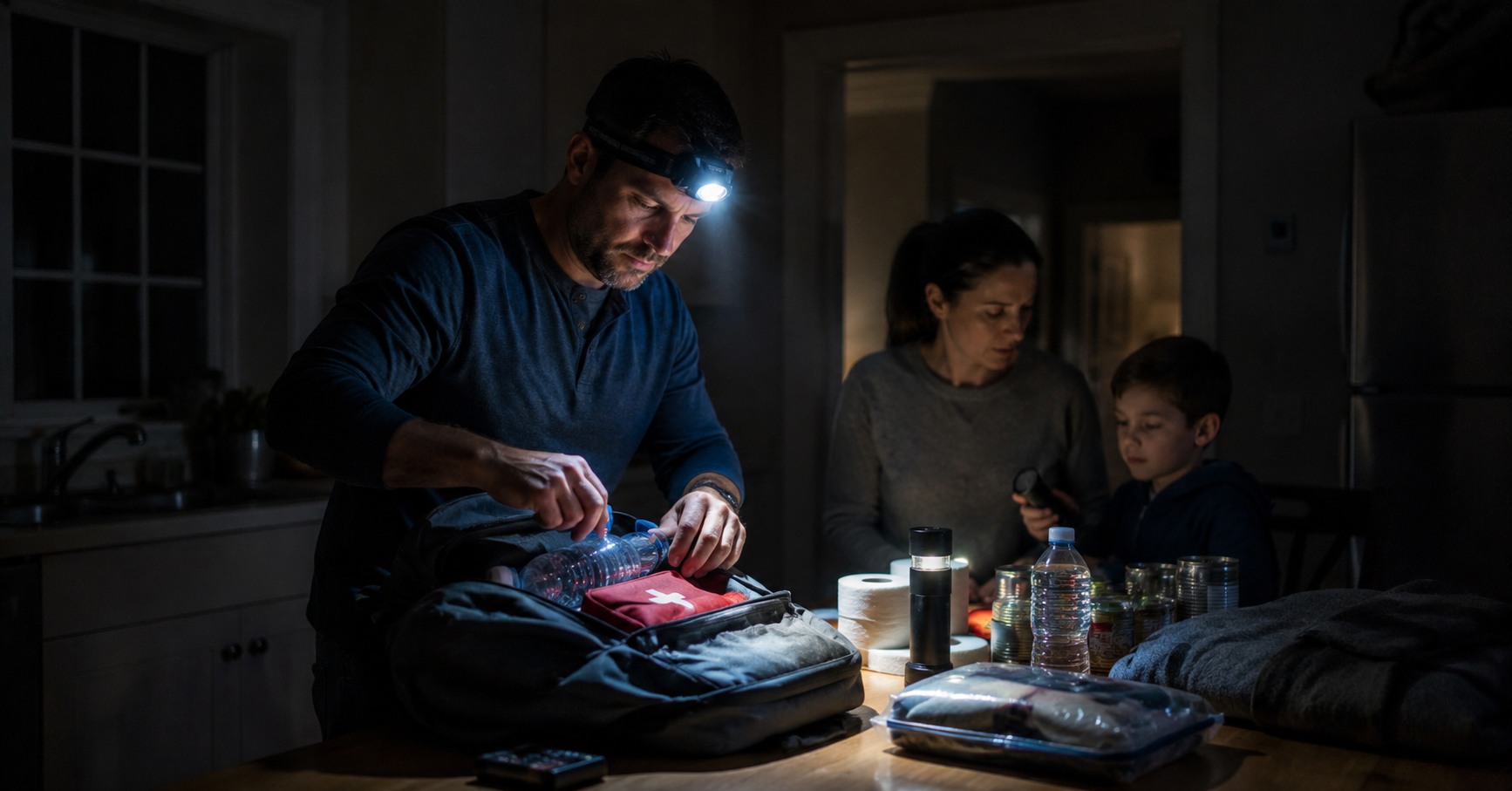
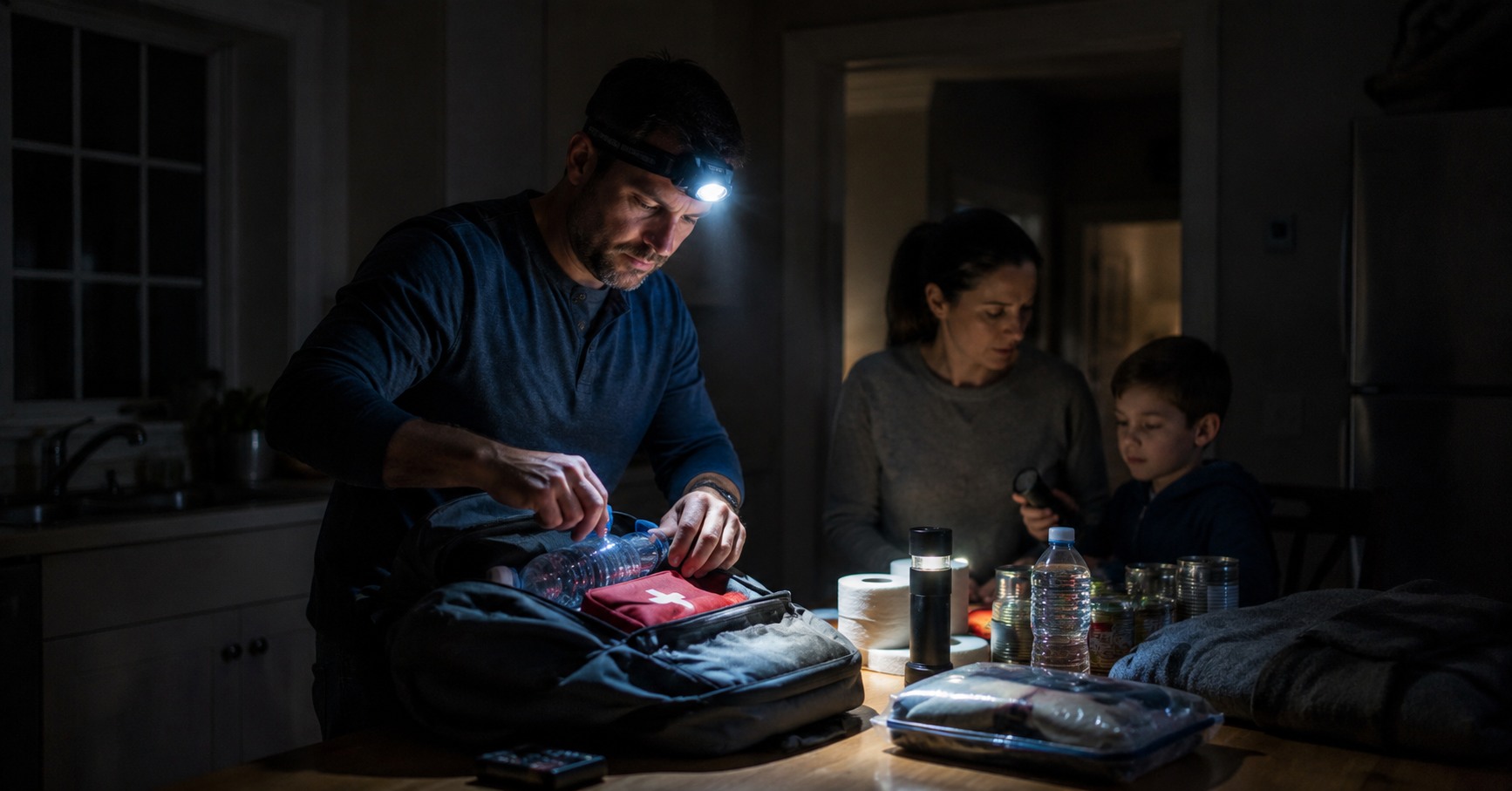
In the emergency scene described by the source, the kit is a soft-sided backpack or duffel with separate compartments. It holds water, canned food, hygiene items, folded soft goods, and a compact light source. That layout shows how emergency lighting is part of a larger system, not a stand-alone purchase. The kit has to be portable, organized, and easy to open in the dark.
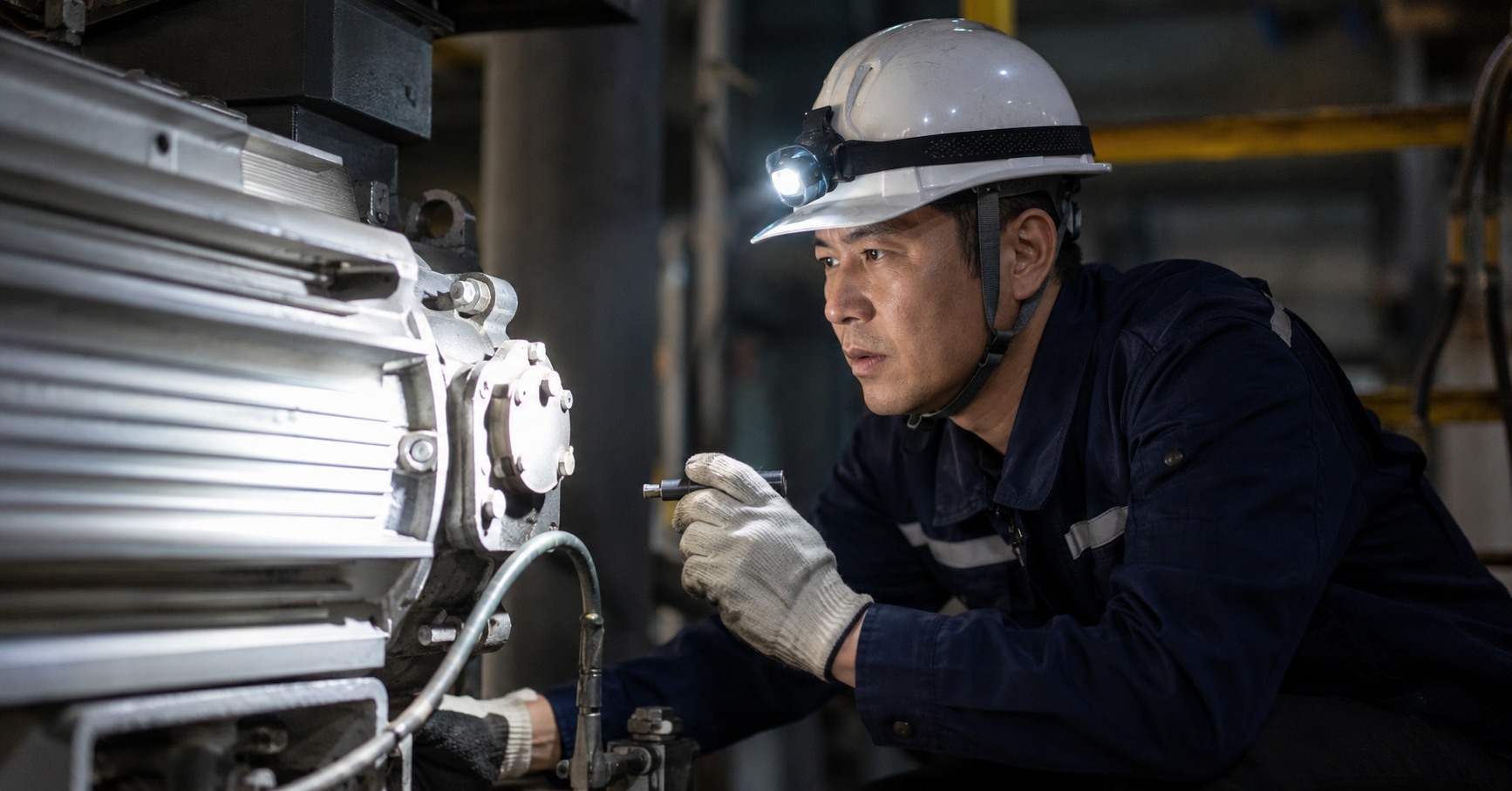
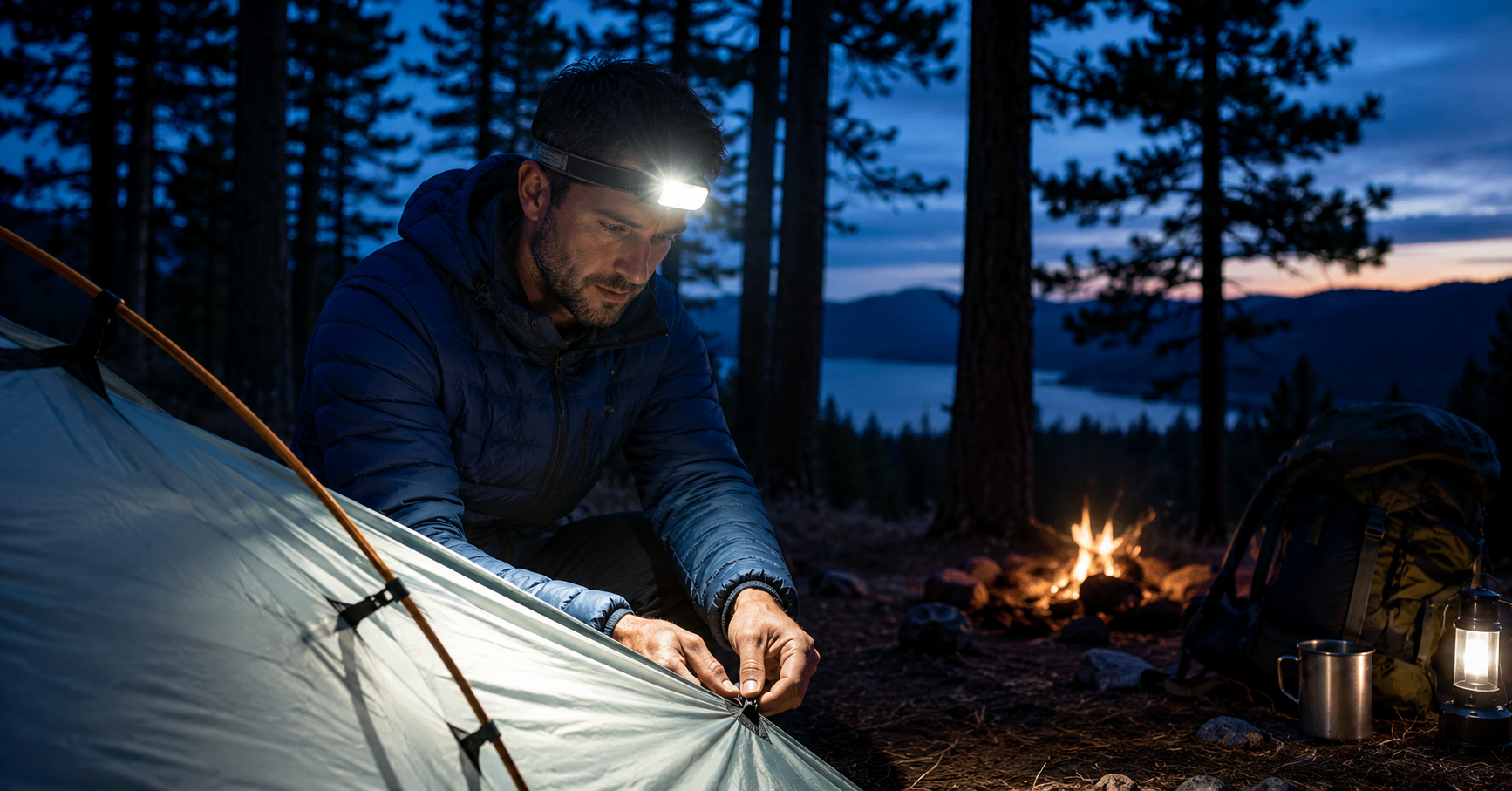
A weak beam, an awkward switch, or a battery setup that is hard to manage can make a useful kit feel incomplete. A headlamp is especially valuable because it leaves both hands free. That matters when someone is carrying supplies, checking a damaged room, helping a child, or reading labels in low light. For preparedness buyers, ease of use is often more important than extra features.
Headlamp, flashlight, or lantern: which one fits the job?
Emergency lighting usually works best as a layered set. Each format has a different role, and a well-planned kit often benefits from more than one. The right mix depends on how people will use the bag, whether they need to move around, and whether the light is for one person or a shared space.
| Light type | Main use | Key strength | Limitation |
|---|---|---|---|
| Headlamp | Task work and movement | Keeps both hands free | Less useful for group lighting |
| Flashlight | Quick inspection and signaling | Simple and familiar | Occupies one hand |
| Lantern | Room or table lighting | Broad ambient light | Less convenient for walking |
A headlamp is the strongest choice for mobility and close-up tasks. A flashlight still works well for checking shelves, stairs, or corners. A lantern is useful when several people need light in one area, such as a room, shelter space, or table. For many kits, the most practical answer is not one product instead of another. It is a balanced set that covers different moments of use.
What buyers should evaluate in an LED headlamp supplier
When sourcing from an LED headlamp supplier, appearance is only a starting point. Emergency use is different from casual use. The light may sit in storage for months, then need to work immediately. That makes simplicity, comfort, and reliability more important than a long feature list.
Buyers should ask how the headlamp is operated in the dark. A clear switch is easier to trust when stress is high. They should also think about comfort and fit. If the band feels unstable or the front housing is too heavy, users may stop wearing it. Storage matters too. A headlamp in a kit should be easy to pack, easy to find, and easy to hand to another person.
Battery planning also deserves attention. Buyers need to think about how the light will be kept ready, how power is managed, and whether the chosen format matches the kit’s expected use. For a current overview of product options, see the product range.
What a LED headlamp factory should be able to support
A capable LED headlamp factory should do more than assemble a housing and strap. For emergency-preparedness customers, consistency is important. The light needs to turn on when needed, fit comfortably, and store well inside a bag with food, water, and soft goods. If a factory can also support kit assembly or packaging, that can help buyers who want bundled emergency sets.
That kind of support is useful for disaster-readiness programs, retail preparedness kits, and car emergency bags. A soft-sided backpack with compartments makes the whole system easier to understand. Users can see where the light goes and where the other supplies belong. The packaging should reduce clutter, not add to it. In an emergency, people need a product that is obvious at a glance.
Factory communication matters as well. If a supplier cannot clearly discuss form factor, fit, or how the product is positioned for kit use, that is a sign to slow down. For sourcing questions or bundling needs, you can use the contact page or send an inquiry.
Common mistakes when building emergency lighting kits
One common mistake is buying only one type of light and assuming it covers every situation. A strong lantern may be useful in a room, but it does not replace a hands-free option. A flashlight helps with inspection, yet it can be awkward when someone is also carrying bags or guiding a child. Balanced lighting avoids those gaps.
Another mistake is focusing on the light and forgetting the bag. If the kit is messy, the light can be hard to find when the power goes out. Emergency gear should also be reviewed over time. Water gets replaced, food gets rotated, batteries age, and the bag may move from a closet to a vehicle and back again. Lighting should be checked with the same discipline. A kit is only useful if its parts are ready together.
How to match the light to the end user
The right headlamp depends on who will use it and where it will be stored. For household kits, the most helpful choice is usually one that supports quick tasks while leaving both hands free. That is useful for adults helping children, handling pets, or sorting supplies in the dark. For older users, comfort and simplicity often matter more than advanced functions.
For evacuation kits, compact storage becomes more important because every inch in the bag counts. For car kits, quick access and readiness are the key concerns. For shelter or aid programs, the main question is how the light will be used in real moments: walking, reading labels, or finding items in a zipped backpack. If the answer is clear, the product choice becomes clearer too.
Buyers should start with the use case, not catalog language. The best emergency light is the one that works when the bag is opened in the dark, when people are tired, and when nobody has time to search for a switch. That is the standard worth using when choosing a supplier or reviewing a kit lineup.
FAQ
Why should a headlamp be included in an emergency kit?
A headlamp keeps both hands free while still giving directed light. That makes it useful for packing, moving through dark spaces, reading labels, and handling first-response tasks. In a crowded or stressful setting, that hands-free advantage can make the kit more practical.
Is a flashlight enough for emergency lighting?
A flashlight is still useful, especially for inspection or signaling, but it does not solve every need. If someone must carry supplies, guide a child, or work with both hands, a headlamp is easier to use. A lantern can then support shared area lighting.
Should lighting be stored inside the main emergency bag?
Yes, whenever possible. Keeping the light in the same organized bag as food, water, hygiene items, and other essentials makes it easier to find under stress. A clear storage system saves time and helps users avoid searching through multiple places in the dark.
What should buyers avoid when sourcing emergency lighting?
Buyers should avoid complicated controls, uncomfortable fit, and unclear battery planning. Emergency products need to be simple, easy to locate, and easy to use when conditions are not ideal. A product that looks good on a table may still fail in a real kit if it is awkward to wear or store.