


Emergency lighting is bought for the moment when ordinary lighting stops being useful. A distributor may be preparing blackout kits, a roadside service brand may need a compact vehicle set, or a retailer may be building a seasonal preparedness range. In each case, the visible product is only one part of the decision. The buyer also needs a repeatable battery platform, clear controls, dependable charging, packaging that survives distribution, and a supplier that can explain what will happen after the first order.
This guide is written for importers, private-label teams, project buyers and outdoor retailers comparing an emergency light manufacturer. It uses Brightenlux public product information as a practical reference, including rechargeable and dry-battery lantern platforms, portable headlamps and broader outdoor lighting capabilities. The goal is not to promise a universal specification. Emergency products should always be checked against the intended market, local electrical rules, battery requirements, claims language and the actual sample.
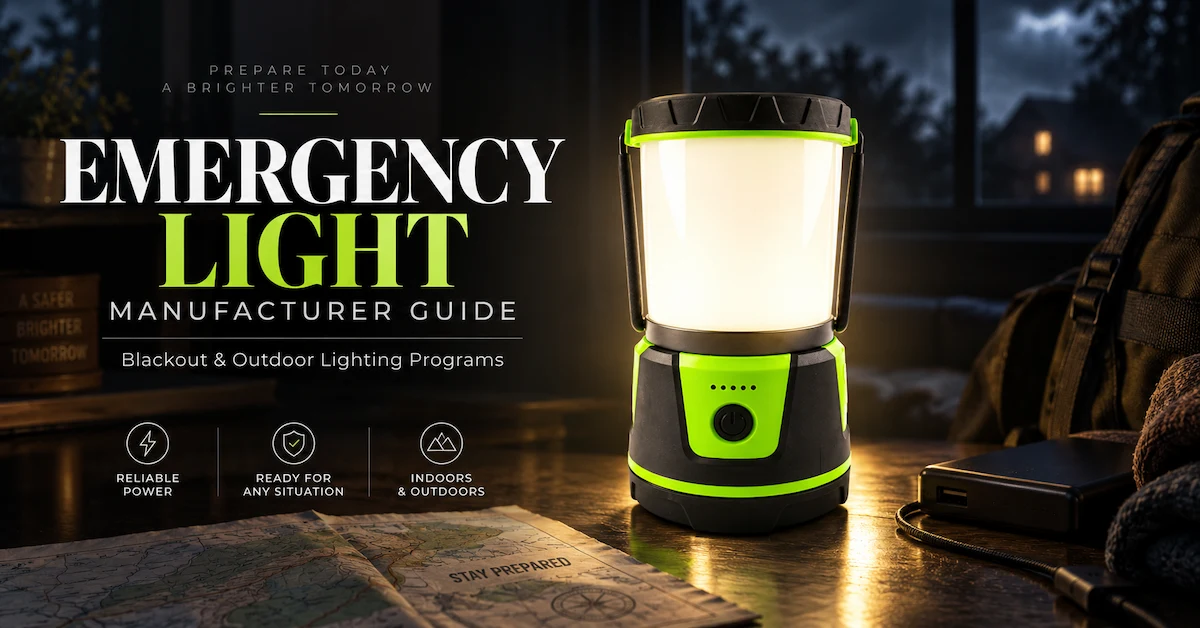
Quick answer: what should an emergency light manufacturer provide?
A useful emergency light manufacturer should help you define the use case before it recommends a model. It should be able to discuss area illumination versus task lighting, rechargeable versus replaceable batteries, runtime at different modes, weather exposure, controls that work with gloves, and the packaging needed for your sales channel. It should also offer a controlled sample process, documented changes and a realistic plan for repeat orders.
For a buyer, the quickest test is simple: ask the supplier to describe the product in one sentence that a customer could understand, then ask for the physical evidence behind every important claim. If a lantern is described as 2000 lumens, request the measurement method and mode. If it is called waterproof, ask which ingress rating applies to which enclosure. If it is rechargeable, confirm the cell quantity, charging port, charger specification and expected runtime. Clear answers reveal more than a long catalogue.
The same discipline applies when you compare an emergency light supplier. A supplier can quote quickly and still be unsuitable if it cannot freeze a bill of materials, manage artwork changes or keep the approved battery and charger consistent. Emergency lighting is a readiness product. Consistency at the second and third shipment matters as much as the first sample.
Start with the user job, not a lumen headline
An emergency kit does not have one universal user. A household needs a safe area glow for cooking, stairs and communication. A tow operator needs hands-free light at a vehicle shoulder. A shelter manager needs several hours of broad illumination with simple charging. A retailer may want a compact giftable item that sits in a car kit. Those jobs create different priorities even when the product names all contain the word emergency.
Write the job down in operational language. For example: “One adult must inspect a car at night for 45 minutes in light rain, with one hand occupied.” Or: “A family of four needs a low-glare room light for eight hours during a planned outage.” The sentence tells the LED emergency light manufacturer whether to emphasize a flood beam, a lantern diffuser, a magnetic base, a head strap, a red signal mode or a long low-mode runtime.
Brightenlux groups emergency-ready products within its wider outdoor lighting range rather than treating emergency lighting as a single shape. The public Emergency Light category is a useful starting point for a buyer's brief, while the camping and working-light families show how a product can be positioned for preparedness, roadside work or outdoor use.
Choose the right emergency product format
Product format determines where the light can be placed, how many people can use it at once and how quickly a user can understand the controls. A strong rechargeable emergency light manufacturer will usually show more than one platform, because a lantern, a handheld beam and a headlamp solve different problems.
Lanterns for shared area visibility
A lantern is the natural choice when several people need to see the same space. A diffused or multi-sided source reduces the narrow hotspot associated with a flashlight. That can make a kitchen, tent, work table or temporary shelter easier to navigate. For a commercial line, check the handle, hanging point, base stability and diffuser cleaning surface as carefully as the LED module.
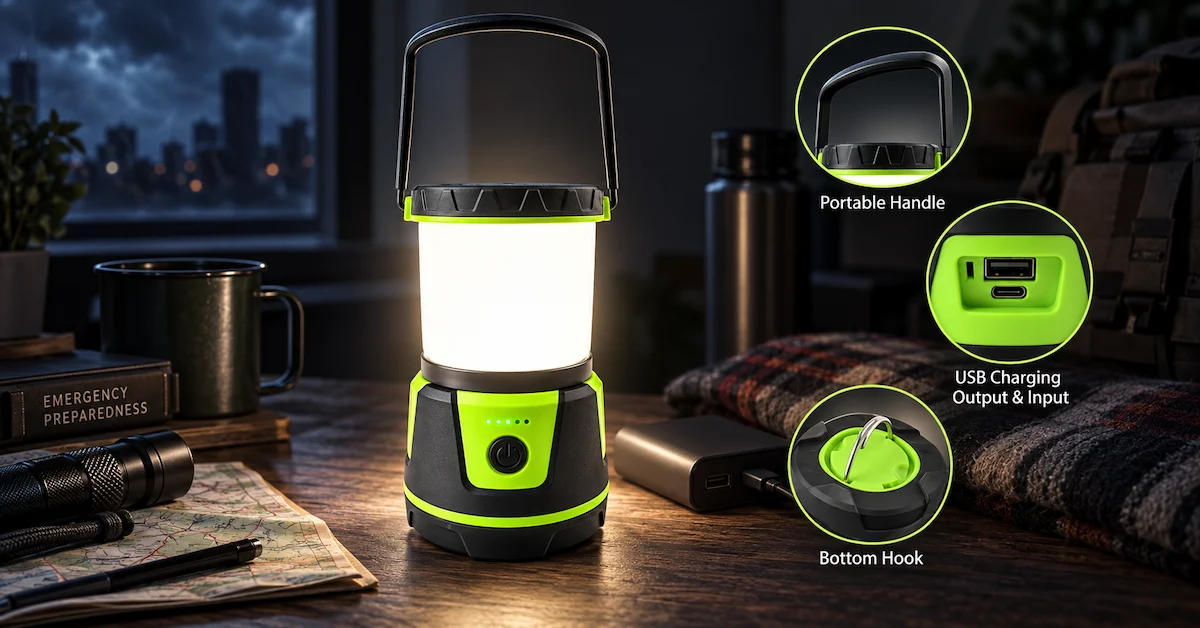
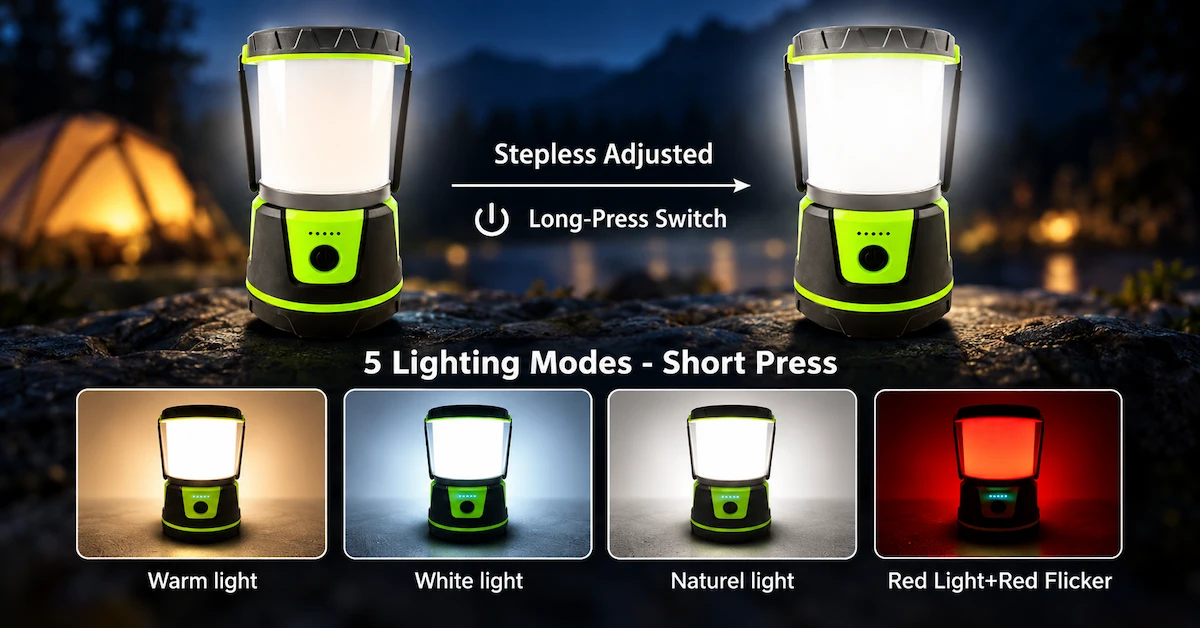
Brightenlux's 2000-lumen rechargeable camping lantern is a relevant reference for an emergency range. Its public description lists multiple white and red modes, dimming, a Type-C output power-bank function, three 2200mAh lithium batteries and an IP44 rating. Those details create a clear product story: broad light, adjustable output and the ability to help recharge a small device. A buyer should still confirm the final runtime, charging current, included cable and market-specific labelling on the approved sample.
Dry-battery lanterns for long storage programs
Some emergency programs prefer replaceable cells. A warehouse can store a light for a long period, and an end user can purchase replacement batteries locally. This format also avoids shipping a lithium battery in every unit, although the complete product and packaging still require normal transport and compliance review.
The Brightenlux 1000-lumen dry-battery lantern is described with three D-size cells, three white colour temperatures, dimming, an 8 to 10 hour working time and IP44 weather resistance. For a wholesale buyer, the important question is not whether D cells are familiar. It is whether the target market can source them, whether the retail pack states that cells are not included, and whether the carton design prevents accidental switch activation during storage.
Headlamps for hands-free response
A hands-free light is often the fastest way to improve an emergency task. A user can carry a first-aid bag, open a breaker panel or change a tyre while keeping the beam pointed where the head turns. The control must be easy to find, and the strap must remain comfortable during movement.
Brightenlux's 800-lumen Type-C rechargeable headlamp combines a focused main LED with cool-white and red side LEDs. The public page describes high, medium and low main modes, a strobe shortcut, red light and red strobe functions, an adjustable strap, and a 2200mAh 18650 battery with a Type-C cable. That combination can suit emergency kits where a user needs both inspection light and a lower-glare signal mode.
Handheld and work lights for directed tasks
A handheld light remains valuable for checking a dark corner, directing a beam through a vehicle compartment or signalling to another person. A magnetic tail or a stable stand can turn it into a temporary work light. When comparing a portable emergency light manufacturer, ask whether the product can be used in more than one position without adding a fragile accessory.
The Brightenlux outdoor range includes Type-C rechargeable flashlights with magnetic tails, adjustable focus and multiple modes. They are not a substitute for a lantern when a whole room needs illumination, but they can complete a kit. The best assortment often uses one area light plus one directed or hands-free light, with a shared charging and packaging logic.
Product comparison for a practical emergency range
| Format | Best fit | Questions for the supplier | Brightenlux reference |
|---|---|---|---|
| Rechargeable lantern | Blackouts, shelters, camping, family kits | Low-mode runtime, diffuser coverage, Type-C input/output, battery evidence | 2000-lumen rechargeable lantern |
| Dry-battery lantern | Long-storage kits, remote areas, replacement-cell programs | Cell availability, included-cell statement, switch protection, carton storage | 1000-lumen D-cell lantern |
| Rechargeable headlamp | Hands-free repair, first aid, evacuation bags | Strap comfort, red modes, charging protection, impact and moisture checks | 800-lumen Type-C headlamp |
| Handheld or work light | Vehicle checks, workshops, directed inspection | Beam control, mounting options, switch cycles, spare parts and accessories | Brightenlux outdoor lighting range |
Use this table to create a range architecture, not a final technical specification. The target channel may need one hero SKU, one entry SKU and one replenishment item. A fleet buyer may need a kit identifier instead of four independent retail boxes. A good emergency lighting manufacturer China partner should be able to explain how the products can be sold together without creating confusing claims or incompatible accessories.
Request an Emergency Lighting Range Review
Specification Checklist: What to Lock Before Sampling
Many sourcing problems begin when a buyer approves a photo instead of a configuration. Before a sample is made, create a one-page product brief with the model code, intended user, light source, output modes, battery type, charging method, runtime target, ingress claim, materials, dimensions, weight, accessories and packaging language. Add the destination market and the channel where the item will be sold.
Separate “must have” from “nice to have.” A red strobe may matter for a roadside signal, while a power-bank port may matter for a shelter kit. A decorative colour may be important for retail but irrelevant to a municipal order. A disciplined OEM emergency light manufacturer should be willing to challenge an overfilled brief and explain which features create tooling, battery, testing or lead-time consequences.
Brightness and beam
Request a mode table rather than a single maximum number. Record high, medium and low output, approximate runtime at each mode, beam spread, colour temperature and any red or signal mode. Ask whether the number is an LED rating, an estimated output or a measured result. A buyer can then write accurate packaging copy and compare samples fairly.
Power and charging
For rechargeable designs, document the cell chemistry, quantity, nominal capacity, protection board, charging input, cable, full-charge time and storage guidance. For dry-battery designs, record the cell size, polarity markings and whether cells are included. If the product can act as a power bank, specify the output port and expected current. These details should appear in the bill of materials and change-control record, not only in an email.
Ingress and impact claims
IP44, IP65 and similar ratings describe a test condition, not a guarantee that any product can be submerged or dropped indefinitely. Ask which enclosure and port covers were evaluated, whether the battery door was closed, and how the claim is worded for the target market. A responsible supplier will make the claim narrower when the evidence is narrower. That protects the brand and gives the end user practical expectations.
Human factors
Emergency users may be tired, wet or wearing gloves. Check the button travel, mode memory, charging indicator, handle grip, hanging hook and base stability. Test whether the light can be turned on without looking at it. Test whether the red mode can be reached without cycling through an uncomfortable high-brightness flash. Small interaction details often decide whether a light is used correctly during a stressful event.
How to evaluate factory and quality capability
A product page cannot show whether a factory will maintain the approved configuration. During supplier review, ask for a simple production map: incoming inspection, component verification, assembly, charging test, light-output check, waterproof or spray check where applicable, ageing or function test, final inspection and carton release. You do not need a cinematic factory tour. You need to know who checks what, when and against which document.
Brightenlux describes itself as a Ningbo-based outdoor lighting manufacturer with products spanning flashlights, headlamps, camping lights and working lights. For an international buyer, the practical value is the ability to discuss a family of related products with one team. The buyer should still request current evidence for the exact emergency model, battery, charger and packaging selected for the order.
Sample approval should be measurable
Write a sample approval sheet that includes photographs, dimensions, weight, colour references, button behaviour, charging indicator behaviour, mode sequence and accessory count. Record the sample serial or date. For a lantern, include a room-level lighting test and a low-mode runtime check. For a headlamp, include movement, strap adjustment and red-mode checks. A signed sample without measurements can still leave room for interpretation.
Use a golden sample and a change log
Keep one approved sample with the buyer and one controlled reference with the manufacturer. Every change, even a different USB-C board or a new diffuser plastic, should receive a short change note. The note should explain the reason, affected documents, new sample requirement and approval owner. This is especially important when a supplier also serves wholesale customers and has several similar models in production.
Check the carton, not just the lamp
Emergency products often live in vehicles, warehouses and garages. The retail box should prevent button activation, protect lenses and keep cables or cells from rattling. The master carton should be easy to count and strong enough for the planned distribution route. Ask for a packed-carton photograph and a drop or handling plan appropriate to the channel. Packaging is part of readiness, not an afterthought.
OEM and private-label options that create real value
When buyers search for a custom emergency light supplier, they may be asking for a logo, a colour, a kit or an entirely new product. Define the level before requesting a quotation. Logo printing and a new carton are usually a different project from a new housing, revised battery pack or custom electronics.
Useful customization can include a private-label badge, a high-contrast housing colour, a bilingual instruction sheet, a different retail pack count, a branded carrying case, a kit insert, a pre-set mode sequence or an accessory bundle for roadside and preparedness channels. The right choice depends on the customer problem. A rescue fleet may value a numbered case and replaceable strap. A retail brand may value shelf-ready artwork and a colour that matches its existing range.
For a new project, send the supplier a concise brief: target customer, annual volume estimate, desired format, battery preference, output and runtime target, market, packaging language, logo files, test expectations and delivery window. Ask for a response that separates standard options from tooling or engineering work. That makes a comparison between an emergency light supplier and an OEM partner much more useful.
Wholesale planning: build an assortment that can be replenished
Wholesale buyers often make one of two mistakes. They select too many similar models and split their volume, or they choose one product that cannot serve every end-user scenario. A better approach is to build a small ladder. An entry lantern can cover basic blackout use. A rechargeable lantern can add convenience and power-bank value. A headlamp or handheld unit can support hands-free or directed work. Each SKU should have a clear reason to exist.
Before requesting a quote from a wholesale emergency light supplier, calculate the complete landed proposition: unit price, battery or charger inclusion, packaging, carton dimensions, freight class, inspection, duties, marketplace fees and expected warranty replacements. A low unit price can become expensive when the product needs a separate charger, has a fragile box or creates a high return rate because the mode sequence is confusing.
Ask for tiered quantities and a reorder plan. Confirm whether the quoted MOQ applies per colour, per artwork, per battery configuration or across the family. Ask which components have long lead times and how many days are needed for a repeat order after artwork approval. A written replenishment plan protects the buyer from a successful launch becoming an unavailable product.
Claims, documentation and market readiness
Emergency lighting is sold with claims that sound obvious but can be interpreted broadly: waterproof, impact resistant, long lasting, safe, certified, emergency grade and weatherproof. Use only the wording supported by the selected configuration and destination requirements. The page for each product is a starting reference; the purchase order should identify the approved sample and the evidence reviewed.
Request the documents relevant to the project, which may include a specification sheet, battery information, charger details, test reports, declarations, packaging artwork and user instructions. The exact set depends on the market and product. If lithium cells are included, align the battery evidence and shipping description with the actual pack-out. If a product is sold without batteries, make that absence clear in the carton and online listing.
Do not copy a competitor's compliance sentence into your artwork. Ask the manufacturer and your local compliance adviser to review the final claim set. This is one area where a careful emergency lighting manufacturer China partner can save time: it can identify which statement describes a standard feature, which needs a test, and which should be removed.
A nine-step sourcing checklist
- Define the event. State whether the product is for blackouts, evacuation, roadside service, camping, shelter use or mixed retail.
- Choose the lighting job. Decide whether the main need is area light, task beam, hands-free work, signalling or a combination.
- Freeze the power platform. Select rechargeable or dry-battery supply and document the exact battery and charger configuration.
- Write the mode table. Record output, runtime target, colour options, red or strobe functions and mode memory.
- Set environmental expectations. Define rain, dust, temperature, impact and storage conditions instead of using a generic “rugged” claim.
- Approve the human interface. Test buttons, indicators, handle, strap, base, hook and charging access with the intended user.
- Review the complete package. Check retail artwork, accessories, battery statement, master carton, transport protection and instructions.
- Run a controlled sample. Measure the approved sample and retain a golden reference with photographs and revision details.
- Plan the reorder. Confirm MOQ, lead time, component continuity, inspection points, warranty handling and the process for future changes.
This sequence keeps the conversation grounded in a real deployment. It also gives a buyer useful material for a product page, sales training and customer service. When a supplier can answer each step clearly, the quotation becomes easier to compare and the launch is less likely to depend on assumptions.
Send Your Emergency Light Product Brief
Frequently asked questions
What is the difference between an emergency light manufacturer and an emergency light supplier?
A manufacturer controls some or all of the product assembly, engineering and quality process. A supplier may manufacture, distribute or combine products from several factories. The label matters less than the evidence: ask who owns the specification, who approves component changes, where final assembly occurs and who handles a quality issue.
Is a rechargeable lantern always better than a dry-battery lantern?
No. Rechargeable designs are convenient and can support Type-C charging or power-bank functions. Dry-battery designs can be attractive for long-storage programs and markets with easy access to replacement cells. Match the power platform to the storage plan, user behaviour, shipping model and service expectations.
How many lumens should an emergency product have?
There is no single correct number. A lantern needs useful area coverage and manageable glare, while a handheld light may need a concentrated beam. Ask for measured modes, runtime and beam information. A lower setting that lasts through the full event can be more useful than a maximum setting that drains quickly.
Can an OEM emergency light manufacturer change the battery?
Sometimes, but a battery change can affect charging, runtime, balance, enclosure space, transport documents, protection design and testing. Treat it as a configuration change that needs a new review, not as a simple purchasing substitution.
What should I request from a custom emergency light supplier?
Send the intended user, use case, format, output, runtime, battery, market, packaging language, logo and volume estimate. Ask the supplier to mark which options are standard, which require a new mould or tooling, and which claims need additional evidence.
Is IP44 enough for outdoor emergency use?
It may be suitable for splashes and light rain in a defined use case, but it is not a universal outdoor guarantee. Confirm the exact rating, enclosure condition, port covers and operating instructions. Choose a higher or different protection level when the deployment environment requires it.
How do I avoid receiving a different product on the reorder?
Use a golden sample, a signed specification, a bill of materials and a change-control rule. Require written approval before changing the LED, battery, charger, plastic, switch, artwork or accessory set. Inspect against the approved reference, not only against the supplier's current catalogue photo.
Turn an emergency lighting brief into a sellable program
The strongest emergency range is easy to explain: each product has a defined job, the modes and runtime are understandable, the charging or battery choice fits the market, and the packaging tells the truth. Brightenlux public product pages provide useful reference points for a rechargeable lantern, a dry-battery lantern, a rechargeable headlamp and related outdoor lighting formats. Use those references to start a conversation, then confirm the exact model, configuration and evidence for your project.
When you contact Brightenlux, include the target market, user scenario, preferred product format, quantity, battery decision, logo or packaging requirements and delivery timing. The team can then suggest a practical combination rather than sending an unfiltered catalogue. For a portable emergency light manufacturer project, a clear brief is the fastest route to an honest quote, a useful sample and a repeatable order.