

Camping Light with Power Bank: Practical Lighting for Trips and Emergencies
A camping light with power bank gives buyers a practical middle ground between a simple lantern and a larger portable power station. It provides area lighting for tents, vehicles, cabins, and home emergency kits while adding USB charging convenience for low-stakes backup use. For B2B sourcing teams, the value is not only in brightness. The more important question is whether the product is easy to carry, simple to operate, stable when placed down, and useful when a phone or small device needs urgent power.
Why This Product Category Has Become Practical
Outdoor users often want fewer items in their gear box, not more. A rechargeable LED camping lantern with a built-in USB power bank helps reduce that packing burden by combining ambient lighting and backup charging in one compact unit. It can support family camping, car camping, roadside situations, base camp use, and home power outage preparation. This product type does not need to replace a dedicated large battery pack. Its role is more specific: provide dependable light and offer an additional charging option when a wall outlet is unavailable. That makes it attractive for retailers and distributors serving customers who value simplicity, portability, and everyday emergency readiness.
What Problems It Solves for End Users
Many camping frustrations are small but disruptive. A phone battery drops too low, a headlamp is misplaced, or a tent lantern does not spread enough light across shared space. A camping light with power bank addresses these ordinary issues by giving users a visible, easy-to-grab lighting tool with added energy reserve. The most useful models are not judged only by whether they turn on. Buyers should consider how people actually handle gear in the dark: placing it on a table, hanging it from a loop, carrying it between tent and vehicle, or using the USB port without guessing. These details separate practical equipment from products that only look useful online.
What the Visible Design Tells Buyers
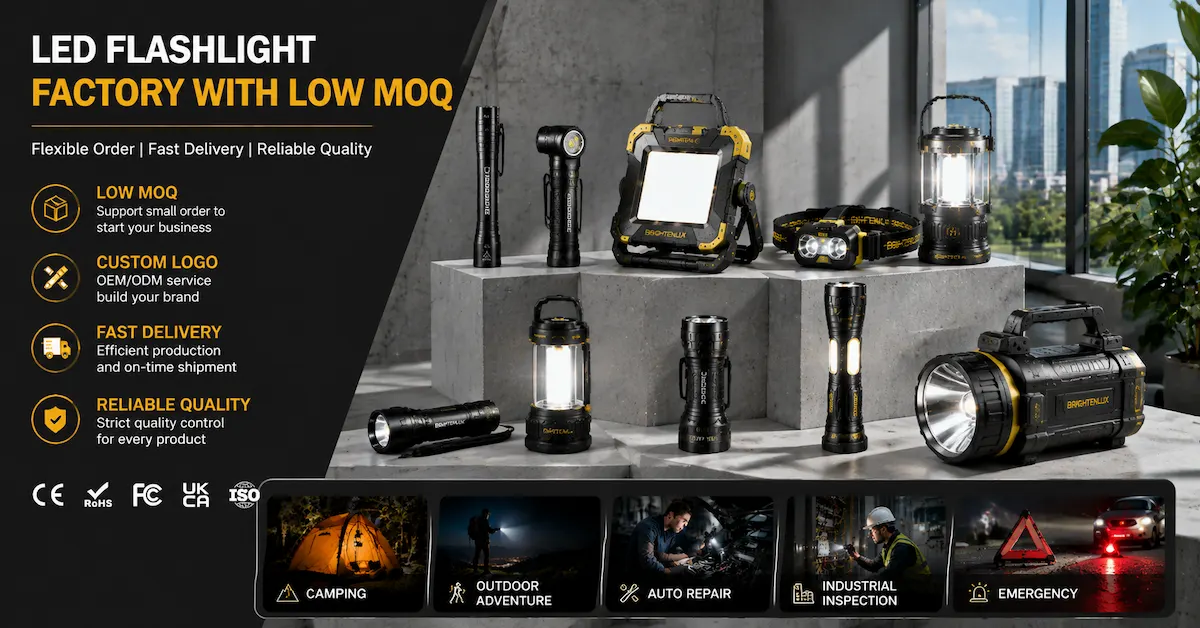
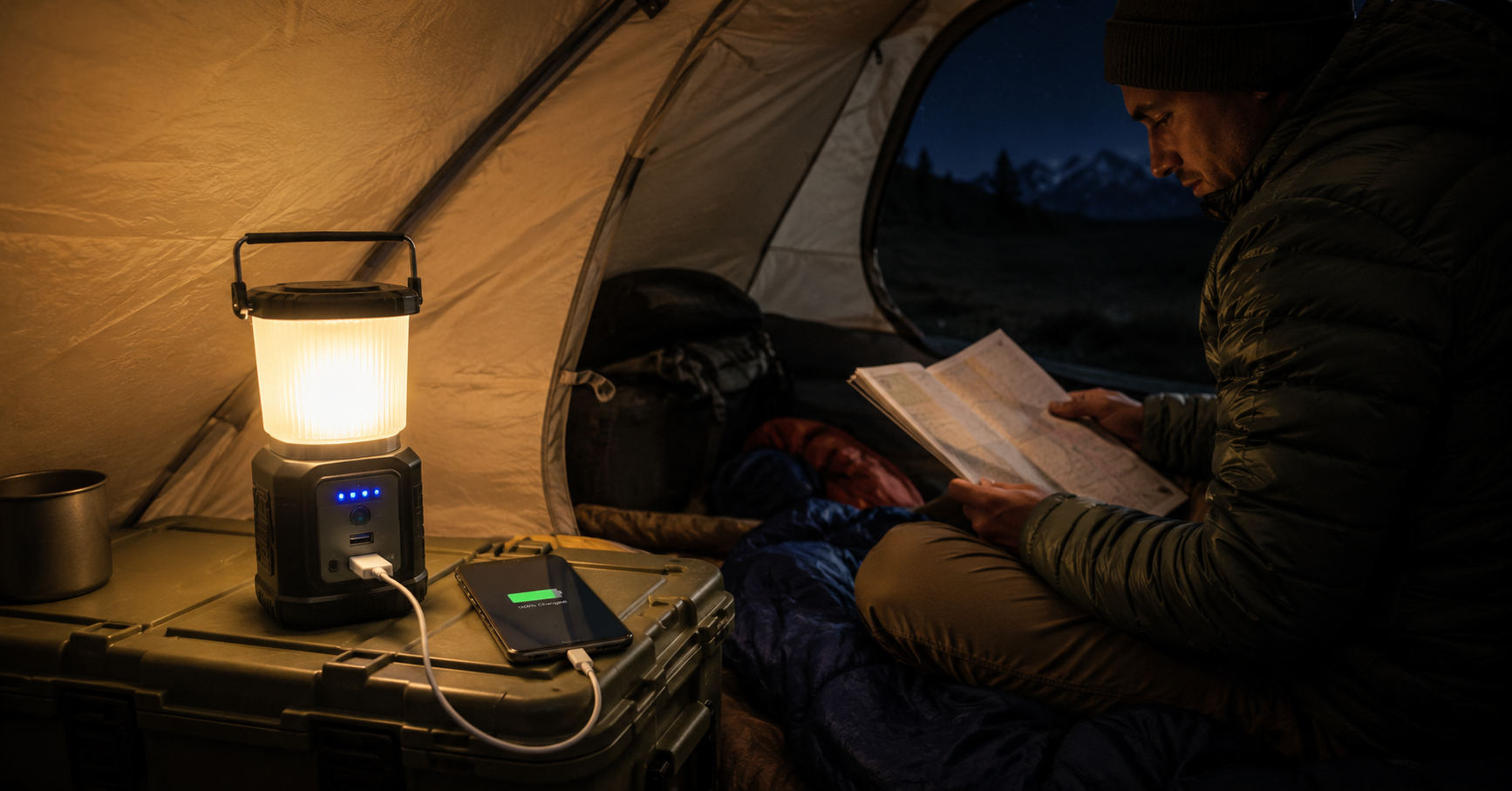
The source product follows a familiar portable lantern structure: a black hard-plastic base, a translucent ribbed diffuser, and a folding carry handle or top loop. This design supports everyday outdoor use without unnecessary mechanical complexity. The ribbed diffuser suggests softer ambient lighting instead of a narrow beam, which is generally more comfortable inside tents, cabins, and emergency spaces. A compact tower-like form can also save room in a duffel, truck bin, or shelf display. However, buyers should still review balance and placement. A lantern may appear sturdy in images but still tip easily on uneven ground if the base is too light or the proportions are poorly managed.
Why Integrated USB Power Matters
Adding USB charging changes the lantern from a single-purpose light into a small backup energy source. Phones are used for weather updates, navigation, photos, messaging, and emergency contact, even on trips where users want to disconnect. In that context, an emergency lantern with power bank capability provides useful redundancy. It can reduce the number of separate items users need to remember, pack, and maintain. Still, buyers should avoid assuming that the phrase “power bank” means high-capacity device charging. In this category, the charging function is best understood as convenience and emergency support. Battery capacity, output behavior, and lighting runtime must be confirmed before positioning the product.
Selection Criteria for Sourcing Teams
For private label, wholesale, or retail assortment planning, evaluation should begin with function and handling rather than decoration. The housing should tolerate ordinary packing, carrying, hanging, and repeated setup. The diffuser should create comfortable light without looking overly cloudy or cheaply finished. The control area should be readable at a glance, especially because users may operate it with cold fingers or in low light. Visible blue indicator LEDs, a power button, and USB ports suggest user-facing charge status feedback and rechargeable operation, but buyers still need documentation. For comparable lighting options, sourcing teams can review the broader Brightenlux product range.
| Check Point | Why It Matters |
|---|---|
| Form factor | Fits camp boxes, shelves, tents, and vehicles without wasting space. |
| Handle or loop | Supports carrying and hanging for hands-free area lighting. |
| Indicator visibility | Helps users understand charge status in dark conditions. |
| USB access | Makes backup charging easier without awkward positioning. |
| Diffuser quality | Improves comfort for shared tent and cabin lighting. |
Common Buying Mistakes to Avoid
A frequent mistake is treating every camping light with power bank as if it serves the same purpose. Some lanterns are better suited to tent lighting, while others may be positioned for emergency visibility or broader campsite coverage. If a buying team only requests a “portable light with charging,” the final product may look correct but feel wrong in use. Another mistake is assuming every USB port performs the same way. The presence of a port does not confirm charging efficiency, available power after lighting use, or smooth operation in low light. Before procurement, confirm battery specifications, charging behavior, output modes, and how the light and power bank functions interact.
Where This Lantern Style Fits Best
This compact lantern style is well suited to car camping, family tent trips, household emergency kits, vehicle backup storage, cabins, workshops, and off-grid scenarios where simple lighting and light-duty charging are useful. It can be portable without being backpack-minimal, so buyers should position it honestly. For hiking, it is better described as a base-camp or backup item than an ultralight trail carry. The visible structure suggests practical everyday use rather than extreme expedition positioning. That is not a weakness. Many end users simply want a dependable lantern that turns on when needed, can be hung easily, and can help keep a phone from becoming useless at the wrong moment.
Next Steps for B2B Product Planning
Before placing an order, ask for the details that affect real-world experience: battery specification, charging standard, output modes, and whether device charging works while the lantern is illuminated. Review the handle joint, diffuser finish, button feel, port placement, and any covers if present. Packaging and manuals should explain setup in plain English, because outdoor customers do not want a puzzle during a nighttime emergency. If you are comparing models or planning a private label program, send requirements through the Brightenlux inquiry page or discuss application needs with the team via Brightenlux contact support.
FAQ
Is a camping light with power bank useful if I already own a flashlight?
Yes, because a flashlight and a lantern solve different lighting problems. A flashlight is better for directional viewing, while a lantern provides shared area lighting for tents, tables, vehicles, and emergency spaces. The power bank function adds a backup charging option when a phone or small device needs urgent power.
Can an emergency lantern with power bank replace a separate power bank?
Sometimes it can support light backup charging, but it should not automatically be treated as a full replacement for a dedicated power bank. The answer depends on the internal battery specification, output behavior, and how much energy remains after lighting use. Buyers should verify these details before marketing it that way.
Should buyers prioritize brightness or charging function first?
Balance is more important than chasing one headline feature. A brighter lantern may disappoint if it is unstable, awkward to hang, or confusing to operate. For camping and emergency use, buyers should evaluate lighting comfort, form factor, battery behavior, USB accessibility, and control simplicity together.
What should sourcing teams confirm before ordering this product type?
They should confirm battery capacity, charging standard, output modes, USB function, and whether the lantern can charge devices while illuminated. Mechanical details also matter, including handle durability, base stability, diffuser quality, and button placement. These practical checks help prevent customer frustration after the product reaches the field.