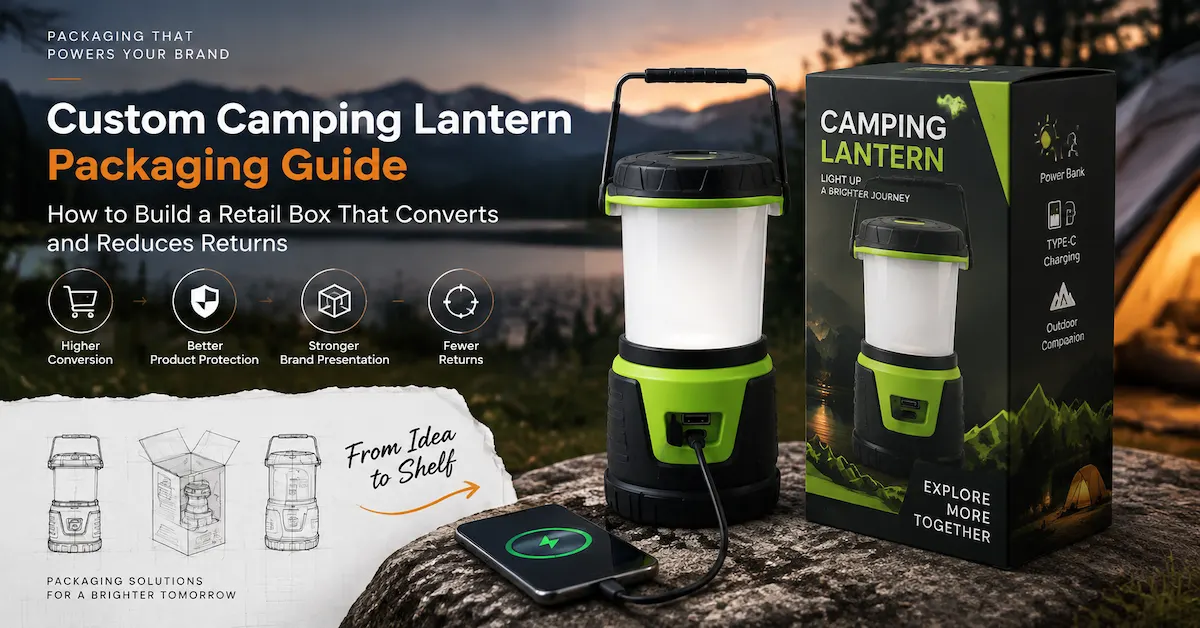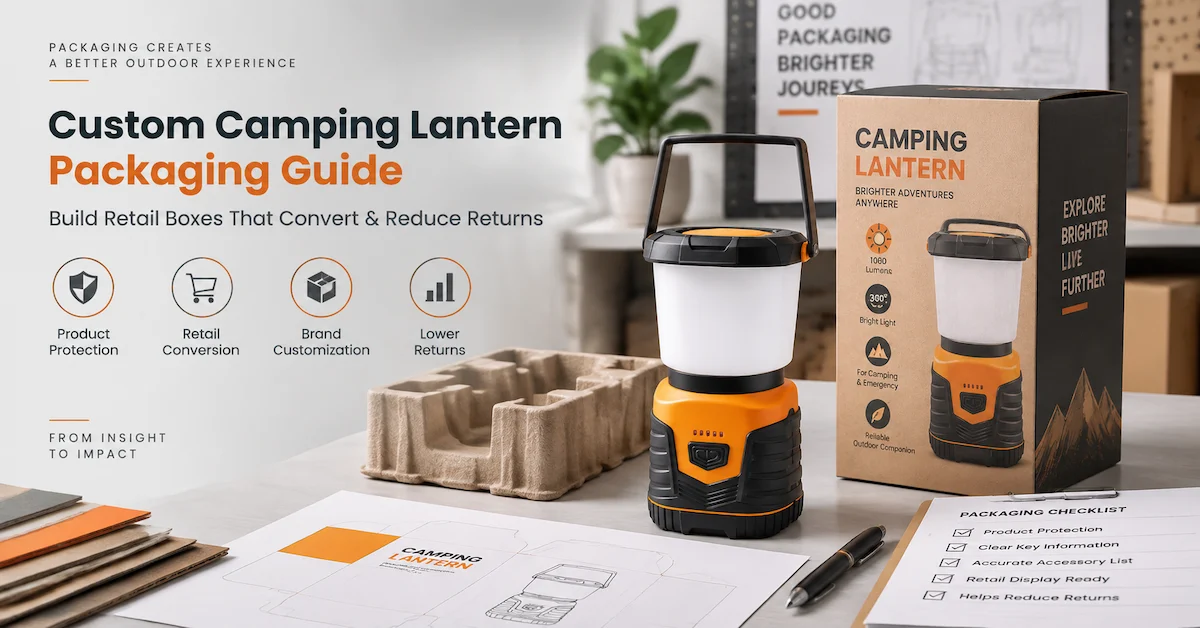


Direct answer: A strong camping lantern package protects the diffuser, handle, switch, battery door or charge port; explains the power system without misleading claims; fits the real retail or parcel route; and can be repeated at the agreed MOQ, cost and quality level.
This guide addresses a real B2B purchasing question with commercial investigation and supplier comparison intent. It is written for outdoor brands, importers, distributors, e-commerce operators, promotional buyers and retail sourcing teams. Its purpose is to help a qualified buyer send a clearer RFQ, approve evidence and reduce avoidable damage, returns and artwork revisions.
Who Brightenlux is and what this packaging discussion covers
Ningbo Brightenlux Electric Appliance Co., Ltd. is identified on its public website at No. 688 Jiyi Industrial Area, Xidian Town, Ninghai, Ningbo, Zhejiang 315613, China. The site presents camping and emergency lighting, portable-light product platforms, OEM and ODM support, product-appearance discussion, packaging and branding support for overseas buyers. Buyers can contact the company through its inquiry page, by phone at 0086-574-65130100 or by email at admin@brightenlux.com.
This article uses public Brightenlux product pages as original product evidence. It does not invent packaging MOQ, printing tolerances, drop-test results, tooling cost or lead time. Those values depend on the final model, battery, insert, artwork, quantity, printer and route. Every numeric packaging commitment should therefore be confirmed on the quotation, approved sample or test report for the exact production-intent configuration.
Public product evidence that should shape the package
| Brightenlux public platform | Published product evidence | Packaging decision created | Confirm for the RFQ |
|---|---|---|---|
| 1000 lm dry-battery lantern | 42 SMD 3014 + 4 SMD 3030 LEDs; three D cells not included; three color temperatures; dimming; 8-10 hours stated; ABS + PC; IP44; 495 g; 9 × 9 × 18.5 cm | Battery-not-included wording, battery-door protection, tall-box stability and retail explanation | Current model, sample measurements, final pack contents, box dimensions, MOQ and lead time |
| 1000 lm rechargeable lantern | 42 SMD 3014 + 4 SMD 3030 LEDs; three color temperatures; dimming; 4000 mAh 18650 lithium battery with protection; power-bank function | Cable retention, lithium-battery statement, port explanation, accessory count and transport review | Exact cell, charging interface, cable, runtime method, shipping configuration and destination evidence |
| 2000 lm rechargeable lantern | COB LED; white and red modes; dimming; power-bank function; three included 2200 mAh lithium batteries; 6600 mAh total stated; 10-15 hours stated; IP44 | Higher product weight, battery documents, large front-panel hierarchy and stronger insert control | Exact production battery, mode behind runtime, carton mass, pack-out, tests and current availability |
These three products are not interchangeable package sizes. The dry-battery platform creates an explicit “batteries not included” communication task. The 1000-lumen rechargeable platform creates a cable, cell and power-bank communication task. The 2000-lumen platform combines higher stated output, multiple modes and a larger included battery configuration. The package must follow the chosen SKU rather than borrowing claims or inserts from a visually similar lantern.
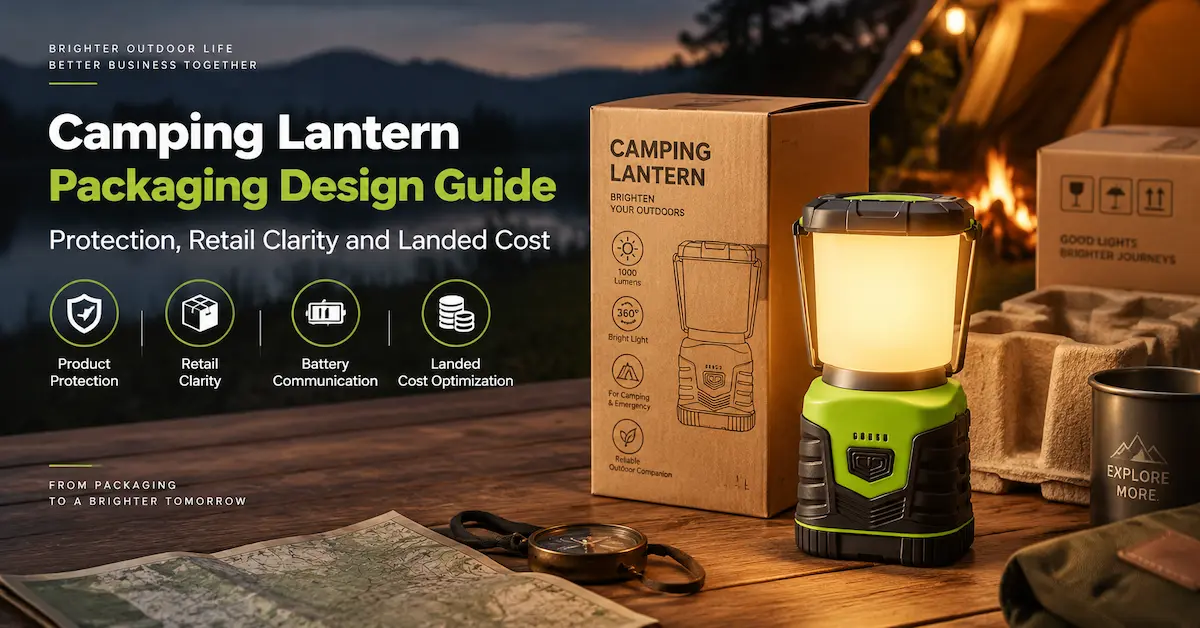
A buyer comparing custom camping lantern packaging should treat the box, insert, product, battery statement and shipping carton as one packaged-product system. This is also true for LED camping lantern packaging, rechargeable camping lantern packaging and private label camping lantern packaging. The artwork can change by market, but the approved physical configuration, evidence and claims must remain connected.
For a complete brief, link the camping lantern box design to the intended sales route. Ask the camping lantern packaging manufacturer to distinguish structural protection from graphic design, and make camping lantern retail packaging consistent with the online listing. When product or structure changes are involved, treat the work as OEM camping lantern packaging design with sample, evidence and change-control gates.
Define the packaged-product system before drawing the box
Start with the production-intent lantern, battery configuration, cable, manual, accessories, bag, retail box, insert, seal, label, inner pack and master carton. Give each component a revision. Photograph the correct orientation and record the actual mass. A packaging engineer cannot protect an undefined assortment, and a designer cannot write correct copy when the included items are still changing.
The first brief should also name the route. A lantern sold through a specialist store, shipped one unit at a time through parcel networks and delivered in mixed pallets experiences different hazards. If the same retail box must support all routes, state that constraint early. Otherwise, allow channel-specific outer protection while keeping the consumer-facing identity consistent.
Eighteen packaging decisions to score before selecting a supplier
1. Product orientation
Buyer decision. Choose whether the lantern stands upright, lies on its side or ships collapsed The useful evidence is a fitted sample with the handle, switch and diffuser in the intended position. Ask every shortlisted supplier to answer against the same product configuration, because a polished rendering and a low quotation are not evidence that the lantern, insert and carton have been evaluated together.
Failure mode and control. An upright tall box can tip, while a side pack can load the handle or lens The practical next step is compare two structures with actual product mass and inspect the pressure points. Record the owner, sample revision and pass condition. That record lets purchasing compare offers without losing the design logic when the order moves from design to production.
2. Diffuser protection
Buyer decision. Keep the light-diffusing surface away from abrasive board edges and loose accessories The useful evidence is a marked contact map and post-shipment visual inspection. Ask every shortlisted supplier to answer against the same product configuration, because a polished rendering and a low quotation are not evidence that the lantern, insert and carton have been evaluated together.
Failure mode and control. Scratches appear immediately when the lantern is first illuminated The practical next step is separate the diffuser with a sleeve, bag or insert surface that does not rub. Record the owner, sample revision and pass condition. That record lets purchasing compare offers without losing the design logic when the order moves from design to production.
3. Handle and hook restraint
Buyer decision. Hold moving metal or plastic handles without bending them The useful evidence is an opening-cycle and vibration observation on the complete pack. Ask every shortlisted supplier to answer against the same product configuration, because a polished rendering and a low quotation are not evidence that the lantern, insert and carton have been evaluated together.
Failure mode and control. A loose handle can mark the body, tear a bag or puncture the carton The practical next step is design a recess or tie point that releases without tools. Record the owner, sample revision and pass condition. That record lets purchasing compare offers without losing the design logic when the order moves from design to production.
4. Switch protection
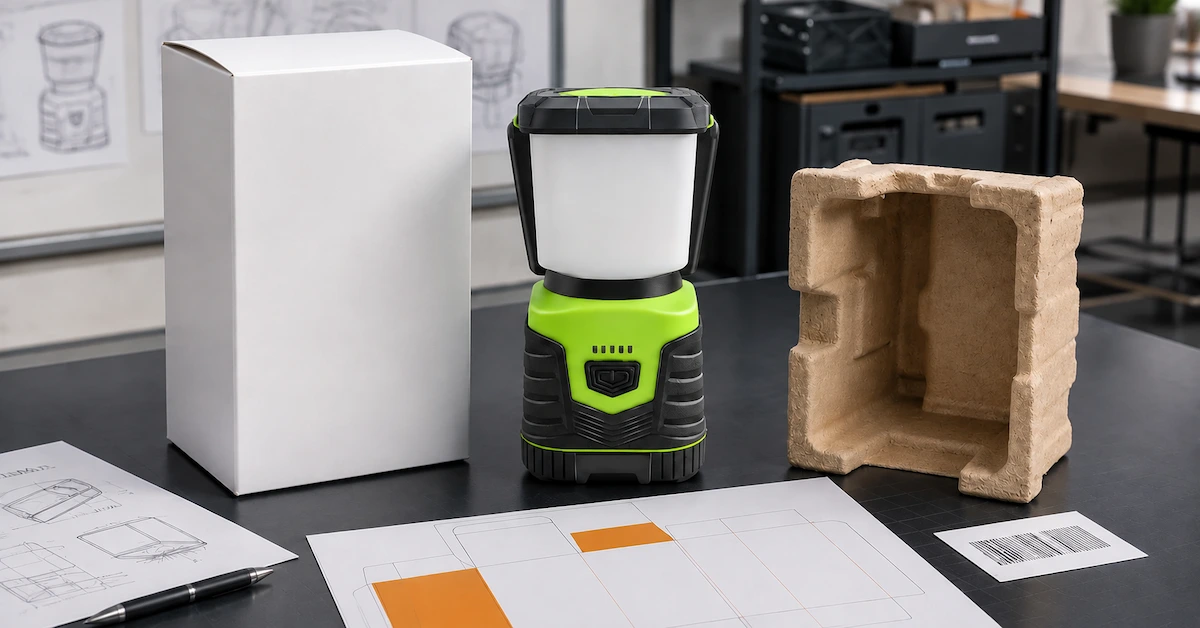
Buyer decision. Prevent accidental activation inside the box The useful evidence is clearance measurement and a packed-product compression check. Ask every shortlisted supplier to answer against the same product configuration, because a polished rendering and a low quotation are not evidence that the lantern, insert and carton have been evaluated together.
Failure mode and control. A pressed switch can drain a rechargeable lantern or create a customer complaint The practical next step is add structural clearance and verify every approved orientation. Record the owner, sample revision and pass condition. That record lets purchasing compare offers without losing the design logic when the order moves from design to production.
5. Battery-door support
Buyer decision. Protect a dry-cell door from concentrated load The useful evidence is the actual three-cell product configuration and closure check. Ask every shortlisted supplier to answer against the same product configuration, because a polished rendering and a low quotation are not evidence that the lantern, insert and carton have been evaluated together.
Failure mode and control. A deformed door can rattle or lose contact after purchase The practical next step is support the body around the door rather than pressing on the moving panel. Record the owner, sample revision and pass condition. That record lets purchasing compare offers without losing the design logic when the order moves from design to production.
6. Port-cover clearance
Buyer decision. Keep charging and power-bank ports from taking insert pressure The useful evidence is port location drawing and packed sample review. Ask every shortlisted supplier to answer against the same product configuration, because a polished rendering and a low quotation are not evidence that the lantern, insert and carton have been evaluated together.
Failure mode and control. A flap can arrive open, creased or unable to seal The practical next step is create a cutout and test removal without snagging. Record the owner, sample revision and pass condition. That record lets purchasing compare offers without losing the design logic when the order moves from design to production.
7. Accessory separation
Buyer decision. Assign a fixed pocket for cables, manuals and adapters The useful evidence is approved pack list and count tray. Ask every shortlisted supplier to answer against the same product configuration, because a polished rendering and a low quotation are not evidence that the lantern, insert and carton have been evaluated together.
Failure mode and control. Loose cables scratch the diffuser and omitted accessories create returns The practical next step is use a labeled compartment or sealed accessory envelope. Record the owner, sample revision and pass condition. That record lets purchasing compare offers without losing the design logic when the order moves from design to production.
8. Retail shelf footprint
Buyer decision. Set box dimensions from both protection and shelf constraints The useful evidence is physical shelf trial, carton cube and units-per-case calculation. Ask every shortlisted supplier to answer against the same product configuration, because a polished rendering and a low quotation are not evidence that the lantern, insert and carton have been evaluated together.
Failure mode and control. A decorative void raises freight and reduces facings The practical next step is compare a compact protective option with the buyer's shelf module. Record the owner, sample revision and pass condition. That record lets purchasing compare offers without losing the design logic when the order moves from design to production.
9. Parcel delivery route
Buyer decision. Design for individual handling when the retail box may become a shipping pack The useful evidence is a route-specific test selected with reference to ISTA procedures. Ask every shortlisted supplier to answer against the same product configuration, because a polished rendering and a low quotation are not evidence that the lantern, insert and carton have been evaluated together.
Failure mode and control. A shelf-ready box can fail repeated drops, vibration or compression The practical next step is add an overbox or create a channel-specific mailer system. Record the owner, sample revision and pass condition. That record lets purchasing compare offers without losing the design logic when the order moves from design to production.
10. Master-carton loading
Buyer decision. Control inner quantity, orientation and empty space The useful evidence is actual carton dimensions, gross weight and stack pattern. Ask every shortlisted supplier to answer against the same product configuration, because a polished rendering and a low quotation are not evidence that the lantern, insert and carton have been evaluated together.
Failure mode and control. Inner boxes move, corners crush and pallet utilization falls The practical next step is build a full master-carton sample before confirming freight. Record the owner, sample revision and pass condition. That record lets purchasing compare offers without losing the design logic when the order moves from design to production.
11. Battery statement
Buyer decision. Make battery included or excluded visible and consistent The useful evidence is product BOM, quotation, manual, retail page and carton proof. Ask every shortlisted supplier to answer against the same product configuration, because a polished rendering and a low quotation are not evidence that the lantern, insert and carton have been evaluated together.
Failure mode and control. A dry-cell customer may expect batteries; a lithium pack-out may be misdeclared The practical next step is use one approved statement across commercial and shipping files. Record the owner, sample revision and pass condition. That record lets purchasing compare offers without losing the design logic when the order moves from design to production.
12. Claims hierarchy
Buyer decision. Give the front panel one primary job and a small set of verified differentiators The useful evidence is claim-to-evidence matrix. Ask every shortlisted supplier to answer against the same product configuration, because a polished rendering and a low quotation are not evidence that the lantern, insert and carton have been evaluated together.
Failure mode and control. Too many badges make important charging or battery facts hard to see The practical next step is rank claims by buyer value and evidence strength. Record the owner, sample revision and pass condition. That record lets purchasing compare offers without losing the design logic when the order moves from design to production.
13. Barcode placement
Buyer decision. Reserve a flat, scannable panel away from folds and glossy interference The useful evidence is a verified barcode and the current GS1 guidance. Ask every shortlisted supplier to answer against the same product configuration, because a polished rendering and a low quotation are not evidence that the lantern, insert and carton have been evaluated together.
Failure mode and control. A barcode that looks correct on screen can fail at receiving or checkout The practical next step is print and scan a production-method proof before release. Record the owner, sample revision and pass condition. That record lets purchasing compare offers without losing the design logic when the order moves from design to production.
14. Material choice
Buyer decision. Select board and insert from mass, route, moisture exposure and print requirement The useful evidence is supplier declaration, sample caliper and physical pack test. Ask every shortlisted supplier to answer against the same product configuration, because a polished rendering and a low quotation are not evidence that the lantern, insert and carton have been evaluated together.
Failure mode and control. A premium surface can crack at folds or a weak insert can collapse The practical next step is approve the material code, construction and finish on the PO. Record the owner, sample revision and pass condition. That record lets purchasing compare offers without losing the design logic when the order moves from design to production.
15. Opening experience
Buyer decision. Make the product easy to remove without pulling on the handle or diffuser The useful evidence is unboxing observation with an unfamiliar user. Ask every shortlisted supplier to answer against the same product configuration, because a polished rendering and a low quotation are not evidence that the lantern, insert and carton have been evaluated together.
Failure mode and control. A tight insert creates damage during first use The practical next step is add finger access and an intuitive orientation cue. Record the owner, sample revision and pass condition. That record lets purchasing compare offers without losing the design logic when the order moves from design to production.
16. Pack-out labor
Buyer decision. Estimate assembly steps before approving a complex structure The useful evidence is timed pilot pack-out and work instruction. Ask every shortlisted supplier to answer against the same product configuration, because a polished rendering and a low quotation are not evidence that the lantern, insert and carton have been evaluated together.
Failure mode and control. A low-cost box can require slow folding, taping and accessory placement The practical next step is compare total packed cost and line capacity, not board price alone. Record the owner, sample revision and pass condition. That record lets purchasing compare offers without losing the design logic when the order moves from design to production.
17. Waste and recyclability
Buyer decision. Reduce material without weakening the protective system The useful evidence is material list, separation trial and damage result. Ask every shortlisted supplier to answer against the same product configuration, because a polished rendering and a low quotation are not evidence that the lantern, insert and carton have been evaluated together.
Failure mode and control. Removing an insert can shift damage cost to returns The practical next step is lightweight after proving performance and explain disposal accurately. Record the owner, sample revision and pass condition. That record lets purchasing compare offers without losing the design logic when the order moves from design to production.
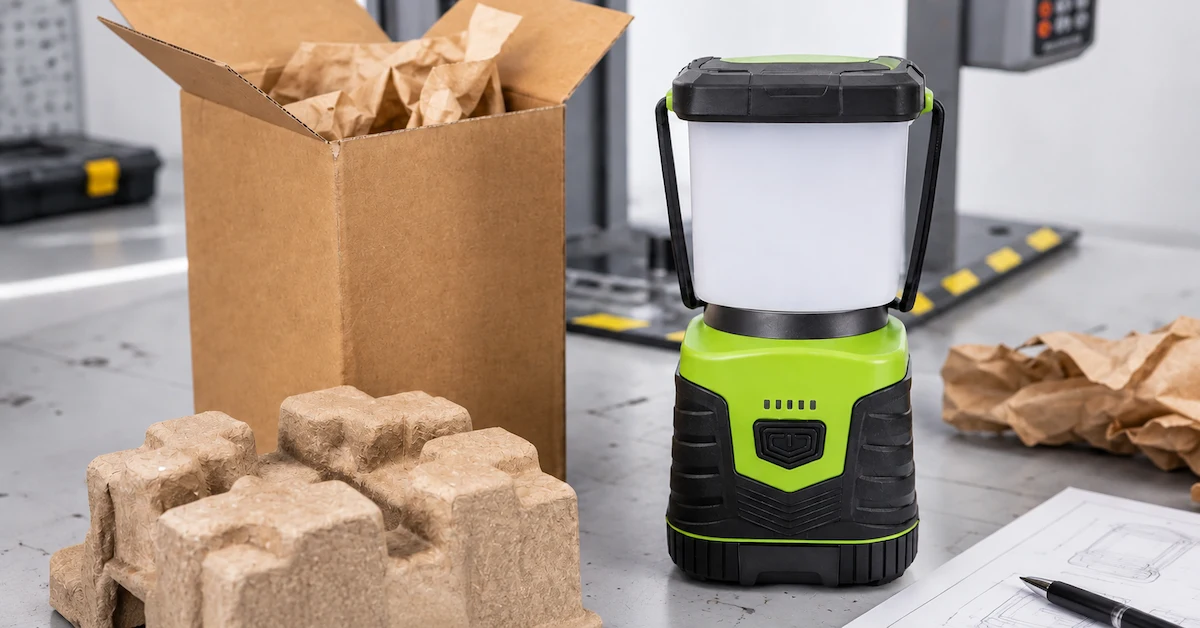
18. Reorder control
Buyer decision. Freeze the approved packaging revision with the product revision The useful evidence is retained sample, dieline, print proof and change notice. Ask every shortlisted supplier to answer against the same product configuration, because a polished rendering and a low quotation are not evidence that the lantern, insert and carton have been evaluated together.
Failure mode and control. A new cable, handle or battery can make the old insert or text wrong The practical next step is reopen fit and claims review whenever product or route changes. Record the owner, sample revision and pass condition. That record lets purchasing compare offers without losing the design logic when the order moves from design to production.
How to compare packaging quotations fairly
| Quotation line | Required scope | Hidden cost to expose | Buyer record |
|---|---|---|---|
| Retail box | Dimensions, board grade, construction, print colors, coating and closure | Plate/setup, special paper, finish, hand assembly | Dated dieline and material code |
| Insert | Material, cavity, tolerance and accessory pockets | Tooling, minimum material purchase, rejected fit | Approved insert sample |
| Artwork | Number of panels, languages, barcode and proof cycle | Extra revisions, translations, prepress correction | Signed proof and editable source ownership |
| Packing labor | Folding, bagging, accessory placement, sealing and labels | Slow line, extra tape, rework | Pilot time study |
| Testing | Protocol, sample count, conditioning and report | Retest after a change or failed first design | Report tied to pack revision |
| Freight | Retail cube, units per carton, gross weight and pallet pattern | Oversize parcel, low container utilization | Final packing list |
Normalize every quote to the same configuration and Incoterm. If one supplier includes the cable, manual, battery label, retail box and master carton while another quotes only the lantern and neutral box, the lower unit number is not a comparable offer. Ask the camping lantern packaging manufacturer or product factory to list all exclusions and the event that starts lead time.
Buyer workbook: turn each design preference into a measurable requirement
Box-volume worksheet
Situation. The design team wants a taller front panel while logistics wants a smaller cube. A packaging preference becomes useful only when the buyer can describe the product configuration and the point of failure it is intended to prevent. For this decision, measure the product envelope, insert clearance, retail-box volume, units per case and pallet utilization for both options. Use the complete product, battery configuration and accessory pack rather than an empty carton or a visual rendering.
Commercial interpretation. A larger face can improve shelf communication but may reduce container and warehouse efficiency. Record both alternatives, freight assumptions and the reason the chosen structure wins. Ask the supplier to show how the proposal changes retail-box dimensions, units per master carton, packing labor, one-time setup and reorder minimum. This makes the discussion about landed value and controlled risk rather than a single board price.
Insert-material worksheet
Situation. Molded pulp, folded board and formed plastic appear to solve the same fit problem but behave differently. A packaging preference becomes useful only when the buyer can describe the product configuration and the point of failure it is intended to prevent. For this decision, measure contact points, compression recovery, abrasion, humidity response, tooling, minimum and packing speed. Use the complete product, battery configuration and accessory pack rather than an empty carton or a visual rendering.
Commercial interpretation. The least expensive insert per piece may require a larger carton or slower accessory placement. Record material code, approved thickness, cavity drawing and disposal statement. Ask the supplier to show how the proposal changes retail-box dimensions, units per master carton, packing labor, one-time setup and reorder minimum. This makes the discussion about landed value and controlled risk rather than a single board price.
Accessory-count worksheet
Situation. Rechargeable configurations can include a cable, manual and market-specific insert while the dry-cell version may omit batteries. A packaging preference becomes useful only when the buyer can describe the product configuration and the point of failure it is intended to prevent. For this decision, measure every included item, its pocket, mass, count method and how an omission will be detected. Use the complete product, battery configuration and accessory pack rather than an empty carton or a visual rendering.
Commercial interpretation. Adding one small accessory can change the insert, labor, retail copy and shipping declaration. Record a photographed pack standard and a simple count checklist. Ask the supplier to show how the proposal changes retail-box dimensions, units per master carton, packing labor, one-time setup and reorder minimum. This makes the discussion about landed value and controlled risk rather than a single board price.
Damage-cost worksheet
Situation. A thinner carton reduces material cost but may increase diffuser scratches, crushed corners or replacement shipments. A packaging preference becomes useful only when the buyer can describe the product configuration and the point of failure it is intended to prevent. For this decision, measure damage type, occurrence by route, product value, reshipment, service time and customer impact. Use the complete product, battery configuration and accessory pack rather than an empty carton or a visual rendering.
Commercial interpretation. A minor material saving can be erased by a small increase in returns. Record the baseline pack, revised pack, test evidence and total cost assumption. Ask the supplier to show how the proposal changes retail-box dimensions, units per master carton, packing labor, one-time setup and reorder minimum. This makes the discussion about landed value and controlled risk rather than a single board price.
Variant-complexity worksheet
Situation. The buyer is considering several colors, battery configurations and language boxes. A packaging preference becomes useful only when the buyer can describe the product configuration and the point of failure it is intended to prevent. For this decision, measure minimums, excess printed stock, changeover time, barcode count and slow-moving inventory per variant. Use the complete product, battery configuration and accessory pack rather than an empty carton or a visual rendering.
Commercial interpretation. A broad launch may dilute volume and make every box more expensive. Record core SKU, optional variants and the volume threshold for adding each one. Ask the supplier to show how the proposal changes retail-box dimensions, units per master carton, packing labor, one-time setup and reorder minimum. This makes the discussion about landed value and controlled risk rather than a single board price.
Print-finish worksheet
Situation. Foil, spot varnish, lamination or textured paper is proposed to create premium positioning. A packaging preference becomes useful only when the buyer can describe the product configuration and the point of failure it is intended to prevent. For this decision, measure setup, unit cost, rub resistance, fold behavior, barcode effect and recyclability communication. Use the complete product, battery configuration and accessory pack rather than an empty carton or a visual rendering.
Commercial interpretation. A finish that looks strong in a proof may scuff in mixed cartons or hide barcode contrast. Record finished production-method sample and approved placement map. Ask the supplier to show how the proposal changes retail-box dimensions, units per master carton, packing labor, one-time setup and reorder minimum. This makes the discussion about landed value and controlled risk rather than a single board price.
Lead-time worksheet
Situation. The supplier gives one total lead-time number although structure, artwork, material and product are not frozen. A packaging preference becomes useful only when the buyer can describe the product configuration and the point of failure it is intended to prevent. For this decision, measure dates for blank sample, artwork proof, production sample, packaging material, product assembly, inspection and shipment. Use the complete product, battery configuration and accessory pack rather than an empty carton or a visual rendering.
Commercial interpretation. A fast headline date often excludes buyer approval and retesting. Record milestone owner, prerequisite and the event that starts each clock. Ask the supplier to show how the proposal changes retail-box dimensions, units per master carton, packing labor, one-time setup and reorder minimum. This makes the discussion about landed value and controlled risk rather than a single board price.
Reorder-risk worksheet
Situation. The first order is approved, but battery, handle or cable availability may change later. A packaging preference becomes useful only when the buyer can describe the product configuration and the point of failure it is intended to prevent. For this decision, measure which product dimensions and claims affect packaging and which materials have long purchase cycles. Use the complete product, battery configuration and accessory pack rather than an empty carton or a visual rendering.
Commercial interpretation. A packaging reorder placed from an old file can be unusable for the new build. Record change-notice rule, retained sample and pre-reorder configuration review. Ask the supplier to show how the proposal changes retail-box dimensions, units per master carton, packing labor, one-time setup and reorder minimum. This makes the discussion about landed value and controlled risk rather than a single board price.
Complete the workbook with actual quotations rather than estimates copied from an earlier program. Ask each supplier to state quotation validity, currency, trade term, box and insert minimum, one-time tooling or setup, sample charge, production waste assumption and ownership of unused printed stock. Add the final retail and master-carton dimensions to the commercial comparison. Packaging decisions affect cash twice: once when materials are purchased and again when finished goods occupy freight and warehouse space. A clear worksheet lets the buyer identify whether a price difference comes from material, protection, print, labor, quantity or a missing scope item. It also creates a useful agenda for the first supplier meeting and a reference for the next reorder.
A 90-point pre-publication and pre-order check
| Quality area | Points | Evidence in this article | Release question |
|---|---|---|---|
| Search intent | 20 | Answers a supplier-comparison and packaging-design purchase question | Can the buyer decide what to request next? |
| Original evidence | 20 | Three Brightenlux public product platforms and product-specific packaging implications | Are final pack data and samples attached? |
| Entity / GEO | 15 | Company, location, products, applications, markets and contact path stated | Can an AI system identify who makes what and where? |
| Answer extractability | 15 | Direct answer, headings, tables, definitions and FAQ | Can each block stand alone? |
| SEO | 10 | Title, description, H1, slug, links, ALT, canonical and breadcrumb | Does the CMS preserve each element? |
| Schema | 10 | Article, BreadcrumbList and Organization only | Does markup match visible content? |
| Trust | 10 | Evidence note, sources, review date, contact and limitations | Are unconfirmed factory values labeled? |
Frequently asked questions
What should I send first for a camping lantern packaging quotation?
Send the exact product link or sample code, destination market, sales channel, order quantity, battery configuration, included accessories, target launch date, preferred box type, languages and barcode requirement. Ask the supplier to separate confirmed facts from assumptions and to quote standard, pilot and custom options.
Is there a universal packaging MOQ?
No. The product order, paper stock, print method, color, finish, insert, language version and printer setup can have different minimums. Request the MOQ per box design and per SKU, plus a neutral-box or label-based pilot option when the printed-box minimum is too high.
Should the box show the highest lumen value?
Only when the value applies to the exact production configuration and the measurement basis is supportable. The front panel should pair the verified headline with the use case, power type and key differentiator. Avoid implying that peak output is sustained for the full published runtime.
How should a lithium-battery lantern be described?
State whether the battery is installed, packed with the product or omitted; identify the supplied charging accessory; and make the product, carton, invoice and transport file agree. The freight specialist must confirm current route and carrier requirements for the exact pack-out.
Do I need a physical packaging sample?
Yes for a serious retail or e-commerce launch. A PDF proof checks text and placement, but it cannot prove fit, opening force, insert retention, surface appearance, barcode scan quality or protection. Approve a production-intent pack before mass printing.
Which packaging test should be used?
Select a test from the real distribution route and damage risk. ISTA explains that screening, partial-simulation and general-simulation procedures serve different purposes. Ask a qualified packaging professional or test laboratory to select the applicable procedure rather than claiming a test based only on box size.
Can one box serve several lantern models?
Sometimes, if dimensions, mass, accessory count, battery wording and claims are genuinely compatible. A shared outer structure with model-specific labels can reduce inventory, but do not hide different batteries or instructions behind a generic package.
What should be checked at final inspection?
Check the approved artwork revision, model and barcode, print condition, box dimensions, insert, product orientation, accessory count, battery statement, manual language, carton quantity, carton marks and closure. Link findings to the batch and retained sample.
What is the best camping lantern box design for a tall lantern?
There is no universal best structure. Start with center of gravity, handle position, diffuser vulnerability, shelf orientation and route. A folding carton with a fitted insert can work for retail; a stronger mailer or overbox may be needed for parcel shipment. Test the complete pack.
How do I reduce packaging cost without increasing damage?
Reduce unused cube, simplify finishes, consolidate accessory pockets and improve pack-out labor before removing protective material. Compare landed cost and return exposure. A smaller well-fitted structure often saves more than choosing the thinnest board.
Send a complete packaging RFQ
Include product model, sample revision, battery configuration, market, channel, quantity, forecast, box type, insert preference, languages, barcode, required claims, accessory pack, test expectation, master-carton requirement, desired sample date and production date. Ask for a standard option, a custom option and a list of assumptions. That request creates a faster and more defensible reply than asking for “best price with color box.”